Whitmore River
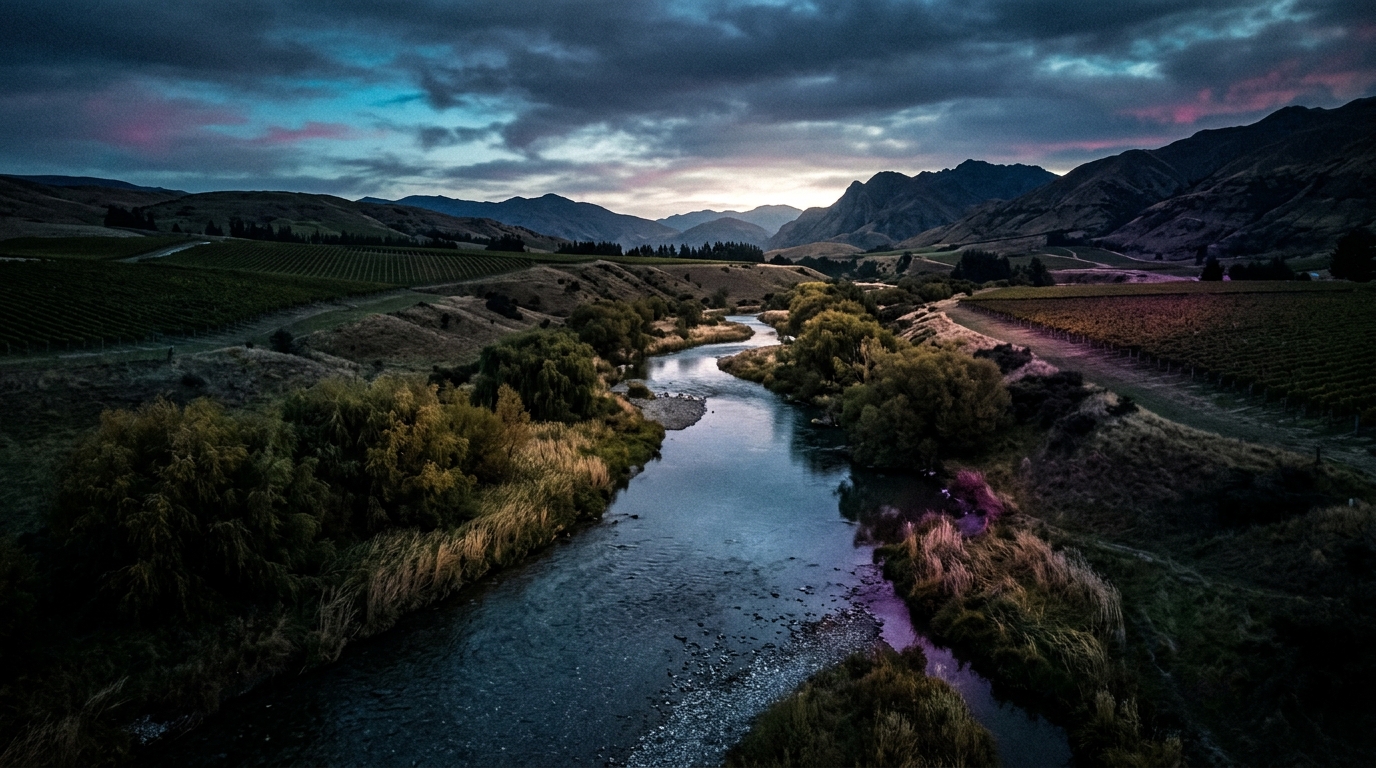
The Whitmore River is a slow, shallow waterway that rises in the Whitmore Highlands north-west of Brierly and winds south-east past the settlement before spreading into the wetlands of the Carrington Flats. Brierly's primary water source since its founding in 1810, it sustains the settlement's farmlands and its renowned vineyards, lending the wine a mineral terroir prized by its vintners. Once entirely lifeless, the river was stocked with Earth-native fish and lined with willows and reeds by the early settlers. It carries the name of the founding Guardian George Whitmore.
From the Highland Springs
The Whitmore River rises in the Whitmore Highlands, the rugged, elevated country that lies to the north-west of Brierly. There, deep underground springs push up through fractured rock to gather into a steady, unfailing source, fed by the aquifers and the seasonal runoff of the highlands above. It is an unglamorous birth for a river that means so much to the settlement downstream — no great lake or glacier, simply water working its patient way up through stone — but it is a dependable one, and dependability has always been the river's chief virtue.
From its source the river winds south-east, cutting a slow course through rocky hills before the land opens and softens beneath it. By the time it reaches the fertile ground around Brierly it has become a calm, deliberate waterway, broad and shallow rather than swift, carrying the highland water down onto the plains where it would, in time, sustain a whole community.
The River and the Settlement
Since the founding of Brierly in 1810, the Whitmore River has been the settlement's lifeline. It was the primary reason the founders' barren stretch of ground could be made to live at all, and from the earliest days the settlers bent their efforts to making the most of it. They learned its natural flood cycles and worked with them, and where the flooding would not reach they cut irrigation channels to carry the water out across the fields.
Above all, the river fed the vines. The Brierly Vineyards, laid out on the plains by George Whitmore and grown into the settlement's economic heart, depended on the river's steady supply, and the channels that ran from its banks to the rows of grapes were among the most carefully tended works in the settlement. What the river gave the vineyards, the vineyards gave Brierly: its trade, its craft, and much of its identity. Beyond the vines, the same waters served the farmlands and the daily life of the community, so that scarcely a household in Brierly was untouched by it.
A River Brought to Life
Like all the waters of Clivilius in the beginning, the Whitmore River was at first entirely lifeless — a clean, moving body of water with nothing living in or along it. The settlers set about changing that with the same deliberate care they brought to everything else. They stocked the river with Earth-native fish, trout and carp among them, which served the double purpose of keeping the water healthy and providing food for the table.
Along the banks they planted in earnest. Reed grasses, willow trees, and fruit-bearing plants took root where there had been bare ground, their roots binding the soil against the erosion that the seasonal floods would otherwise have carried away. Over the generations the river became not merely a channel of water but a living corridor through the settlement's land, and in this slow, deliberate seeding of a dead waterway there was something of the whole Brierly project in miniature — the patient work of making a barren world support life.
The Whitmore Terroir
The river left its mark most distinctively on the settlement's wine. Its waters, carrying the dissolved minerals of the highland rock through which they had risen, fed a soil whose particular character came to be prized by the vintners who worked it. The subtle influence of that mineral-rich water on the vines — the terroir it lent the grapes — was held to be one of the quiet secrets behind the quality of Brierly wine, and the connection between the river and the bottle became part of the settlement's lore.
It was a fitting association, for the river and the vineyards bore the same name. To drink Brierly wine was, in a sense, to taste the Whitmore Highlands themselves, carried down on the water to the plains and drawn up again through the roots of the vines.
Where the Waters Spread
Below Brierly the river changes character. As the land flattens, the Whitmore slows and spreads, losing its single channel and fanning out into a broad network of marshes and shallow floodplains known as the Carrington Flats. There the water moves sluggishly through reed and shallow, and in doing so it does the settlement a final service: the wetlands act as a natural filter, settling out sediment and drawing off excess nutrients, so that the river system as a whole keeps its clarity and its agricultural usefulness.
For all its importance, the Whitmore was never a river for travel. Its shallow depth and winding, uncertain course made it poorly suited to boats, and what use it saw beyond irrigation was modest — small rafts poled along its calmer stretches, and the occasional project to extend its waters further out across the land. Movement along the valley belonged instead to the Old Brierly Road, which runs for a long stretch alongside the river, shadowing its banks where the ground allows before the two part ways. Travellers followed the water without ever truly using it; the river's gift to Brierly was never movement, but life.
A Geography of Founders
The river's name, like so much of Brierly's geography, is a memorial to the people who made the settlement. It carries the name of George Whitmore, the vintner among the five founding Guardians, whose vines were the river's chief beneficiary and whose family name spread, in time, across the river, the highlands that feed it, and the plains it waters. That the settlement should name its central waterway after the man whose craft it sustained was no accident; it was how Brierly remembered its founders, by writing them into the land itself.
The same instinct named the wetlands at the river's end for Elizabeth Carrington, the botanist Guardian, so that the Whitmore runs its whole course from one founder's name to another's — from the vintner's highlands to the botanist's flats. The river remains, two centuries on, among the most essential of all Brierly's features, woven into the settlement's agriculture, its traditions, and its annual festivals. As Brierly slowly opens to the wider world, the careful management of its waters has become a priority once more, much as it was for the first settlers who learned, long ago, to make a dead river live.







