Patrick and Jane Lahey Residence, Sandy Bay
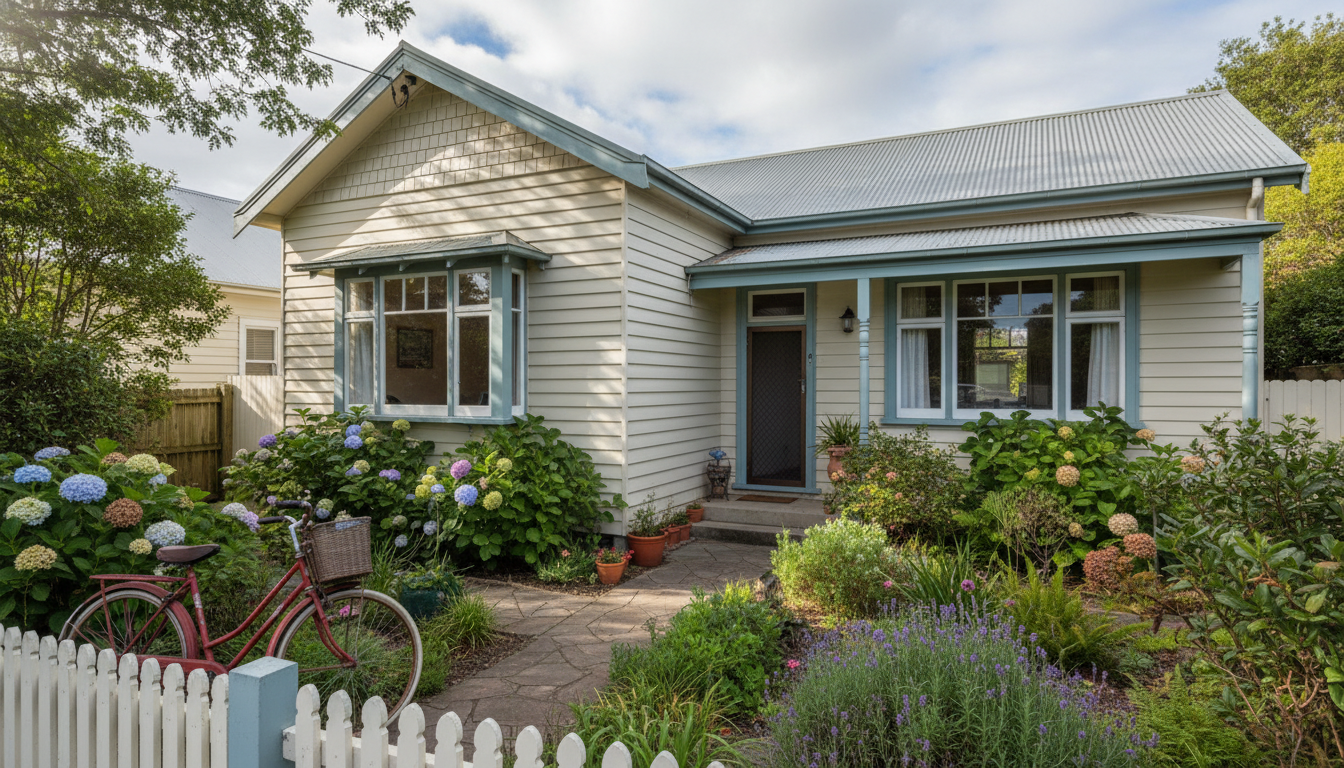
The cottage at 4 Bective Street served as Patrick and Jane Lahey's family home from 1952 through early 1963, housing their growing family during the years when Nicholas, Fiona, Solomon, and Pip were young children. The weatherboard cottage represented respectable working-class achievement—three bedrooms, modest garden, convenient location near schools and Sandy Bay shops. It was here that Jane received Deutsche Werft's offer in February 1961, here that she returned in May 1962 carrying secrets that would reshape their marriage, here that the hollowed-out book containing Hamburg's only physical evidence found its place on an ordinary bookshelf.
Location and Neighbourhood Context
The cottage at 4 Bective Street occupied a quarter-acre block in Sandy Bay, the Hobart suburb that had evolved throughout the twentieth century from colonial agricultural land into established residential area serving middle-class and working-class families. Sandy Bay in the 1950s and early 1960s represented aspirational respectability—neither wealthy like Battery Point nor struggling like some of Hobart's industrial suburbs, but rather comfortably middle in ways that suited families seeking stability without pretension.
Bective Street itself ran roughly north-south, connecting Sandy Bay Road to the slopes rising towards the Hobart Rivulet valley, its length accommodating perhaps twenty properties on modest blocks. The street was sealed bitumen, narrow by modern standards, with minimal verge space between road and property boundaries. Footpaths existed intermittently, their presence depending on individual property owners' willingness to maintain concrete paths rather than grass verges. Street lighting was adequate without being generous, the sodium lamps creating pools of yellow light that left substantial darkness between their coverage areas.
The neighbourhood's character was established through its housing stock—predominantly weatherboard cottages constructed between the 1920s and 1940s, with occasional older Victorian-era structures surviving from Sandy Bay's earlier development periods and a few newer brick veneer homes appearing as post-war prosperity enabled construction of more substantial dwellings. The overall impression was solidly respectable working-class—properties were maintained adequately if not elaborately, gardens showed attention without obsessive grooming, the visual landscape suggesting people who took pride in their homes whilst lacking resources for major improvements.
Sandy Bay's proximity to central Hobart made it attractive to workers whose employment required daily commuting to the city or to the port facilities along the Derwent waterfront. The suburb's modest elevation provided some properties—though not 4 Bective Street—with views across the Derwent estuary, these view properties commanding slightly higher rents or sale prices whilst the remainder traded location convenience against other amenities. Schools, shops, churches, and public transport were all within reasonable walking distance, creating the self-contained neighbourhood life that characterised Australian suburbs during this period.
Architectural Description and External Features
The cottage at 4 Bective Street exemplified the modest weatherboard construction that dominated Tasmania's early twentieth-century residential development. Built in approximately 1927, the structure represented standard workers' cottage design—rectangular footprint measuring roughly nine metres by seven metres, with a later lean-to addition at the rear extending the depth by an additional two metres to accommodate bathroom facilities that the original construction had housed in separate external privy.
The exterior walls were clad in painted weatherboards, horizontal timber planks overlapping to shed water, a construction method that was economical, relatively straightforward to maintain, and which provided adequate insulation for Tasmania's temperate climate. The paint was cream when the Laheys took occupancy in 1952, chosen by the previous owner and maintained by Patrick through regular repainting that Tasmania's weather demanded approximately every seven years. The trim around windows and doors was darker cream, creating subtle distinction without the contrast that more elaborate colour schemes employed.
The roof was corrugated iron, steeply pitched to shed rain and snow, painted dark green in the tradition that made iron roofs less visually jarring against landscape and vegetation. The pitch created sufficient roof space for storage accessed via pull-down ladder in the hallway ceiling, this space accumulating the children's outgrown clothing, Christmas decorations, Patrick's archived work documents, and the various items that family life generated but which didn't warrant regular access.
A front verandah extended across the cottage's width, approximately two metres deep, supported by timber posts that had been part of the original construction. The verandah floor was tongue-and-groove timber boards, painted the same cream as the weatherboards, showing wear where foot traffic concentrated near the front door. The verandah provided covered outdoor space that was used primarily during summer months—children's play area, location for evening sitting during warm weather, transitional space between public street and private interior.
The front garden occupied perhaps one hundred square metres between the cottage and Bective Street, divided by a path of concrete pavers leading from the front gate to the verandah steps. The garden featured established plants that the Laheys had inherited and maintained without major modification—two camellia bushes flanking the front path, a hedge of escallonia providing privacy screen between property and street, patches of lawn requiring regular mowing, and flower beds where Jane grew seasonal annuals that provided colour without demanding extensive maintenance.
A narrow driveway ran along the cottage's eastern side, leading to a small garage at the rear that had been added sometime in the 1940s when automobile ownership became more common. The garage was weatherboard construction matching the main cottage, barely large enough to accommodate the Ford Prefect that Patrick had purchased in 1956, requiring careful manoeuvring to park without damaging the structure or vehicle. The garage also stored garden tools, Patrick's modest workshop equipment, and the accumulated items that garages universally attracted regardless of their designated purposes.
The rear garden was larger than the front, perhaps two hundred square metres, divided into functional zones—a vegetable patch where Patrick grew tomatoes, beans, and lettuce during appropriate seasons, a clothesline area where Jane hung washing on the Hills hoist rotary clothesline that Patrick had installed in 1953, and an area of lawn where the children played. A small shed in the rear corner housed additional tools and provided workspace for projects that required shelter but didn't warrant garage space.
Interior Layout and Room Functions
The cottage's interior was arranged according to standard early twentieth-century workers' cottage design—central hallway running from front door to rear, with rooms opening off both sides, maximising space efficiency within the modest footprint. The front door opened directly into this hallway, narrow but adequate for circulation, its walls lined with hooks for coats and hats, a small table for keys and mail, and the ceiling hatch providing roof storage access.
The front room—positioned to the left of the entrance, occupying the cottage's northwest corner—served as the formal living room, though "formal" was relative term in a working-class household. This room measured approximately four metres by four metres, containing the furniture that Patrick and Jane had accumulated during their early married years—a three-seater sofa, two armchairs, a coffee table, and a bookshelf against one wall. The room's two windows faced north and west, providing good natural light during most of the day, their curtains in floral fabric that Jane had made herself in 1954.
The front room was where the family gathered for evening activities, where the wireless sat providing news and entertainment, where Jane read whilst Patrick reviewed technical documents in the evening, where they'd hosted the occasional social gathering during their earlier Sandy Bay years before the children's demands made entertaining difficult. The room contained the bookshelf where Jane's modest literary collection resided alongside Patrick's engineering references, this shelf eventually receiving the hollowed-out Faust in November 1962.
Behind the front room, a second room of similar dimensions served as the main bedroom, where Patrick and Jane slept throughout their Sandy Bay residence. The room contained a double bed, two wardrobes—one for Patrick's work clothes and one for Jane's dresses and household clothing—a dressing table with mirror, and a chest of drawers providing additional storage. The room's single window faced west, providing afternoon light but requiring curtains for privacy and morning darkness.
Across the hallway, the cottage's eastern side contained two smaller bedrooms originally designed for children or to accommodate working lodgers that many Depression-era families had required for additional income. By 1952, when the Laheys took occupancy, these rooms housed Nicholas and Fiona in one room, with the second room initially serving as Patrick's study before Solomon's birth in 1954 required its conversion to nursery. By 1957, when Pip arrived, the sleeping arrangements had become complicated—Nicholas and Solomon sharing one room, Fiona and Pip sharing the other, the children's need for space creating pressure that eventually contributed to the family's 1963 relocation to larger accommodation in New Norfolk.
The kitchen occupied the rear of the cottage in the lean-to addition, measuring approximately four metres by three metres, its modest dimensions typical of kitchens designed when cooking was viewed as purely functional activity. The room contained a wood-burning stove that Patrick had converted to electric operation in 1955, a small refrigerator purchased in 1956, a sink with draining board, limited counter space, and wall-mounted cupboards providing storage for dishes and staple foods. A small table with four chairs occupied one corner, serving for family meals that were too casual for the dining area.
The dining area occupied a space between kitchen and hallway, not quite a separate room but distinguished from circulation space by the presence of a dining table with six chairs—purchased used in 1953 when Jane was pregnant with Solomon and the family's growing size demanded formal eating space. This area served for Sunday dinners and special occasions, the family's regular meals occurring in the kitchen where proximity to cooking facilities made serving easier.
The bathroom, added during the 1930s renovation that had brought internal plumbing to a cottage originally reliant on external facilities, occupied a small space carved from what had been rear verandah. The room contained toilet, sink, and a cast-iron bathtub, its dimensions barely adequate for adult bathing and requiring careful scheduling when four children and two adults all needed morning access. The bathroom's small window provided ventilation and minimal light, supplemented by a single ceiling fixture.
Daily Life and Family Rhythms (1952-1961)
The cottage at 4 Bective Street shaped and was shaped by the Lahey family's daily rhythms throughout the decade of their residence. Patrick's workdays during this period—before Deutsche Werft, when he was employed by Hobart Port Authority—followed reliable patterns. He departed at quarter to seven each morning, walking to the bus stop on Sandy Bay Road for the ride to Hobart's waterfront. He returned around half past five, tired but predictably present, his working hours allowing genuine family participation rather than the eighteen-hour days that would characterise his Hamburg period.
Jane's days were structured by children's needs and household management that was considerably more labour-intensive than modern domestic work. Washing required heating water, operating a wringer machine purchased in 1954, hanging clothes on the rotary line, bringing them in when dry, ironing with sad irons heated on the stove before Patrick's 1957 purchase of an electric iron represented modest modernisation. Cooking for six people on limited budget required planning, shopping multiple times weekly at Sandy Bay shops, preparing meals largely from scratch in the kitchen's constrained space.
The children's presence dominated the cottage's character throughout the 1950s—Nicholas's steadiness providing stability, Fiona's energy creating chaos that Jane managed with varying success, Solomon's quieter temperament offering occasional respite, Pip's arrival in 1957 pushing the household's capacity nearly to breaking point. The cottage wasn't really large enough for six people, requiring constant negotiation about space, noise, privacy that was largely theoretical rather than actual.
Bedtimes created traffic jams in the hallway as bodies moved between bedrooms and the single bathroom. Mornings were similarly chaotic, everyone needing toilet access, washing facilities, breakfast, preparation for school or work. The cottage's modest dimensions meant that conflicts were immediate and unavoidable—doors couldn't be closed far enough to create real separation, walls weren't thick enough to provide sound insulation, the children's bedrooms weren't large enough to accommodate play that didn't overflow into common areas.
Yet the cottage also created intimacy that larger homes might not have fostered. The family couldn't avoid each other, creating forced togetherness that was sometimes oppressive but also sometimes precious. Jane knew exactly where each child was at any moment because the cottage's size made invisibility impossible. Patrick's evening presence in the front room was immediately apparent throughout the house, his return from work creating shift in atmosphere that everyone registered.
Financial Context and Class Position
The cottage represented significant financial achievement for the Lahey family whilst simultaneously marking the limits of their economic position. Patrick's salary at Hobart Port Authority placed them firmly in working-class territory—sufficient for modest comfort, inadequate for luxuries or significant savings. The cottage was rented rather than owned, the landlord being Mr. Herbert Thompson, a retired merchant who owned several properties in Sandy Bay that provided his retirement income.
The rent in 1952 was three pounds ten shillings weekly, rising to four pounds five shillings by 1961, consuming approximately one-quarter of Patrick's wages—a proportion considered affordable by 1950s standards though leaving limited margin for unexpected expenses. The Laheys maintained financial stability through careful management rather than abundance—Jane kept meticulous household accounts, Patrick performed all maintenance he was capable of rather than hiring tradesmen, both deferred purchases until absolutely necessary rather than buying on credit that was becoming increasingly common.
The cottage's contents reflected this careful economy. Furniture was functional rather than fashionable, accumulated gradually over years rather than purchased in coordinated sets. The wireless was second-hand, bought in 1953 after their previous model had failed beyond Patrick's capacity to repair it. The refrigerator was the smallest model available in 1956, barely adequate for family needs but matching budget constraints. Jane's sewing machine, purchased new in 1954 as investment in her capacity to make children's clothing rather than buying it, represented rare major expenditure justified by long-term savings it enabled.
Yet within working-class context, the Laheys were managing adequately. They weren't struggling—meals were regular and sufficient, clothing was adequate if not fashionable, the children attended school properly equipped. They maintained respectability through cleanliness and order that cost effort rather than money. The cottage was always clean, children were always presentably dressed, appearances were maintained despite underlying financial constraints that middle-class observers might not recognise.
Social Life and Community Integration
The cottage's position within Sandy Bay's social geography was unremarkable—neither particularly prominent nor notably isolated, simply present within neighbourhood networks that developed through proximity and children's school connections. Jane participated in the Sandy Bay Primary School Mothers' Club, attending meetings in the school hall, contributing to fundraising efforts through cake stalls and fetes. She maintained cordial relationships with neighbouring women—Mrs. Harrison at number 2, Mrs. Chen at number 6—characterised by occasional tea visits and practical assistance during illness or crisis whilst stopping short of intimate friendship.
Patrick's social connections centred primarily on work, his engineer's temperament and long working hours limiting community involvement beyond basic neighbourly courtesy. He attended church irregularly, more from sense of social obligation than religious conviction, maintaining minimal participation that satisfied community expectations without requiring genuine engagement. He belonged to no clubs or organisations, his limited leisure time occupied with family or solitary activities rather than fraternal socialisation.
The cottage occasionally hosted guests—Patrick's mother visiting from Launceston, Jane's mother making the journey from Cygnet, Patrick's sister Patricia staying overnight when visiting from Adelaide. Yet the cottage's modest size made extended visits challenging, guests requiring displacement of children from bedrooms, creating complications that discouraged casual entertaining. The Laheys' social life was correspondingly limited, their isolation not entirely circumstantial but partly chosen through recognition that their accommodation couldn't comfortably support the social obligations that entertaining created.
The Hamburg Interregnum (March 1961 - May 1962)
The cottage's character changed fundamentally when Patrick and Jane departed for Hamburg in March 1961, leaving the property temporarily vacant whilst they spent a year in Germany. The decision to leave rather than maintain occupancy created practical challenges—the landlord, Mr. Thompson, was understanding but required assurance that rent would continue during their absence, eventually agreeing to reduced rate reflecting the cottage's non-occupation whilst maintaining the Laheys' right to return.
The children's departure for Jeffries Manor was managed from the cottage—Nicholas, Fiona, Solomon, and Pip packing possessions, saying goodbye to the bedrooms they'd occupied throughout their childhoods, the house emptying of the energy that four children created. Jane walked through vacant rooms after the children had departed, experiencing the particular grief that comes from seeing spaces suddenly devoid of the lives that had filled them. The cottage had been too small for six people, yet with only Jane and Patrick preparing for Germany, it felt enormous and oppressively silent.
Before Hamburg departure, Patrick and Jane packed essential belongings they couldn't afford to store, arranged for their furniture to remain in place under dust covers, established systems for forwarding mail and managing bills during their absence. The cottage was left clean and secured, curtains drawn, utilities reduced to minimal service, the space suspended in hibernation awaiting their return.
During their Hamburg residence, the cottage represented home in abstract sense—the place they'd return to, the life they'd resume, though both would discover that resumption was impossible. The cottage waiting in Sandy Bay was physical constant whilst everything else transformed through Jane's affair and its consequences. When they returned in May 1962, the cottage was unchanged physically—same rooms, same furniture, same layout—yet the people returning to occupy it were fundamentally different from those who'd departed fifteen months earlier.
Return and Reconstruction (May 1962 - February 1963)
Jane and Patrick's return to 4 Bective Street in May 1962 began the complex process of reconstructing family life from the wreckage that Hamburg had created. The children returned from Jeffries Manor—Nicholas now thirteen and aware that something had changed even if he didn't know what, Fiona eleven and adjusting poorly to resumed parental authority after months of Thelma's different management style, Solomon eight and Solomon, Pip six and bewildered by transformations he couldn't comprehend.
The cottage that had been too small for six people in 1961 felt even more constrained upon return. The children had grown, their physical presence requiring more space. Yet more significantly, the emotional geography had shifted—Jane and Patrick maintained careful distance from each other, their relationship rebuilding slowly from betrayal's ruins, their interactions characterised by cautious courtesy rather than the comfortable assumptions that had previously structured their marriage.
Jane navigated daily life carrying knowledge that nobody else in the cottage could share. She'd given birth to Heather in October, had returned from Adelaide claiming food poisoning had abbreviated her visit, had resumed maternal duties whilst her body still carried physical memory of pregnancy and relinquishment. The cottage's walls contained this secret alongside Jane's consciousness, the space becoming repository for what couldn't be spoken, what would remain hidden for decades whilst family life proceeded around it.
The photograph hidden in the hollowed-out Faust on the bookshelf represented physical manifestation of this secrecy. Jane knew it was there—the knowledge permanent and unchangeable—yet nobody else would discover it for fifty-six years. The bookshelf in the front room appeared entirely ordinary, its contents reflecting typical educated household's literary collection, nothing suggesting that one volume contained evidence of adultery that would devastate anyone who discovered it.
Patrick resumed work at Hobart Port Authority, applying his Hamburg-acquired expertise in containerisation to Tasmania's ports as they began contemplating the technological transformation that would eventually revolutionise Australian shipping. His days followed reliable patterns—departure at quarter to seven, return at half past five, evenings occupied with technical reading or family presence that was physically present but emotionally reserved. He never mentioned Hamburg directly, never referenced Jane's affair, maintained silence that was simultaneously gift and burden.
The cottage witnessed their marriage's slow reconstruction—not restoration of what had existed before Hamburg but rather creation of something new built on foundations that had cracked but not completely failed. They learned to navigate shared space whilst maintaining appropriate boundaries, to coordinate parenting whilst acknowledging their relationship's altered character, to present unified front to children and community whilst privately managing complexity that outsiders couldn't see.
Departure and Transition (February 1963)
By late 1962, the cottage's inadequacy for family needs had become undeniable. The children required more space than the two small bedrooms provided, Jane needed distance from Sandy Bay's social networks where maintaining performed normality was exhausting, Patrick recognised that remaining in accommodation associated with pre-Hamburg life prevented the genuine fresh start their transformed marriage required.
Patrick secured position with New Norfolk's Boyer Mill, the paper manufacturing facility offering both employment and accommodation in company housing that was larger than the Bective Street cottage whilst removing the family from Hobart's environment where Jane's isolation and Patrick's work demands had contributed to circumstances enabling her affair. The decision to relocate was practical—better accommodation, stable employment, fresh beginning—yet also strategic, creating physical distance from Hamburg's aftermath whilst maintaining Tasmanian residence that kept them near family support.
The Laheys departed 4 Bective Street in January 1963, their furniture and belongings loaded into a removalist's truck for the forty-kilometre journey to New Norfolk. The cottage returned to Mr. Thompson's rental stock, available for the next family requiring modest accommodation in Sandy Bay's respectable working-class neighbourhood. The Laheys' eleven-year residence was marked only by minor wear—scuff marks on floorboards, slight damage to walls where children had been less careful than Jane preferred, the accumulated evidence of family life that would be repaired and painted over before new tenants arrived.
Yet for Patrick and Jane Lahey, the cottage at 4 Bective Street remained significant beyond its modest physical reality. It was where their children had spent formative years, where Jane had received Deutsche Werft's offer that had seemed like adventure, where they'd returned carrying secrets that transformed ordinary domestic space into container for what couldn't be revealed. The cottage had witnessed their crisis's immediate aftermath, had housed the beginning of their marriage's reconstruction, had become repository for evidence hidden in hollowed-out books that appeared entirely innocent to anyone who didn't know what to look for.







