Patrick and Jane Lahey Residence, Finkenwerder
The flat at 47 Neßdeich served as Patrick and Jane Lahey's temporary home during their Hamburg residence from March 1961 through late 1962. Company housing provided by Deutsche Werft, the modest second-floor accommodation contained three rooms plus kitchen and bathroom—adequate for a childless couple but sparse by Australian standards. Here Jane spent solitary days whilst Patrick worked eighteen-hour shifts, the thin walls allowing German conversations to penetrate whilst her own secrets remained contained. The flat witnessed their marriage's transformation from comfortable partnership into something more honest and complicated.
Location and Context
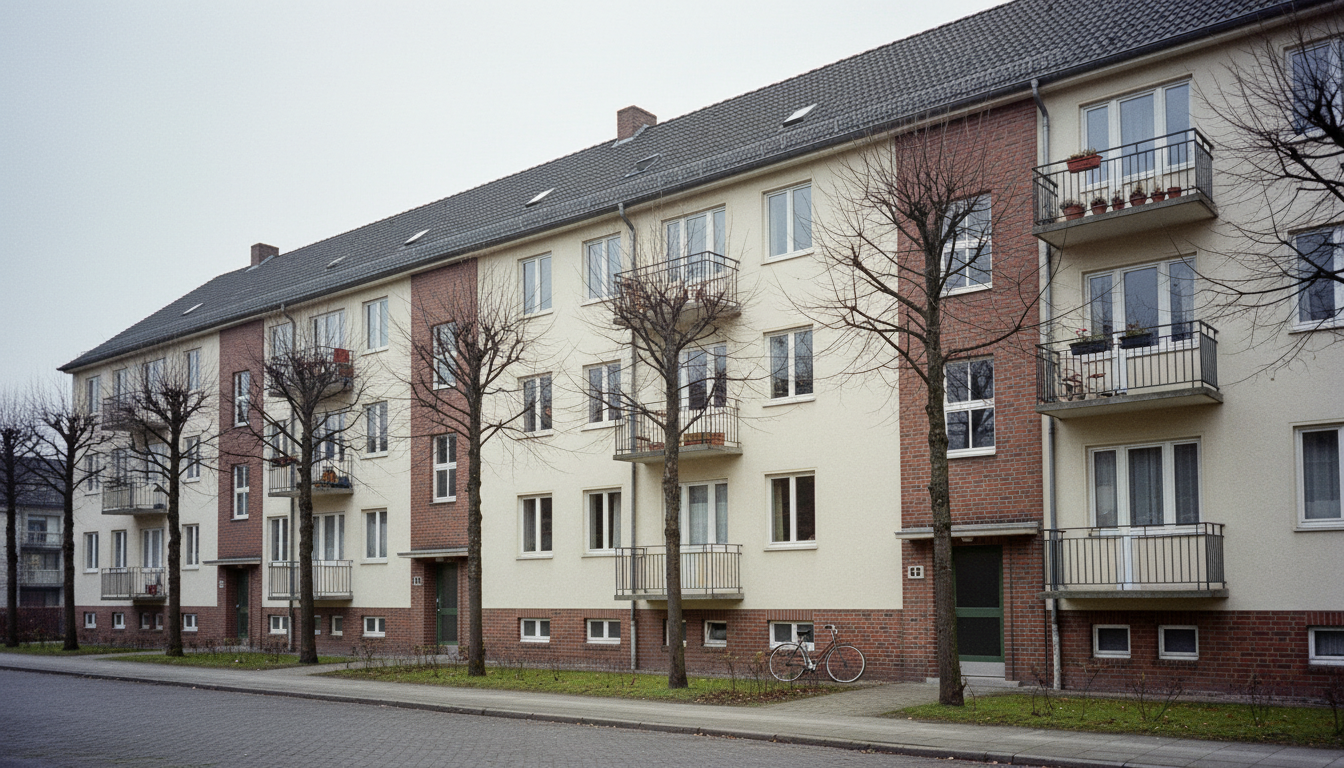
The building at 47 Neßdeich occupied a typical position within Finkenwerder's working-class residential landscape, situated approximately eight hundred metres from the Deutsche Werft shipyard facilities where Patrick Lahey worked throughout his Hamburg tenure. Neßdeich ran roughly parallel to the Elbe River, the street's orientation providing some properties with partial water views whilst others faced inland towards Finkenwerder's residential interior. Number 47 fell into the latter category, its windows overlooking the street and the modest brick buildings that defined the neighbourhood's architectural character rather than providing the river vistas that more expensive accommodation commanded.
Finkenwerder in the early 1960s retained its historical character as a shipbuilding district, the neighbourhood's identity fundamentally shaped by the maritime industries that had dominated the peninsula for generations. The population was predominantly working-class—shipyard workers, dock labourers, small shopkeepers, tradesmen—with a smaller contingent of engineers and administrative staff occupying slightly better housing that acknowledged their white-collar status whilst remaining firmly within the working-class geography. The district was self-contained by both geography and culture, connected to Hamburg proper by ferry and road bridges but maintaining distinct identity that separated Finkenwerder residents from the broader city's more cosmopolitan character.
The immediate neighbourhood around 47 Neßdeich exemplified this working-class functionality. The buildings were solid brick structures dating primarily from the 1920s and 1930s, constructed during periods when housing demand from shipyard expansion required rapid residential development. Most had survived the Second World War with varying degrees of damage and subsequent repair, the mixture of original and reconstructed sections creating subtle visual irregularities that marked the neighbourhood's passage through Germany's mid-century catastrophe. The streets were narrow by modern standards, designed before automobile ownership became common, with limited parking creating ongoing tensions as car ownership gradually increased through the 1950s and early 1960s.
Building Structure and Common Areas
The building at 47 Neßdeich was typical of Finkenwerder's interwar residential architecture—a three-storey brick structure housing eight flats, two per floor, accessed via a central stairwell that rose steeply through the building's core. The exterior was rendered in grey plaster that had weathered unevenly, creating patterns where water drainage had left marks and where wartime damage repairs had created slight colour variations. The windows were wood-framed, double-glazed in the German fashion providing some insulation against Hamburg's damp winters, their proportions reflecting the 1920s aesthetic that favoured vertical emphasis.
The entrance hall at street level maintained the minimal decoration typical of working-class housing—terrazzo flooring capable of withstanding heavy traffic, cream-painted walls showing years of accumulated scuffs and marks, a row of metal mailboxes providing individual slots for each flat's post. A single electric light bulb, periodically replaced through collective agreement among residents about cost-sharing, provided illumination that was adequate without being generous. The space smelled of floor wax, damp plaster, and the accumulated cooking odours that inevitably permeated residential buildings where privacy was compromised by thin walls and shared ventilation.
The stairwell was narrow, its steps steep in a manner that made furniture removal challenging and which represented genuine obstacle for elderly residents or anyone managing heavy loads. The handrail, dark wood polished smooth by decades of hands, provided necessary support for the climb. Each landing contained two doors—one for each flat—painted in colours that individual tenants had chosen within limits that the building's owner imposed to maintain reasonable aesthetic uniformity. A small window at each landing provided minimal natural light, barely sufficient during Hamburg's frequently overcast days, requiring the electric lights to illuminate the stairs even during nominal daylight hours.
The building's residents in 1961-1962 represented typical Finkenwerder demographic mixture. The ground-floor flats housed a retired dock worker and his wife, and a young family with three children whose noise was source of periodic complaint from upper floors. The first floor contained a middle-aged couple who both worked at local shops, and a widow whose adult son visited weekly to check on her welfare. The second floor, where the Laheys resided, also housed Herr and Frau Schmidt, he a foreman at Deutsche Werft, she a homemaker who maintained keen interest in the comings and goings of their Australian neighbours. The third floor accommodated two more working-class families whose lives intersected minimally with the Laheys' beyond polite greetings when encountering each other on the stairs.
The Lahey Flat: Layout and Furnishing
The second-floor flat that Deutsche Werft provided for Patrick and Jane Lahey consisted of three rooms beyond the small entrance hallway—a main living/dining room, a bedroom, and a third room barely large enough to qualify as such but designated as study or workspace. The total floor space measured approximately sixty-five square metres, modest by Australian standards but considered adequate for a childless couple in early 1960s Germany where housing remained scarce due to wartime destruction and insufficient post-war construction.
The entrance opened directly into a narrow hallway perhaps one metre wide and three metres long, with doors leading to the various rooms and a small coat cupboard providing minimal storage for outdoor clothing. The hallway's walls were papered in a floral pattern that had faded from its original colours, the paper showing slight damage near corners where furniture had scraped during previous tenants' occupancy. The flooring throughout was dark-stained wood, worn smooth by years of use, requiring regular maintenance with wax to prevent excessive deterioration.
The main room served combined living and dining functions, measuring approximately twenty square metres with two windows overlooking Neßdeich. The space contained furniture that Deutsche Werft provided as standard for company housing—a sofa upholstered in brown fabric showing wear but still serviceable, two armchairs in similar condition, a dining table with four chairs constructed from solid if unremarkable wood, and a bookshelf against one wall. The furniture was functional without any pretension to style, the kind of pieces that served their purposes efficiently whilst being sufficiently durable to survive multiple tenants' use.
The walls were painted cream, a neutral choice that made the room feel slightly less cramped than darker colours would have allowed whilst showing every mark and requiring periodic repainting to maintain reasonable appearance. A single ceiling light fixture provided general illumination, supplemented by a floor lamp near the sofa for reading. The windows featured curtains in heavy fabric—practical for privacy and insulation but aesthetically undistinguished—that Jane had found in place upon arrival and had seen no reason to replace despite their uninspired appearance.
The bedroom was smaller, perhaps twelve square metres, containing a double bed, wardrobe, and chest of drawers that exhausted the available space for furniture. The bed was comfortable by German standards if firmer than the Australian mattresses Patrick and Jane were accustomed to, requiring adaptation during their first weeks of residence. The wardrobe provided barely sufficient hanging space for two people's clothing, necessitating seasonal rotation of garments and careful organisation to prevent overcrowding. A single window overlooked the building's small rear courtyard, providing less natural light than the main room but offering relative quiet compared to the street-facing spaces.
The third room, euphemistically designated as study, measured barely eight square metres and contained a small desk, chair, and additional bookshelf. Patrick used this space for technical work he occasionally brought home from Deutsche Werft, spreading drawings across the desk whilst calculating stress loads or reviewing vessel specifications. Jane appropriated the room for her private writing—letters home, her diary, the occasional attempts at processing her Hamburg experience through prose never intended for other eyes. The room's door could be closed, providing the minimal privacy that the flat's layout allowed, making it valuable beyond its limited space.
Kitchen and Bathroom Facilities
The kitchen occupied perhaps six square metres, its modest dimensions typical of German flats designed when cooking was viewed as purely functional activity requiring minimal space. The room contained an electric cooker with four hobs and an oven, a small refrigerator that hummed constantly and which was less effective at maintaining proper cold temperatures than its Australian equivalents, a sink with draining board, and minimal counter space that made food preparation requiring multiple simultaneous tasks challenging.
Storage consisted of wall-mounted cupboards painted white, their interiors lined with paper that previous tenants had installed and which Jane had replaced upon arrival with fresh lining from the local hardware shop. The cupboard space was barely adequate for storing cookware, dishes, and the staple foods that efficient household management required keeping in supply. A small window provided ventilation essential when cooking produced steam or odours, though the window's size limited how effectively the small space could be aired during and after meal preparation.
The kitchen's floor was covered in linoleum that showed wear near the cooker and sink where foot traffic concentrated, the pattern—abstract geometric in shades of grey and cream—dating from the flat's post-war renovation. The room received adequate natural light during daylight hours but required electric illumination for morning and evening cooking, the single ceiling fixture providing functional if somewhat harsh illumination that created stark shadows and made the space feel smaller than its already modest dimensions.
The bathroom was similarly compact, containing toilet, sink, and bathtub in arrangement that required careful navigation to avoid bumping into fixtures whilst moving between them. The tub was cast iron, deep in the European fashion, requiring considerable water heating capacity to fill adequately—a process that took substantial time given the building's hot water system's limitations. A small window provided ventilation and minimal light, supplemented by electric fixture above the mirror-fronted medicine cabinet mounted above the sink.
The bathroom's walls were tiled halfway to the ceiling in white ceramic, above which cream paint created the same neutral backdrop that characterised the rest of the flat. The floor was covered in additional tiles, slightly textured to prevent slipping when wet, showing the accumulated grime in grout lines that required periodic scrubbing to maintain reasonable cleanliness. A radiator provided heating that was barely adequate during Hamburg's cold months, making winter bathing an exercise requiring considerable commitment to personal hygiene.
Daily Life and Domestic Routines
The flat at 47 Neßdeich shaped the Laheys' daily routines through its physical constraints and its position within Finkenwerder's geography. Patrick's workdays began early, typically departing the flat by half past six to reach Deutsche Werft for seven o'clock start times that German industrial culture expected. His morning routine consisted of rising, washing, dressing in the work clothes he'd laid out the previous evening, consuming the breakfast Jane prepared, gathering his leather satchel containing technical documents and lunch, departing with brief kiss and promise to telephone if he'd be later than usual returning.
Jane's days, particularly during the early months before Ferdinand Morrison entered her life, were defined by the flat's isolation and the challenge of occupying time in a space that provided limited distraction. She developed routines that structured otherwise empty hours—morning cleaning that the modest space didn't truly require but which provided activity, shopping expeditions to local grocers where her limited German made transactions challenging, afternoon walks through Finkenwerder that familiarised her with the neighbourhood whilst emphasising her status as outsider.
The flat's thin walls made privacy largely illusory. Herr and Frau Schmidt's conversations were audible through the wall separating the main rooms, their arguments about money or his late working hours or her mother's health providing inadvertent entertainment and occasional discomfort when intimacy rather than conflict penetrated the inadequate sound insulation. The family below could be heard through the floor—children's voices, furniture being moved, the rhythmic sounds of daily life that emphasised Jane's own childless existence in ways that became increasingly difficult as the months progressed.
Cooking in the tiny kitchen required planning and organisation that Jane had never needed in their Sandy Bay cottage with its generous kitchen and modern appliances. German groceries demanded adjustment—different cuts of meat, unfamiliar vegetables, staples packaged in ways that required interpretation. Jane's limited German made following recipes from German cookbooks challenging, leading to experimental adaptations that sometimes succeeded and occasionally failed in ways that left both Laheys laughing at inedible results or grimly consuming meals that were technically food without being genuinely palatable.
The evening hours after Patrick's return varied considerably depending on his work demands and emotional state. During the early Hamburg months, they'd maintained reasonable domestic companionship—Patrick recounting his day whilst Jane described her explorations or frustrations, both processing their foreign residence through shared experience. As Patrick's work hours extended and Jane's isolation deepened, the evenings became more mechanical—dinner eaten, minimal conversation, Patrick often returning to technical work at the desk in the third room whilst Jane read or attempted letters home that captured none of her actual experience.
The Flat During the Affair
The flat's character changed fundamentally once Jane's affair with Ferdinand Morrison began in mid-November 1961. The space that had been merely lonely became actively oppressive, its walls seemingly closing in as Jane maintained dual existence—faithful wife when Patrick was present, adulteress during daytime hours when she met Ferdinand whilst Patrick worked at Deutsche Werft. The flat became stage set where Jane performed domesticity whilst her actual life occurred elsewhere, in Ferdinand's elegant Blankenese accommodation or in Hamburg cafés where she and Ferdinand conducted their relationship away from spaces that Patrick inhabited.
Jane's return to the flat after afternoons with Ferdinand required transitional rituals—composing her expression, ensuring her appearance contained no evidence of where she'd actually been, preparing dinner that would allow her to occupy her hands whilst avoiding Patrick's eyes during conversation that felt increasingly fraudulent. The kitchen became refuge where cooking's demands provided legitimate excuse for physical activity that made emotional performance slightly less exhausting.
The bedroom's intimacy became complicated by Jane's adultery. She and Patrick had never maintained a particularly active sexual relationship during their Hamburg residence—his exhaustion from work, her increasing emotional distance, their shared bed becoming more about proximity than passion. Yet after November, even this limited intimacy felt like additional betrayal, Jane's body that had been with Ferdinand hours earlier now lying beside Patrick whilst she pretended sleep and processed guilt that felt crushing when allowed full attention.
The third room's privacy became essential for Jane's diary writing, the only space where she could attempt to process what she was doing through private articulation that couldn't be shared with anyone. She'd write late at night after Patrick had fallen asleep, the small desk lamp creating circle of light in otherwise dark flat, recording thoughts and experiences that would destroy her marriage if discovered whilst simultaneously creating the only honest account of who she was becoming through her choices.
The Flat After Valentine's Day
Following Jane's confession on Valentine's Day 1962 and Patrick's decision to help her manage the catastrophe rather than simply end their marriage, the flat's atmosphere transformed again. The performance was over—Patrick knew everything, eliminating the need for Jane to maintain fiction of fidelity whilst actually conducting affair. Yet this honesty created different kind of oppression, the space now containing their explicit knowledge of betrayal rather than Jane's secret knowledge alone.
They navigated shared spaces with new awkwardness, both attempting to determine how to exist together whilst acknowledging what had occurred. The bedroom became particularly fraught—they continued sharing the bed because alternative arrangements would create questions from neighbours that neither wanted to address, yet the intimacy of shared sleeping space felt wrong when their marriage existed in uncertain state between destruction and reconstruction.
The kitchen, ironically, became space where they functioned most normally. Cooking and eating required practical coordination that transcended emotional complexity, their bodies remembering patterns established over thirteen years of marriage even whilst their relationship's emotional content had been fundamentally altered. Jane prepared meals, Patrick ate them, both maintained the domestic machinery of married life whilst processing whether marriage itself would continue beyond its current crisis.
The flat witnessed their late-night conversations about logistics—how to arrange Jane's travel to Adelaide, what to tell Deutsche Werft about early departure from Hamburg, how to manage the documentation that adoption would require. These practical discussions occurred at the small dining table that had hosted countless ordinary meals, the space now accommodating extraordinary planning required to manage consequences of Jane's affair whilst protecting all parties from social catastrophe.
Departure and Aftermath
When Patrick and Jane departed 47 Neßdeich in late March 1962, leaving Hamburg for their return to Tasmania via Adelaide where Jane would give birth to the child Patrick's sister would adopt, the flat returned to company housing stock for allocation to the next Deutsche Werft employee requiring accommodation. The furniture remained, the walls retained their neutral paint, the kitchen and bathroom continued serving their functions for subsequent occupants.
Yet for Patrick and Jane Lahey, the flat at 47 Neßdeich remained significant beyond its modest physical reality. It was where their marriage had transformed from comfortable partnership into something more honest and more damaged, where Jane had conducted the affair that had created catastrophe, where Patrick had listened to confession that should have ended their relationship but which instead revealed his capacity for grace that neither had previously understood existed. The space had witnessed their crisis and the beginning of their attempt at reconstruction, containing those experiences even after they departed and other lives occupied the rooms they'd temporarily inhabited.







