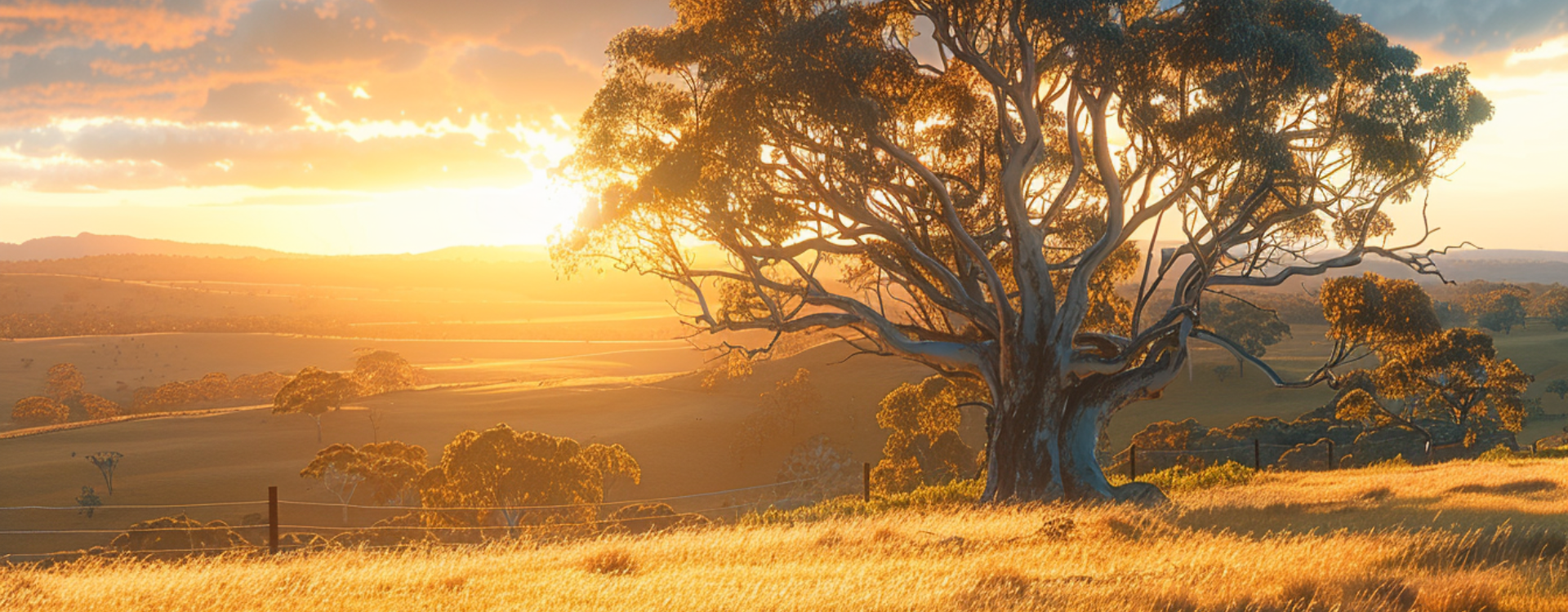
Jennings Family Farm, Gawler
Established in 1889 on the outskirts of Gawler, South Australia, the Jennings Family Farm was carved from scrubland bordering Stockwell's Scrub by Irish immigrants William and Margaret Jennings from County Clare. Across five generations, the property has endured colonial hardship, depression, bushfire, and profound family loss. Now under the stewardship of Anne Elizabeth Evans (née Jennings), it remains both a working agricultural property and a living archive of family and community history.
County Clare to Stockwell's Scrub (1888–1900)
William and Margaret Jennings arrived in South Australia from County Clare, Ireland, in 1888 aboard the SS Carpentaria, joining the steady flow of Irish emigrants who had been reshaping the colony's agricultural landscape since the mid-nineteenth century. They were not fleeing famine—the worst of that catastrophe had passed a generation earlier—but the grinding stagnation and limited prospects that persisted in rural Ireland decades after the crisis itself. William, a labourer's son with experience on tenant farms, sought what Ireland could not offer: land of his own.
In 1889, with assistance from a conditional land purchase scheme administered through the South Australian colonial government, the Jenningses acquired a forty-acre parcel north-east of Gawler, bordering what was then known as Stockwell's Scrub. The property sat approximately forty kilometres north of Adelaide, on undulating land that had been lightly grazed but never properly cleared or cultivated. It was, by any honest reckoning, unpromising country—dry, scrubby, and remote from the markets and infrastructure that made farming viable—but it was theirs, and William approached its transformation with the dogged persistence of a man who understood that ownership, however modest, was a form of freedom.
The initial years were marked by hardship of the kind that colonial records tend to understate. A complaint lodged by Margaret with the Gawler local council in October 1891, preserved in the records of the Gawler Chronicle, detailed "unpassable roads and erratic mail deliveries" that left the family isolated during the wet months. Local accounts suggest that their first winter was spent in a canvas tent whilst William hand-dug an irrigation trench using repurposed fenceposts and a modified spade. By 1893, they had erected a two-room hut of pine and corrugated iron and begun cultivating wheat, onions, and modest pasture for a small flock of sheep. William supplemented the farm's meagre early income with seasonal labour on the Gawler to Angaston railway line, the wages funding fencing, seed, and the incremental improvements that slowly transformed a scrubland allotment into a working property.
The Jenningses' eldest daughter, Norah (born 1891), later recalled in a 1967 oral history project conducted by the Gawler Historical Society that "every fencepost had a story, and every nail in the shed cost a week of worry." The remark captured something essential about the farm's founding character: a property built not through capital or advantage but through relentless labour, modest expectations, and the quiet conviction that the land would eventually yield to those who persisted.
Consolidation and the Early Twentieth Century (1900–1940)
By the turn of the century, the Jennings property had stabilised into a small but viable mixed farm. William expanded the original forty acres through opportunistic purchases of neighbouring parcels as other settlers, less resilient or less fortunate, abandoned their claims. The farmhouse was extended and improved—stone foundations replacing the original pine stumps, a verandah added to the northern face, a detached kitchen built to reduce the fire risk that plagued rural dwellings throughout the region. The property began to assume the physical character it would retain, in modified form, for the next century: modest, functional, and unpretentious, its buildings arranged around a central yard with the practicality of people who valued shelter over aesthetics.
William's health declined in the early twentieth century, and management of the property passed gradually to his son Edward Charles Jennings (born 2 June 1918), who assumed full operational control in the early 1940s. Edward was a man of considerable agricultural vision tempered by an inflexibility of temperament that would later create friction with his own eldest son. He introduced barley rotations that improved soil health and diversified the farm's income, built the first large storage shed using second-hand stone sourced from the disused Dawkins Quarry, and negotiated a rail access agreement with the Roseworthy line that allowed produce to be transported more efficiently to Adelaide markets.
Edward married Margaret Fiona Sullivan, a farmer's daughter from the Adelaide Hills region whose practical intelligence and quiet determination complemented her husband's more forceful personality. Margaret brought horticultural expertise to the property, expanding its productivity through the planting of citrus and plum groves alongside the established grain and sheep operations. Her gardening ledger from 1932, now held by the Gawler Historical Society, remains a rare document of interwar orchard management in the region, recording varietals, seasonal challenges, pest control methods, and experiments with early organic fertiliser techniques.
The 1930s tested the property as severely as its founding decade had done. During the Depression, Edward bartered wheat for flour and tools, and Margaret offered surplus produce to the Salvation Army kitchen in Gawler South. In 1934, the farm narrowly avoided foreclosure following two consecutive crop failures. Only the sale of Margaret's family violin—a wedding heirloom from the Sullivan household—allowed the Jenningses to cover their bank overdraft. The episode was rarely discussed publicly but became a touchstone of family sacrifice, a reminder that the property's survival had been purchased through losses that could not be measured in acres or bushels.
Modernisation and Family (1945–1997)
Edward and Margaret's eldest son, Brian Edward Jennings, was born on 3 September 1945 at the Gawler and District Hospital. Brian grew up shadowing his father through the paddocks and sheds, developing a fascination with mechanical things that went beyond the ordinary curiosity of a farm boy. He spent hours in the farm workshop learning to repair and maintain equipment with a natural aptitude that Edward, despite his reserved nature, quietly recognised and encouraged.
Brian assumed increasing responsibility for the property's operations from the 1960s onwards, bringing a pragmatic modernising vision that both honoured and challenged his father's methods. He was among the first farmers in the region to install sub-surface irrigation, a technique that significantly improved water efficiency and crop yields. After attending a Department of Agriculture workshop in Nuriootpa in the mid-1950s, he adopted soil monitoring techniques that allowed more precise management of the property's resources.
Brian's marriage to Patricia Anne O'Connor on 14 January 1967 at St Peter's Anglican Church in Gawler marked the beginning of the farm's most prolific domestic era. Patricia, the eldest daughter of Irish immigrants Seamus and Eileen O'Connor from Adelaide, had been studying education at the University of Adelaide when she met Brian at the Gawler Agricultural Fair in the spring of 1965. She left her teaching aspirations behind to join him on the farm, bringing intellectual curiosity, organisational energy, and an abiding love of literature that would shape the household as profoundly as her husband's mechanical talents shaped the land.
Between 1968 and 1982, Brian and Patricia raised seven children on the property: Cody Brian (born 15 August 1968), Anne Elizabeth (born 22 November 1970), Catherine (born 7 March 1973, delivered unexpectedly at the farmhouse with the assistance of a retired midwife neighbour), Janice Marie (born 12 September 1975), Kenneth Oliver (born 29 January 1978, also at the farmhouse), Raymond (born 3 June 1980), and Tania (born 18 December 1982). The farmhouse dinner table, long enough to seat the entire family, became the centre of domestic life—a place where the day's work was discussed, arguments were conducted and resolved, and the values of hard labour, integrity, and community responsibility were transmitted through example rather than lecture.
Under Brian's management, the landholding expanded to over one hundred acres through gradual acquisitions of neighbouring parcels. The farm diversified beyond traditional wheat and barley into lucerne and, under Patricia's initiative, organic garlic, which she marketed directly at local produce stands and through connections in the Gawler community. In 1980, Brian oversaw the installation of solar panels for shed operations—a forward-thinking decision that placed the Jennings farm ahead of many regional peers. A 1986 interview with the Gawler Herald captured Brian's frustrations alongside his innovations: rising operating costs, what he termed "bureaucratic meddling" from government regulators, and declining rainfall patterns that were beginning to squeeze the margins of even well-managed properties.
The Ash Wednesday bushfires of February 1983 tested the family's resilience in terrifying fashion. Although the Jennings property avoided direct destruction, wind-borne embers scorched fencing and blackened paddocks across the farm's eastern boundary. Brian and five-year-old Kenneth spent fourteen hours assisting neighbours near One Tree Hill, battling spot fires and helping to move livestock from the path of the blaze. Their efforts were later acknowledged with a community bravery citation—a recognition Brian accepted with characteristic modesty.
Each of the seven children developed distinct temperaments and vocations that carried them in remarkably different directions from the same farmhouse kitchen. Cody, the eldest, inherited his father's physical connection to the land but also a restlessness that farm life could not satisfy; his life would follow an extraordinary path that took him far beyond the paddocks where he was raised. Anne absorbed the practical agricultural knowledge that would later make her the farm's most capable steward. Catherine developed a passion for animals that led to a career in zoology and conservation. Janice pursued nursing with a compassion rooted in her mother's example. Kenneth revealed a prodigious musical talent, departing the farm at the age of eight in February 1986 to study at the Sydney Conservatorium of Music—a separation that Brian found quietly painful. Raymond, like his father, gravitated towards mechanics and engines. And Tania, the youngest, became a storyteller whose imagination was fed by the very landscapes that surrounded her.
Grief, Transition, and Anne's Stewardship (1997–Present)
The farm entered its most turbulent period in the late 1990s with a sequence of losses that would have broken a less resilient family. Edward Charles Jennings, who had gradually released his grip on daily management as a heart condition slowed him through the 1990s, died on 15 August 1997 at the age of seventy-nine. Three months later, on 18 November 1997, Brian Edward Jennings suffered a massive heart attack whilst working the land he had tended for over thirty years. He was fifty-two years old. The farm lost two generations of stewardship within a single season.
Leadership of the property passed to Anne Elizabeth Jennings, Brian and Patricia's second child and a qualified agronomist who had studied at the University of Adelaide before pursuing research work in the Riverina district of New South Wales. Anne returned to Gawler to assume stewardship of a property that was grieving its patriarch and facing the operational challenges of a sudden leadership vacuum. She brought formal agricultural training to complement the instinctive knowledge she had absorbed growing up on the farm, and she approached the task with a steadiness that sustained both the property and her family through the difficult years that followed.
Patricia Anne Jennings, who had held the household together with fierce determination after Brian's death, was diagnosed with cancer in 2001 and died on 5 September 2002 at the age of fifty-five. Her passing removed the farm's emotional anchor—the woman whose warmth, intelligence, and stubborn devotion to her family had defined the property's domestic character for thirty-five years. With both parents gone, the Jennings siblings entered adulthood as orphans bound together by shared memory, shared grief, and the shared understanding that the farm was the physical embodiment of everything their parents had built and valued.
Anne introduced modern sustainable farming practices to the property, including no-till techniques that improved soil structure and reduced erosion, community composting trials conducted in partnership with regional agricultural networks, and enrolment in a sustainable water use certification programme. Her approach was informed by science but tempered by the practical wisdom of a woman who had grown up watching her father and grandfather wrestle with the same soil. The transition was not without internal tensions—Raymond, whose mechanical expertise and traditional instincts sometimes placed him at odds with Anne's more progressive methods, publicly questioned the cost-effectiveness of certain reforms during a 2009 Gawler council agriculture forum—but the siblings maintained a respectful working relationship grounded in mutual devotion to the property and to each other.
The years that followed brought further losses that narrowed the family circle with devastating regularity. Cody Brian Jennings, the eldest sibling, died on 31 July 2018 at the age of forty-nine in circumstances that were only partially revealed to the family; a memorial service held at the farm on 5 November 2018 drew the surviving siblings together in shared mourning. Janice Marie Jennings, a Clinical Nurse Specialist at the Royal Adelaide Hospital who had devoted her spare time to community health and education initiatives connected to the farm, died on 8 November 2019, aged forty-four, after contracting a rare form of meningitis. Raymond Jennings, a gifted mechanic who had maintained the farm's equipment alongside running his own classic car restoration business in Gawler, was killed in a road accident on 14 February 2023, aged forty-two.
The Property in the Twenty-First Century
The Jennings Family Farm remained operational but evolved in scale and focus under Anne's stewardship, reflecting both the economic realities of small-scale farming in regional South Australia and a deliberate shift towards sustainable, community-oriented agriculture. The property's commercial operations centred on boutique garlic production—a continuation of the enterprise Patricia had begun decades earlier—alongside bush tomatoes and a two-acre heritage orchard that Anne maintained as both a productive asset and a living connection to the fruit trees Margaret Jennings (née Sullivan) had first planted in the 1930s.
Seasonal workshops on seed-saving, beekeeping, and rainwater harvesting were run from the property by Anne and drew participants from across the northern Adelaide Plains and the Barossa Valley. The programmes reflected Anne's conviction, shared by her late mother, that agricultural knowledge was most valuable when it was shared rather than hoarded—a principle that had governed the Jennings family's relationship with the Gawler community since William and Margaret first arrived from County Clare.
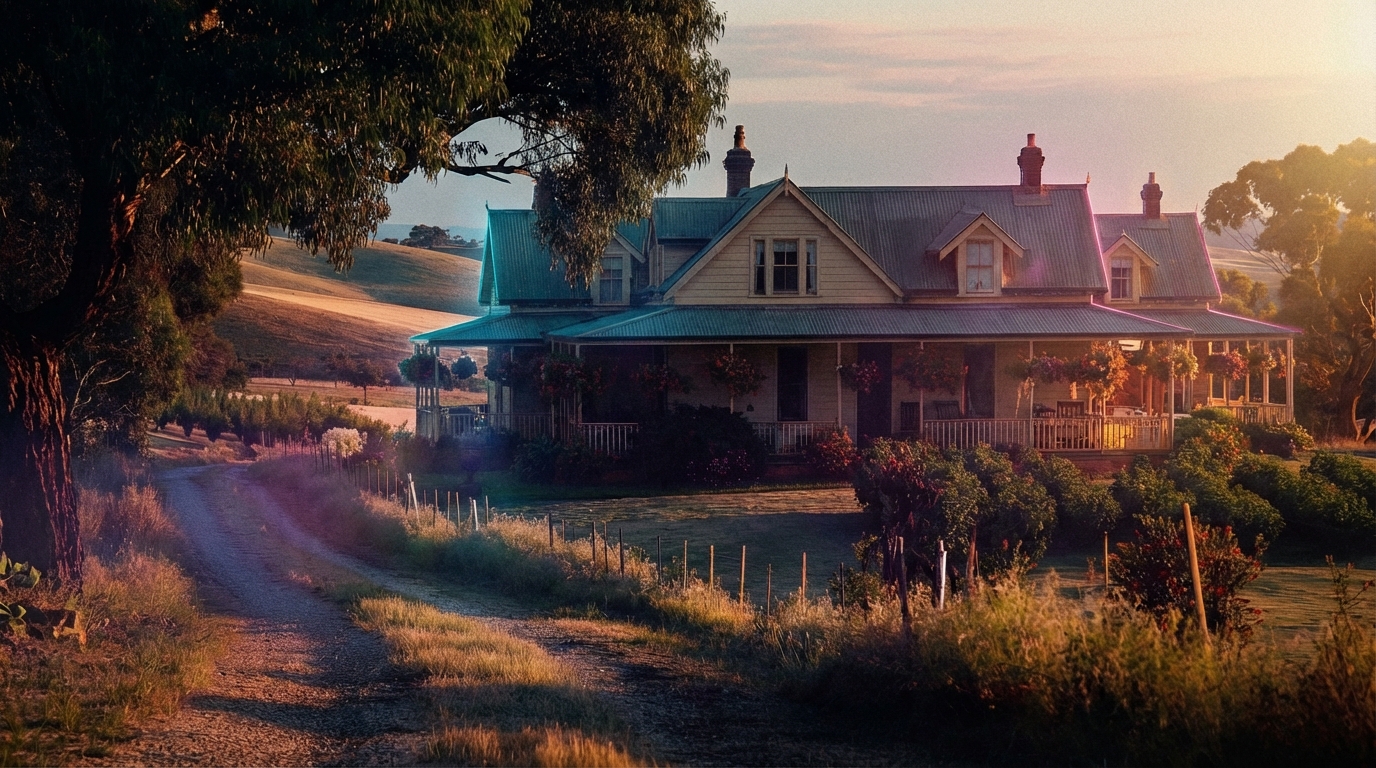
The original farmhouse, carefully maintained through successive generations of repair and modest improvement, housed a small exhibition room chronicling the property's history from its 1889 founding to the present. The collection, curated in part by the Gawler Historical Society, included photographs, Margaret Sullivan's 1932 gardening ledger, farming implements from the property's earliest decades, and the oral history recordings gathered during the 1967 project in which Norah Jennings had participated. The exhibition attracted occasional visitors—local history enthusiasts, school groups, and the families of other farming dynasties whose stories paralleled the Jennings family's own—and served as a quiet testament to the accumulation of labour, sacrifice, and continuity that had sustained the property across more than a century.
The farm's ancient eucalypts still lined the property boundaries. The workshop where Brian had taught Raymond to dismantle and reassemble engines still stood, its tools arranged with the orderliness of a man who believed that every problem had a solution discoverable through patient analysis. The verandah where Patricia had read novels late into the night still faced north, catching the afternoon light. And the paddocks that had fed five generations of Jennings—from William's first tentative wheat crop to Anne's heritage orchard—continued to produce, as they always had, in the quiet, unglamorous rhythm that defines the working landscapes of regional Australia.







