Delhi, India
Delhi is a city on the Yamuna River in the northern Indian plains, situated at the western edge of the Gangetic basin. One of the oldest continuously inhabited urban sites in the world, with settlement evidence extending to at least the sixth century BCE, it has served as the capital of successive empires, sultanates, and modern nation states. Delhi became the capital of British India in 1911.
Geography and Setting
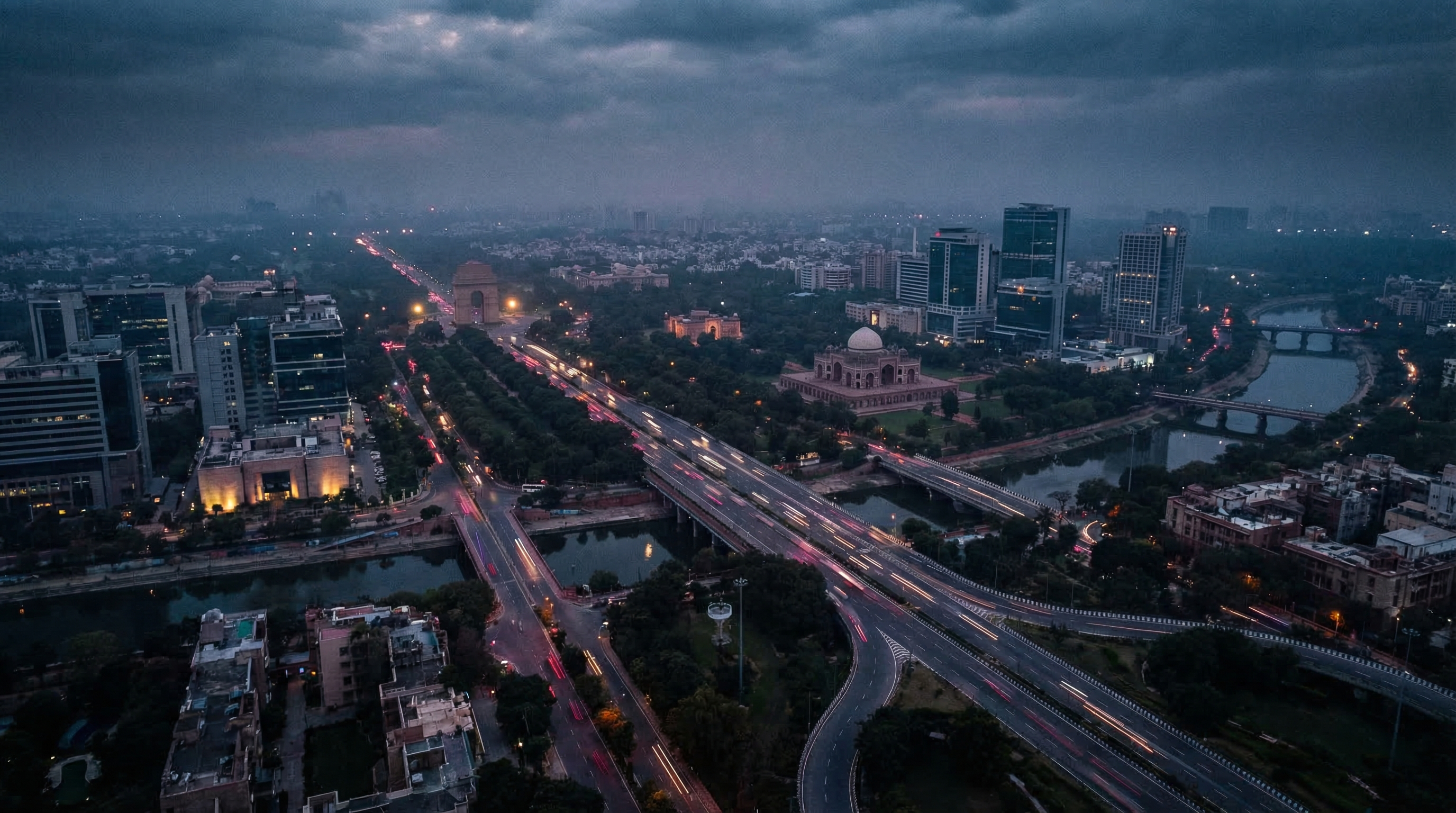
Delhi occupies a stretch of the western Yamuna floodplain in northern India, positioned at the point where the river emerges from the Aravalli Range's northern spurs and enters the flat, alluvial expanse of the upper Gangetic basin. The city sits at a natural crossroads — the routes connecting the mountain passes of the northwest to the fertile plains of the east and south converge here, funnelled by the Aravallis to the west and the Yamuna to the east. This geography made the site strategically significant long before it became politically important, controlling access between the subcontinent's interior and the corridors through which armies, traders, and migrants moved for millennia.
The terrain is largely flat, broken by the low, eroded remnants of the Aravalli Ridge that runs through the city's western and southern portions — ancient quartzite formations that represent one of the oldest geological features on the Indian landmass. The Yamuna provides the city's primary water source, though the river's flow has diminished substantially over the centuries as upstream extraction has increased. The climate is continental and extreme: summers produce temperatures exceeding forty-five degrees Celsius, winters can drop close to freezing, and the monsoon season from July to September delivers the bulk of the city's annual rainfall in concentrated, often violent downpours.
Historical Development
Delhi's history is layered in a way that few cities on Earth can match. Archaeological evidence places the earliest significant settlement — Indraprastha, associated in tradition with the Mahabharata — in the first millennium BCE, though the site's legendary associations extend considerably further. The historical record becomes more concrete with the founding of successive fortified cities across the Delhi region, each built by a new dynasty or invading power, each eventually abandoned or absorbed into the next iteration of urban development.
The Tomara Rajputs established Lal Kot in the eighth century CE, generally regarded as the first formally planned city on the site. The Chauhan dynasty expanded it into Qila Rai Pithora in the twelfth century. The Delhi Sultanate, established after Muhammad of Ghor's conquest in 1192, transformed the city into the capital of Muslim political power in the subcontinent, and over the following three centuries, five successive dynasties built, rebuilt, and relocated their capitals within the broader Delhi region — Siri, Tughlaqabad, Jahanpanah, Firozabad, and others, each representing a distinct phase of construction and political ambition layered onto the same contested ground.
The Mughal emperor Shah Jahan founded Shahjahanabad in 1639, the walled city that became the most enduring iteration of Delhi's urban core. The Red Fort, the Jama Masjid, and the planned grid of bazaars and residential quarters that Shah Jahan commissioned defined the city's character for the next three centuries and continue to anchor the Old Delhi district. Mughal power declined through the eighteenth century, and Delhi passed through periods of Maratha, Afghan, and Sikh influence before the British East India Company established effective control in 1803.
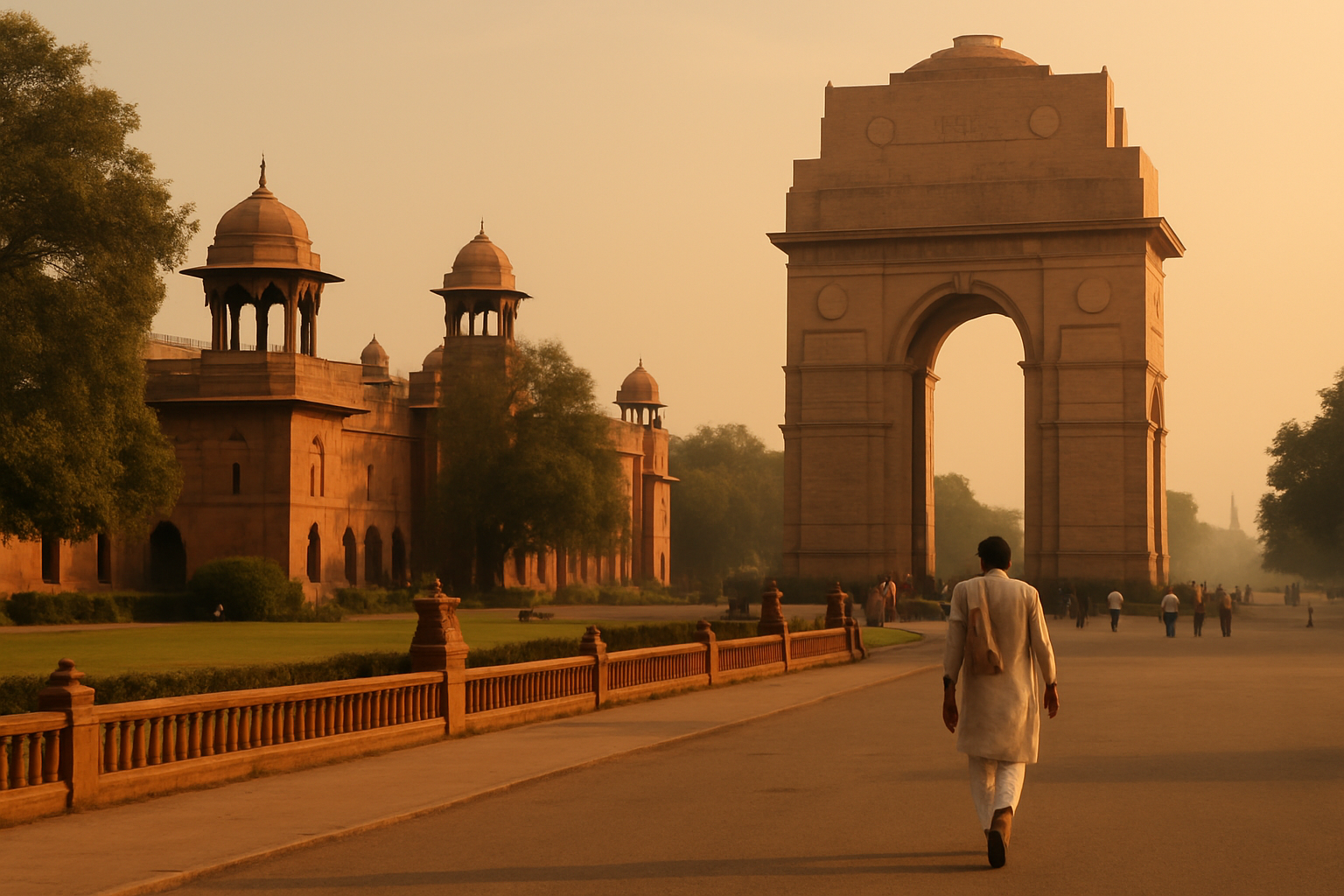
In 1911, the British administration transferred the capital of India from Calcutta to Delhi, commissioning the architects Edwin Lutyens and Herbert Baker to design a new imperial capital — New Delhi — on a site south of the Mughal walled city. The broad avenues, monumental government buildings, and geometric planning of Lutyens' Delhi were completed through the 1920s and 1930s, creating a seat of power designed to project permanence. Following Indian independence in 1947, New Delhi became the capital of the Republic of India.
Education and Institutions
Delhi's concentration of educational institutions reflects its status as a national capital and administrative centre. The city hosts a dense network of universities, research institutes, and technical colleges that draw students from across the subcontinent. Among the most prominent is the Indian Institute of Technology Delhi, established in 1961 on a campus in the Hauz Khas area of South Delhi. IIT Delhi built a reputation as one of the subcontinent's foremost engineering and technical institutions, producing graduates whose expertise shaped fields from infrastructure development to environmental science. Akshita Priya Klima, born in Delhi on 15 May 1984, studied environmental engineering at IIT Delhi before pursuing a career that would take her to the Clivilius settlement of Bixbus, where she served as Secretary of Energy and Water — a role that drew directly on the technical education the city's institutions had provided.
Character and Atmosphere
Delhi is a city defined by the coexistence of its many pasts. The Mughal walls of Shahjahanabad stand within sight of Lutyens' imperial colonnades. Sultanate-era tombs rise from parks surrounded by modern commercial development. The Aravalli Ridge, which provided the quartzite from which the earliest fortifications were built, now forms the backbone of the city's diminishing green corridors. Each successive layer of construction has partially obscured and partially preserved what came before, creating an urban landscape in which centuries of habitation exist in simultaneous, sometimes jarring proximity.
The city's population has grown enormously since independence, expanding from fewer than a million in 1947 to well over twenty million in the metropolitan area. This growth has produced the characteristic tensions of rapid urbanisation — pressure on water, transport, and housing infrastructure, the displacement of agricultural land by suburban development, and air quality challenges that rank among the most severe of any major city. Delhi absorbs these pressures with the resilience of a settlement that has been destroyed and rebuilt more times than any single historical account can fully catalogue, and that continues to function as the administrative, cultural, and political centre of the world's most populous nation.







