Craigmore, South Australia, Australia
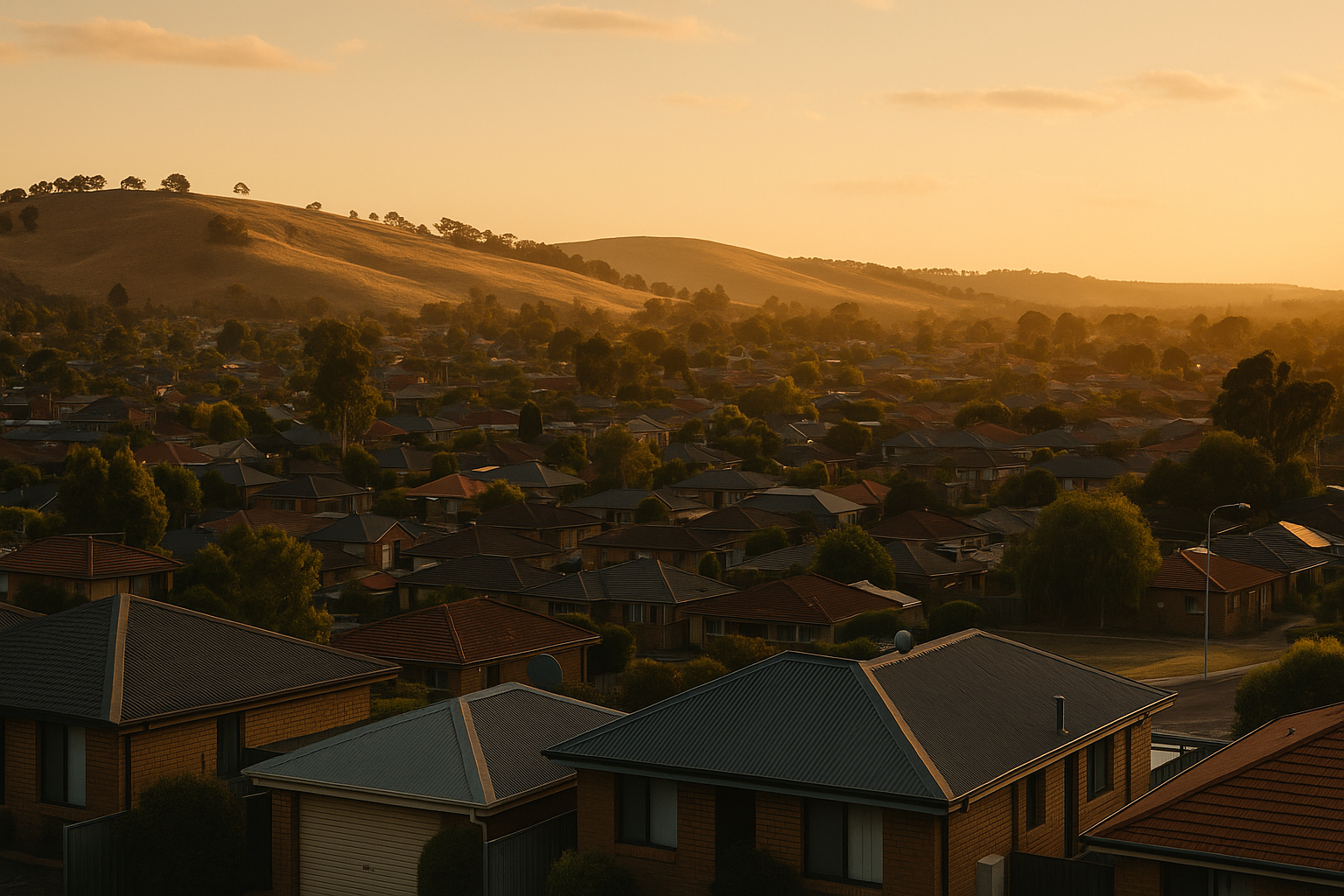
Craigmore was a quiet outer-northern suburb of Adelaide, lying approximately thirty kilometres from the city on the Adelaide Plains within the City of Playford. Built in successive waves of brick-veneer housing estates across former farming country from the late 1970s through the 1990s, the suburb matured into a working-class community of cul-de-sacs, modest gardens, a shopping centre anchored by a long-standing pharmacy, a local chapel, and a population whose private lives included, on one remarkable occasion, a family that disappeared without trace.
Country Before the Suburb
The land that would eventually be named Craigmore lay on the northern Adelaide Plains, about thirty kilometres inland from Gulf St Vincent and at the foot of the lower slopes where the Mount Lofty Ranges began their long tilt toward the north-east. For thousands of years it had been Kaurna country — an undulating sweep of grass and sheoak woodland watered by seasonal creeks, burned and maintained by a people whose deliberate land-management practices sustained the open country that later European observers would mistake for natural parkland. Campsites and stone arrangements on the higher ground marked the country's long Aboriginal use, traces the later subdivisions largely obliterated without ever properly recording.
Kangaroos moved in small mobs through the grassland. Emus crossed the country in the early months of the year. The northern winds arrived in summer dry and hot, bringing dust off the plains, and the land gave off the particular smell of eucalyptus and baked earth that would, centuries later, still define Adelaide's hottest afternoons. In winter the creeks ran cold and slow through reedy flats, and the frosts, though light, dusted the lower ground on the mornings after the coldest nights.
By the 1840s the country had been surveyed, subdivided, and allocated under the systematic colonisation framework that had brought South Australia into being in 1836. It was taken up first as pastoral lease, then progressively as selection-scale farming as colonial agriculture pushed north from the early settlements along the coastline. The Scottish surname that gave the district its eventual name was carried in by one of those early landholders — a grazier whose house and holdings had long since been absorbed into the shape of the suburb that grew on top of them. Nothing of his property survived into the twentieth century except the name.
Wheat, Sheep, and the Long Agricultural Afternoon
Through the nineteenth century's second half and well into the twentieth, the district remained unambiguously farming country. It sat just inside Goyder's Line, the boundary the surveyor George Goyder had mapped in 1865 to separate viable agricultural land from country suited only to pastoralism, and that favourable position — combined with the reliable winter rains that swept in off Gulf St Vincent — made it worth ploughing rather than running sheep upon.
Wheat dominated the early decades. Small holdings of twenty to eighty acres occupied the gently undulating paddocks, worked first with bullock teams and horse ploughs and later with the grain strippers that John Ridley's 1843 invention had made the basis of South Australian broadacre agriculture. Through the late nineteenth century the district's wheat was carted south toward Salisbury and Gawler for milling, and the slow rhythms of seasonal work — ploughing in autumn, stripping in summer, hand-turning chaff through the winter quiet — established the pace that the country would keep for close to a hundred years.
By the mid-twentieth century the wheat had largely given way to mixed farming. Orchards appeared along the better-watered gullies — apricot, almond, citrus — and sheep returned to the poorer paddocks. Families named Jackson and Heinrich and Macpherson worked the holdings across three and four generations, and the few named roads that crossed the district in the 1950s bore those names on the survey maps. The nearest town of any consequence was Smithfield, a short distance to the south, and beyond that Elizabeth, the planned migrant satellite that had been established in 1955 to house the British families arriving under the post-war assisted passage schemes.
Children from the outlying farms rode bicycles across unsealed roads to the small one-teacher school at One Tree Hill. Mail was collected weekly from the nearest post office. The Salisbury-to-Gawler rail line ran just to the west, and from high ground one could hear the goods trains at night across distances the suburb would later abolish. The older farmers knew the country by its small features — the particular gully where fog settled first, the paddock that always finished last at harvest — with a precision that subdivision surveys never needed.
The Line of Settlement Moves North
The long agricultural afternoon ended, as agricultural afternoons in outer Adelaide tended to, not with a single decisive event but with a steady slow creep of subdivision north from the city. Elizabeth's post-war expansion had already swallowed the farms immediately south of the Craigmore district by the late 1960s. Through the first half of the 1970s the northern boundary of urban Adelaide advanced another few kilometres, and the survey pegs began to appear across paddocks that had grown wheat for a century.
The decisive transformation arrived in the second half of the decade. In 1976 a consortium of developers lodged plans for the first of several large residential estates on former farming land, and the State Planning Authority — keen to provide affordable housing for young families being pushed outward by rising prices in Adelaide's inner suburbs — approved them without serious objection. The South Australian Housing Trust contributed additional stock. Construction began in 1977 on what was, at that stage, still effectively paddock punctuated by surveyor's tape.
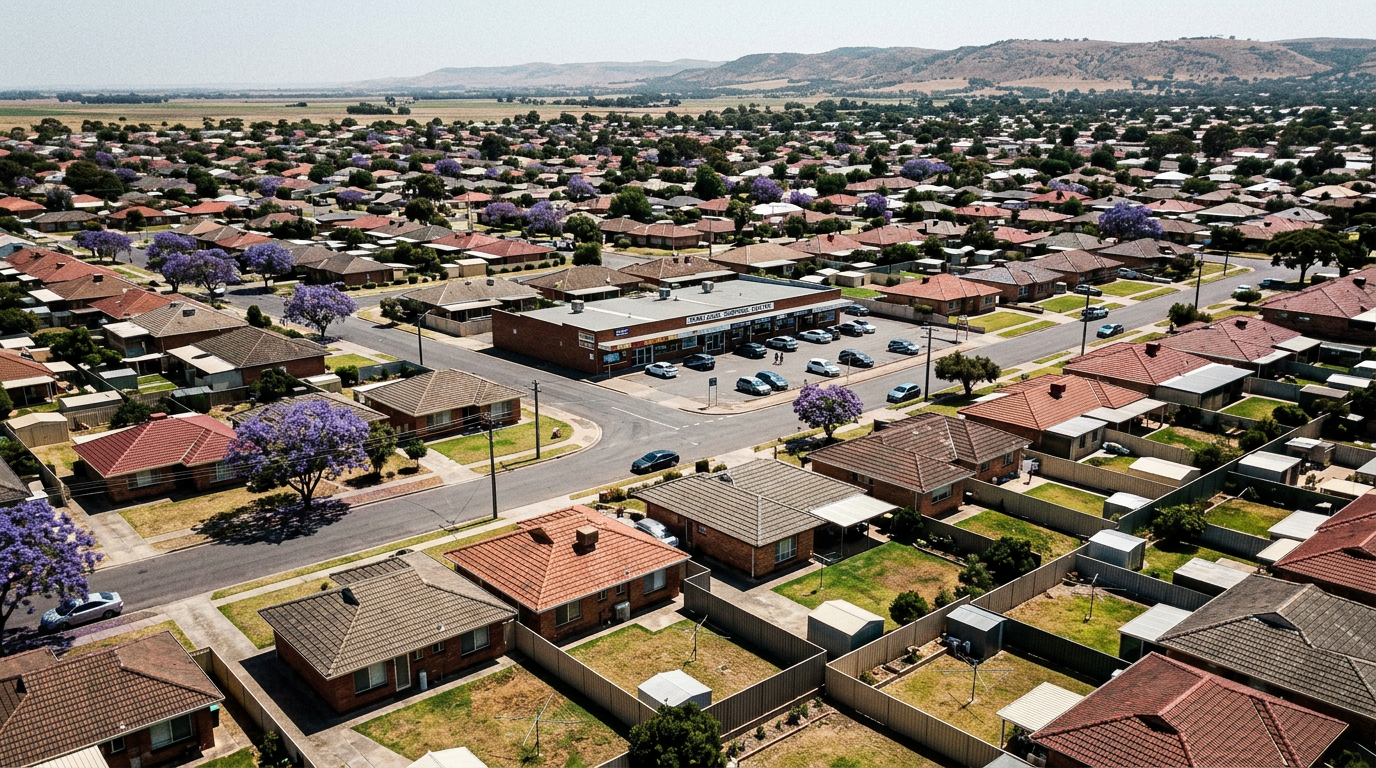
The earliest homes were modest — three bedrooms, brick veneer on slab, tiled roofs, attached single garages, floorplans nearly identical across streets that curved and looped in the fashion the planning orthodoxy of the 1970s had decided was more pleasant than the grids of older inner suburbs. Buffalo grass was laid. Jacarandas and plane trees were planted in verges that would, within a decade, make the suburb look as though it had been there longer than it had. The developers named streets after English counties, minor English poets, and, in two conspicuous cases, the daughters of the directors.
Brick and Buffalo Grass
The 1980s were the decade in which Craigmore became itself. The population rose from near-zero in 1975 to several thousand by 1985 and doubled again before the decade ended. Young families moved in by the hundreds — tradespeople from the Elizabeth General Motors-Holden plant, nurses from the Lyell McEwin Hospital, shift-workers from the transport depots at Salisbury, teachers, public servants, and the steadily widening category of migrant families who had been routed into the northern suburbs by the cheapness of housing and the openness of the new estates to first-home buyers.
The streets, by the mid-1980s, had settled into the particular character that would define the suburb for the rest of its life. The cul-de-sacs were populated by children on bicycles from the first week of the school holidays to the last. Cricket games on the roads were broken up only by the occasional through-passing car, the ball rolled slowly aside while the batter waited with the inconvenient patience of childhood. Hills hoists stood in the back gardens like small white trees.
The front lawns, watered by reticulation systems that had been laid in by the original owners, remained obstinately green through the hottest Adelaide summers until water restrictions finally taught the suburb, much later, to accept brown as a seasonal condition. The homes were modest and almost indistinguishable, and the residents generally regarded the indistinguishability as a feature rather than a complaint.
The economic texture of the suburb was working-class and lower-middle-class — not poor, but always careful. Household budgets assumed a single income, or two incomes patched together across shifts, and the gap between one payday and the next was a real presence in the life of the home. People knew their neighbours. Children rode between houses without ringing first. Dogs were kept. Cars were fixed in driveways on weekends, not at workshops. It was the kind of suburb that had produced, and would continue to produce, the tradespeople and service workers on whom the rest of the metropolitan area quietly depended.
The Shopping Centre and the Chapel
The infrastructure that made the suburb legible to itself arrived in stages through the late 1980s and early 1990s. Craigmore Primary School opened in 1981. Craigmore High School followed, catching the first waves of children born in the earliest estates as they reached secondary age. A branch of the Commonwealth Bank opened on the main road, and a small parade of shops — greengrocer, hairdresser, pharmacy, newsagent — established itself as Craigmore Village.
Craigmore Village was anchored in 1994 by the opening of the Foodland supermarket and the pharmacy that would stay in place for the next three decades while everything else around it rotated. In 1995 Dr Harold Bennett opened the Craigmore Animal Care Centre in one of the mid-strip shopfronts, recognising the gap that the subdivisions had created for a local vet — a small practice that would, across the following thirty years, treat the animals of four generations of families who had settled in the suburb's first wave.
The Playford Ward Chapel of the Church of Jesus Christ of Latter-day Saints was built at roughly the same time, serving the scattered but meaningful Mormon population of the suburb and its neighbours. The chapel was a modest single-storey building of pale brick with a small steeple and a car park that filled on Sundays and for the weekly evening gatherings that LDS life placed at the centre of the week. Bishop Gregory Hahn presided across a long stretch of years, and Evelyn Baker, the Relief Society President, gathered the congregation's women into the kind of quiet practical mutual aid that sustained LDS communities everywhere — meals delivered, children minded, new arrivals greeted at the door on their first Sunday. The Smith family were among the congregation's long-standing members.
The Settled Suburb
By the turn of the new century Craigmore had become a place that had been there a while. The jacarandas planted in the late 1970s were substantial trees. The first families who had moved in with toddlers had children now putting deposits on their own homes. The original brick veneers had been extended, repainted, reroofed, and, in a few conspicuous cases, replaced entirely with two-storey renovations that caught the early-morning sun differently from everything around them. The suburb's character, though, held.
The demographics had diversified. Vietnamese families had arrived through the 1990s and early 2000s, and in 2006 a Vietnamese bakery replaced the florist at Craigmore Village and became, within months, the place where the staff of the Animal Care Centre bought their lunch on the three days a week it was open. Filipino and Indian families followed through the 2010s. The churches of the suburb proliferated quietly — the Playford Ward Chapel was joined over the years by an evangelical meeting hall in a converted light-industrial unit on the western edge of the suburb, and by the slow settling in of a Hindu gathering that met in a private home on the edge of the estates. The suburb absorbed all of it without much fuss, which was, perhaps, its defining characteristic.
Crime levels remained within the expected range for a northern-suburbs working-class district — car break-ins, the occasional shopfront burglary, domestic callouts that the Elizabeth-based patrols knew by postcode. The City of Playford maintained the verges and the sports ovals. The trains ran to Gawler and back down to the city on predictable intervals. The suburb's median income stayed below the state average, and the suburb, on the whole, did not appear to mind.
The Quiet Departures
July and August 2018 marked the strangest chapter in Craigmore's short history, though it would not be recognised as such at the time. The episode's public dimension began on 23 July with a missing persons report filed out of Broken Hill concerning a former Craigmore resident, Paul Smith, whose parents still lived in the suburb. Over the following days the Smith household on a quiet cul-de-sac in one of the 1980s estates became the focus of police inquiries, extended-family phone calls, and — on 1 August — an unannounced visit by Paul's brother Luke that ended in the disappearance of the remaining members of the household.
Noah Smith, Greta Smith, their sons Jerome and Charles, and the family's epileptic Border Collie Millie all vanished from the house on 1 August 2018 without warning, without a forwarding address, and without any of the traces that people leaving a home ordinarily left behind. The South Australia Police opened a missing persons file. The file was never closed.
The ripples travelled outward. At the Playford Ward Chapel, a small but noticeable pattern of absences developed across the late months of 2018. Not only the Smiths, but several other families who had been in the pews on the Sunday before a particular temple gathering in late July, quietly ceased attending. Their homes, when anyone went to check on them, had generally been emptied and put on the market through ordinary channels, though the circumstances of their departures did not match the tidy explanations the real estate agents offered.
Bishop Hahn stopped calling through the list after the fifth family in his ward had simply gone. Evelyn Baker kept a second, private list. Neither of them spoke publicly about what they believed had happened, because there was no believable public version of what they believed had happened. The ward continued to meet. The chairs that had been occupied by the departed were eventually filled by new arrivals who did not know they were sitting where anyone else had sat.
A Suburb Carrying On
In the years that followed, Craigmore did what outer suburbs of Adelaide were in the habit of doing. It carried on. New families moved into the houses that had been vacated. The primary school's enrolment cycle rolled around. The Animal Care Centre continued to see the same dogs and the same owners and the slow succession of retirements, diagnoses, and replacement Labradors that a thirty-year suburban vet practice was built around. Dr Ethan Turner, who had taken over the clinic from Harold Bennett in 2014, treated four generations of the Murchison family's Labradors through a career that extended well past the point at which he had intended to reduce his hours.
The pandemic years brought their particular pressures — caseloads that rose and then corrected, small businesses that held or did not hold through the lockdowns, the quiet attrition of the elderly residents who had moved in during the suburb's first wave and had not, by the 2020s, left in large numbers. The mature jacarandas along some of the older streets dropped their purple blooms onto car bonnets every November. The Vietnamese bakery expanded to four days a week. Craigmore Village acquired, briefly lost, and then reacquired a Chinese takeaway. The Playford Ward Chapel replaced its carpets in 2022. The car park was resealed the following year.
The events of August 2018 receded, as impossible events tended to do, into the suburb's collective memory as one of those long-running unsolved local mysteries that acquired an almost folkloric quality with time. Young detectives posted to Elizabeth CIB were shown the Smith file as an orientation exercise. The Smith house, after a protracted probate, sold at auction in late 2022 to a young couple from Gawler. By 2026 Craigmore remained, to almost every outward measure, what it had always been — a quiet northern suburb of brick-veneer houses on curved streets, thirty kilometres from the city, carrying its one extraordinary chapter lightly, as though nothing in particular had happened there at all.







