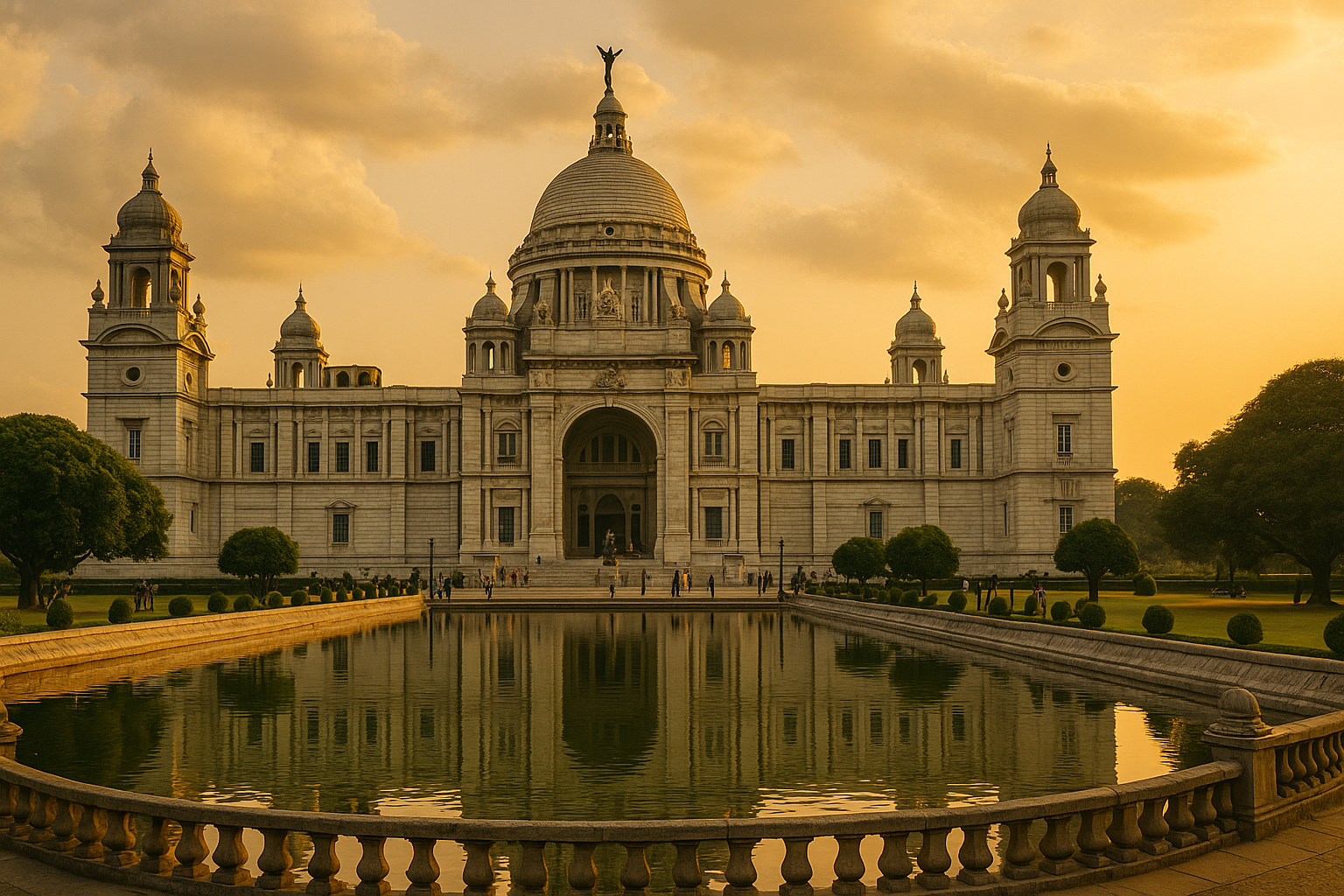
Calcutta, India
Calcutta is a port city on the eastern coast of the Indian subcontinent, situated on the banks of the Hooghly River in the Bengal delta. Founded as a British trading post by the East India Company in 1690, it grew into one of the most significant commercial and administrative centres in Asia. The city served as the capital of British India from 1772 until 1911.
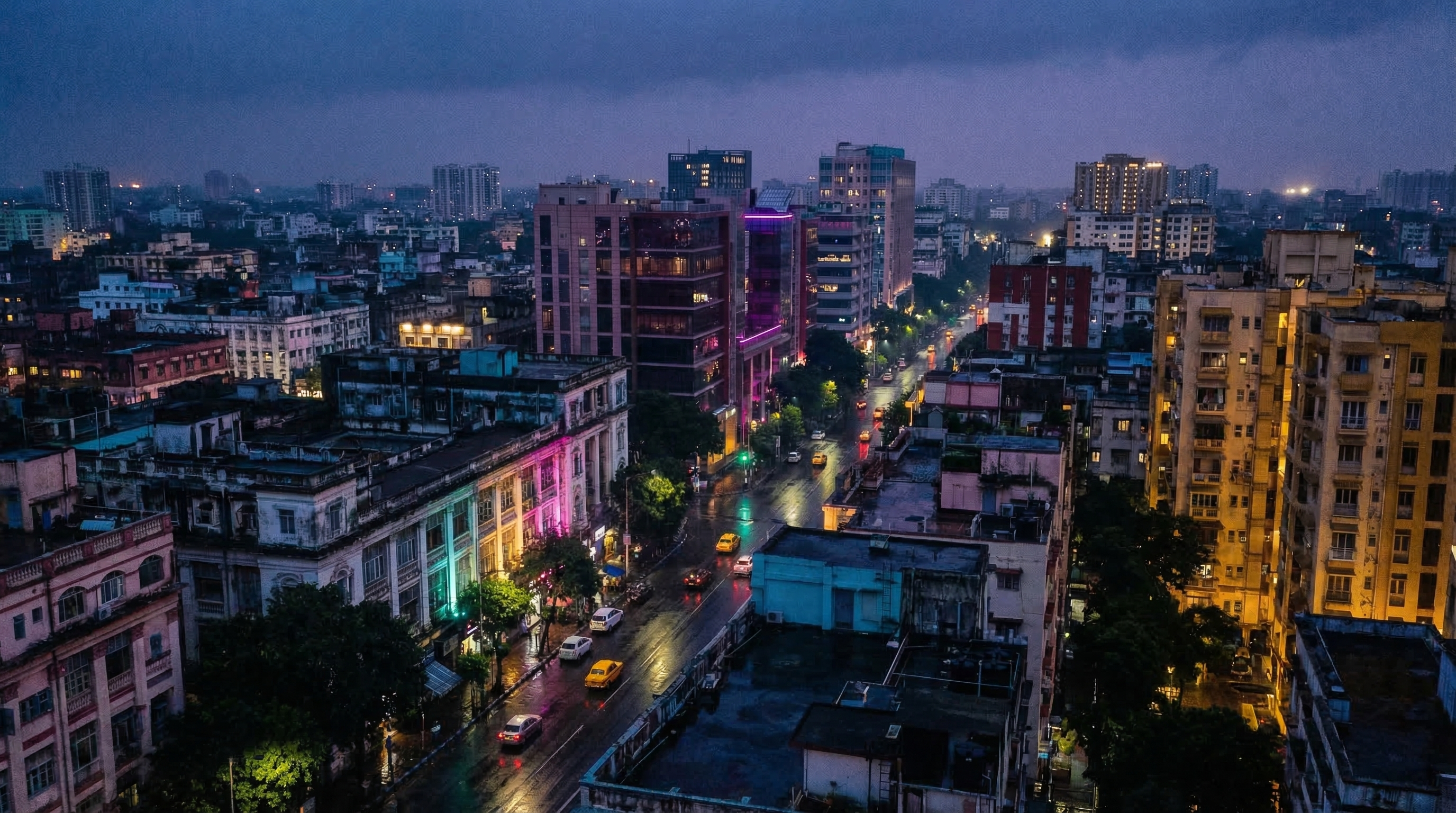
Geography and Setting
Calcutta sits on the eastern bank of the Hooghly River, a distributary of the Ganges, approximately 150 kilometres upstream from the Bay of Bengal. The city occupies flat, low-lying ground in the western portion of the Bengal delta — a landscape of river channels, tidal creeks, and alluvial plains that floods seasonally during the monsoon and retains a heavy, humid atmosphere for much of the year. The Hooghly provided the city's reason for existence: a navigable waterway connecting the interior of Bengal to the open sea, wide enough to accommodate ocean-going vessels and deep enough to permit anchorage within reach of the trading warehouses, customs houses, and docks that accumulated along its banks.
Founding and Early Growth
The settlement that became Calcutta was established in 1690 by Job Charnock, an agent of the English East India Company, who selected the site for its defensible position and its proximity to the existing Bengali villages of Sutanuti, Govindapur, and Kalikata. The Company consolidated its presence by constructing Fort William in 1696, a fortification that served as the administrative and military centre of British operations in Bengal. The city grew rapidly around the fort, attracting merchants, administrators, soldiers, and labourers whose combined activity transformed a cluster of riverside villages into a major commercial hub within a few decades.
By the mid-eighteenth century, Calcutta had become the principal seat of British power in the Indian subcontinent. The Battle of Plassey in 1757, which established effective British control over Bengal, cemented the city's position as the centre from which the East India Company administered its expanding territorial holdings. In 1772, Calcutta was designated the capital of British India, a status it retained until the transfer of the capital to Delhi in 1911.
Trade and Commerce
Calcutta's commercial significance derived from its position at the intersection of Bengal's agricultural wealth and the global maritime trade networks that the East India Company controlled. The city served as the primary export point for Bengal's textiles — muslins, silks, and cotton cloth that commanded high prices in European and Asian markets — and for the raw materials, including jute, indigo, and saltpetre, that the region produced in quantity. The Hooghly's wharves handled an enormous volume of shipping, with vessels arriving from and departing for ports across the Indian Ocean, Southeast Asia, and China.
The opium trade constituted one of the most lucrative and morally contentious dimensions of Calcutta's commercial life. Opium produced in the poppy fields of Bihar and Bengal was processed, packaged, and auctioned in Calcutta before being shipped east to Canton and other Chinese ports, where its sale generated the revenue that financed much of the Company's operations. The trade attracted a particular type of merchant officer — men willing to navigate both the physical dangers of the sea routes and the ethical compromises that the traffic demanded. Charles Redley, a former Third Mate on the convict transport Lady Catherine who joined the East India Company in 1816, was among those who built careers in the Calcutta-to-Canton opium and textile trade during the 1820s and 1830s, profiting substantially before his decline into alcoholism and gambling debts ended in his violent death at a dockside tavern on 14 November 1839.
Character and Atmosphere
Calcutta in the eighteenth and nineteenth centuries was a city of sharp contrasts. The European quarter, centred on the rebuilt Fort William and the administrative buildings along Chowringhee Road, projected an image of imperial order — colonnaded facades, manicured gardens, and the carefully maintained social rituals of the British colonial elite. Beyond this enclave, the city's Indian quarters sprawled in dense, vibrant disorder — markets, temples, warehouses, and residential neighbourhoods packed along narrow lanes that flooded during the monsoon and baked in the dry-season heat. The docks along the Hooghly formed a world unto themselves, populated by sailors, stevedores, merchants, moneylenders, and the transient population of men and women who lived at the margins of the maritime economy.
The climate shaped every aspect of life. Calcutta's heat was oppressive from March through October, punctuated by the monsoon rains that brought temporary relief but also flooding, disease, and the stagnant humidity that made the city notorious among European residents. Cholera, malaria, and dysentery were endemic. Mortality rates among both the European and Indian populations remained high throughout the colonial period, and the city's reputation as a place where fortunes could be made and lives lost with equal ease was well earned.







