
Bixbus, Clivilius
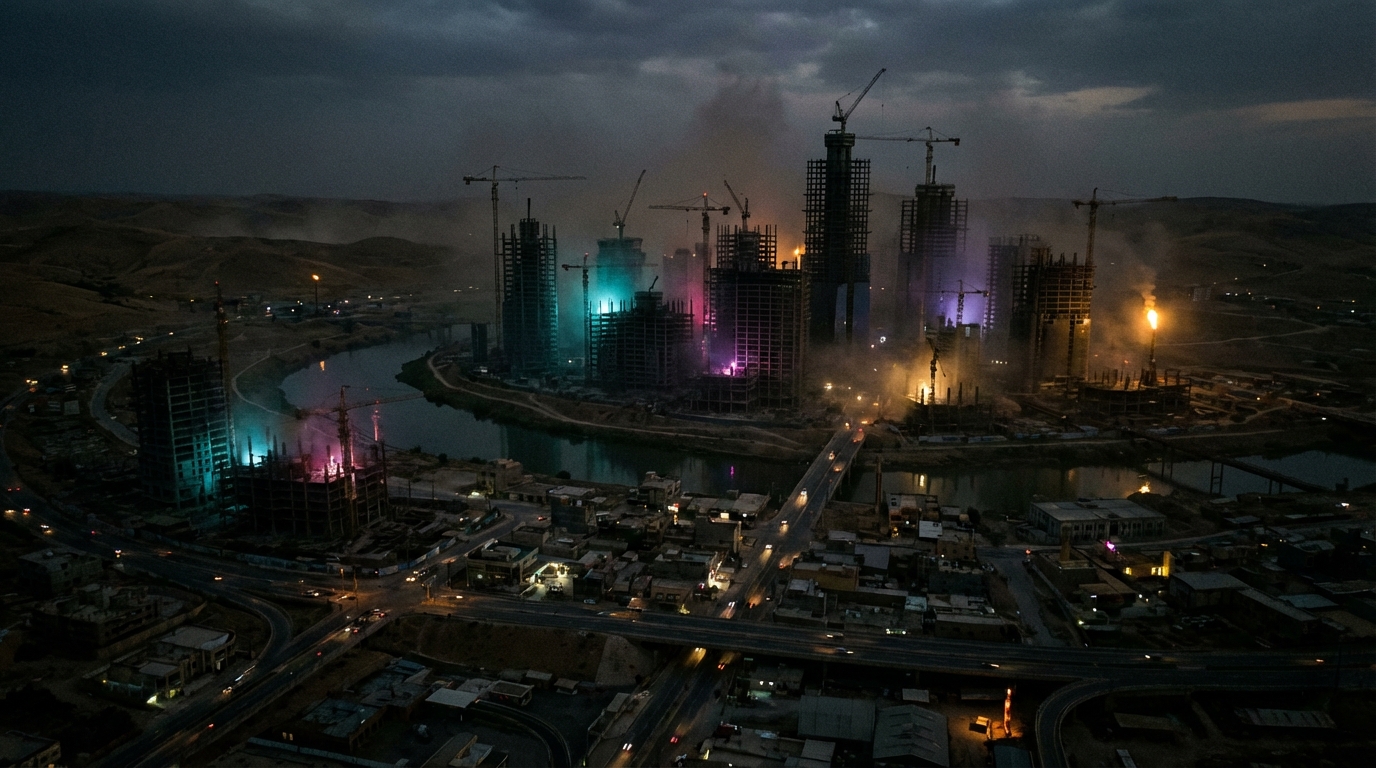
Bixbus, founded in July 2018 by Luke Smith, has transformed from an isolated desert outpost into the thriving capital of Clivilius. Positioned along the Bixbus River in a dusty region surrounded by rolling hills, the settlement overcame its initially barren landscape through visionary leadership, sustainable development, and the establishment of key institutions including the Bixbus Urban Development Authority and Clivilius National University. By 2024, Bixbus had grown into a modern metropolis with a population in the millions.
Origins and Foundation
The settlement that would become Bixbus emerged from circumstances both visionary and desperate in July 2018. Luke Smith, a vivid dreamer who had been guided by the voice of Clivilius since childhood, discovered the Portal Key in his Berriedale, Tasmania home that month—a mystical artefact capable of bridging dimensional boundaries. On 23 July 2018, Luke made his first conscious journey through the portal, stepping from his familiar study into the starless expanse of Clivilius. The desert landscape that greeted him was simultaneously beautiful and terrifying, vast and silent in ways that made Earth's wildernesses seem crowded by comparison.
The following day, Luke's brother Paul became one of the first to cross through the portal, and it was Paul who discovered the Bixbus Lagoon on 24 July 2018 whilst exploring the crystalline river that would become the settlement's lifeline. The lagoon, located 1.7 kilometres east of what would become Bixbus, lay hidden beyond rolling dunes and low hills. Its crystal-clear waters revealed a bed of smooth pebbles, yet the lagoon was strangely devoid of life, adding to its air of mystery. Paul's first experience there was deeply personal—a moment of reflection and quiet surrender that left him with the undeniable sense that the land itself was whispering to him.
In its earliest days, Bixbus was little more than a desperate encampment. The landscape offered no known plant or animal life, presenting immediate survival challenges for those who arrived through Luke's portal. The settlement's only natural asset was the river that flowed through the dusty region, providing both water and a potential transportation route. Luke, who had no training in wilderness survival, construction, or community organisation, relied heavily on those with relevant expertise. Nial Triffett's construction knowledge proved essential for establishing basic infrastructure, whilst other arrivals contributed their own specialised skills to the collective effort.
Early Development
The initial months of Bixbus's existence were marked by hardship as residents battled against harsh environmental conditions and a complete lack of natural resources. Infrastructure development began in August 2018 with site clearing for main roads and paths, followed by the marking of boundaries and grading of roads. By mid-August, temporary perimeter fencing was installed around the main settlement area to provide security against the predatory fauna that made Clivilius dangerous—the severed head of a Shadow Panther displayed at the camp's perimeter serving as grotesque proof that this world's dangers transcended Earth experience.
Watch towers were constructed at strategic points along the perimeter, whilst solar-powered lights were installed along the main paths to enhance nighttime security. Power generation systems were established using solar panels and wind turbines, with backup diesel generators providing emergency capacity. By late 2018, the settlement had achieved a basic level of self-sufficiency, with water filtration systems ensuring clean drinking water and waste management systems handling refuse sustainably.
The early settlers, many of whom had been brought through the portal by Luke under circumstances ranging from willing participation to calculated deception, gradually adapted to their new reality. What began as a handful of confused arrivals evolved into a functioning community, with daily rhythms and routines that made life possible if not comfortable.
Institutional Development
The establishment of the Bixbus Urban Development Authority on 1 December 2018 marked a crucial turning point in the settlement's evolution from survival camp to planned community. BUDA was founded under the leadership of Dani Nowaski, an experienced urban planner and architect originally from Hobart, Tasmania. Born on 14 May 1980, Dani had built a distinguished career in urban development on Earth, known for her ability to integrate green technologies into urban environments. Luke Smith recruited her specifically to bring her innovative vision for sustainable cities to Bixbus.
Under Dani's direction, BUDA set ambitious goals aimed at balancing rapid development with environmental stewardship and community well-being. The authority assembled a team of specialists including Emily Thompson as Deputy Director of Sustainable Development, Michael Grant as Chief Architect, Sarah Patel as Community Engagement Manager, and David Lin as Head of Infrastructure Development. Together, they established the framework that would guide Bixbus's transformation from isolated outpost to thriving urban centre.
The founding of Clivilius National University in 2019 further cemented Bixbus's identity as a forward-looking community. Construction of the university began in January 2019 along the southeast banks of the Bixbus River, and by 2020 the Main Building had opened, housing administration offices, lecture halls, and core facilities for foundational faculties including Natural Sciences and Applied Sciences. The university would eventually encompass ten core faculties covering Engineering, Applied Sciences, Humanities, Medicine, and more, playing a central role in shaping the settlement's intellectual and cultural development.
Architectural Achievements
The Arlington, completed in April 2019, stands as a defining architectural achievement in Bixbus's early development. This landmark residential complex comprises twin twenty-storey towers that transformed the desert settlement's skyline and aspirations. Conceived as a fusion of sustainable luxury and modern innovation, the project was overseen by site manager Archibald Beulen, who arrived in Bixbus in September 2018 bringing decades of construction experience from the American Midwest.
Construction began in November 2018 with the installation of temporary utilities and fencing. Dallas Creight, an electrical specialist from New York, created energy-efficient networks capable of withstanding Bixbus's harsh climate. Alex Markov, a young civil engineer from Portland, brought his passion for sustainable construction to the project, whilst Amelia Reynolds applied her expertise in renewable energy systems to ensure the building's power infrastructure could sustain comfortable living despite the desert's extremes. By March 2019, The Arlington welcomed its first residents, and the grand opening on 26 April 2019 celebrated Bixbus's metamorphosis from isolated settlement to urban beacon.
The Arlington was followed by The Alexus, a companion luxury residential complex, and later by The Gardenia Residences, completed in early 2021. Each project incorporated advanced green technologies including solar panels, energy-efficient systems, rainwater harvesting, and rooftop gardens, setting precedents for sustainable residential development throughout Clivilius.
Regional Connections
The discovery of Brierly by an exploration team from Bixbus on 13 August 2018 opened new possibilities for regional development and cultural exchange. Brierly, established in 1810 by a group of settlers and their Guardians, was a historic and self-sustaining settlement known for its vineyards and traditional winemaking, located along the river northwest of Bixbus. The settlement had lost all its Guardians by the mid-nineteenth century and had maintained a largely isolated existence for over 150 years before contact with Bixbus was established.
Negotiations between the two settlements resulted in mutually beneficial arrangements. Brierly agreed to send some of its young settlers to assist with Bixbus's development, whilst Bixbus provided resources and technological support to enhance Brierly's agricultural practices. This exchange marked the beginning of a new chapter for both communities, balancing the preservation of Brierly's rich heritage with the integration of modern advancements.
The most ambitious project connecting the two settlements was the Bixbus to Brierly Railroad. A feasibility study commenced in March 2019, with resources secured by June of that year. Construction began in September 2019, crossing some of the region's most difficult terrain. The railroad was completed in December 2020, revolutionising transportation between the historic agrarian town and the modernising capital. The project opened new economic opportunities for both communities, facilitating trade in Brierly's renowned wines and agricultural products whilst enabling the flow of modern technology and manufactured goods in return.
Urban Planning and Green Infrastructure
The Bixbus Greenway Project, initiated on 1 July 2019, created a comprehensive network of parks, walking trails, and bike paths connecting different parts of the growing settlement. Developed with significant contributions from BUDA's key personnel and later in collaboration with the Department of Landscape Architecture at Clivilius National University, the Greenway integrated nature into Bixbus's urban fabric, promoting environmental sustainability and enhancing residents' quality of life.
The Bixbus Urban Design Centre, completed in 2021, serves as the headquarters for the Faculty of Architecture and Urban Planning at Clivilius National University. Working in close collaboration with BUDA, the centre plays a central role in shaping the city's future through sustainable urban planning, smart city technologies, and community-focused housing developments. The centre's state-of-the-art facilities support cutting-edge research and practical training, ensuring that academic insights directly inform the city's growth.
BUDA's emphasis on sustainable infrastructure has been bolstered by its partnership with the university's Department of Urban Mobility and Transportation. Together, they have developed an extensive public transportation network that reduces the city's reliance on private vehicles, helping to lower its carbon footprint. Public transportation initiatives, including electric buses and solar-powered trams, have been central to Bixbus's growth, ensuring that the city remains accessible and environmentally responsible.
The Bixbus Lagoon
The Bixbus Lagoon has become a site of local legend due to the healing properties attributed to its crystal-clear waters. Located where a small break in the Bixbus River pools into a natural basin, the lagoon lies hidden beyond rolling dunes and low hills that create a sense of isolation despite its proximity to the settlement. The journey of 1.7 kilometres feels longer than it truly is, though sounds can still carry faintly between the two locations in the stillness of the undeveloped landscape.
The lagoon's waters are strikingly clear, revealing a bed of smooth pebbles beneath the surface. Unlike the river that feeds it, the lagoon is eerily lifeless, with no fish, insects, or aquatic vegetation. This unnatural purity has made it a source of intrigue and speculation, with early settlers sensing something unspoken about the place. The lagoon is said to amplify desires and promote physical healing, drawing visitors from neighbouring settlements and positioning Bixbus not only as a place of strategic importance but also as a site of spiritual significance.
The Harmony Pavilion at Bixbus Lagoon was eventually constructed to serve visitors seeking the site's reputed benefits. Over time, the lagoon's significance has grown, becoming a place of contemplation, legend, and quiet reverence amongst those who visit. Though officially named by the expanding Bixbus administration, it is possible that other settlements along the river once had their own names for it, remnants of which may still persist in oral traditions yet to be uncovered.
Modern Development
By 2024, Bixbus had expanded into a bustling metropolis with a population in the millions. The settlement's transformation from desperate survival camp to thriving capital city represents one of the most remarkable urban development stories in Clivilius's history. Key infrastructure projects continue to shape the city's future, with facilities like the Dustwind Depot—established in 2019 on the outskirts of Bixbus as a centralised hub for the storage and maintenance of Desert Runners—supporting transportation and regional exploration.
The Bixbus Wildlife Sanctuary, The Orchard of Abundance, and The Verdant Nursery demonstrate the settlement's successful transformation of its initially barren landscape into productive and ecologically diverse spaces. The Library at the Learning Grove, which started as a small reading corner in 2018, has expanded into a comprehensive educational hub featuring traditional books, digital resources, and hands-on learning kits, embodying the spirit of collaboration and the pursuit of knowledge in a challenging environment.
Clivilius National University continues to expand, with the Bixbus Institute for Medicine and Health Sciences completed in 2023 adjacent to the Bixbus General Hospital. The university's sprawling campus stretches along the river, integrating sustainable design principles such as solar energy systems and green rooftops. Future developments include the Global Research Hub and Technology Incubator, both planned for completion in 2024, which will focus on collaborative projects between Clivilius and Earth and support innovative start-ups addressing challenges unique to life in Clivilius.
Governance and Community
The Clivilius Lead Council, formed to provide practical and stable governance to the new world, counts Dani Nowaski amongst its key members. The council, consisting of leaders and visionaries from across Clivilius, is dedicated to the region's development and ensuring balanced growth across all settlements. BUDA has played a key role in connecting Bixbus with smaller settlements, particularly those no longer under the guardianship of their founders. By offering infrastructure support and integrating these communities into the metropolitan area, BUDA has fostered regional growth and migration towards Bixbus.
The Bixbus Housing Authority, founded in 2019 specifically to address the settlement's evolving housing needs, manages residential complexes including The Arlington. Sarah Patel's work as Community Engagement Manager has been instrumental in involving residents in the city's development through public forums, workshops, and direct outreach. This participatory approach, combined with the expertise of the Department of Housing and Community Development at Clivilius National University, has helped develop housing solutions that are both inclusive and sustainable.





