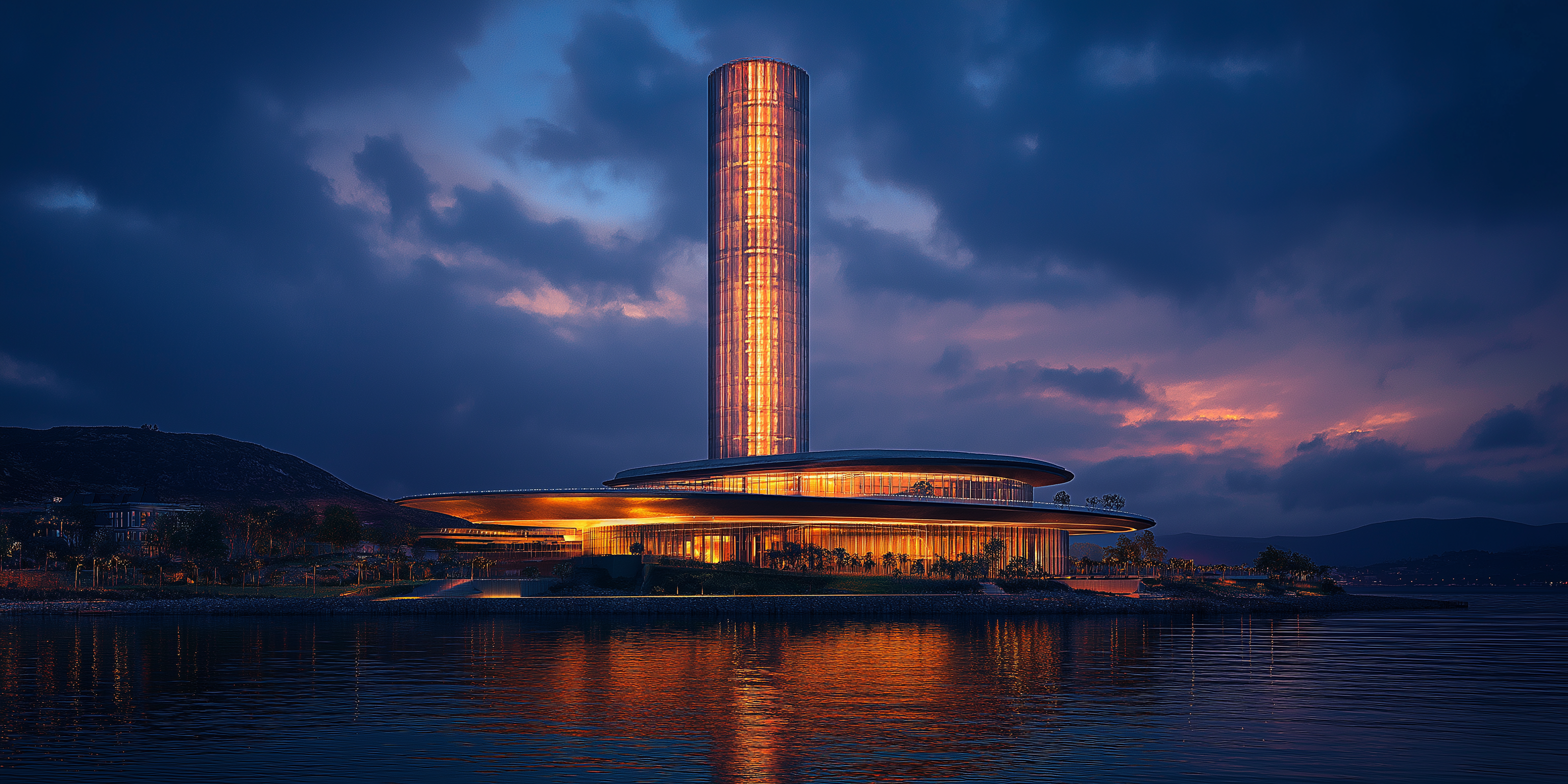
Wrest Point Casino, Tasmania
Wrest Point Casino, opened in 1973 as Australia's first legal gambling venue, transformed Tasmania's hospitality landscape through its bold modernist architecture and Monte Carlo-inspired elegance. Rising seventeen storeys above the Derwent River, the complex symbolised Hobart's evolution from colonial outpost to sophisticated destination. Within its gilded halls where fortunes shift like river tides, the casino became witness to both legitimate entertainment and darker narratives—hosting everything from high-stakes gambling to desperate heists, criminal operations, and inter-dimensional escapes that would forever mark its legacy.
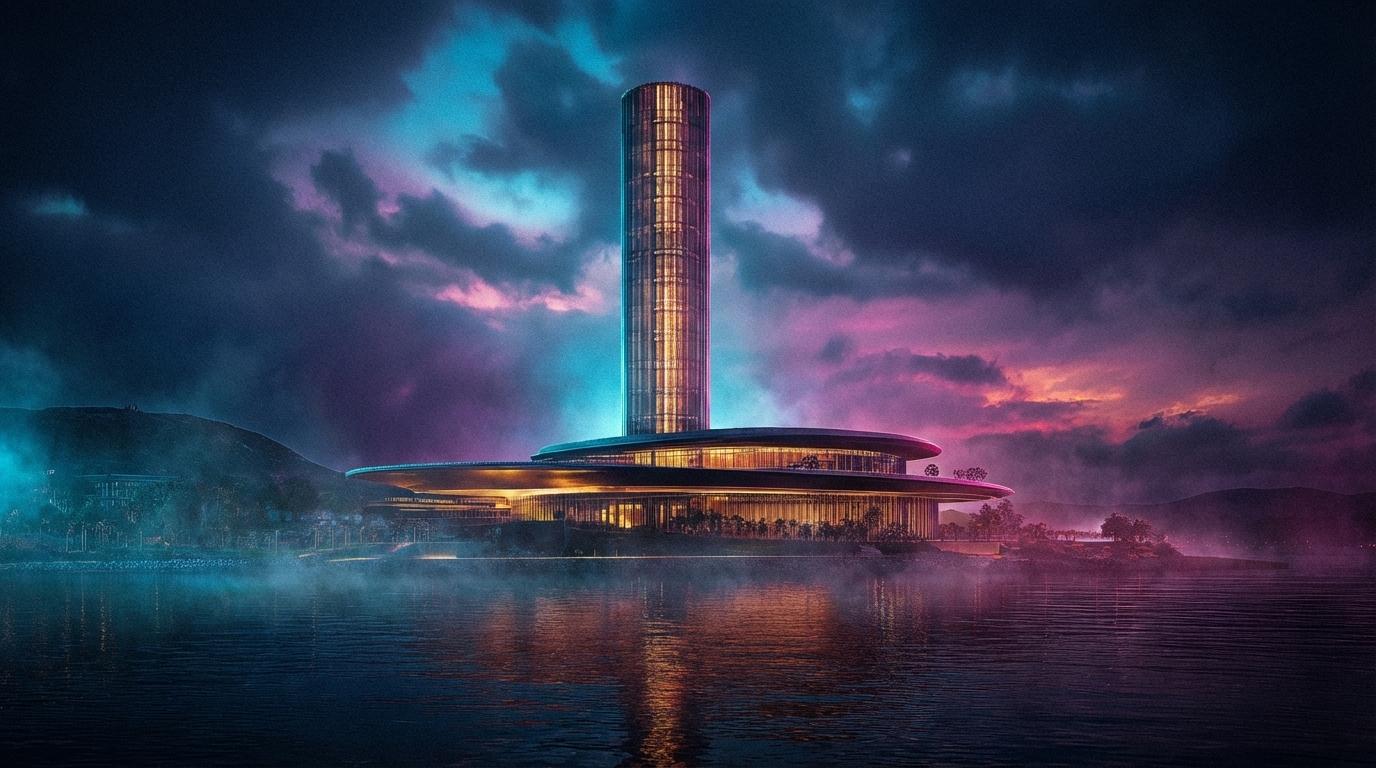
The Visionary Gamble
The story of Wrest Point Casino begins with Greg Farrell Sr., a Tasmanian entrepreneur whose vision transcended the modest boundaries of local hospitality. In the late 1960s, when most Australian states regarded casino gambling with moral suspicion, Farrell recognised an opportunity that others dismissed as impossible: to establish the nation's first legal casino in Hobart, transforming Tasmania from a provincial backwater into a destination for sophisticated entertainment.
Farrell's ambition was not simply commercial; it was cultural. He had observed how European casinos functioned as social institutions—places where refined entertainment, quality dining, and architectural grandeur combined to create experiences that transcended mere gambling. Monte Carlo became his north star, a model demonstrating how gaming could serve as the economic engine powering broader cultural elevation. Farrell believed Tasmania deserved such a transformation, and he possessed both the entrepreneurial courage and political connections to make it reality.
The legislative battle proved formidable. Casino gambling remained controversial across Australia, associated in the public imagination with organised crime, moral decay, and social dysfunction. Farrell and his supporters needed to construct a different narrative—one positioning the proposed casino as a catalyst for tourism, employment, and Tasmania's modernisation. They commissioned architectural designs deliberately emphasising elegance and sophistication rather than garish excess. They promised revenue for the state government, jobs for local workers, and international recognition for Hobart as a destination worthy of global attention.
The Tasmanian Parliament ultimately approved the Federal Hotels Casino Act in 1968, granting Federal Hotels—the company Farrell and partners controlled—the licence to operate Australia's first legal casino. It was a watershed moment, not just for Tasmania but for Australian entertainment culture generally. The monopoly on casino operations represented an enormous commercial opportunity, but it also carried immense responsibility. Failure would vindicate the critics and potentially set back casino legalisation across the nation for decades.
Architecture of Ambition
Construction began in the early 1970s on a prominent site along Sandy Bay's waterfront, where the Derwent River curves gracefully beneath Mount Wellington's watchful presence. The location was strategically selected for its natural beauty, accessibility from Hobart's city centre, and the dramatic visual impact a tall building would create against the mountain backdrop. Farrell understood that the casino's architecture would communicate as much as its operations—it needed to declare Tasmania's arrival as a sophisticated destination whilst respecting the landscape's natural grandeur.
The resulting structure—a seventeen-storey tower that remains one of Hobart's tallest buildings—represented a bold architectural statement. Its modernist design stood in deliberate contrast to the Georgian and Victorian architecture dominating Hobart's heritage districts, signalling Tasmania's willingness to embrace contemporary culture alongside historical preservation. The tower's height provided not just accommodation and gaming facilities but something more valuable: perspective. From the revolving restaurant crowning the structure, visitors could experience Hobart's setting in its full glory—the river winding through the landscape, the city clustered along its shores, Mount Wellington dominating the western horizon.
The interior design drew heavily on European casino traditions, particularly Monte Carlo's elegant gaming salons. Plush carpets absorbed sound, creating an atmosphere of hushed intensity. Gilded mirrors multiplied the space whilst creating intriguing visual perspectives. Crystal chandeliers provided ambient lighting that suggested sophistication without the harsh brightness of utilitarian function. The colour palette—rich burgundies, deep emerald greens, golden accents—evoked traditional gaming establishments whilst maintaining a distinctly contemporary aesthetic sensibility.
The casino floor itself was organised with careful attention to both psychology and practical operation. Poker tables clustered in semi-private arrangements, allowing serious players the concentration they required. Slot machines lined walkways, their flashing lights and celebratory sounds creating an atmosphere of constant possibility. The roulette wheels—those iconic symbols of casino gambling—occupied positions of visual prominence, their spinning becoming almost hypnotic to observers. Every design choice reflected Farrell's understanding that casinos sold not just gambling opportunities but experiences—the intoxicating feeling of possibility, the thrill of risk, the sophisticated pleasure of participating in an adult environment where fortunes could change with the turn of a card.
Opening and Early Years
Wrest Point Casino officially opened on 10 February 1973, an event celebrated as a defining moment in Tasmania's tourism evolution. The opening gala attracted political leaders, business figures, and cultural personalities eager to witness history. For Hobart, the event represented validation—proof that Tasmania could compete for sophisticated tourists rather than merely serving as a quaint colonial curiosity or wilderness destination. The casino's immediate success exceeded even optimistic projections, with visitors flocking from mainland Australia and increasingly from international markets to experience Australia's first legal gaming venue.
The early years established patterns that would define Wrest Point's character for decades. The casino attracted a diverse clientele: high rollers seeking significant stakes, tourists incorporating gaming into broader Hobart visits, locals treating the venue as a special occasion destination. The revolving restaurant became particularly popular, offering fine dining with constantly shifting panoramic views—a unique selling proposition that brought non-gamblers to the property and positioned Wrest Point as more than just a gaming venue.
Margaret Elizabeth Horne joined the casino's hospitality team in the mid-1970s, bringing a warmth and attentiveness that would become characteristic of Wrest Point's customer service philosophy. Margaret understood intuitively that whilst people came for the gambling, they returned because of how the experience made them feel. She cultivated an approach that balanced professional efficiency with genuine care, remembering regulars' preferences, anticipating needs before they were articulated, and creating an atmosphere where guests felt valued rather than merely processed. Her tenure exemplified Farrell's vision of the casino as a full-service destination rather than merely a gaming operation.
The casino's economic impact proved transformative. Employment opportunities multiplied—dealers, security staff, hospitality workers, maintenance crews, administrative personnel. Local suppliers benefited from the casino's constant demand for food, beverages, linens, and countless other necessities. Tasmania's tourism profile elevated dramatically, with Wrest Point featuring prominently in marketing materials positioning the state as offering both natural beauty and sophisticated entertainment. The revenue flowing to the state government through gaming taxes funded public services and infrastructure improvements. Farrell's gamble had paid off spectacularly, validating his belief that Tasmania could support world-class entertainment facilities.
Evolution and Expansion
The decades following Wrest Point's opening saw continuous evolution responding to changing market conditions, competitive pressures, and shifting cultural attitudes towards gambling. The monopoly Federal Hotels initially enjoyed faced eventual challenges as other Australian states legalised casino gaming. Melbourne's Crown Casino, Sydney's Star City, and other major venues created competition for high-roller markets. Wrest Point responded by emphasising its unique selling propositions: intimate scale compared to massive mainland complexes, spectacular natural setting, and the historical cachet of being Australia's first legal casino.
Physical expansions and renovations maintained the property's competitive position. Additional hotel accommodation increased capacity for overnight guests. The gaming floor underwent periodic updates, introducing new technologies whilst preserving the elegant aesthetic that defined the venue's character. The conference and convention facilities expanded, recognising that business travellers represented valuable markets beyond leisure tourists. Each enhancement reflected careful strategic thinking about how Wrest Point could remain relevant whilst maintaining the distinctive identity Farrell had established.
The revolving restaurant continued attracting diners impressed by the engineering novelty and spectacular views. Watching Hobart slowly rotate below whilst enjoying fine dining created an experience uniquely associated with Wrest Point—something no competitor could replicate without building their own rotating facility in an equally spectacular location. This feature exemplified the original vision's enduring power: that entertainment venues succeed by creating memorable experiences transcending any single amenity.
The casino's employment practices evolved alongside broader social changes, with increasing emphasis on responsible gambling initiatives, staff training programmes, and community engagement. Security operations became increasingly sophisticated, incorporating surveillance technologies that made the gaming floor one of Hobart's most monitored spaces. Every transaction, every hand played, every spin of the roulette wheel occurred beneath the watchful eye of cameras designed to protect both the house and legitimate patrons from various forms of fraud or misconduct.
The Darker Undercurrents
Beneath Wrest Point's polished surface of legitimate entertainment, darker narratives gradually took root. The very features that made the casino successful—significant cash flows, diverse clientele, sophisticated surveillance capabilities—also attracted those operating outside the law. Criminal elements recognised opportunities that legitimate business deliberately ignored, and gradually, the casino became entangled in stories far removed from Farrell's original vision of cultural elevation.
Blake Karger's employment as a security officer in 2018 represented a particularly troubling development. Blake brought professional competence and an outwardly respectable demeanour that made him valuable to legitimate security operations. However, his true value lay elsewhere—in his extensive connections to Hobart's criminal underworld and his willingness to leverage his casino position for intelligence gathering and occasional enforcement work. For syndicates requiring information about high-stakes players, their financial situations, or their movements through Hobart, Blake provided invaluable services. His dual existence—respectable by day, lethal by night—perfectly exemplified how criminal elements could infiltrate even well-managed institutions.
The casino's high-stakes gaming attracted not just legitimate wealth but also money requiring laundering, individuals fleeing consequences elsewhere, and operators running various cons. In 2014, Beatrix Cramer and Jarod James executed a sophisticated chip theft operation, exploiting the controlled chaos of crowded gaming floors to steal chips from distracted players. Their techniques demonstrated both audacity and skill—carefully selecting targets, coordinating movements, executing thefts with practiced efficiency. When Beatrix inadvertently stole from a syndicate-connected high roller, the consequences proved devastating, ultimately leading to Brody Taylor's murder and establishing Blake's reputation for following through on threats with lethal finality.
The casino's management walked a delicate line between maintaining security and avoiding reputational damage. Publicising criminal activities occurring within the premises could undermine the sophisticated image Farrell had carefully cultivated. Yet allowing criminal elements too much freedom risked regulatory intervention or worse. The security team, led by professionals like Darren Stevens and supported by personnel including Ryan Chaffey and Lachlan Barwick, implemented protocols balancing vigilance with discretion. Incidents were managed quietly when possible, law enforcement involved only when absolutely necessary.
The Night Everything Fractured
27 July 2018 stands as a watershed date in Wrest Point's history—the night when the casino transformed from entertainment venue to stage for events that defied conventional reality. Beatrix Cramer walked through the revolving doors that evening carrying the weight of Brody's death and her stolen antique shop, intending to orchestrate a heist that would provide funds to reclaim her former life. What she could not anticipate was how thoroughly the evening would unravel, how the casino's carefully controlled environment would become a crucible for violence, desperation, and ultimately, escape into impossibility.
Beatrix's entrance into Wrest Point carried profound symbolic weight. The revolving doors that admitted her represented a threshold between the mundane world of loss and grief outside, and the intoxicating atmosphere of possibility within. The casino's Monte Carlo-inspired elegance—its plush carpets, sparkling chandeliers, gilded mirrors—created a backdrop suggesting sophistication and control. Yet beneath the refined surface, Beatrix recognised the establishment for what it truly was: a battlefield where risk and reward collided, where fortunes shifted like the Derwent River's tides, where careful planning could yield spectacular returns or catastrophic failure.
Her encounters throughout the evening traced a trajectory from calculated confidence through growing unease to desperate flight. The initial poker game with Jarod demonstrated their practised coordination—signals exchanged, chips accumulated, the familiar rhythms of a successful con. Yet Graeme's presence and probing questions about Jarod introduced complications. The casino's atmosphere of refined excitement transformed into something more threatening as Beatrix realised she was being watched, evaluated, potentially trapped.
Blake's appearance represented the ultimate complication—a blade-wielding shadow from her past now wearing casino security uniform. The irony was almost unbearable: the very institution Greg Farrell Sr. had built to bring legitimate prosperity to Tasmania now employed the man who had murdered Brody. Wrest Point's promise of sanctuary dissolved as Beatrix understood that even within these monitored, controlled spaces, she remained vulnerable to those operating outside conventional justice systems.
The confrontation with Graeme shattered the casino's carefully orchestrated atmosphere entirely. The chips scattered across green felt became impromptu spoils in a moment when civility collapsed into chaos. The surveillance systems that protected the house's interests now captured violence, the crowd of onlookers transforming from fellow patrons into unwitting witnesses. Wrest Point's sophisticated infrastructure—designed to contain and channel risk through controlled gaming—proved inadequate when confronted with the raw, unpredictable violence of human desperation.
Leigh's covert intervention, his seemingly drunken stumble creating the distraction necessary for Beatrix's escape, demonstrated how even the most monitored environments contain vulnerabilities. The casino's polished marble floors—those flat surfaces built for elegance—became potential escape routes. The security protocols designed to prevent theft and fraud proved insufficient against operatives trained in more sophisticated forms of deception.
Charlie Claiborne's arrival represented law enforcement's intersection with mysteries the casino could never have anticipated. The sergeant's authoritative commands echoed through spaces designed for warmth and welcome, his presence transforming the institution built on bringing people together into a site of forced separation. As Beatrix was dragged into the restricted storage room amongst silent poker machines, Wrest Point became something far more complex than entertainment venue—it became a threshold between realities.
Aftermath and Continuing Operations
In the months and years following that extraordinary July evening, Wrest Point Casino continued its operations with outward normality that belied the strange events occurring within its walls. Darren Stevens, Ryan Chaffey, Lachlan Barwick, and other security personnel maintained their professional vigilance, their communications transcripts from that night filed away in records few would ever examine. The casino floor continued its eternal cycle—chips exchanged, cards dealt, roulette wheels spinning, fortunes won and lost with mechanical regularity.
Yet for those aware of what had transpired, the casino carried additional significance. The storage room where Beatrix vanished remained part of routine operations, its secret known only to a handful of individuals bound by silence more powerful than any non-disclosure agreement. Blake Karger continued his dual existence, the deadly enforcer concealed behind the respectable security officer facade. The gilded mirrors that had witnessed violence now reflected patrons who had no awareness of the extraordinary events that had occurred in their midst.
Margaret Horne's legacy of hospitality continued influencing the casino's service culture, her warmth and attentiveness having established standards that outlasted her direct presence. New employees learned the subtle arts she had mastered—remembering preferences, anticipating needs, creating atmospheres where guests felt valued. This continuity of care represented something precious: the preservation of Farrell's original vision that Wrest Point should offer more than just gambling, that it should create experiences worth remembering and repeating.
The casino's economic significance for Tasmania remained substantial. Employment for hundreds of staff members, revenue for the state government, a cornerstone of Hobart's tourism economy—these practical contributions continued regardless of the strange stories attached to the premises. Wrest Point endured as both symbol and reality of Tasmania's transformation from colonial backwater to sophisticated destination, even as it accumulated secrets that complicated any simple triumphalist narrative.







