William Brodie
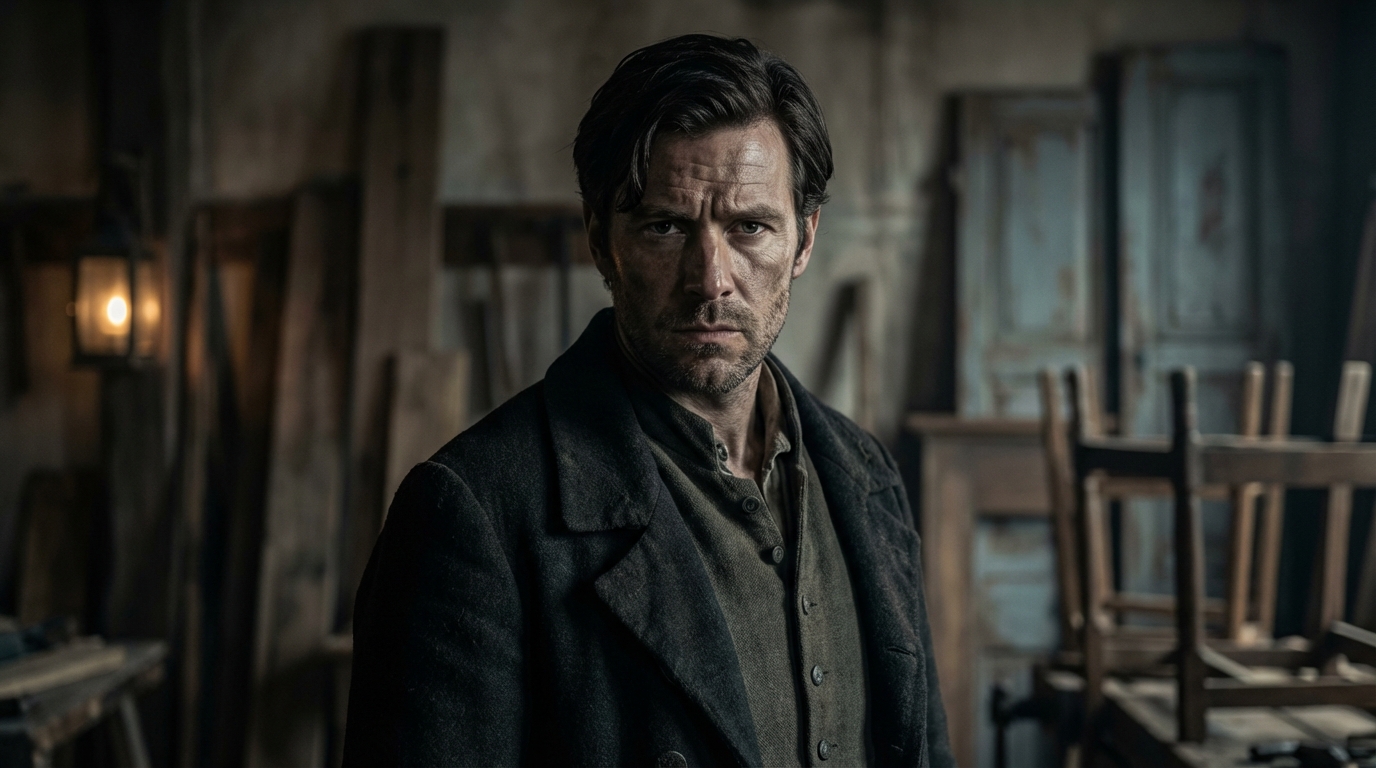
Born in Edinburgh on 28 September 1741, William Brodie inherited his father Francis's cabinet-making trade, becoming Deacon of the Incorporation of Wrights in 1781 while secretly leading a criminal gang. After meeting Elspeth Stewart in 1758, he was recruited as New Edinburgh's fifth Guardian on 9 July 1762, his expertise proving invaluable for establishing Chewbathia's defences. His Edinburgh criminal career ended with the botched Excise Office robbery of March 1788 and apparent execution—though Guardian intervention ensured his survival and escape to Clivilius. He lived nineteen quiet years beyond the gallows, dying at Chewbathia on 23 February 1807, aged sixty-five.
The Cabinet-Maker's Son
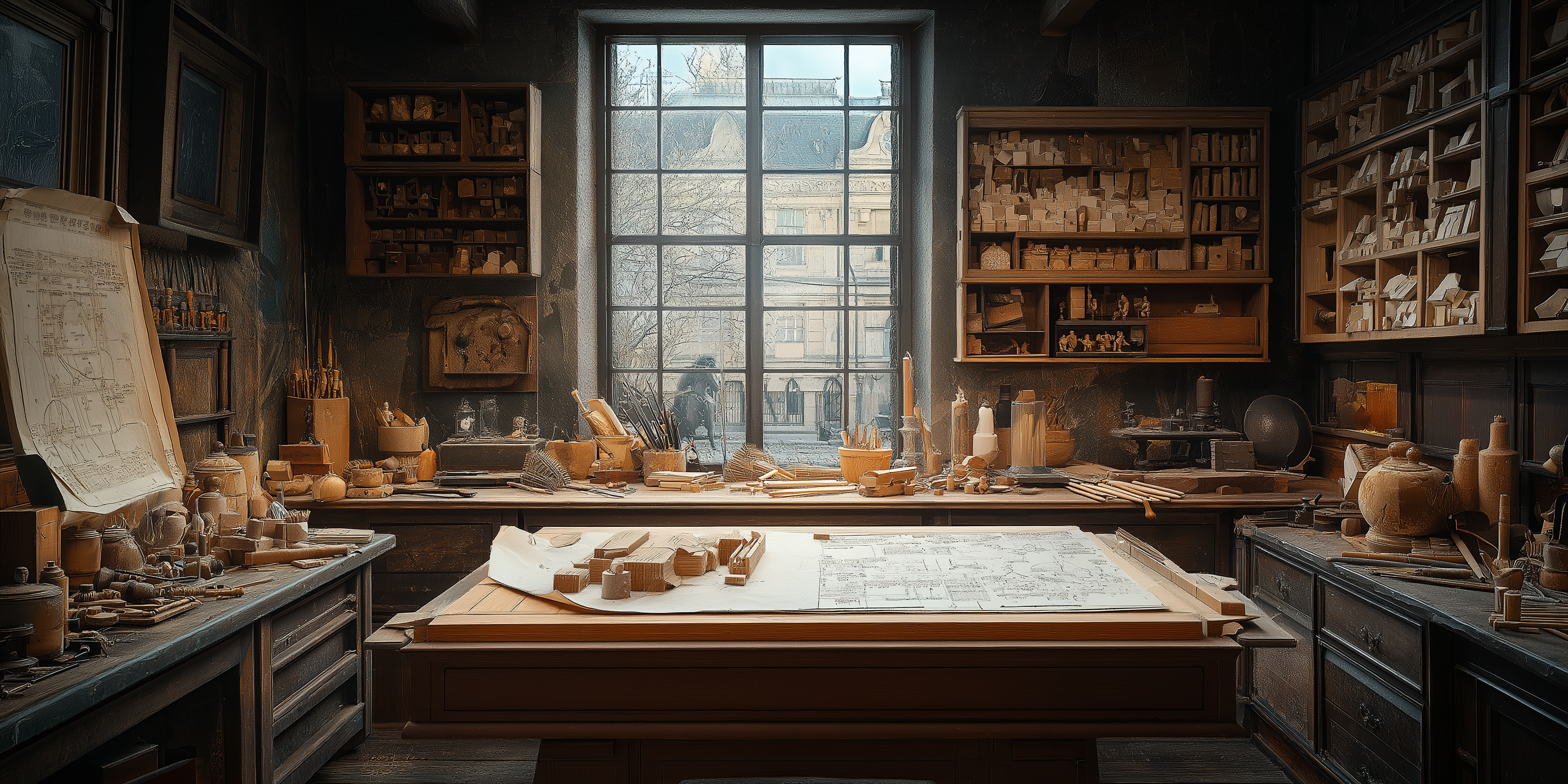
William Brodie entered the world on 28 September 1741 in Brodie's Close, a narrow wynd leading off Edinburgh's Lawnmarket within sight of the Castle. His father, Francis Brodie, had established himself as one of the city's most respected cabinet-makers and wrights, his workshop producing furniture of such quality that it graced the homes of Edinburgh's wealthiest citizens. His mother, Cecil Grant, brought her own respectable lineage to the union. From his first breath, William inhabited a world of skilled craftsmanship, civic respectability, and Presbyterian propriety—foundations that would make his eventual double life all the more remarkable.
The Brodie workshop occupied premises at the foot of the close, a stone's throw from the High Street's bustling commerce. Young William grew up amid the scent of sawdust and wood shavings, the rhythmic sounds of saw and plane, the precise measurements and careful joinery that transformed raw timber into objects of beauty and utility. His father's trade was more akin to architecture than mere furniture-making—Francis Brodie served as Convenor of Trades, designed buildings, and fulfilled contracts that shaped Edinburgh's Georgian elegance.
William received an education befitting his station, studying classics at Edinburgh's High School before apprenticing in the family business. He proved an apt pupil, his hands quickly mastering the intricacies of cabinetry while his eye developed the discernment that would later make him one of the city's finest craftsmen. Yet even as a youth, something restless stirred beneath his respectable surface. He dreamed of the sea, of piracy and adventure, of lives more exciting than the steady progression from apprentice to master that his birth had ordained.
Freeman of the Wrights
In 1763, William Brodie was admitted as a Burgess and Guild Brother of Edinburgh, formally entering the trade that would define his public life. His skill quickly distinguished him from his peers—furniture bearing his mark commanded premium prices, and commissions flowed from the city's elite. Part of his work required visits to customers' homes and business premises, installing furniture and fitting the locks and security mechanisms that protected Edinburgh's wealth from those who might covet it.
These domestic visits provided more than legitimate income. William's keen eye catalogued not just the furniture he installed but the valuables it surrounded, the routines of households, the weaknesses in their security. The same hands that crafted exquisite pieces learned to read locks like texts, understanding their mechanisms with an intimacy that transcended mere professional necessity. Whether this knowledge remained dormant during these early years or found quiet expression in nocturnal ventures history does not definitively record, though later evidence would suggest his criminal education began earlier than authorities ever suspected.
Edinburgh in the 1760s offered ample opportunity for a young man of divided inclinations. By day, the city displayed its Enlightenment face—philosophers debating in taverns, scientists advancing human knowledge, architects transforming medieval streets into Georgian elegance. By night, darker entertainments flourished in the closes and wynds that threaded through the Old Town's vertical maze. Gambling dens operated behind respectable facades; cockfighting drew crowds to basement pits; taverns on the Grassmarket catered to appetites the Kirk would never sanction. William Brodie came to know both Edinburghs intimately.
First Meeting
On 12 March 1758, sixteen-year-old William attended a gathering at Balcarres House that would alter the trajectory of his life in ways he could not then have imagined. Among the guests was a young woman of twenty named Elspeth Stewart—a seamstress whose connection to the event came through her employer, Moira MacKenzie, whose Emporium of Fashion served Edinburgh's elite.
Lady Margaret Sinclair made the introduction, noting the young cabinet-maker's promising reputation and the seamstress's evident intelligence. Their conversation that candlelit evening touched on art and craftsmanship, the relationship between beauty and function, the hidden structures that supported visible elegance. William found in Elspeth a kindred perception—someone who understood that surfaces concealed depths, that the respectable and the remarkable might coexist in a single soul.
The encounter was brief, constrained by social propriety and the gulf between their respective stations. Yet something passed between them—recognition, perhaps, of complementary shadows. Four years would elapse before their paths crossed again, years during which both would discover how thoroughly their circumstances could transform.
The Double Life Begins
Historians generally date William Brodie's criminal career to around 1768, when he allegedly copied keys to a bank and made off with £800—a sum sufficient to maintain a household for years. Whether this marked his true beginning or merely his first documented success remains uncertain. What is clear is that by the late 1760s, the respectable cabinet-maker had developed a parallel existence that would have horrified Edinburgh's proper citizens had they known.
The skills that made him valuable to wealthy clients proved equally valuable for relieving them of their possessions. His professional access to homes and businesses provided opportunities to study their security; his expertise with locks allowed him to create duplicate keys from wax impressions taken during legitimate visits; his reputation for respectability deflected suspicion even when thefts occurred shortly after his departure. The same precision that produced beautiful furniture now planned and executed burglaries with equal craftsmanship.
William's nocturnal earnings supported appetites his legitimate income could not satisfy. His gambling grew from recreation to compulsion, his nights at cockfighting pits and card tables consuming profits as quickly as they accumulated. He maintained two mistresses in separate establishments, neither aware of the other's existence, fathering five children whose support required ever-greater resources. He frequented the Edinburgh Cape Club, that irreverent mock-Masonic society where he adopted the pseudonym "Sir Lluyd"—pronounced "lewd," an acknowledgment of inclinations his daytime persona carefully concealed.
Elspeth's Proposition
In the spring of 1762, William Brodie's worlds collided in unexpected fashion. Elspeth Stewart—now a woman of twenty-four transformed by experiences William could not have imagined—sought him out with a proposition unlike any he had received.
She had become a Guardian, she explained, tasked with establishing a settlement in a realm called Clivilius. Her sisters would join her in this endeavour, but they needed resources, supplies, and above all, someone with William's particular combination of legitimate expertise and shadowed connections. She required a man who could procure what New Edinburgh needed through channels both official and otherwise, who understood how to navigate Edinburgh's underworld while maintaining its trust, who possessed skills equally applicable to building and to breaching.
On 1 June 1762, Elspeth enlisted William and his band of skilled associates in her cause. These men—accustomed to operating in darkness for personal gain—now found their talents redirected toward purposes their limited imaginations had never contemplated. The same abilities that violated Edinburgh's wealthy now served to supply a fledgling settlement fighting for survival in an alien realm.
The Fifth Guardian
On 9 July 1762, Lizbeth Wilson—the ancient Guardian who had first called the Stewart sisters to their destiny—pressed a Portal Key into William Brodie's palm. The ceremony that transformed Edinburgh's duplicitous craftsman into New Edinburgh's fifth Guardian was witnessed by Elspeth and her sisters, who understood what others might not: that William's very contradictions made him uniquely suited for the challenges ahead.
The threshold he crossed that day led to landscapes unlike anything Scotland offered—barren expanses awaiting transformation, communities struggling to establish themselves in unfamiliar territory, threats that required defensive preparations the sisters' skills alone could not provide. William's expertise in locks and mechanisms, in understanding how security could be both created and circumvented, proved invaluable. His connections to Edinburgh's underworld provided access to supplies and information the settlement desperately needed. His capacity for maintaining separate existences—respectable tradesman by day, shadowed operator by night—enabled him to serve New Edinburgh while preserving his position in the old.
From the beginning, William's Guardian role differed from the sisters'. Where they committed themselves fully to Clivilius, he maintained his Edinburgh presence, traveling between worlds as circumstances required. This arrangement served multiple purposes: it kept supply channels open, preserved his cover, and allowed him to continue the procurements—legitimate and otherwise—that New Edinburgh's growth demanded.
Chewbathia
In April 1763, William accompanied Elspeth on a scouting expedition that would determine New Edinburgh's defensive future. Their mission: to identify a location suitable for establishing Chewbathia, the military outpost that would protect the settlement from external threats. The partnership revealed how thoroughly their complementary strengths had merged—Elspeth's strategic vision combining with William's criminal instincts for identifying vulnerabilities and defensive positions.
The site they selected offered natural advantages that William's experienced eye immediately recognised. His years of planning burglaries had taught him to think like both attacker and defender, to perceive weaknesses that others overlooked, to understand how terrain could be exploited or fortified. These skills, once applied to violating Edinburgh's security, now served to ensure New Edinburgh's survival.
Construction began on 23 May 1763, with William overseeing the mechanical and defensive elements that would make Chewbathia legendary. The ingenious mechanisms and traps he designed drew directly from his criminal expertise—devices that detected intrusion, barriers that responded to unauthorised access, systems of locks and triggers that protected the settlement's most vulnerable points. The hands that had crafted tools for breaking and entering now created tools for keeping threats at bay.
When Captain Angus MacTavish arrived on 17 March 1764 to train New Edinburgh's defensive forces, he found in William an unexpected collaborator. The military veteran and the reformed thief—if reformed was quite the right word—combined their expertise to create a defensive system that transcended what either could have achieved alone. MacTavish provided tactical discipline; William contributed mechanical ingenuity and an intimate understanding of how determined adversaries thought.
The completion of Chewbathia on 11 June 1765 marked the culmination of William's transformation—or at least, one aspect of it. The master craftsman whose Edinburgh workshop produced elegant furniture had become the architect of an entire settlement's protection. His mechanisms and traps earned him the nickname "the Tinkering Thief," a title that acknowledged both his criminal past and his present purpose.
The Continuing Shadow
Yet William Brodie never entirely abandoned his Edinburgh existence or its darker dimensions. Throughout the 1770s and into the 1780s, he maintained his dual life with the same skill he had always applied to it—perhaps with even greater skill, given the additional layer Clivilius added to his deceptions.
In 1781, following his father's paralysis, William succeeded him as Deacon of the Incorporation of Wrights and Masons—the presidency of Edinburgh's guild of carpenters and a position on the Town Council. The respectability this conferred served multiple purposes: it advanced his legitimate business, provided cover for his continuing criminal activities, and created opportunities to direct resources toward New Edinburgh's needs. The Deacon who sat in council meetings deliberating civic matters was also the Guardian who slipped between worlds, the mastermind who planned burglaries to fund both his personal vices and his settlement's requirements.
His criminal operations intensified during this period. In 1786, he recruited a gang of three accomplices—George Smith, a locksmith; John Brown, a thief fleeing transportation; and Andrew Ainslie, a shoemaker—and together they launched what became a highly successful crime wave across Edinburgh. They robbed safes and strongboxes, made off with cash and jewellery, even stole the University of Edinburgh's silver mace from the college library. The proceeds funded gambling debts, mistresses' establishments, and—through channels only William fully understood—supplies for New Edinburgh.
The Excise Office
The events of 5 March 1788 marked the beginning of William Brodie's end in Edinburgh, though historians have never fully understood the forces that converged that night. The armed raid on His Majesty's Excise Office in Chessel's Court, on the Canongate, represented the most ambitious operation William had yet attempted—and the most catastrophic failure.
The plan itself was characteristically meticulous. William had obtained access to the Excise Office during legitimate business, using putty to take impressions of keys that he later duplicated. On the appointed night, his gang entered with tools they had nicknamed "Great Samuel" and "Little Samuel," intent on cracking the office's inner safes. William's role was to coordinate from the doorway while Ainslie stood watch outside.
What went wrong remains debated. Some accounts suggest William fell asleep at his post; others that the gang's presence was detected through ill fortune rather than incompetence. The haul proved disappointing—approximately £16 split four ways, far short of expectations. More critically, the authorities had been alerted, nearly capturing the gang red-handed.
In the aftermath, loyalties crumbled. Ainslie, fearful of the gallows, turned King's Evidence. Brown and Smith were arrested. William fled Edinburgh, making his way via London to Amsterdam, where he hoped to board a ship bound for the Americas—or perhaps for destinations only a Guardian could reach. But a forger's tip led authorities to his hiding place, and he was captured on the eve of his departure, returned to Edinburgh in chains to face justice.
Trial and Sentence
The trial of William Brodie began on 27 August 1788 before a city whose fascination with the case bordered on obsession. Edinburgh's elite, who had purchased furniture from his workshop and welcomed him into their homes, now confronted the full extent of his deceptions. The gallery filled at an early hour; the crowd's attention fixed on the proceedings with an intensity that reflected both outrage and morbid fascination.
William appeared dressed for the occasion in a new dark blue coat, fancy vest, black satin breeches, and white silk stockings, his hair full dressed in the fashion of a gentleman. His demeanour remained easy and confident throughout—the same charm that had sustained his double life now facing its ultimate test. Beside him, George Smith cut a meaner figure, his bearing timid and dejected where William's remained composed.
The evidence against him proved overwhelming. Searches of his premises had revealed the tools of his criminal trade: duplicate keys, disguises, pistols, and mechanisms whose purposes required no explanation. Former accomplices testified to operations spanning years. The jury's verdict was foregone; the sentence, inevitable. William Brodie and George Smith were condemned to hang on 1 October 1788 at Edinburgh's Tolbooth.
The Tolbooth Gallows
The morning of 1 October 1788 dawned over Edinburgh to find an estimated forty thousand spectators gathered to witness the execution of the city's most notorious deceiver. The gallows stood near St. Giles' Cathedral, in the shadow of the same Tolbooth whose civic functions William had helped oversee. Legend holds—though historians dispute—that he had himself helped design improvements to the very apparatus that would now end his life, a final irony befitting his contradictory existence.
Among the crowd stood his ten-year-old daughter Cecil, witness to her father's final performance. The condemned men were brought to the scaffold in chairs, guarded by the city guard. George Smith met his end first, his terror evident to all who watched. Then William ascended, his composure remarkable to those who recorded the scene.
What happened next has generated speculation for over two centuries. The rope required adjustment three times as the bell of St. Giles tolled its doleful accompaniment. When the platform dropped, William Brodie's body jerked and then hung—apparently lifeless, apparently ended.
But rumours began circulating almost immediately. It was said that William had worn a steel collar beneath his clothing, designed to defeat the noose's fatal embrace. It was said he had bribed the hangman to ignore this device and to ensure his body was cut down quickly. It was said that a French physician waited nearby, ready to revive him once the crowd dispersed. His body disappeared from its unmarked grave at St. Cuthbert's Chapel of Ease; reports emerged of a man matching his description seen in Paris, alive and well despite his very public execution.
Edinburgh's authorities dismissed these tales as folklore, the desperate fantasies of those who could not accept that the charming Deacon had met his deserved end. Official history recorded William Brodie's death on 1 October 1788, case closed.
But official history knew nothing of Guardians, of Portal Keys, of a settlement in another realm that had good reason to ensure its Tinkering Thief survived.
Beyond the Gallows
What transpired in the hours after William Brodie's apparent execution remains known only to those who participated in it. The steel collar was real—though its purpose was not merely to defeat the rope's constriction, but to create ambiguity sufficient for what followed. The arrangements William had made were not those of a desperate man grasping at unlikely survival, but those of a Guardian whose colleagues had resources beyond anything Edinburgh's authorities could have imagined.
The body that disappeared from St. Cuthbert's did not lie mouldering in some secret grave. The man reportedly seen in Paris may indeed have passed through that city—a waypoint on a journey that ended not in France but in Clivilius, where New Edinburgh awaited the return of its most controversial founder.
William Brodie's second life in New Edinburgh was quieter than his first. The notoriety that had made him Edinburgh's most famous villain made him something else entirely among those who knew the full truth: a reminder that redemption wore many faces, that skills developed in shadow could serve light, that the same hands capable of violation could also protect. He continued his work at Chewbathia, refining the defensive systems that bore his mechanical signature, training apprentices in crafts both legitimate and strategic.
The man who had maintained two mistresses, fathered five children, gambled away fortunes, and led Edinburgh's most successful criminal gang found in Clivilius a different kind of double life—one where both halves served purposes larger than his own appetites. The Tinkering Thief became simply the Tinkerer, his criminal expertise transmuted into protective innovation, his capacity for deception channelled into the misdirections that kept New Edinburgh's enemies uncertain.
The Quiet Years
The William Brodie who emerged from Edinburgh's shadow into Clivilius's light was a man profoundly altered by his brush with death. The steel collar had worked as designed; the arrangements had held; the Guardian network had extracted him from the city where forty thousand spectators believed they had witnessed his execution. But something had died on that scaffold nonetheless—the reckless confidence that had sustained his double life, the gambler's certainty that luck would always turn his way, the thief's arrogance that believed himself too clever to be caught.
The years following his escape saw William settle into Chewbathia with a quietude that would have astonished those who had known him in Edinburgh. The gambling compulsion that had driven so much of his criminal career found no outlet in the settlement's more austere environment; more significantly, it seemed to have burned itself out in the crucible of his near-execution. The man who had wagered fortunes on cockfights and cards now channelled that same intensity into his mechanical work, creating devices of increasing sophistication for the settlement's protection.
His relationships with the Stewart sisters evolved during this period. Elspeth, who had first recognised his potential and recruited him to their cause, became something between mentor and confessor—the one person who had seen both his worst and his best, who understood the full arc of his transformation. Their working partnership at Chewbathia deepened into genuine friendship, two people who had each navigated shadows and emerged with purpose. Effie's diplomatic warmth gradually thawed his initial wariness of her probing questions about his past. Katrina's quiet acceptance asked nothing of him except honest labour, which he found surprisingly comfortable. Violet's architectural collaborations with his mechanical designs produced some of Chewbathia's most innovative defensive structures.
The children he had left behind in Edinburgh haunted him in ways he rarely acknowledged aloud. Cecil, who had witnessed his execution at ten years old, would grow up believing her father dead—a mercy, perhaps, given the notoriety that now attached to the Brodie name, but a mercy that cost William dearly in private moments. His other children, scattered between two households he had maintained through deception, faced the consequences of his exposure without him there to shield them. He sent what support he could through channels so indirect the recipients never knew its source, but he understood this could never compensate for his absence.
In Clivilius, William found unexpected purpose in training the next generation. The skills that had made him Edinburgh's most successful burglar—the understanding of locks and mechanisms, the ability to think like both attacker and defender, the patience required for meticulous planning—proved invaluable for those charged with protecting the settlement. Young apprentices learned from the Tinkerer techniques that would keep New Edinburgh secure for generations, never knowing the full history of the hands that guided their own.
The Weight of Years
As the 1790s progressed, William Brodie confronted the accumulated weight of his earlier excesses. The body that had endured years of late nights in gambling dens, of stress from maintaining multiple deceptions, of the physical demands of burglary, began presenting accounts he could not defer. His hands, once so steady and precise, developed tremors that made fine mechanical work increasingly difficult. The energy that had allowed him to sustain his double life drained away, leaving him dependent on rest that his younger self would have scorned.
He adapted, as he had always adapted. Where once he had crafted mechanisms himself, now he designed them for others to build, his drawings conveying with precision what his hands could no longer execute. Where once he had prowled Chewbathia's perimeter personally checking defences, now he trained subordinates to conduct inspections according to protocols he had established. The transition from doing to directing was not easy for a man whose identity had been bound up in the skill of his hands, but William had survived worse adjustments.
The death of Morag Stewart in November 1790—the sisters' mother, who had crossed to Clivilius in her later years—affected him more than he might have expected. He had known Morag only slightly during his Edinburgh years, a seamstress wife of a blacksmith occupying a different social stratum from the Deacon of Wrights. But watching the sisters grieve their mother reminded him of losses he could never properly mourn—his own parents long dead, his Edinburgh family believing him executed, his connections to his former life severed beyond repair.
Losing Elspeth
The morning of 8 November 1801 brought news that struck William Brodie with force he had not anticipated. Elspeth Stewart—First Guardian, founder, the woman who had offered him redemption when he deserved only contempt—had died at sixty-three. The illness that had weakened her through the preceding months had finally claimed her, leaving New Edinburgh without the leader who had guided it from desperate founding to prosperous settlement.
William was sixty years old when Elspeth died, his own health increasingly fragile. He had known, intellectually, that this day would come—had watched her decline with the same analytical eye he applied to all threats, had understood the prognosis the settlement's physicians carefully avoided stating directly. Yet understanding changed nothing when the reality arrived. He had lost colleagues before, had witnessed death in forms both violent and peaceful, had himself stood on the scaffold awaiting what he believed would be his end. None of it had prepared him for the particular grief of losing Elspeth Stewart.
She had been, he realised only in her absence, the fixed point around which his second life had oriented itself. Her belief in his capacity for redemption had made that redemption possible; her willingness to trust a man whose entire existence had been built on deception had given him reason to become trustworthy. Without her steady presence anchoring the settlement's leadership, without her occasional visits to Chewbathia to review its defences and consult on its operations, without the knowledge that she was there if he needed guidance—the world felt fundamentally less stable.
He attended the memorial services, standing among the crowds who had gathered to honour New Edinburgh's founder. Violet's architectural memorial took shape over the following months, a structure William ensured was protected by his most sophisticated mechanisms—a final collaboration between the youngest Stewart sister and the Tinkering Thief, honouring the eldest sister who had brought them both to Clivilius. In his private quarters, William kept a small portrait of Elspeth that she had given him years before, a reminder of the woman who had seen potential where others would have seen only villain.
Final Years
The six years following Elspeth's death were William Brodie's twilight, a gradual diminishment that he faced with the same pragmatic acceptance he had brought to his escape from Edinburgh's gallows. His body continued its slow betrayal—the tremors worsening, his breath growing shorter, his once-robust frame shrinking into the gauntness of age and accumulated damage. He spent increasingly long periods confined to his quarters at Chewbathia, emerging for essential consultations but otherwise conserving the energy that had become precious currency.
His mind, mercifully, retained its sharpness even as his body failed. He used this final lucidity to document everything he had learned—the techniques for designing defensive mechanisms, the principles of security that his criminal career had taught him, the methods for training others in skills that required both technical precision and strategic thinking. These documents, carefully preserved in Chewbathia's archives, would guide the settlement's defensive development for generations after their author had passed.
Visitors came with increasing frequency as word spread that the Tinkerer's time was limited. Former apprentices returned to pay respects to the master who had shaped their skills. Settlement leaders sought final consultations on projects William had helped initiate. The Stewart sisters—Effie, Katrina, and Violet, now elderly themselves—made the journey to Chewbathia to sit with the man who had been their colleague in founding, their partner in building, their unlikely brother in the strange family that New Edinburgh's Guardians had become.
William used these visits to make what peace he could with his complicated past. He spoke more openly than he ever had about his Edinburgh years, about the choices that had led him into shadow and the woman who had led him out. He acknowledged the harm his criminal career had caused—the households violated, the trust betrayed, the respectable facade that had made his deceptions all the more damaging. He made no excuses, offered no justifications beyond the simple acknowledgment that he had been a different man then, driven by appetites he no longer understood and ambitions that now seemed hollow.
To those who would carry forward Chewbathia's mission, he offered counsel born from a life spent navigating between legitimacy and shadow. "Trust no lock you haven't tested yourself," he told them. "Think always like those who would breach your defences, because they are certainly thinking about how to breach them. And remember that the most dangerous threats often wear respectable faces—I should know, having worn one myself."
Death
The winter of 1806-1807 proved the harshest Chewbathia had experienced in years, and William Brodie's weakened constitution could not withstand its assault. A chest infection that would have been minor annoyance in his younger years became serious illness, then crisis, then the slow inevitable decline that those who attended him recognised as terminal.
He died on 23 February 1807, aged sixty-five, in the quarters he had occupied for nearly two decades. Effie Stewart was present, having made the difficult winter journey when word reached New Edinburgh that the end was near. She held his hand as his breathing slowed, this woman who had been his fellow Guardian since those desperate early days, who had watched his transformation from Edinburgh's notorious deceiver to Clivilius's dedicated protector.
His final words, witnesses reported, were characteristically dry: "Tell them the locks held." Whether he meant Chewbathia's defences, which had indeed never been breached during his tenure, or something more metaphorical about the barriers he had built around his reformed self, none could say with certainty. Perhaps he meant both. William Brodie had always excelled at meanings that worked on multiple levels.
The funeral was held at Chewbathia, the military outpost he had helped design and whose defences bore his mechanical signature throughout. Representatives from New Edinburgh made the journey despite winter's lingering grip, acknowledging the debt the settlement owed to its most controversial founder. The Stewart sisters—now only three, with Elspeth six years gone—stood together as the man who had been their unlikely colleague was committed to Clivilius earth.
He was buried within Chewbathia's walls, in a location protected by mechanisms of his own design. The grave marker, simple by his own prior request, bore only his name and dates—no mention of his Edinburgh notoriety, no acknowledgment of the execution he had escaped, no reference to the double life that had defined his early years. In death, as in his Clivilius years, he wished to be remembered for what he had built rather than what he had taken.







