Whitmore Family Vineyard
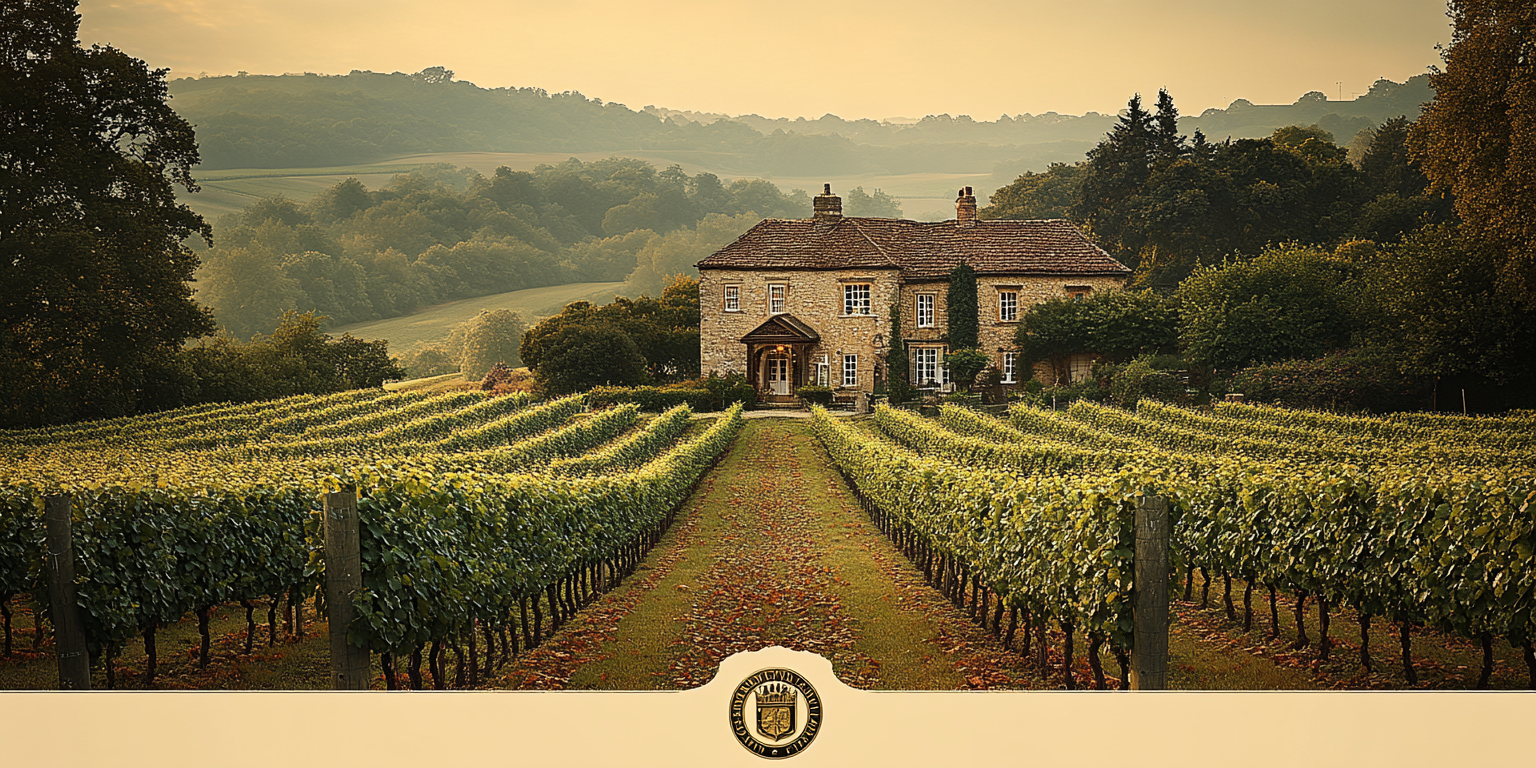
The Whitmore Family Vineyard, established in 1732 on the limestone hills near Shepton Mallet, Somerset, was a small but respected estate known for three generations of carefully made Cabernet Sauvignon and Merlot. Holding to craft over scale, it gave the Whitmore family its identity and raised the master vintner George Henry Whitmore. Outpaced by industrial competitors, it ceased winemaking in 1879 — yet its truest legacy had already left England, in the vine cuttings George carried to found the vineyards of Brierly in Clivilius.
Origins on the Limestone
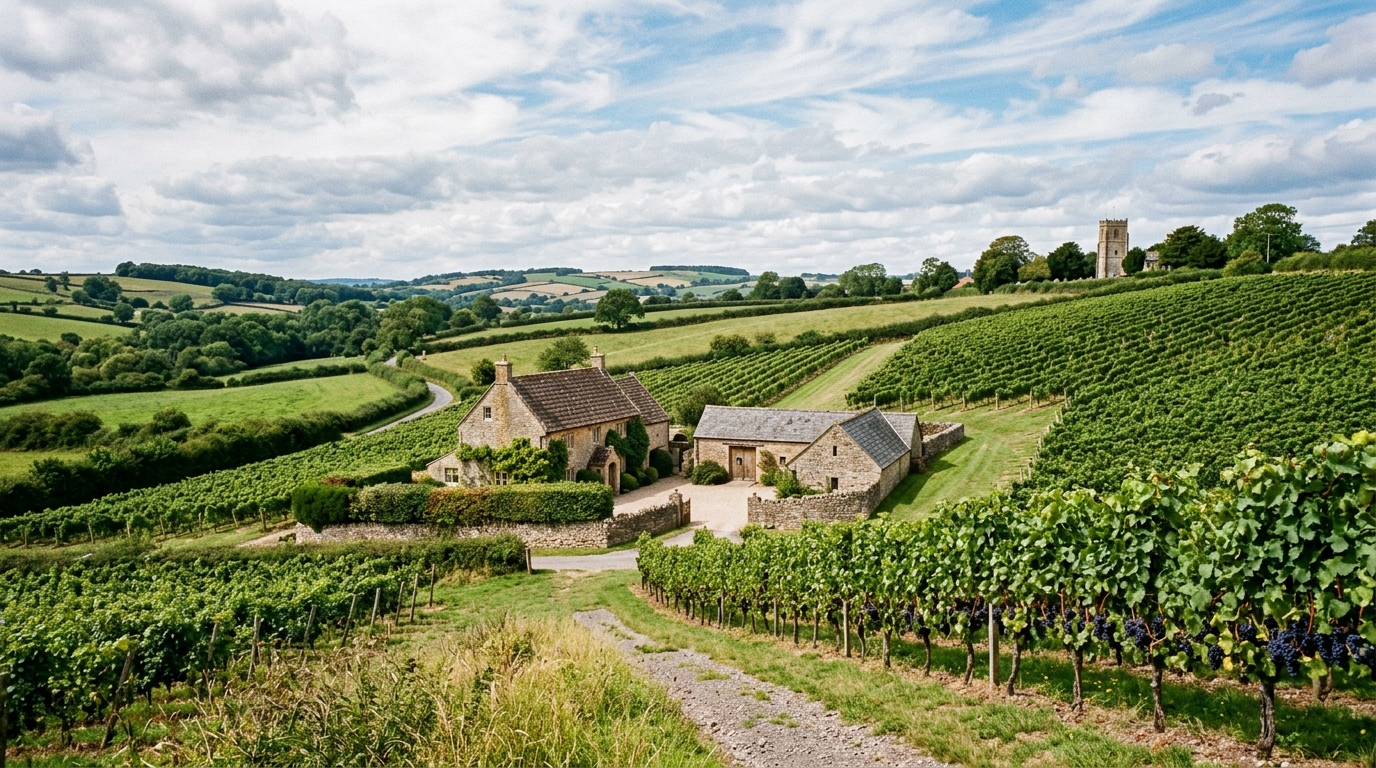
The Whitmore Family Vineyard was founded in 1732 by Richard Whitmore, a former merchant who had spent years studying the viticulture of France and the southern English counties before deciding to plant rather than trade. Drawn to the limestone-rich hills near Shepton Mallet, he bought a modest stretch of well-drained ground and set his first vines, determined to coax from Somerset a deep, full-bodied red to rival those of the Continent. The gamble was a slow one, as all vineyards are, but it took. By 1750 his Cabernet Sauvignon and Merlot had found a name in the local trade, supplying the inns, manor houses, and merchants of a county only beginning to acquire a wine culture of its own.
What Richard established was never large. From the outset the estate was built on patience and craft rather than acreage, a small operation that measured itself by the quality of what it poured rather than the quantity. That character would define the vineyard for the better part of a century and a half, through every hand that inherited it, and would shape the man who carried its vines furthest of all.
Three Generations of Craft
Richard's son, Henry Whitmore, inherited the vineyard in 1768 and refined what his father had begun. From the vintners of Bordeaux he brought back the practice of ageing the wine in oak, deepening its richness and giving the Whitmore reds a structure that set them apart from their neighbours. Under Henry the estate's reputation grew quietly, and by the 1770s its bottles were found in taverns across Somerset and into Wiltshire, still the work of a single family on a single modest holding.
The vineyard passed in turn to Henry's son Thomas, the third generation of Whitmore vintners, who held to the family creed that tradition was worth more than expansion. With his wife, Sarah, née Pemberton, whose Bristol merchant connections kept the casks moving to steady markets, Thomas raised his sons among the vines. The elder, Edward, was the heir, and took naturally to the commerce of wine. The second son, George Henry Whitmore, born on the estate in 1778, took to the vine itself — to the pruning and the fermentation and the long patience the work demanded — and grew into the most gifted vintner the family would ever produce, though the estate would not be his to keep.
War and the Turn of the Century
The long wars with France reshaped the trade. As Continental imports faltered, England leaned harder on its own farms and vineyards, and demand for domestic wine rose even as the wider economy strained. The Whitmores felt both the opportunity and the pressure, and by 1805 an ageing Thomas had passed the running of the estate to his sons, with Edward formally taking charge of operations. By the turn of the nineteenth century the vineyard had expanded modestly, a new storage cellar dug and a little more ground brought under vine to meet the demand, though it remained small by the standard of the larger estates beginning to rise across the south.
The division of temperament between the brothers showed plainly in these years. Edward was content to keep to their father's methods, satisfied that the family's small-batch craft was its strength. George chafed against the same constraints, experimenting with hybrids and pressing for greater consistency in fermentation, forever testing the edges of what the old vineyard would tolerate. It was a restlessness the estate had no room to satisfy, and in time it would carry him clean out of the world.
The Son Who Left
The great rupture came in 1810, when George made the unprecedented decision to leave England altogether and join a company of settlers bound for Clivilius. He took with him cuttings from the vineyard's finest stock — not seeds, which would have introduced the chance variation he distrusted, but living wood drawn from its best vines — and of the three hundred he carried, two hundred and seventeen would survive transplantation into the soil of another world. His departure was met with bewilderment and no little disappointment, Edward in particular regarding it as the abandonment of a legacy more than a century in the making.
Yet in the long view it was George's leaving that carried the vineyard's truest inheritance forward. The Somerset estate had given him the craft, the discipline, and the very vines; what he made of them in Clivilius — the founding vineyards of Brierly, a wine drawn from ground no Whitmore before him could have imagined — was the old vineyard's seed grown into something wholly new. The name that began on a limestone hill near Shepton Mallet would, through him, take root on a second world.
Decline and Repurposing
The vineyard George left behind endured, but it did not flourish as it had. Edward kept it running through the middle decades of the century, still producing fine wine but without his brother's appetite for innovation, and the estate held its quality while the market moved beneath it. Cheap imports from the Continent and the rise of large industrialised vineyards across England steadily eroded the place a small Somerset holding could claim.
By 1864, facing mounting financial pressure, Edward's grandson James Whitmore attempted a belated modernisation, introducing new trellising and mechanised pressing in the hope of competing on scale at last. It came too late. The advantages of the great commercial vineyards could not be undone by one struggling estate, and in 1879, after nearly a hundred and fifty years of production, the Whitmore Family Vineyard ceased making wine, sold off its remaining stock, and turned its ground to other agriculture. Its descendants scattered across England in the years that followed, some still working the land, none continuing the craft that had made the family's name.
A Name on Two Worlds
The vineyard on the limestone is gone, its rows long since given over to other uses and its bottles to memory. But its true continuation never lay in the Somerset soil at all. It lay in two hundred and seventeen lengths of living wood that crossed into Clivilius in 1810, and in the vintner who carried them, and in the vineyards he raised from them in a place where no vine had ever grown. The Whitmore name, modest in its own country, endured on a world its founder never knew existed.







