4128.59 · February 28, 1808 AD
Voices in the Unfamiliar Dark
Newly arrived convicts from the HMS Resolution spent their first night in the Sydney holding barracks, confronting the alien sensations of solid ground beneath bodies accustomed to the sea's motion. The strange sounds of the Australian night—the shriek of possums, the chorus of unfamiliar insects—provided an unsettling introduction to the land that would hold them for the duration of their sentences.
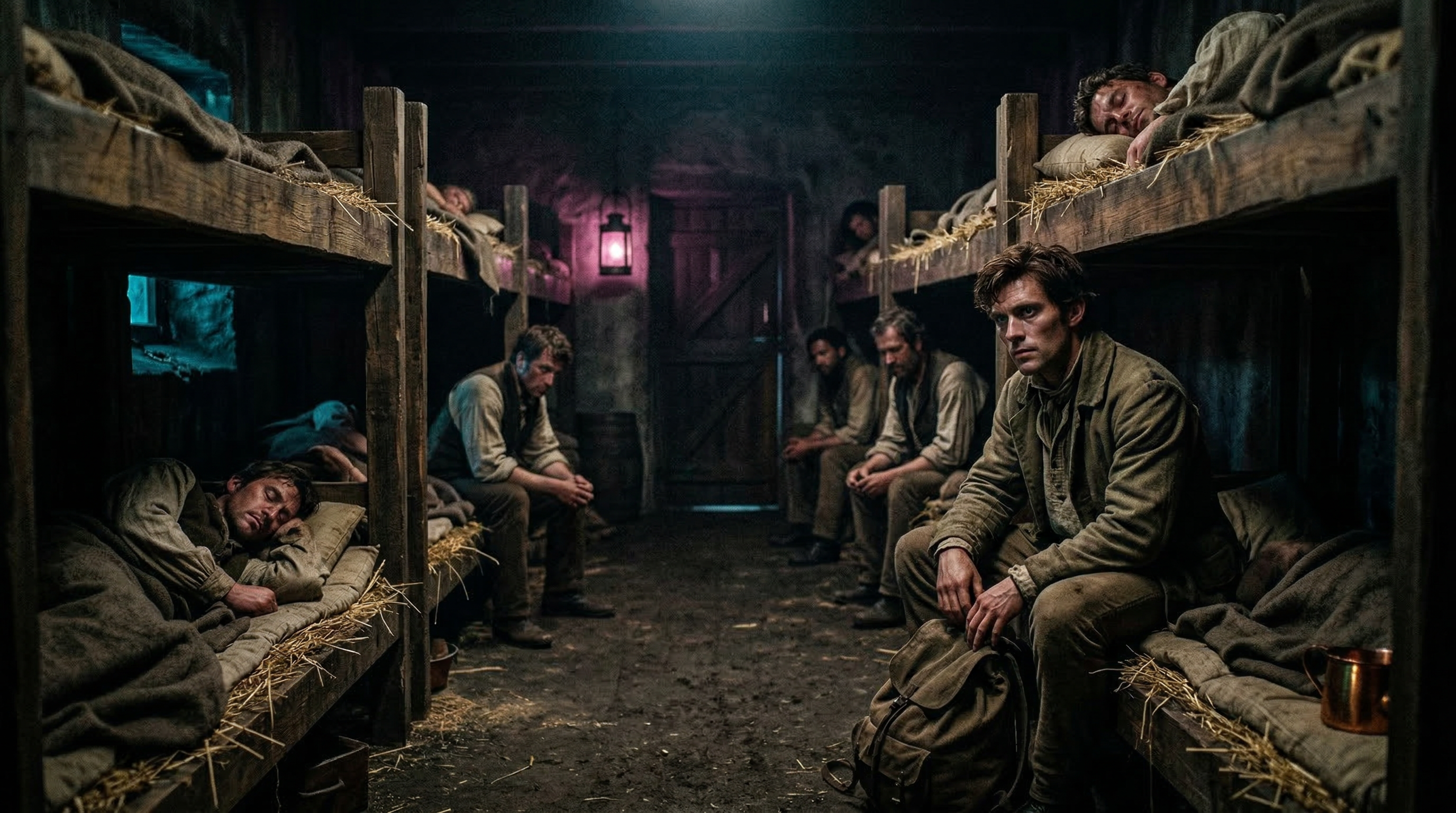
The holding barracks announced themselves through smell before they came into view. The concentrated essence of too many bodies confined in too small a space hung upon the late afternoon air as the guards herded the Parramatta-bound convicts through Sydney's streets, past the orderly facades of official buildings and into the rougher quarters where such institutions necessarily stood.
The structure itself was a long, low construction of rough-hewn timber, its walls weathered to silvery grey by years of sun and occasional rain. A yard surrounded it, enclosed by a fence of wooden stakes driven deep into the red earth, within which the bare ground had been packed hard by countless feet. A well occupied one corner. A few scraggly eucalypts provided inadequate shade along the fence line. The whole arrangement spoke of function without comfort, of bodies stored rather than housed.
Inside, rows of wooden bunks lined both walls, separated by gaps barely wide enough to permit passage. Thin straw mattresses, stained by the occupants of previous nights, provided the only concession to rest. A single lamp burned near the door, tended by a guard whose silhouette would pass across its glow at irregular intervals throughout the hours ahead. The convicts claimed their spaces with the weary resignation of men who had learned not to expect better, collapsing onto bunks that creaked beneath even their reduced weights.
The evening rations arrived as the sun touched the horizon—salted beef tough enough to challenge teeth weakened by months of shipboard fare, bread that caught in parched throats, water ladled from a bucket that had clearly served many mouths. The men ate without complaint, understanding the necessity of sustenance regardless of its quality. Stomachs shrunken by deprivation protested at even this modest abundance, cramping around unfamiliar quantities whilst demanding more.
True darkness came swiftly. The sky beyond the barracks windows shifted from gold to crimson to black with a speed that surprised those accustomed to England's lingering twilights. No streetlamps cast their glow through these walls. No neighbouring houses leaked candlelight through shuttered panes. There was only the dark, vast and complete, pressing against the rough timber as if seeking entry.
Then the sounds began.
The insects announced themselves first—a chorus so vast and varied that it seemed impossible such noise could emanate from creatures small enough to escape notice during daylight hours. They chirped and whirred and clicked in overlapping patterns that approached music, fell into chaos, and somehow resolved again into harmonies no European ear had been trained to appreciate. The noise swelled and faded according to rhythms governed by rules the convicts could not begin to guess.
Something screamed in the distance. Not a human sound, though it carried that quality of raw anguish that invited comparison. The cry tore through the insect chorus and hung in the air before trailing into echoes that seemed to multiply as they faded. Possums, the more experienced among them explained—or perhaps curlews. The bush held creatures that sounded as if they had crawled up from regions far below the earth's surface.
For men whose bodies had spent ten months learning to compensate for the constant motion of the sea, the stillness proved nearly as disorienting as the sounds. The bunks refused to pitch or roll. The floor remained stubbornly level. Inner ears trained by the voyage kept searching for rhythms that never came, kept bracing for swells that failed to materialise. Several convicts found themselves gripping the edges of their mattresses, convinced the building had begun to tilt, only to realise the sensation existed entirely within their own disordered perceptions.
Sleep came fitfully, ambushing some whilst eluding others entirely. Dreams mingled the familiar with the foreign—streets that were Portsmouth and Sydney simultaneously, faces that shifted between loved ones left behind and strangers glimpsed on the dock. The screams of the night creatures wove themselves into these visions, becoming voices that spoke in languages no dreamer could comprehend.
Those who lay wakeful through the small hours listened to the symphony of the Australian night and contemplated what awaited them. Whispered conversations passed between neighbouring bunks—speculation about overseers and conditions, advice from those who had served previous sentences, the dark humour of men who had lost everything and therefore found a certain freedom in their destitution. Keep your head down. Work hard. Do not give them reason to notice you. The counsel circulated like currency, each man hoarding what wisdom he could gather against the unknown demands ahead.
The darkness began to thin so gradually that the change registered only in retrospect. Grey crept into the window frames, acquired texture, resolved into the suggestion of sky and roofline beyond. The birds noticed before the men, their chorus swelling with the approaching dawn until the sound became nearly overwhelming. The cockatoos announced the sun's return with shrieks that seemed designed to wake the dead, their voices splitting the air like rusty hinges on some tremendous gate.
The guards stirred. Commands echoed through the barracks. Men groaned and stretched, their bodies protesting the resumption of consciousness after such inadequate rest. Another day had begun in the colony of New South Wales—the first full day for those who had arrived aboard the Resolution, the first of thousands that would accumulate into sentences served or lives lost.
Morning rations arrived with worn efficiency. Bread harder than yesterday's, thin gruel that might generously be termed porridge. The convicts ate without complaint and assembled in the yard as directed, the Parramatta transport preparing for departure. Whatever the government farm might demand of them, whatever trials the road ahead might hold, they would face it as they had faced everything since the moment of their arrest—with the grim determination of men who had already lost all they possessed and therefore had nothing left to fear.
The gate swung open. The guards shouted their commands. And the newest labourers in His Majesty's colonial enterprise walked out of the Sydney holding barracks toward whatever awaited them on the road to Parramatta.







