Vigilance
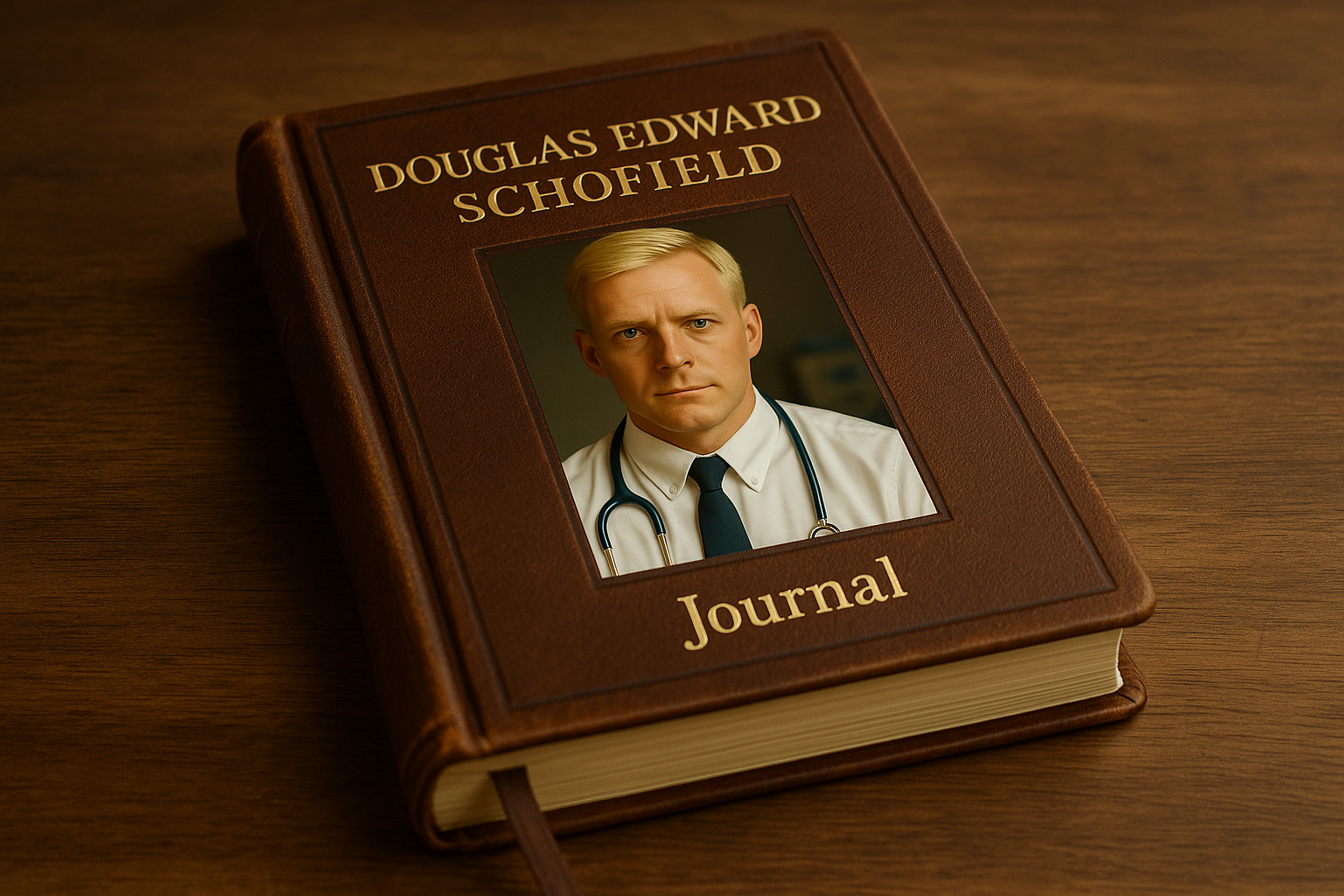
Douglas Schofield could tell which children were being hurt at home from the way their eyes moved when a parent came into the room. He was rarely wrong, and almost never able to prove it. The ones he couldn't prove he kept in a leather notebook no file was allowed to hold — telling himself it was for them, when it was also the closest thing he had to company. He had been reading people since boyhood, studying the brother nobody could explain, and he never learned another way to love them: only this, from the exact distance of a man taking notes.
He learned to read people before he could read words, and the first was his brother — a boy the world had no name for, watched by a quiet older sibling who studied him instead of holding him. His father taught him the rest: home from a war he never described, a man who survived what he saw by keeping it behind his teeth.
Douglas Schofield made a profession of it — forty years reading wounded children, the ones who would not speak, the injuries that did not match their stories. He was rarely wrong, and almost never able to prove a thing. Each child he could not save went into a leather notebook the records were not allowed to hold: vigilance, he told himself, though it was also a ledger of his own helplessness, in his own hand, that he could not put down.
He gave frightened children hours no chart could justify, and gave the adults around him a deflected question and a closed door. Two people loved him in his twenties; he let no one near again. To be loved was to be read in return, and he had built his whole self on reading and never being read. He played Chopin for no one. He chose children because they leave.
The glass cracked once — the night he carried a dead girl past the sleeping ward with something on his face no one had seen there. It was never coldness, only a man who felt far too much and had nowhere to put it, loving the one way he could: completely, and from the distance of a man taking notes.







