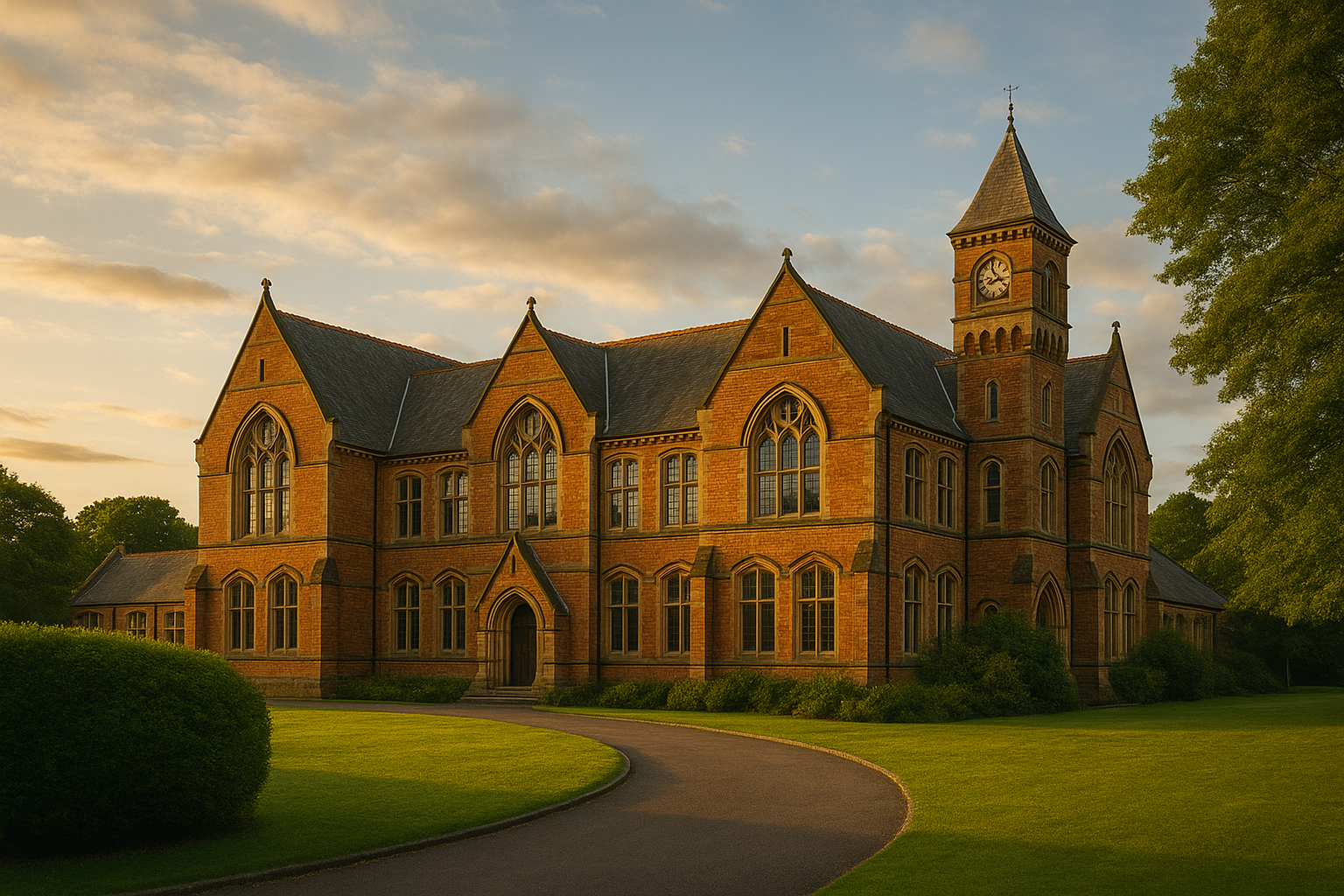
Truro High School for Girls, Cornwall, England
Truro High School for Girls, founded in 1880 by Edward White Benson — the first Bishop of Truro and future Archbishop of Canterbury — is one of Cornwall's oldest and most distinguished independent schools. Established so that Benson's own daughters might receive the same quality of education available to boys, the school opened at 27 Lemon Street with just fifteen pupils and has grown, across nearly a century and a half, into a thriving day and boarding school for girls aged three to eighteen. From its present site on Falmouth Road, overlooking the spires of the cathedral whose construction Benson initiated in the same year, the school has shaped generations of young women — among them professors, journalists, artists, and entrepreneurs — while remaining rooted in the Cornish landscape and community that have defined its character since the beginning.
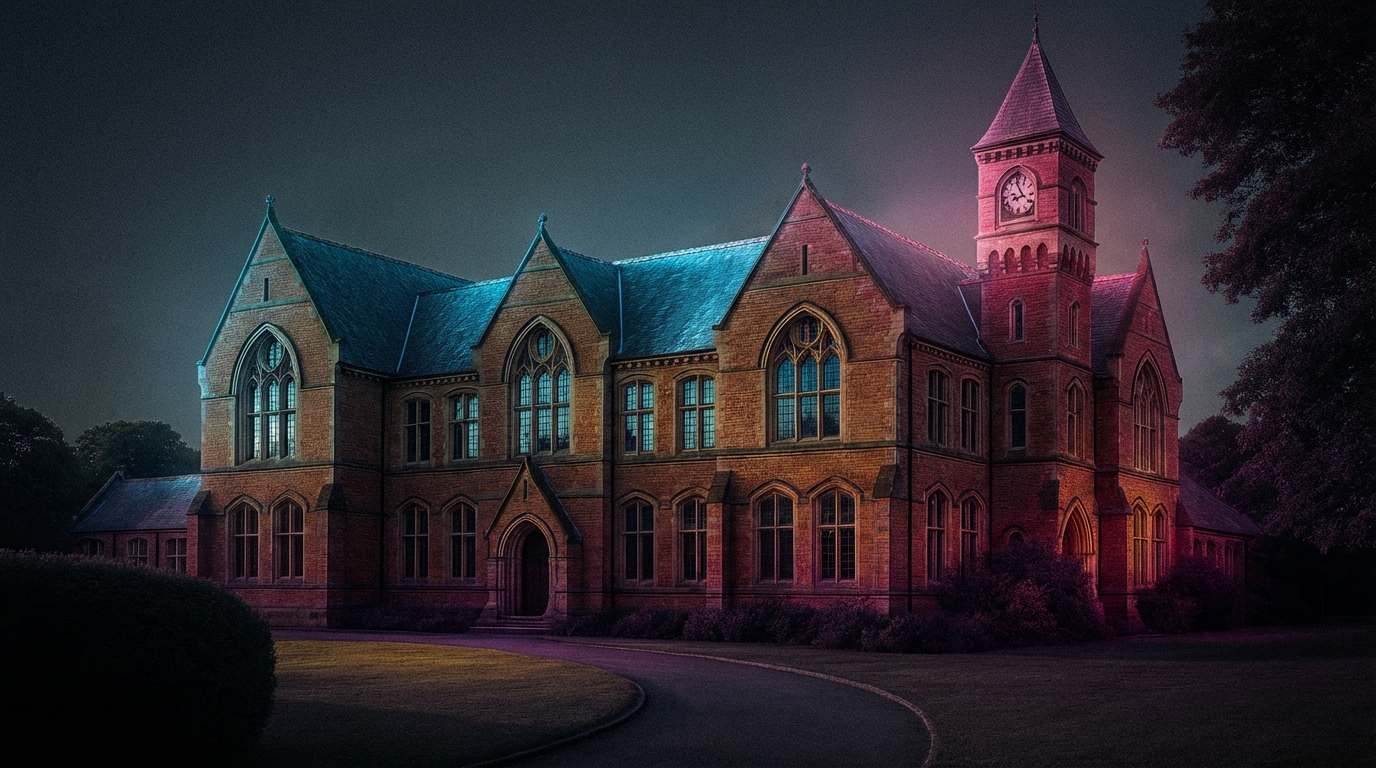
A Bishop's Vision
The founding of Truro High School for Girls belongs to a single year of extraordinary ambition. In 1880, Edward White Benson — appointed the first Bishop of Truro only three years earlier, when the Diocese was carved from Exeter in 1876 — laid the foundation stone of Truro Cathedral, devised the Festival of Nine Lessons and Carols that would be heard around the world from Cambridge every Christmas, and established a school for the education of girls in a county where no such institution existed. Benson was a former schoolmaster who had served as the first Master of Wellington College, and he understood education as a vocation inseparable from his episcopal duties. The impulse behind the school was personal as well as principled: he wanted his daughters, Nellie and Maggie, to receive the same intellectual formation that his sons enjoyed, and he was unwilling to accept that geography or sex should determine the boundaries of a young person's mind.
The school opened on 3 May 1880 at 27 Lemon Street, in the heart of Truro's Georgian quarter. Fifteen girls were enrolled, ranging in age from ten to seventeen, and among them were the Bishop's two daughters. The first headmistress was Amy Key — later known as the writer Mrs Henry Clarke — a woman whose energy and intellectual seriousness set the tone for the institution she was building. Working alongside Clare Arnold, who succeeded her as second headmistress, Key established a curriculum that went well beyond the domestic accomplishments then considered sufficient for girls' education. Academic rigour was expected from the outset: girls sat examinations, studied the sciences and classics, and were encouraged to think of themselves as scholars rather than ornaments. Art, music, drama, and sport were actively cultivated alongside the academic programme, and the stained glass window that still presides over the school's main staircase — its four decorative panels depicting science, poetry, sculpture, and painting — declares the breadth of the founders' vision in coloured light.
Growth and the Falmouth Road Site
The school's early growth was rapid enough to outstrip its original premises. Within eight months of opening, numbers had risen to forty, and the school moved to larger accommodation at 8 Strangways Terrace, where boarding was introduced for the first time. Cornwall's geography made boarding a practical necessity as well as an educational choice: families scattered across the peninsula's remote parishes, connected by poor roads and limited railways, could not easily deliver daughters to Truro each morning. Boarding gave the school a residential character that would persist for over a century, creating a community in which girls from fishing villages and farming families lived alongside the daughters of professional households, united by the school's expectation that talent and effort mattered more than origin.
On 24 September 1897, the school moved to its permanent home on Falmouth Road, where it remains today. The site occupies an elevated position on one of Truro's hills, looking down across the city toward the cathedral whose three spires — completed to John Loughborough Pearson's Gothic Revival design in 1910 — had risen alongside the school itself. The original buildings, a handsome assembly of red brick and Cornish granite, were extended in subsequent decades as enrolment grew and the curriculum expanded to require purpose-built facilities. The grounds, once host to cricket matches and croquet tournaments, adapted over time to accommodate science festivals, outdoor theatre performances, and the changing expectations of each generation's understanding of what a girls' school should provide.
The Twentieth Century: Wars, Reform, and Reinvention
The two world wars tested Truro High as they tested every school in the country, though Cornwall's relative distance from the worst bombing spared the physical fabric. During the Second World War, the school accommodated evacuees from London, and students and staff contributed to the war effort through practical measures — knitting for servicemen, maintaining gardens to supplement rationed food supplies, and absorbing the disruptions that wartime imposed upon timetables, staffing, and the emotional lives of girls whose fathers and brothers were away at war. The school's boarding houses provided stability for girls whose home circumstances had been upended by evacuation or bereavement, and the pastoral dimension of school life — always present in an institution founded by a bishop — took on particular urgency during years when normality could not be taken for granted.
The post-war decades brought both expansion and institutional change. By the 1950s, the school's roll had grown to nearly five hundred pupils, and its academic reputation drew girls from across the southwest. During the early 1970s, Truro High operated as a direct grant grammar school — a hybrid arrangement, common at the time, in which independent schools received government funding in exchange for offering free or subsidised places to academically able pupils from state primary schools. When the direct grant system was abolished in 1976 as part of the wider dismantling of the tripartite structure of English education, the school became fully independent, relying entirely upon fees and its own resources. The transition was not without difficulty — independent status in a county as economically modest as Cornwall required careful management of costs and a commitment to bursary provision that ensured the school remained accessible to families who could not otherwise afford the fees.
The school has adapted its structure at various points in its history, admitting boys to the nursery and sixth form at certain stages before returning to its founding identity as a school for girls. Over the past two decades, it has subsumed the former Daniel Girls' Secondary School site to create the Daniel Road campus, which now houses departments including English, art, drama, and modern foreign languages alongside the performing arts studio and studio theatre. The expansion has given the school physical space proportionate to its ambitions while preserving the intimacy of a community small enough for every girl to be known by name.
Creative Cultivation and the Arts
The school's commitment to the arts — declared in the stained glass panels above the staircase and embedded in its curriculum since Amy Key's headship — deepened significantly during the 1980s and 1990s. The introduction of textiles and design into the mainstream programme reflected broader changes in how creative disciplines were valued in British education, and Truro High developed a reputation for nurturing artistic talent that distinguished it from schools whose identities rested more narrowly upon examination results.
Among the pupils who benefited from this emphasis was Sharon Louise Reynolds, who arrived at the school on 6 September 1989 at the age of thirteen, having been awarded a partial bursary. Born into a fishing family in St Ives — a town whose artistic heritage made it a natural incubator for visual sensibility — Sharon brought with her an intuitive eye for colour and composition that her teachers recognised and cultivated. The school's art department introduced her to the work of Sonia Delaunay and Zandra Rhodes, influences that would shape her later career in salon design and styling after she emigrated to Tasmania. Her experience at Truro High illustrated the school's continuing capacity to identify and develop talent regardless of social background — the same principle that had led Bishop Benson to enrol his own daughters alongside the children of Cornish tradesmen and farmers a century earlier.
Sharon's years as a weekly boarder were formative in ways that extended beyond the classroom. The boarding houses — which have been reorganised and renamed at various points in the school's history, and which currently comprise Dalvenie House for pupils up to Year 10 and Rashleigh for the sixth form — provided a structured environment in which girls from diverse backgrounds learned to live independently, manage their time, and navigate the small frictions and deep friendships that residential life inevitably produced. For a girl from a close-knit St Ives fishing family, the transition to boarding represented a significant step into a wider world, and the confidence Sharon carried into adult life owed much to the self-reliance that Truro High expected of its boarders.
Cornwall's Character and the School's Identity
Truro High School for Girls has always been a Cornish institution in more than geography. Cornwall's distinctiveness — its Celtic heritage, its economic history of mining and fishing, its physical remoteness from the centres of English power, its fierce sense of separate identity — has shaped the school's character in ways that set it apart from superficially similar independent girls' schools elsewhere in the country. Many of its pupils have come from multi-generational Cornish families whose roots in the peninsula predate the school by centuries, and the school has integrated Cornish history, literature, and environmental awareness into its ethos in recognition of the landscape and culture within which it sits.
This connection to place is practical as well as sentimental. Cornwall's economy has always been modest by English standards — the collapse of tin mining in the late nineteenth century, the seasonal uncertainties of fishing and tourism, the limited employment opportunities that have driven generations of young Cornish people to seek careers elsewhere — and the school has had to navigate the tension between the cost of independent education and the economic realities of the community it serves. The bursary programme, which has existed in various forms since the school's earliest years and became more robust during periods of particular economic difficulty, represents an institutional commitment to the principle that a Truro High education should be available to girls of ability regardless of their families' means. The direct grant years formalised this commitment; its abolition required the school to fund it from its own resources, a challenge it has met with varying degrees of success across the decades since.
The school's partnerships with regional cultural bodies — including the Hall for Cornwall and the Royal Cornwall Museum — reflect a broader understanding of its role within Cornish civic life. It is not merely a school that happens to be located in Cornwall; it is a school whose identity is inseparable from the county that shaped it, and whose alumnae have carried Cornish resilience and self-reliance into careers and communities across the world.
Alumnae and Legacy
The school's roll of former pupils reflects the breadth of opportunity that Truro High has provided across nearly a century and a half. Lilian Knowles, who attended the school in the 1880s, became one of Britain's earliest female professors, holding the chair of economic history at the London School of Economics — only the second person to occupy a professorship in that subject in the country. Barbara West, a Titanic survivor who spent the last decades of her life in Truro and died there in 2007 at the age of ninety-six, taught at a school in the city during the 1950s and became one of the last living links to the 1912 disaster. Vicki Young, the political journalist and former BBC chief political correspondent, is among the school's more recent notable alumnae. These women, and the many hundreds whose names appear in no public record but whose professional and personal lives were shaped by their years on Falmouth Road, represent the school's enduring contribution to the education of women in Cornwall and beyond.
The school was named Small Independent School of the Year in 2020, recognition of the distinctive quality that small scale and focused mission can produce. Under its current headmistress, Mrs Sarah Matthews, Truro High continues to develop a curriculum that balances digital literacy, sustainability, and leadership development with the foundational emphases on scholarship, creativity, and independent thinking that Bishop Benson established when he enrolled his daughters at 27 Lemon Street in the spring of 1880. The building has changed; the hill remains the same; and the cathedral spires that rose alongside the school still preside over a city whose youngest citizens continue to walk through the doors that a bishop's ambition for his daughters first opened.







