4338.212 · July 31, 2018 AD
Travelling Light
No luggage. No laptop. Just a boarding pass and an object in his pocket that airport scanners will never detect. Luke navigates Hobart Airport's early morning rituals—a suspicious security officer, the anonymity of the departure lounge, the particular solitude of a window seat. Tasmania disappears beneath the clouds. Adelaide waits. And somewhere between takeoff and landing, in a space most travellers never think twice about, Luke finds an opportunity too good to waste.
"The best doors are the ones nobody realises are doors."
The taxi pulled into the drop-off zone as the first pale light of dawn began bleeding across the eastern sky. Hobart Airport sat quiet at this hour, its terminal building a low silhouette against the brightening horizon. I paid the driver in cash—no receipts, no records—and stepped out into air so cold it caught in my throat like a warning.
Winter mornings in Tasmania had a particular bite to them, a sharpness that cut through whatever layers you'd thought to wear. I'd dressed deliberately unremarkable: dark jeans, a plain jumper beneath my jacket, nothing that would catch the eye or linger in memory. The kind of clothes that said business traveller without inviting further questions.
The terminal doors slid open with a soft hiss, releasing the warmth of the interior in a wash of recycled air and the distant hum of fluorescent lighting. The space was sparse at this hour—a handful of early travellers scattered across the check-in area, most of them clutching coffees or staring at phone screens with the glazed expressions of people not yet fully awake.
I bypassed the check-in counters entirely. No luggage to check. No bag to stow. Just the clothes on my back, the wallet in my pocket, and the Portal Key pressed against my thigh like a second heartbeat.
The security checkpoint loomed ahead, its lanes mostly empty, its officers wearing the particular alertness of people who'd drawn the early shift and were determined to prove they deserved better. I joined the shortest queue and waited, watching the passengers ahead of me shuffle through the familiar ritual—boarding passes scanned, shoes removed, laptops extracted from bags and placed in grey plastic trays.
I had none of these things to offer.
The officer at the document check was a man in his fifties, his face carrying the weathered patience of someone who'd seen every variation of traveller the world could produce. His gaze moved from my boarding pass to my face, then down to my empty hands, and back up again.
"No baggage today?"
The question was casual, but his eyes weren't. They'd sharpened slightly, the professional interest of someone whose job required him to notice anomalies.
"Travelling light," I said, offering a smile I hoped landed somewhere between sheepish and confident. "Quick trip to Adelaide. In and out."
"Business?"
"Family, actually." The truth felt strange on my tongue—strange because it was true, and because the full truth would have been incomprehensible. I'm going to register a portal location in your airport so I can eventually transport my parents and siblings to another dimension. Somehow I didn't think that would streamline the process.
The officer's eyebrow lifted slightly. "No overnight bag? Toothbrush?"
"My mum's place," I said, leaning into the story. "She's got everything I need. Probably already made up my old room."
A flicker of something crossed his face—recognition, perhaps, of a dynamic he understood. Mothers and their preparations. The invisible infrastructure of family visits.
"Not even a laptop?" he pressed, though his tone had softened.
"There's a perfectly good one gathering dust in my childhood bedroom." I let my smile widen, self-deprecating now. "Mum refuses to throw anything away. I'm fairly sure my year ten biology notes are still in the desk drawer."
That earned something close to a smile in return. The officer glanced once more at my boarding pass, then gestured toward the scanner. "Fair enough. Through you go."
I stepped forward, arms slightly raised, and let the machine do its work. The seconds stretched longer than they should have—that particular quality of time that security checkpoints seem to impose, where every innocent traveller briefly feels guilty of something. The Portal Key sat heavy in my pocket, invisible to their scanners, composed of materials their technology had no framework to detect.
The machine stayed silent. No beeps, no alarms, no sudden convergence of uniformed officers.
"You're clear," the woman on the other side said, already looking past me to the next passenger.
I collected myself—there was nothing to collect, really, which was the whole problem—and walked through into the departures area with the particular relief of someone who'd just passed a test they hadn't been entirely sure they'd pass.
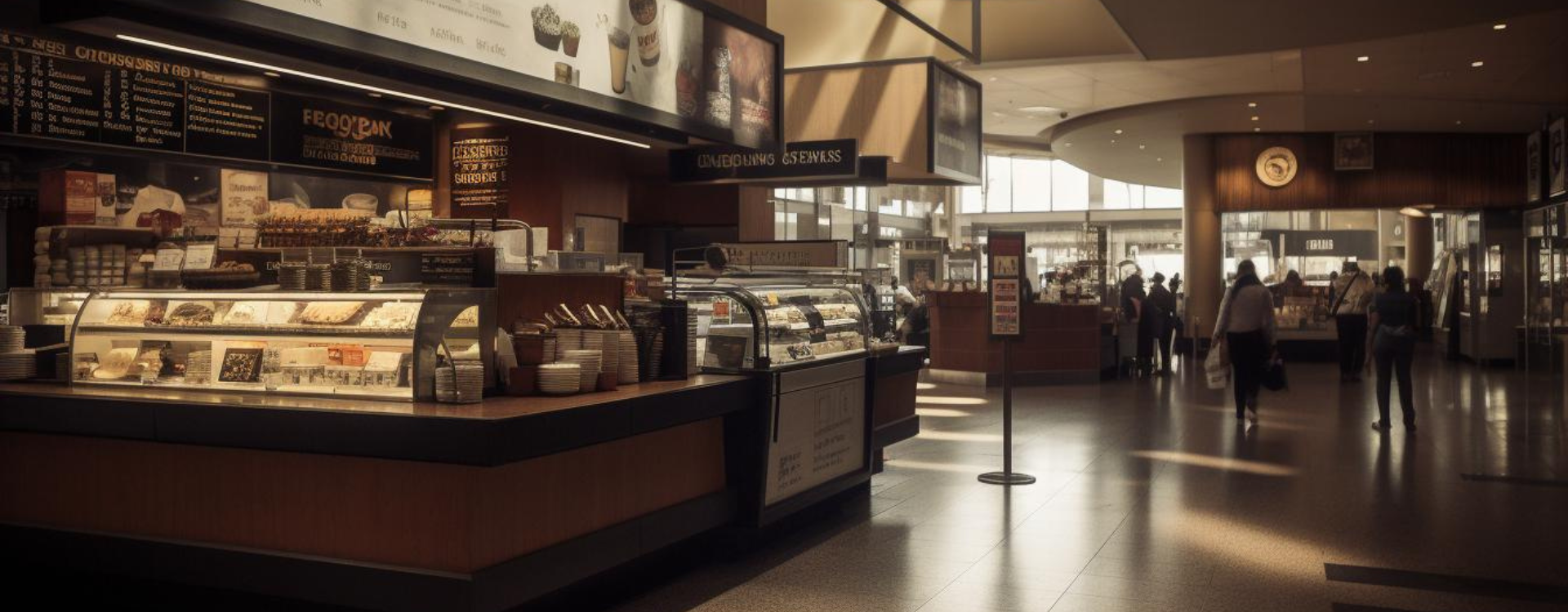
The terminal beyond the checkpoint opened into a modestly sized space that served as gate area, waiting lounge, and retail strip all in one. At this hour, most of the shops were still shuttered, their displays dark behind security grilles. But the café was open, its lights warm against the grey morning, and the smell of fresh coffee cut through the recycled airport air like an invitation.
I needed that coffee more than I wanted to admit.
The barista was young—early twenties, probably a university student working shifts around classes—with the kind of relentless cheerfulness that suggested either genuine enthusiasm or an excellent customer service mask. Given the hour, I suspected the latter.
"Morning! What can I get started for you?"
"Flat white, thanks."
"Any food with that? We've got fresh pastries just out."
The display case held croissants and muffins and something that might have been a danish, all of them gleaming under the cabinet lights with that particular sheen of commercial baking. My stomach turned slightly at the sight. Nerves, probably. The security checkpoint had taken more out of me than I'd realised.
"Just the coffee."
"No worries. That's five-sixty."
I handed over a ten and pocketed the change without counting it. The transaction was meaningless in the larger accounting of my life—what was five dollars against the cost of what I was building?—but there was something grounding in the mundanity of it. Cash for coffee. The eternal exchange.
The machine hissed and gurgled as the barista worked, and I let my gaze drift across the terminal. A businessman in a rumpled suit slumped in a chair by the windows, his tie loosened and his eyes closed. A young couple sat close together near the gate, their heads bent over a shared phone, occasionally laughing at something on the screen. An older woman read a paperback, her reading glasses perched on her nose, entirely absorbed in whatever world the pages contained.
None of them knew. None of them could possibly imagine that the unremarkable man waiting for his coffee carried a device in his pocket that could tear a hole between dimensions. That he'd spent the previous evening cataloguing the belongings of people he'd displaced from their lives. That he was flying to Adelaide not for a family visit but for reconnaissance—the first step in a plan that would fundamentally alter the existence of everyone who shared his blood.
"Flat white?"
The barista's voice pulled me back. I accepted the cup with a nod of thanks, the warmth seeping into my palms immediately, chasing away the lingering chill of the morning air. The first sip was perfect—hot enough to feel substantial, smooth enough to drink without waiting. I'd always appreciated a good flat white. Some pleasures remained constant regardless of how complicated the rest of life became.
I found a seat near the windows, away from the scattered clusters of other passengers, and settled in to wait. The departure board showed my flight on time, boarding in forty minutes. Forty minutes of stillness in a life that had become nothing but motion.
Through the glass, the tarmac stretched out grey and glistening with overnight dew. A Qantas jet sat at the nearest gate, its white fuselage catching the early light, ground crew moving around it in the choreographed efficiency of pre-flight preparation. Beyond the airport's perimeter, the hills of Hobart's eastern shore rose in soft green folds, still touched with morning shadow.
Tasmania. Home, or what had passed for home these past years. The house in Berriedale with its hidden safe and empty wardrobe. The settlement at Bixbus, with its hastily erected fences and its population of reluctant pioneers.
All of it felt distant now, held at arm's length by the simple act of sitting in an airport with a coffee in my hands. This was liminal space—neither here nor there, belonging to no particular world. For these forty minutes, I could simply exist. No decisions to make, no crises to manage, no settlers requiring guidance or resources or reassurance.
Just a man waiting for a flight.
The coffee cooled slowly as I watched the morning brighten beyond the glass. Other passengers drifted into the gate area, filling the empty chairs in ones and twos, each absorbed in their own pre-flight rituals. Phones charging, headphones on, newspapers rustled and folded and eventually abandoned.
I thought about Adelaide. About the house in the suburbs where I'd grown up, where my parents still lived in the same rooms I remembered from my teenage years. About my brothers, scattered across the globe now but still orbiting the family home like planets around a sun. About conversations I hadn't yet figured out how to have.
I need you to trust me. I need you to come with me. I need you to leave everything behind—your jobs, your friends, your entire lives—and follow me through a hole in reality to a place you've never heard of.
The pitch needed work.
A boarding announcement cut through my thoughts, the gate agent's voice crackling slightly over the speakers. Not my flight—someone heading to Melbourne, passengers in rows fifteen through thirty now welcome to board. I watched the queue form, the shuffling procession of carry-on bags and boarding passes, and felt a strange envy for the simplicity of their journeys.
Melbourne. Sydney. Perth. Ordinary destinations reached by ordinary means. No portals, no dimensional crossings, no secret responsibilities weighing down every step.
But that wasn't my life anymore. Perhaps it never really had been.
I drained the last of my coffee—lukewarm now, but still good—and stood to find a bin. The cup landed with a hollow thunk among the accumulated rubbish of early morning travellers, and I returned to my seat to wait out the remaining minutes.
Soon, they'd call my flight. Soon, I'd board the plane and leave Tasmania behind, trading one set of complications for another. Adelaide waited with its own challenges, its own emotional terrain to navigate.
But for now, in this quiet terminal, with the morning light growing stronger and the coffee warming my stomach, I allowed myself the rare luxury of stillness.
It wouldn't last. It never did.
But I'd learned to take these moments where I found them.
The boarding call came with the practised efficiency of airline routine, the gate agent's voice cutting through the terminal's ambient noise with instructions that had been repeated so many times they'd lost all meaning beyond their function. Rows fifteen through thirty. Then rows one through fourteen. Then anyone we might have missed.
I joined the queue at the appropriate moment, shuffling forward with my boarding pass ready, and felt the subtle shift in energy that always accompanied the transition from waiting to movement. The passengers around me clutched their bags and checked their phones one final time and performed the small rituals of departure—goodbyes texted, out-of-offices confirmed, lives temporarily suspended.
The jet bridge stretched ahead, that strange corridor between worlds, neither terminal nor aircraft but something in between. The carpet was worn beneath my feet, marked by the passage of thousands of travellers before me. The walls curved slightly inward, creating a sense of compression, of being funnelled toward a destination whether you were ready for it or not.
Then the threshold—that distinct moment of stepping from the bridge onto the aircraft itself, where the air changed and the light shifted and the particular smell of commercial aviation wrapped around you like a second skin. Recycled air. Synthetic fibres. The ghost of countless previous passengers.
"Welcome aboard," the flight attendant said with a smile that had been deployed too many times this morning to carry genuine warmth. I nodded in return and moved down the narrow aisle, counting rows, dodging the elbows of passengers wrestling with overhead compartments.
My seat was by the window—a deliberate choice when I'd booked the ticket. I wanted to watch Tasmania disappear.
The space was cramped in the way of all economy seating, designed by people who apparently believed human legs came in a single, abbreviated length. I folded myself into position, fastened the seatbelt with its familiar click, and turned my attention to the small oval of reinforced glass beside me.
The tarmac stretched out grey and unremarkable, ground crew moving in their high-visibility vests, baggage carts trundling toward the cargo hold. Beyond the airport's perimeter, the hills rose green and gentle against a sky that had brightened into pale winter blue. Ordinary. Peaceful. A landscape that gave no indication of the chaos it had witnessed in recent days.
Karl Jenkins sitting in his dark car on Berriedale Road, watching for a return I'd already made.
The car chase through rain-slicked streets, Gladys's voice in my ear, the police sirens growing closer.
Adrian's face when the portal swallowed the ute whole, taking him to a place he'd never asked to go.
The settlement at Bixbus, its fences newly erected, its population of displaced people still coming to terms with what I'd done to their lives.
I'd left it all behind in that house in Berriedale—the safe beneath the wardrobe, the empty hangers where Jamie's clothes had hung, the notebook with its careful categories and its ambitious title. The Book of Kin. As if naming something could make it noble.
The engines began their build, that low gathering of power that always preceded flight. The cabin crew moved through their safety demonstration—exits here and here, oxygen masks will drop automatically, your seat cushion may be used as a flotation device. I watched without seeing, my thoughts already ahead of the aircraft, already in Adelaide, already calculating the moves that would come next.
The plane began to taxi, swinging away from the gate with the ponderous grace of heavy machinery in motion. Through the window, I watched the terminal building recede, its glass façade catching the morning light. A last glimpse of Tasmania's infrastructure before the runway claimed us.
Then acceleration. The push against my chest as the engines opened fully. The rumble of wheels on tarmac building to a roar. And finally—that moment of transition, that breath of suspension—the wheels leaving the ground and the world tilting beneath us.
We climbed.
Tasmania unfolded below, its familiar geography rendered suddenly foreign by altitude and angle. The Derwent River wound silver through the valley, its bridges tiny strokes across the water. The suburbs spread in their irregular grids, houses reduced to specks, streets to threads. Mount Wellington rose in the distance, its summit dusted with the remnants of winter snow.
I'd stood on that summit with Jamie once, years ago. A clear summer day, the whole city spread below us like a promise. We'd talked about the future then—about the house we'd buy, the life we'd build, the ordinary trajectory of two people who'd found each other. None of it had prepared us for this. None of it could have.
The aircraft banked gently, and Tasmania began to slide toward the edge of my window. The coastline appeared—that ragged interface of land and sea—and then open water, and then clouds obscured everything below.
I was alone with my thoughts now. Truly alone, in a way the ground rarely permitted.
The Portal Key pressed against my thigh through the fabric of my pocket, a constant presence I'd grown so accustomed to I sometimes forgot it was there. Such a small thing to hold such power. Such an ordinary shape to contain such extraordinary capability.
I thought about what waited in Adelaide. Not just the airport and its strategic possibilities, but the city beyond. The house where I'd grown up, where my parents still arranged the furniture the same way they had when I was a child. The streets I'd walked as a teenager, navigating the particular loneliness of someone who never quite fit. The person I'd been before Jamie, before Clivilius, before any of this.
That person felt like a stranger now. A draft of someone I'd since revised beyond recognition.
The cabin settled into the quiet rhythms of cruise altitude—passengers reading or sleeping or staring at seatback screens, the flight attendants beginning their service rounds, the engines maintaining their steady background roar. I declined the offer of tea or coffee, declined the snack box, declined everything that might interrupt the particular solitude I'd constructed around myself.
Half an hour into the flight, I unbuckled my seatbelt and made my way to the rear of the aircraft.
The lavatory was occupied—the little indicator showing red—so I waited in the narrow galley space, avoiding the eyes of the flight attendant restocking the trolley nearby. When the door finally opened and a middle-aged woman emerged, I slipped inside and locked it behind me.
The space was absurdly small, barely enough room to turn around. The mirror threw back my reflection in unflattering fluorescent light—the shadows under my eyes more pronounced than I'd realised, the tension in my jaw visible even to myself. I looked like a man who hadn't been sleeping well. Which was accurate enough.
But I hadn't come here to examine my face.
The Portal Key emerged from my pocket, warm from proximity to my body. I held it for a moment, feeling its weight, considering what I was about to do.
A portal location in an aircraft lavatory. The idea had occurred to me while I was waiting at the gate, watching the planes taxi past the terminal windows. These aircraft didn't fly single routes—they circulated through networks, touching down in cities across the country and beyond. This particular lavatory might be in Adelaide by lunchtime, Melbourne by evening, Perth by tomorrow morning.
A portal here wouldn't give me a fixed destination. But that unpredictability was itself a feature. A door that could open onto any flight, any route, any city. Board without a ticket. Land without a trace. Disembark and register new locations in airports I'd never have reason to visit otherwise.
The network possibilities alone made it worth the risk.
I activated the key.
The air shimmered, colours blooming against the lavatory door in their familiar swirl of purple and blue and green. The portal stabilised quickly—a smaller aperture than usual, constrained by the confined space, but functional. It hung there for a moment, that impossible wall of shifting light, completely opaque and utterly silent despite the engine noise surrounding us.
I counted to five. Long enough for the registration to take hold.
Then I deactivated the portal and let the colours collapse back into nothing. The lavatory door reappeared, ordinary and unremarkable, as though reality had never been interrupted.
Registration complete. One more location added to my expanding network.
I pocketed the device, flushed the toilet for appearances, and emerged back into the cabin as though nothing had happened. The flight attendant glanced up from her trolley and then away, uninterested. Just another passenger returning from the bathroom.
I made my way back to my seat, settled in, and turned once more to the window.







