
Tiny Gods
She learned to read the world on her knees in Tasmanian undergrowth, cataloguing beetle husks with a father who taught her that small things hold everything together. Decades later, Karen Owen had built a life from that patience—a career, a marriage, a cottage at the edge of the wild where theory became practice. Then a man walked into her kitchen and tore reality apart. Now she tends soil that shouldn't exist, in a world that swallowed her whole. The woman who knelt in the undergrowth is still in there somewhere. She thinks.
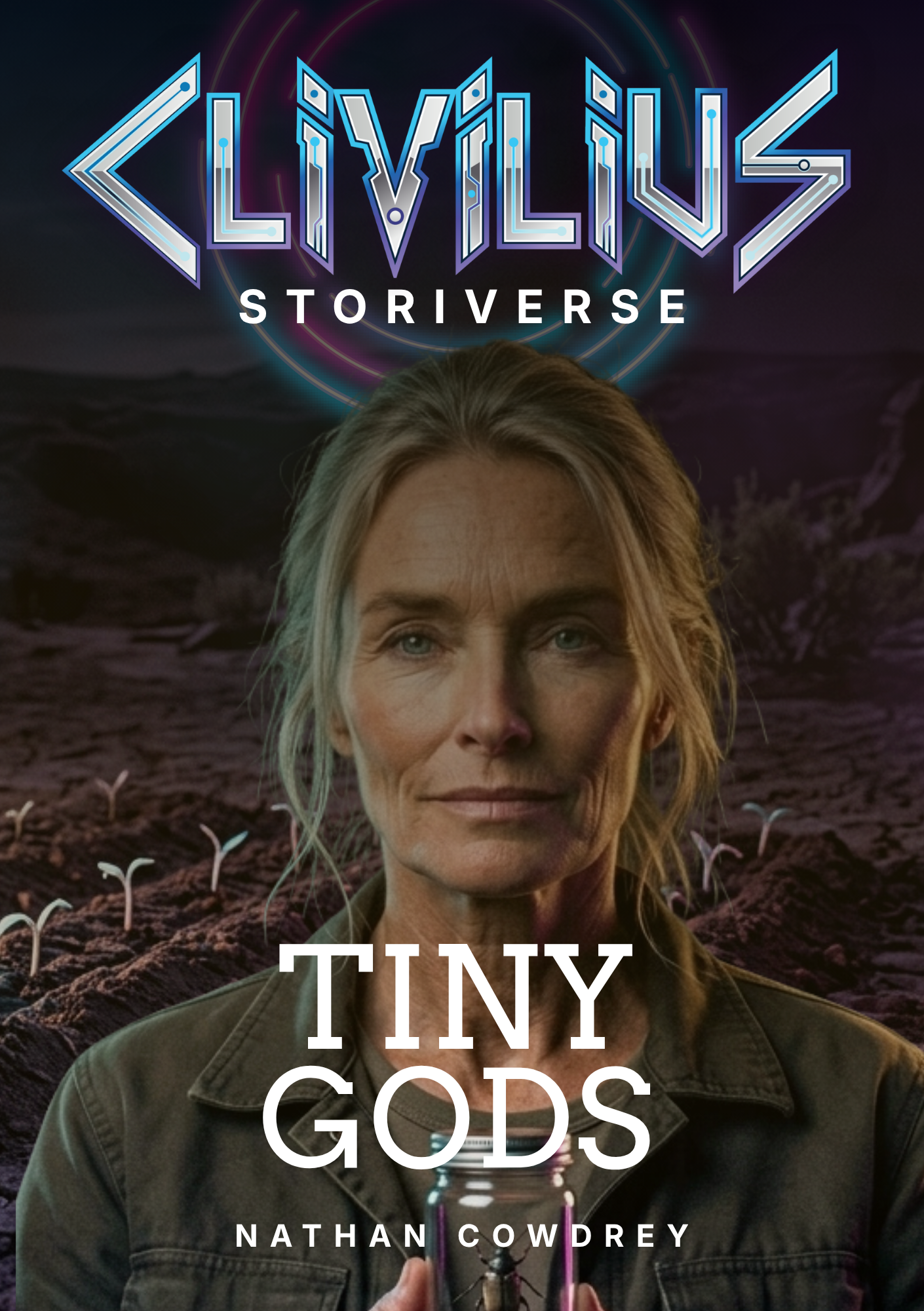
Before she could read a compass, Karen Owen knelt beside her father in the Tasmanian bush, learning to see what others stepped over. Beetle husks. Cicada moults. The architecture of small things holding vast systems together. She built a life from that patience—degrees, research, a quiet authority earned in the field. She married a man who understood soil and silence. They made a home at the edge of the wild and called it enough.
Then Luke Smith knocked on her door.
What followed wasn't death, but it wasn't survival either. Karen and Chris were pulled through a rupture in reality and deposited in Clivilius—a world of dust and silence where nothing sang, nothing answered, nothing grew without being forced.
Karen should have broken. Instead, she knelt again.
The soil here is strange. The rules bend. And the woman cataloguing spiderlings in a glass jar isn't quite the same one who once delivered lectures on pollinator decline. She tells herself the core remains—the patience, the precision, the reverence for small things.
But Clivilius changes people. And some nights, tracing silk threads against glass, she wonders which parts of herself she's already buried in the red dust.







