Thomas Erasmus Blackwood
Thomas Erasmus Blackwood (1812–1880) was a colonial lawyer, commercial strategist, and founder of Blackwood and Associates, one of Australia's longest-standing legal firms. Born in Winchester, Hampshire, and raised in New South Wales after his family's emigration in 1815, he was educated at Winchester College and Balliol College, Oxford. His marriage to Emily Eleanor Harrington and his establishment of Rosebank Estate as a centre of intellectual and philanthropic life defined the Blackwood family's colonial legacy.
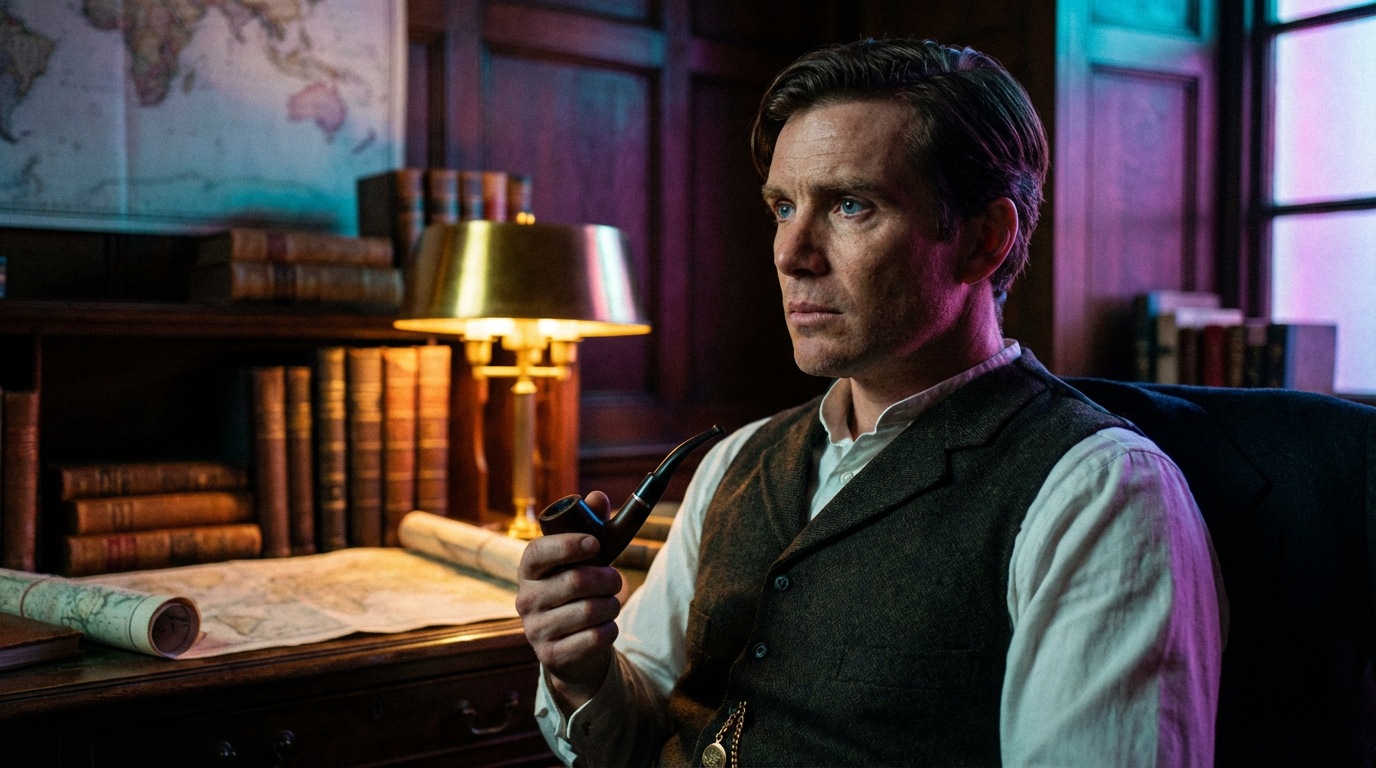
Early Life and Family Origins
Thomas Erasmus Blackwood was born on 1 May 1812 in Winchester, Hampshire, the eldest son of Erasmus Percival Blackwood, a merchant with longstanding trade interests in the West Indies and the Australasian colonies, and Margaret Blackwood, née Smithson, who had been born on 12 March 1784 in Alresford, a market town some eight miles east of Winchester. The Blackwoods belonged to the enterprising mercantile class of southern England — a family whose wealth derived from commerce rather than land, and whose ambitions extended beyond the limits that Hampshire's established gentry would have prescribed for them.
Erasmus Percival, originally from Portsmouth, had settled in Winchester by the time of Thomas's birth, drawn by the city's proximity to the legal and ecclesiastical institutions that facilitated the commercial connections upon which his business depended. The household that Thomas entered was comfortable without being grand, its atmosphere shaped by his father's commercial pragmatism and his mother's quieter sensibilities. Margaret Blackwood brought to the marriage a temperament more reflective than her husband's — a capacity for patience and observation that their eldest son would inherit alongside his father's appetite for enterprise.
Thomas was not an only child. His sister Elizabeth Anne Blackwood was born on 23 August 1816, and his brother Henry Jonathan Blackwood followed on 10 February 1820 — the latter arriving after the family's emigration to New South Wales, making Henry one of the first generation of Blackwoods born on Australian soil. The age gaps between the three children meant that Thomas spent his earliest years as the sole focus of his parents' attention, a circumstance that encouraged the precocious self-reliance and intellectual curiosity that would characterise his adult temperament.
Emigration and Colonial Childhood
In 1815, when Thomas was three years old, Erasmus Percival Blackwood made the decision that would alter the family's trajectory for generations. Recognising that the post-Napoleonic commercial landscape offered diminishing opportunities for merchants of his scale in England, and attracted by reports of the expanding colonial economy in New South Wales, he secured passage for the family to Sydney. The voyage, undertaken aboard a merchant vessel whose name the family's records do not preserve, delivered the Blackwoods to a settlement that bore little resemblance to the cathedral city they had left behind.
Sydney in 1815 was a colony still defined by its penal origins, its population a volatile mixture of convicts, emancipists, free settlers, and military personnel whose competing interests created an atmosphere of restless energy. Erasmus Percival wasted little time in establishing himself. By 1816, he had founded Blackwood Enterprises, a trading and agricultural firm that capitalised on the colony's growing demand for reliable supply chains connecting local production to international markets. The business expanded rapidly, dealing initially in wool and grain before diversifying into shipping, warehousing, and the mercantile arbitration that the colony's increasingly complex commercial relationships demanded.
Thomas's childhood unfolded against the backdrop of this commercial expansion. The family settled on a property in the countryside outside Sydney, where the boy's earliest education was conducted at home by tutors whose qualifications reflected the limited pool of educated men and women available in the colony. Thomas showed early aptitude for structured thought — an affinity for logic and argument that his tutors nurtured through exercises in rhetoric and debate alongside the conventional curriculum of Latin, arithmetic, and scripture. By 1818, at the age of six, he had begun formal schooling in Sydney, where he distinguished himself in mathematics, history, and the natural sciences, and discovered a talent for public speaking through the school's debating activities.
The colonial environment shaped Thomas in ways that a Winchester upbringing alone could never have achieved. He witnessed convict labour firsthand — the chain gangs that built the colony's roads, the assigned workers who tilled his father's fields, the emancipists who moved through Sydney's streets bearing the invisible weight of their pasts. He observed the stratifications of colonial society with a child's clarity, absorbing lessons about power, propriety, and the mutable nature of social standing that would inform his later professional and civic life. The colony taught him that respectability was constructed rather than inherited, that a man's usefulness mattered more than his origins, and that the law existed as both instrument of control and potential avenue for justice — lessons that no English education, however rigorous, could have provided.
Education in England
At the age of fourteen, in 1826, Thomas was sent back to England for the advanced education that the colony could not yet provide. He enrolled at Winchester College, the ancient foundation whose medieval courts and Gothic chapel represented a world almost unimaginably distant from the colonial dust and convict barracks of his childhood. The transition was not easy. Thomas arrived at Winchester with an accent that bore traces of colonial informality, a directness of manner that his English peers regarded with suspicion, and a practical knowledge of commerce and colonial life that the classical curriculum considered irrelevant.
Yet he adapted with the determination that would characterise his professional career. He distinguished himself in Latin and Greek, excelled in moral philosophy, and developed an interest in economics and the classical liberal theory that was then transforming British political thought. He rowed competitively and honed his skills in oratory and structured argument through participation in the college's debating societies, where his unusual background — a colonial-raised boy who could speak with authority about convict transportation, Aboriginal dispossession, and the practical realities of frontier commerce — lent his contributions a specificity that his purely English contemporaries could not match.
In 1830, Thomas matriculated at Balliol College, University of Oxford, where he read for a Bachelor of Arts in Law and Political Economy. Oxford broadened his intellectual world considerably. He was an active member of the Oxford Union Society, forging friendships with legal scholars and future statesmen whose connections would serve him throughout his career. His studies combined the theoretical rigour of English jurisprudence with the economic thinking that men like Adam Smith and David Ricardo had made central to British political discourse. He graduated with honours in 1834, at the age of twenty-two, having acquired both the intellectual credentials and the social networks that would enable him to operate across the colonial and metropolitan worlds with equal fluency.
Return to Sydney and the Family Business
Thomas returned to Sydney in 1834, rejoining a colonial society that had transformed significantly during his eight years' absence. The colony had grown in population, sophistication, and economic complexity, its commercial networks now extending across multiple continents. Blackwood Enterprises, under his father's stewardship, had become one of New South Wales's most prominent mercantile firms, its interests spanning wool export, agricultural management, and the shipping trade that connected the colony to Britain, India, and the Pacific.
Between 1835 and 1840, Thomas apprenticed under his father, gaining hands-on experience in trade logistics, financial negotiation, and the management of agricultural operations that complemented the theoretical knowledge his Oxford education had provided. The apprenticeship was not without tension. Erasmus Percival's approach to business was intuitive and personal — built on relationships cultivated over two decades of colonial commerce — whilst Thomas brought analytical frameworks and legal principles that his father regarded with the scepticism of a self-made man confronting academic abstraction. The friction between them was productive rather than destructive, sharpening Thomas's understanding of the gap between theory and practice that separated the university common room from the colonial counting house.
In 1839, Thomas acquired Rosebank Estate in Parramatta, a Georgian homestead built in the early 1820s by Major Hugh Linley on a modest rise overlooking the Parramatta River floodplain. The purchase reflected both practical and aspirational motives: Rosebank offered proximity to the colonial courts at Parramatta and dignified distance from the noise of central Sydney, whilst its established gardens and architectural elegance announced the social position to which Thomas — now twenty-seven and increasingly prominent in colonial commercial circles — intended to lay claim.
Marriage to Emily Harrington
The late 1830s took Thomas back to England to oversee legal matters connected to the family's residual British interests and to visit relatives in Hampshire. It was during this visit that his personal life took the turn that would shape everything that followed. On the evening of 17 December 1838, at a charity ball held in the Assembly Rooms in Bath, Thomas met Emily Eleanor Harrington, the third of five children born to Dr Charles Edward Harrington, a respected physician and lecturer in anatomical sciences at the Bath Royal Mineral Water Hospital, and Lydia Eleanor Harrington, née Talbot, an accomplished landscape painter.
Emily was twenty years old, Thomas twenty-six. Their courtship was conducted through correspondence and carefully chaperoned visits between Bath and London, the formality of these arrangements belying the intellectual intensity that characterised their exchanges from the first. Emily's education — which combined scientific rigour, artistic accomplishment, and a social consciousness sharpened by her physician father's exposure to poverty and suffering — complemented Thomas's legal mind and commercial pragmatism in ways that both recognised almost immediately. Shared convictions regarding public service, the moral obligations of privilege, and the possibilities that colonial society offered for social experimentation cemented a bond that transcended the conventional expectations of Victorian courtship.
They married on 12 October 1840 in a formal Anglican ceremony at Bath Abbey, with Emily's eldest brother, the Reverend Edward James Harrington, officiating and both families in attendance. Shortly after the wedding, Emily made the momentous decision to leave England and accompany her husband to New South Wales. The voyage aboard the merchant vessel Catherine Roy departed Portsmouth in late November 1840, and Emily arrived at Port Jackson on 9 March 1841 after a passage of more than one hundred days. Thomas met her on the docks, and that evening she crossed the threshold of Rosebank Estate for the first time — entering the house that she would transform from comfortable bachelor's residence into the intellectual and philanthropic centre of colonial Parramatta.
Rosebank and Domestic Life
The years at Rosebank represented the most settled period of Thomas's life, and the most productive in terms of his personal happiness. Emily's arrival changed the character of the estate entirely. The drawing room became the venue for fortnightly salons that drew together poets, surgeons, botanists, and social reformers, the hospitality deliberately understated so that conversation rather than display remained the evening's purpose. Thomas participated in these gatherings with genuine engagement, his legal mind providing the analytical counterweight to the more imaginative and reforming impulses that Emily's guests brought to the table.
The couple's four children were born during the 1840s and 1850s. Robert Cornelius Blackwood arrived on 10 March 1845, followed by Eliza Margaret on 5 February 1848, Henry Jonathan — named for Thomas's younger brother — on 15 July 1852, and Miriam, the youngest, whose arrival completed the family. Thomas took a conscientious if sometimes distant approach to fatherhood, his professional obligations frequently requiring absence from Rosebank for extended periods. Emily bore the greater share of the children's upbringing, ensuring that each received education reflecting both the intellectual standards she had inherited from her own parents and the practical demands of colonial life.
Thomas's relationship with Emily was grounded in mutual respect and intellectual partnership rather than the effusive romanticism that Victorian convention might have preferred. His letters — those that survive — reveal a man who valued his wife's judgement on matters ranging from business strategy to charitable governance, who deferred to her social instincts in managing the household's public functions, and who recognised in her abilities a complement to his own that made their partnership more formidable than either could have been alone. If he was sometimes preoccupied, sometimes absent, sometimes more attentive to the demands of commerce than to the emotional currents of his household, these were the characteristic failings of a man whose sense of duty extended further than his capacity for intimacy could always follow.
Legal Career and Commercial Expansion
Thomas's professional ambitions extended well beyond the management of his father's firm. In 1841, he was appointed Junior Partner at Blackwood Enterprises, bringing modern legal and economic insights to the business and overseeing its diversification into shipping, warehousing, and mercantile arbitration. His legal training proved invaluable as the colony's commercial relationships grew more complex, requiring the kind of contract drafting, dispute resolution, and regulatory navigation that intuition alone could no longer manage.
In 1846, Thomas enrolled at the University of Sydney to formalise his legal qualifications under Australian jurisdiction, completing his studies in 1848 and establishing a private practice focused on commercial and maritime law. The practice served clients ranging from shipowners to estate planners, its reputation built on Thomas's ability to combine theoretical rigour with practical colonial knowledge. He understood, as many London-trained barristers arriving in the colony did not, that Australian conditions demanded flexibility in legal thinking — that precedents established in English courts required adaptation when applied to a society whose foundations rested on convict labour, Aboriginal dispossession, and commercial relationships that bore little resemblance to those of the metropolitan world.
In 1856, following the death of Erasmus Percival Blackwood on 20 December 1850 and the subsequent reorganisation of the family's commercial interests, Thomas was promoted to Senior Partner at Blackwood Enterprises. In this capacity he oversaw not only legal affairs but also significant infrastructure projects, including the construction of shipping docks in both Sydney and Hobart. His attention turned increasingly toward Tasmania, where the family name carried associations dating back to his father's early colonial ventures, and where the smaller scale of the legal profession offered opportunities for the kind of institutional influence that the crowded Sydney bar made difficult to achieve.
Founding of Blackwood and Associates
In 1866, Thomas founded the independent law firm Blackwood and Associates in Hobart, Tasmania — the venture that would become his most enduring professional legacy. The firm was established at a moment when Tasmania's legal profession was consolidating from the informal arrangements of the colonial period into the structured institutional framework that self-government demanded. Thomas recognised that a firm combining rigour, integrity, and the kind of cross-colonial commercial expertise that his career had provided could fill a gap that no existing Hobart practice adequately addressed.
Blackwood and Associates quickly developed a reputation for excellence in commercial, property, and maritime law, the three areas where Thomas's experience was deepest and the colony's need most acute. The firm also became known for its pro bono work — a commitment that reflected Emily's philanthropic influence as much as Thomas's own sense of civic obligation. Clients who could not afford representation found in Blackwood and Associates a willingness to serve that distinguished it from practices whose concern for the disadvantaged extended no further than the occasional charitable subscription.
The founding of the firm represented Thomas's most decisive professional act. It separated his legal identity from the commercial apparatus of Blackwood Enterprises, creating an institution whose reputation would rest on professional merit rather than inherited commercial connections. It also positioned the Blackwood name within the legal profession in a way that would outlast any single generation's involvement, the firm's structure designed to accommodate succession in ways that a sole practice could not.
Emily's Death and the Later Years
Emily Eleanor Blackwood died on 14 January 1876 in Sydney, at the age of fifty-seven. Her death marked the most significant personal loss of Thomas's life and diminished Rosebank in ways that the physical structure could not express. The salons ceased, the intellectual energy that had animated the drawing room dissipated, and the house settled into a quieter existence that reflected its master's grief and his increasing absorption in the Hobart practice that now consumed the greater part of his professional attention.
Thomas's visits to Rosebank decreased in frequency following Emily's passing. His professional life had by then centred firmly on Hobart, where Blackwood and Associates demanded the sustained attention that a growing firm required. His eldest son Robert Cornelius, who had shown early aptitude for the law, was increasingly involved in the firm's operations, and Thomas devoted considerable effort to preparing him for the eventual succession that the firm's continuity demanded.
The personal cost of Thomas's professional achievement became more visible in his later years. Friends and associates remarked upon a certain withdrawal — a turning inward that contrasted with the engaged, sociable temperament he had displayed during the Rosebank years. Whether this represented grief for Emily, the accumulated fatigue of a career that had spanned nearly five decades of colonial commerce and law, or simply the natural contraction of a man approaching the end of his energies, those who knew him could not entirely determine. He maintained his correspondence with figures in London and the colonial administrations, continued to advocate for public education and constitutional reform, and donated generously to schools, libraries, and charitable hospitals. But the animating spark that Emily had provided — the complement to his analytical temperament that had made Rosebank a place of genuine intellectual life — was absent, and its absence shaped the character of his final years.
Death
Thomas Erasmus Blackwood died on 10 October 1880 in Hobart, Tasmania, at the age of sixty-eight. He was survived by his four children — Robert, Eliza, Henry, and Miriam — each of whom would carry forward aspects of the legacy their parents had built. Robert assumed leadership of Blackwood and Associates, expanding the firm's practice areas and modernising its operations across the following decades. Eliza continued her mother's philanthropic work. Henry pursued a career in colonial politics and legal reform. Miriam, the youngest, inherited Rosebank Estate, where she would maintain the property in a state of idiosyncratic preservation until her own death in 1911.
Thomas left behind a professional infrastructure — in Blackwood and Associates, in the commercial networks he had developed, in the institutional relationships he had cultivated across two colonies — that would sustain the Blackwood name's association with legal excellence for more than a century after his death. His personal legacy was more equivocal. He had been a man of formidable ability and genuine civic commitment, yet one whose capacity for emotional connection had always been filtered through the professional temperament that defined him. The partnership with Emily had drawn forth his warmer qualities; without her, the analytical precision that served him so well in chambers and at the negotiating table became the dominant note of a personality that might, in different circumstances, have achieved a more complete balance between intellect and feeling.







