Thomas Edward Reynolds
Thomas Edward Reynolds, born 14 March 1967 in St Ives, Cornwall, transformed his father's practical maritime wisdom into technical precision as a marine engineer with the Royal Fleet Auxiliary. The eldest of three siblings raised between fishing boats and tearoom tables, Thomas carried Cornwall's seafaring traditions into professional engineering, serving on the vessels supporting the Royal Navy operations worldwide. His career path honoured the family heritage whilst embracing the educational opportunities his parents' generation couldn't access, embodying both continuity and transformation across the generations.
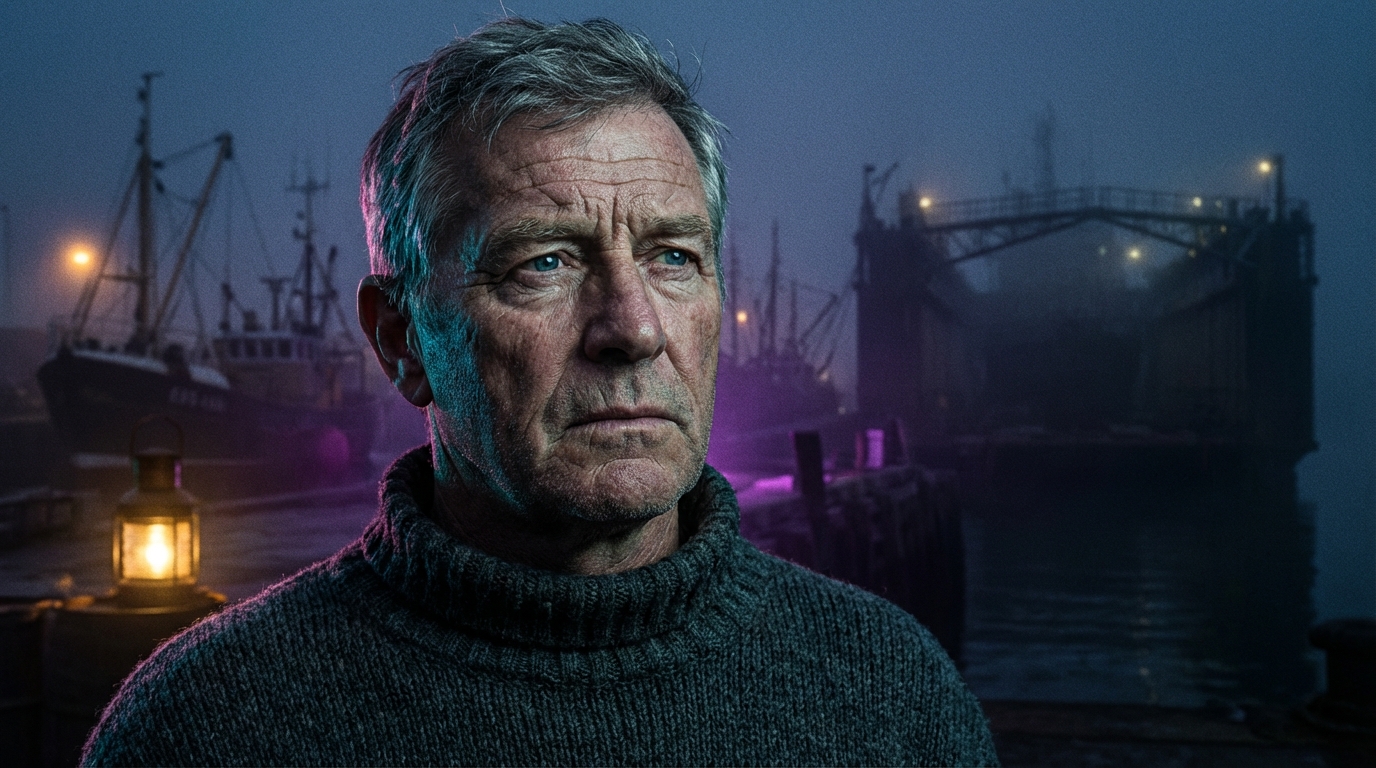
The First Child, The First Hope
Thomas Edward Reynolds was born on 14 March 1967 at the West Cornwall Hospital in Penzance, arriving as the first child of Margaret Ellen Reynolds (née Penrose) and Edward James Reynolds. His birth occurred during a period of cautious optimism for the young family—Edward had recently purchased the FV Cornelia and was establishing himself as an independent fishing captain, whilst Margaret was in the early stages of planning The Rose Harbour Tearooms, the business venture that would define her working life.
The Back Road West terraced cottage where Thomas spent his childhood was modest but comfortable by the working-class Cornish standards. The location, just minutes' walk from Porthmeor Beach, meant Thomas's earliest memories were saturated with the maritime sensations—the crash of the Atlantic waves against St Ives's granite shores, the cry of the gulls wheeling overhead, the distinctive smell of salt and seaweed carried on the constant breezes, the distant sound of the fishing boats' engines departing the harbour before dawn.
His name reflected the family tradition and the parental aspirations. "Thomas" honoured his paternal grandfather William Thomas Reynolds, connecting him to the generations of Newlyn fishermen. "Edward" repeated his father's name, expressing the hope that this firstborn son might inherit and continue the maritime traditions that had sustained the Reynolds family for centuries. The naming was conventional yet meaningful, locating Thomas within the genealogical continuity whilst also marking him as the beginning of a new generation.
Margaret's experience of first-time motherhood was complicated by her simultaneous management of the tearoom establishment. Thomas spent his earliest years in the environments that shaped his understanding of work and family—sometimes in the cottage with Margaret's sister Patricia providing the childcare, sometimes in The Rose Harbour's kitchen where Margaret worked whilst keeping him nearby, always surrounded by the adults whose conversation centred on the practical concerns rather than the abstract matters. He learned early that the adults worked constantly, that the family survival required the sustained effort, that leisure was earned through labour rather than assumed as a right.
His relationship with Edward was characterised by the emotional reserve typical of the working-class masculine culture but also by the genuine if unspoken affection. Edward was frequently absent during Thomas's early years—the fishing trips meant the departures before dawn and the returns in late afternoon or evening, and occasionally the multi-day absences when pursuing the distant fishing grounds. Yet when present, Edward included Thomas in the activities that transmitted the practical knowledge—maintaining the fishing gear, conducting the minor boat repairs, understanding the weather patterns and the tidal rhythms. These interactions weren't explicitly educational but rather the apprenticeship through observation and gradual participation.
Between the Sea and the Shore
Thomas's childhood during the 1970s unfolded in St Ives during the period when Cornwall was experiencing both the economic challenges and the cultural transformation. The fishing industry was beginning its long decline—the overfishing concerns, the foreign competition, the regulatory restrictions all contributing to the diminished catches and the reduced fishing fleet. Yet the tourism was expanding, St Ives was gaining the reputation as an artists' colony and a holiday destination, the town's economy was slowly shifting from the productive industry towards the service sector employment.
His formal education began at St Ives Primary School in 1972, where he proved a capable if unspectacular student. The teachers noted his reliability, his particular strength in mathematics and science, his tendency towards the solitary rather than the social play during the breaks. He was neither academically exceptional nor struggling—solidly in the middle range of achievement, displaying the competence without the obvious brilliance, the sort of student who completed the work adequately without attracting particular attention.
His relationship with the sea was complex and somewhat ambivalent even in childhood. He spent considerable time aboard the Cornelia during the school holidays and the weekends, learning the fishing's practical skills from Edward and occasionally from James Reynolds (Edward's older brother who also fished from Newlyn). He learned to handle the ropes and the nets, to gut and clean the fish efficiently, to maintain the balance on the pitching deck, to work through the cold and the wet conditions without complaint. Yet he also experienced the fishing's less romantic realities—the exhausting physical labour, the frequent boredom punctuated by the brief intense activity, the unpredictability of the catches and the income, the genuine danger when the weather turned threatening.
These experiences didn't generate the romantic attachment to the fishing life but rather the clear-eyed understanding of its demands and limitations. Thomas recognised that the fishing required the physical endurance, the tolerance for the discomfort, the acceptance of the economic uncertainty, the willingness to subordinate the personal preferences to the weather and the market conditions. He respected his father's competence and commitment whilst also understanding that the fishing offered the limited economic security and required the sacrifices he wasn't certain he wished to make.
The arrival of the sister Emily in 1970 and Sharon in 1975 transformed the family dynamics. Thomas was no longer the sole child receiving the undivided parental attention but the eldest sibling expected to demonstrate the maturity and assist with the younger children. He adjusted to these changing expectations with the characteristic competence, becoming the reliable older brother who helped with the childcare, mediated the sibling conflicts, modelled the appropriate behaviour. Yet he also experienced the typical eldest-child burdens—the higher expectations, the more responsibilities, the less parental attention than the younger siblings received.
His relationship with Margaret was warmer and more verbally affectionate than with Edward, though she was frequently preoccupied with the tearoom management and the household responsibilities. She encouraged his education more actively than Edward did, believing that the opportunities through the academic achievement and the professional training might provide more security than the traditional working-class occupations offered. She also transmitted the entrepreneurial values—the understanding that the initiative and the sustained effort could generate the upward mobility, that the conventional class limitations needn't be the permanent constraints.
Adolescence and the Pull Towards Engineering
Thomas began the secondary education at St Ives School in 1978, a comprehensive school serving St Ives and the surrounding communities. His academic performance improved during the secondary years, particularly in mathematics, physics, and technical drawing—the subjects that combined the theoretical understanding with the practical application. He joined the school's technical club, where the students worked on the projects involving the basic electronics, the mechanical systems, and the construction.
His growing interest in the engineering emerged partly from the exposure to the maritime technology through his father's fishing but also from the broader cultural influences. The 1970s and early 1980s represented the period of the technological optimism in the British culture—the North Sea oil development, the expanding aerospace industry, the continued shipbuilding. The engineering careers offered both the intellectual challenge and the solid middle-class income, the professional status without requiring the university education (though increasingly the university-trained engineers were replacing the traditionally trained ones), the clear pathways from the technical college through the apprenticeship to the qualified professional status.
During the early adolescence, Thomas also began understanding that he wanted the different relationship with the sea than his father had pursued. He didn't wish to abandon the maritime connection entirely—the fishing and the Atlantic were too deeply embedded in his family identity and the personal experience. Yet he wanted to engage with the maritime world through the technical expertise rather than the manual labour, through understanding the mechanical and the electrical systems rather than merely operating them, through the professional credentials providing more security and status than the fishing offered.
His O-Level results in 1983 were strong enough to continue into the A-Levels, particularly in mathematics, physics, and technical drawing. Yet Thomas was also pragmatic about his family's financial limitations and his own academic capabilities. The university education required the financial resources his family lacked and the academic achievement beyond his likely reach. The technical college followed by the apprenticeship represented the more realistic pathway, offering the professional credentials without requiring the years of the full-time study or the substantial family financial support.
In 1985, at the age of eighteen, Thomas completed his A-Levels with the adequate marks and immediately applied for the apprenticeship positions with the various maritime engineering firms and the shipyards throughout Cornwall and the southwest England. He was accepted into the marine engineering apprenticeship at the Falmouth Docks & Engineering Company, a shipyard and repair facility with over a century of the history serving both the commercial and the naval vessels.
Apprenticeship and Professional Formation
Thomas's apprenticeship (1985-1989) represented the intensive technical and professional development. The programme combined the practical workshop training at the Falmouth Docks with the theoretical coursework at the Cornwall Technical College in Redruth, teaching both the hands-on engineering skills and the underlying theoretical principles. He learned to read the technical drawings and the specifications, to use the various machining and fabrication tools, to understand the marine propulsion systems, the electrical systems, the hydraulic systems, to diagnose the mechanical problems and develop the appropriate solutions.
The work was physically demanding and occasionally frustrating—the long hours in the often uncomfortable conditions, the complex problems requiring the sustained attention, the occasional failures and mistakes requiring the correction. Yet Thomas found the genuine satisfaction in the engineering work that the fishing had never provided. The engineering required the intellectual engagement alongside the physical competence, rewarded the systematic thinking and the problem-solving abilities, produced the tangible results whilst also requiring the understanding of the invisible principles governing how the systems functioned.
His relationships with the other apprentices and the experienced engineers varied. Some of the older engineers were the generous mentors who transmitted the knowledge patiently; others were dismissive of the young apprentices or jealous of their own hard-won expertise. Thomas navigated these relationships with the characteristic quiet competence, observing carefully, asking the questions when appropriate, demonstrating the reliability that gradually earned the respect from even the initially sceptical supervisors.
He also developed the deeper understanding of Britain's maritime engineering culture and traditions. The Falmouth Docks served the vessels from throughout the world, providing the exposure to the different maritime engineering approaches and standards. The facility maintained both the commercial fishing vessels (like his father's Cornelia, which occasionally required the repairs there) and the larger commercial ships, the naval vessels requiring the classified work, and the private yachts owned by the wealthy clients. This diversity taught Thomas that the maritime engineering encompassed the vast range of the vessels, the technologies, and the operational contexts far beyond Cornwall's fishing industry.
During his apprenticeship years, Thomas maintained the connection with the family whilst also establishing the more independent identity. He lived initially in the shared accommodation in Falmouth, returning to St Ives for the Sunday dinners that remained the important family ritual. He observed his younger sisters' development—Emily becoming interested in the education and the childcare, Sharon displaying the early creative talents—with the mixture of the protective older-brother concern and the recognition that they were pursuing the paths quite different from his own.
Royal Fleet Auxiliary: Choosing the Service
Upon completing his apprenticeship in 1989 with the City & Guilds qualifications in the marine engineering, Thomas faced the decision about the career direction. He could remain at the Falmouth Docks, likely securing the permanent employment in the shipyard's engineering department. He could seek the positions with the commercial shipping companies, working aboard the merchant vessels. Or he could pursue the military or the quasi-military maritime service through the Royal Navy or the Royal Fleet Auxiliary.
Thomas chose to apply for the Royal Fleet Auxiliary (RFA)—the civilian-manned fleet that supports the Royal Navy operations by providing the replenishment at sea, transporting the equipment and the personnel, and conducting the various support functions. The RFA appealed to Thomas for several reasons. It offered the stable employment with the better compensation than most of the commercial maritime positions. It provided the opportunities for the advancement based on the demonstrated competence and the additional training. It involved serving the British national interests without requiring the full military enlistment with its strict discipline and the combat exposure. And it meant continuing the maritime career whilst also engaging with the sophisticated engineering systems far beyond what the fishing vessels or most of the commercial ships required.
He was accepted as the Junior Marine Engineering Officer in 1989, beginning the career that would span over three decades. His initial posting was to the RFA Fort Grange, a fleet stores ship responsible for replenishing the Royal Navy vessels with the ammunition, the food, and the general supplies. The vessel operated primarily in the North Atlantic and the Mediterranean, participating in the NATO exercises and providing the logistics support for the British naval operations.
Thomas's early RFA years (1989-1995) represented the intensive professional development and the significant life changes. He advanced through the engineering hierarchy—the Junior Engineering Officer, the Third Engineering Officer, the Second Engineering Officer—gaining the experience with the increasingly complex systems and assuming the greater responsibility for the vessel's engineering operations. He also adapted to the RFA's distinctive culture—the civilian organisation operating within the military context, requiring both the technical competence and the understanding of the military protocols, maintaining the merchant navy traditions whilst also serving the defence purposes.
His postings varied across the RFA's diverse fleet. He served on the fleet tankers providing the fuel to the naval vessels, on the stores ships handling the logistics, on the forward repair ships capable of conducting the significant mechanical repairs at sea. Each posting provided the exposure to the different vessel types, the operational contexts, and the engineering challenges. He participated in the exercises throughout the North Atlantic, the Mediterranean, and occasionally the Middle East, experiencing the diverse maritime environments and the weather conditions far beyond Cornwall's coastal waters.
Later Career and Present Service
Throughout the 1990s and 2000s, Thomas continued advancing through the RFA's engineering ranks, eventually achieving the Chief Engineering Officer positions responsible for the entire engineering departments on the major vessels. His reputation centred on the reliable competence rather than the spectacular achievement—he consistently maintained the engineering systems properly, diagnosed and resolved the problems efficiently, managed the engineering crews fairly, contributed to the vessel operations' success through the solid professional performance.
His career included the participation in several significant British military operations. He served during the First Gulf War (1990-1991), providing the engineering support aboard the vessels replenishing the Royal Navy ships enforcing the sanctions and participating in the combat operations. He was deployed during the various Balkans operations throughout the 1990s, supporting the NATO interventions in the former Yugoslavia. He participated in the operations related to Afghanistan and the Second Gulf War, though typically in the support rather than the combat roles.
These deployments meant the long absences from Britain—often six to nine months at sea followed by the brief shore leave before the next deployment. This rhythm deeply shaped Thomas's personal life, limiting the opportunities for the sustained relationships and creating the somewhat transient existence even during the periods ashore. He never married, had no children, maintained the lifestyle centred on the professional commitment rather than the family formation.
His relationship with the family evolved as the physical distance and the long deployments reduced the contact frequency. He maintained the connection through the letters, the occasional phone calls, and the brief visits during the shore leave. Yet his siblings increasingly felt they knew him through the intermittent contact rather than the ongoing shared experience. Emily's teaching career in Falmouth allowed the more regular connection when Thomas was ashore, though their lives remained quite separate. Sharon's emigration to Australia meant they saw each other rarely, maintaining the relationship primarily through the occasional communication rather than the regular contact.
His parents aged whilst Thomas served at sea. Margaret closed The Rose Harbour Tearooms in 2008, ending the enterprise that had defined her working life. Edward ceased the fishing in 2010, selling the Cornelia after forty-six years as the captain. Thomas observed these transitions during the brief shore visits, recognising his parents were entering the old age whilst also understanding his career choices meant he couldn't provide the daily support and the connection that Emily, remaining in Cornwall, could offer more readily.







