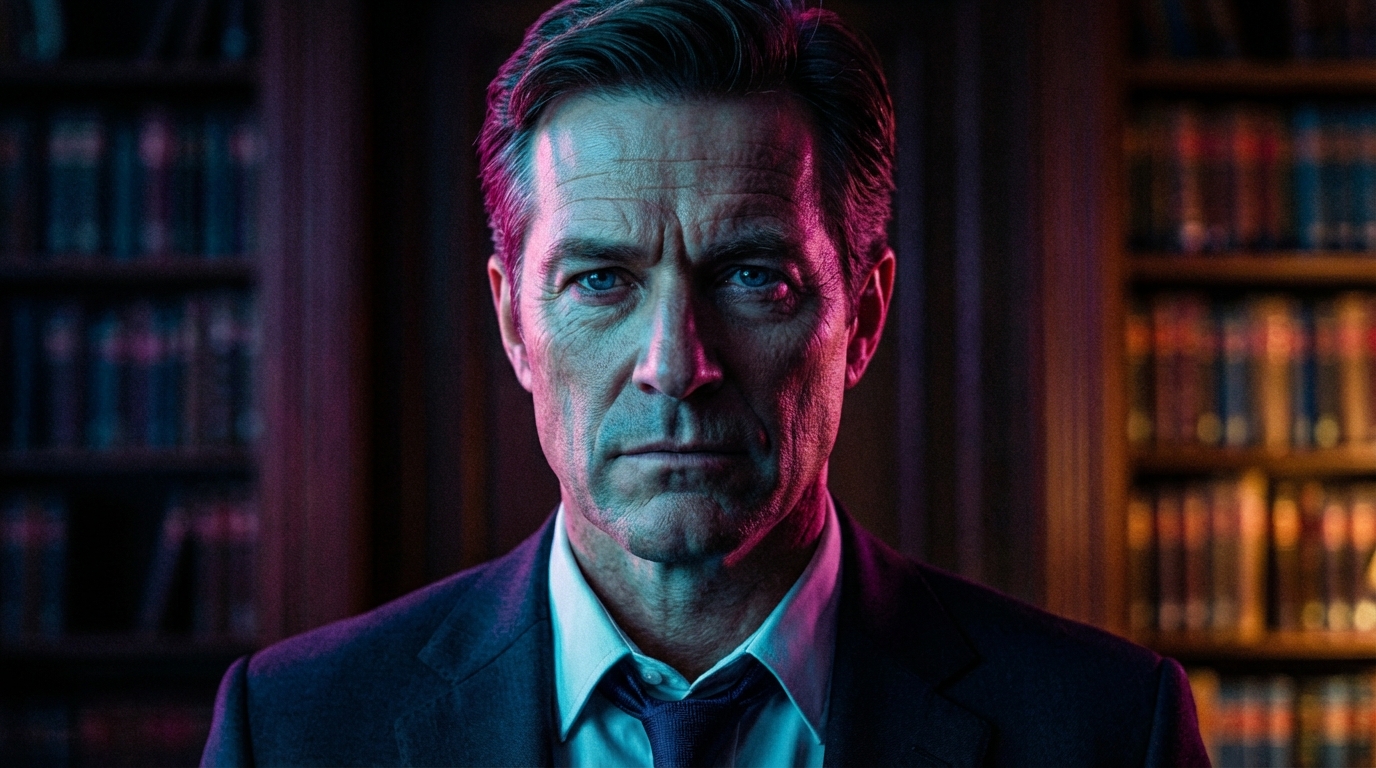
Thomas Charles Jeffries
Thomas Charles Jeffries lived forty-seven years navigating the impossible balance between inherited privilege and personal desire before vanishing into mystery's embrace. Born into Tasmania's most enigmatic dynasty, he became a father at nineteen whilst still at university, building both a family with Louise Greyson and a business empire through Jeffries Industries, only to succumb to escalating paranoia that transformed protective instincts into obsessive control, his 2018 disappearance preceding by hours the massacre that destroyed everything he'd fought to preserve.
Dynasty's Weight and Premature Responsibilities
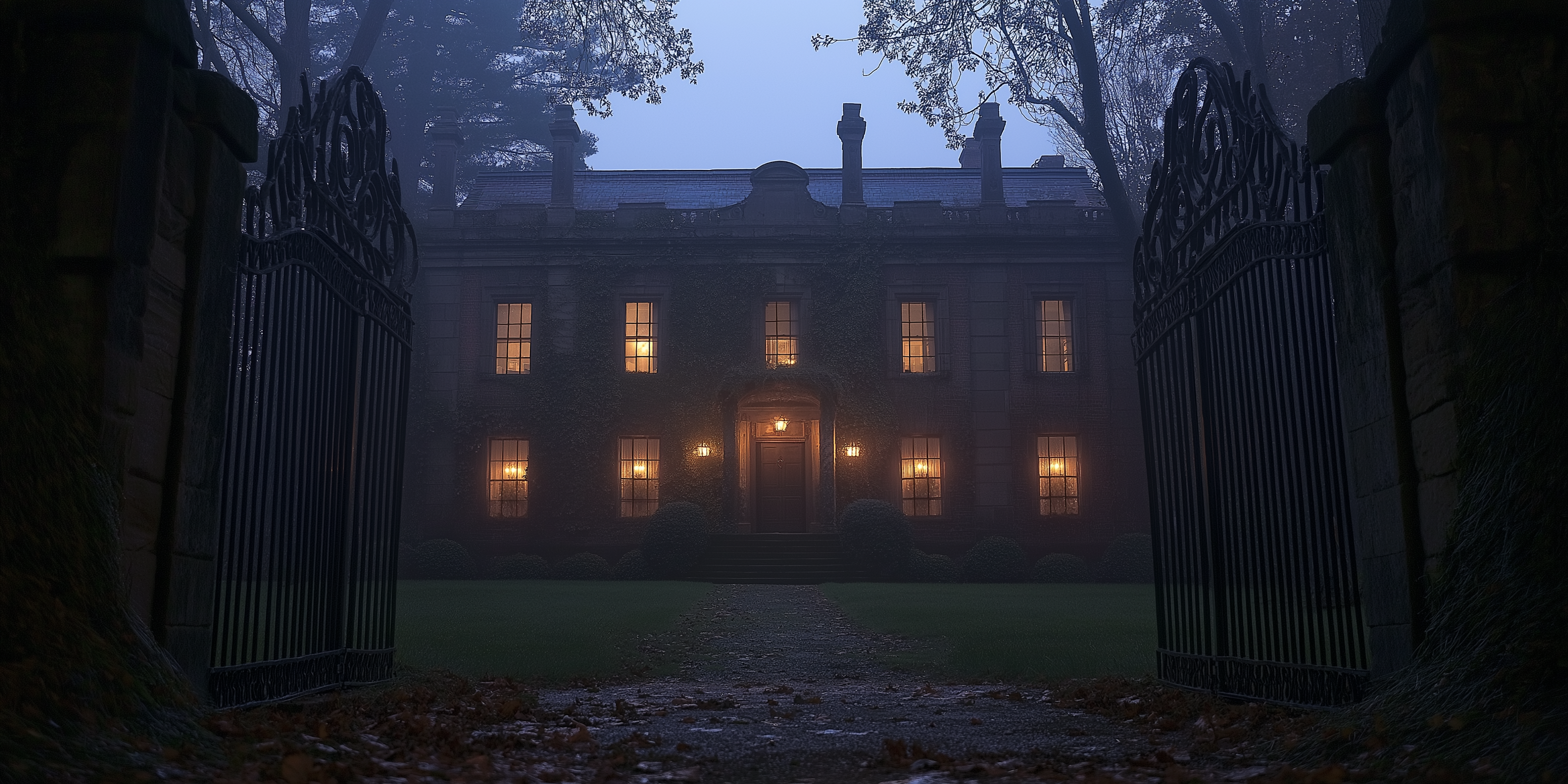
Thomas Charles Jeffries arrived on 15 November 1970 at Royal Hobart Hospital, entering a world where his surname carried two centuries of accumulated expectations, secrets, and unresolved mysteries. The only son of Charles William Jeffries and Rebekah Elise Thompson, Thomas inherited not merely wealth and social position but the weight of a legacy built on colonial ambition, mysterious disappearances, and the kind of power that shaped Tasmania's economic and political landscape. Jeffries Manor, the Georgian sandstone estate constructed by his great-great-great-grandfather William Jeffries Sr. in 1817, provided the physical manifestation of this inheritance—grand, imposing, and haunted by the ghosts of those who had vanished within or because of its walls.
His father Charles, born in 1950 and already burdened by his own family complications, approached fatherhood with mixture of determination and distance. Charles had transformed Jeffries Industries during his tenure as CEO, expanding the family's mining, agriculture, and energy interests whilst navigating the perpetual suspicions that followed the Jeffries name through Tasmanian society. His marriage to Rebekah Thompson in 1969 represented an attempt at normality, at creating stable family life within the manor's complicated atmosphere. Thomas's birth the following year seemed to promise continuation, a new generation to carry forward what previous Jeffries had built.
Yet Thomas's childhood unfolded in the long shadow of expectation. The manor itself, with its high ceilings and ornate furnishings, felt simultaneously like home and museum—a place where one lived amongst the accumulated possessions and memories of seven generations, where family portraits lined walls like silent judges evaluating whether current inhabitants proved worthy of the legacy. His mother Rebekah worked deliberately to create warmth within these formal spaces, to establish routines and traditions that felt genuinely familial rather than merely dynastic. She read to Thomas in the library, planted gardens with him on the extensive grounds, tried to give him experiences of ordinary childhood despite the extraordinary circumstances of their lives.
His father Charles proved more complicated presence. Brilliant in business yet emotionally reserved, Charles seemed to view his son less as individual child and more as future steward of the Jeffries empire. He began Thomas's business education early—explaining during meals how the company operated, bringing him to the Jeffries Industries offices for visits that felt like indoctrination, emphasising always the responsibility that came with privilege. Thomas learned young that his life wasn't entirely his own, that choices would always be evaluated against their impact on family reputation and business interests.
Education and Unexpected Fatherhood
Thomas's enrolment at Hutchins School in 1977 placed him, from his very first year of formal schooling, within Tasmania's most prestigious institution for educating sons of the colonial elite. The school, founded in 1846, had long associations with the Jeffries family—multiple generations had passed through its Gothic Revival buildings, absorbing both academic rigour and social connections that would serve them throughout life. Thomas proved himself a capable student, excelling particularly in economics and business studies whilst maintaining respectable performance across other subjects. Teachers noted his sharp intellect combined with natural leadership qualities, though some detected an emotional guardedness that seemed unusual in someone so young.
His teenage years at Hutchins unfolded with outward conformity to expected patterns—good grades, participation in appropriate extracurricular activities, friendships with sons of other prominent families. Yet beneath this surface normalcy, Thomas carried pressures that few peers could comprehend. His father Charles's expectations intensified as Thomas matured, the business education becoming more detailed and demanding. Weekend visits to Jeffries Industries offices transformed from casual observations to serious apprenticeship, Charles explaining financial statements and strategic decisions whilst Thomas absorbed the complexity of managing a diversified industrial empire.
The meeting with Louise Elizabeth Greyson late in 1989 was entirely accidental, and no part of it served anybody's strategy. Both were finishing Year 12—Thomas at Hutchins, Louise at St. Mary's College, where she was school captain—and both had gone to the University of Tasmania's library rather than make do with their own, each researching colonial Tasmanian business history for coursework the other knew nothing about. Thomas approached her in the stacks with a question about colonial business records that neither of them mistook for anything but pretext. Their conversation that afternoon revealed unexpected common ground: both valued intellectual rigour, both understood the weight of family expectations, and both recognised in the other a kind of loneliness that wealth and privilege couldn't quite conceal.
The Greysons, whilst not possessing Jeffries-level wealth, represented respectable professional success—Louise's father Peter practised law with integrity that earned respect, whilst her mother Nola's community volunteer work established the family as genuinely committed to social responsibility. They were also, once the relationship became apparent, distinctly unenthusiastic about it. Peter harboured reservations about his daughter becoming entangled with a family whose history included mysterious disappearances and whispered scandals. Nola worried that Louise might be sacrificing herself to rescue someone damaged by family dysfunction. Whatever else this connection was, it was not an alliance anybody's parents had brokered, and the momentum it acquired belonged entirely to Thomas and Louise. She saw past his reserved exterior to recognise someone struggling with burdens he'd never chosen, someone who wanted more than merely fulfilling others' expectations. He found in her intellectual equal and emotional anchor, someone who valued him as individual rather than merely as Jeffries heir.
Rebecca was conceived over the summer between school and university, and arrived on 22 September 1990. Both parents had enrolled at the University of Tasmania only months earlier—Louise into a Bachelor of Business, Thomas into a Bachelor of Commerce—so that both were first-year students with a newborn before the academic year was out. Thomas was nineteen, weeks short of his twentieth birthday, suddenly responsible for an infant whose existence complicated every carefully laid plan. The Greyson family's fury and disappointment were palpable even across the distance separating them, Peter and Nola learning through difficult phone call that their eldest daughter was pregnant and unmarried. Charles and Rebekah, whilst maintaining public composure, faced the reality that their son had fundamentally altered his trajectory in ways that couldn't be easily managed or concealed.
Yet Thomas, with characteristic determination that would define his approach to life's complications, refused to abandon either Louise or their child. He completed his degree whilst learning to be a father, supported by Louise's steely resilience and his parents' grudging acceptance of the situation. The birth of Emily in 1992, when Thomas was twenty-one, demonstrated that what had begun as unexpected consequence had evolved into committed partnership—these weren't mistakes to be hidden but a family being deliberately built, whatever others thought about the timing or circumstances.
Building Business Acumen and Family Foundation
Thomas graduated at the end of 1992 and entered Jeffries Industries the following year, a progression that was both natural and an intensified burden. He was now not just heir apparent but young father of two daughters, partner to Louise in an unconventional arrangement that defied Tasmania's social conventions, and trainee in a business empire whose complexity demanded years of apprenticeship. His father Charles's mentorship became more rigorous, demanding that Thomas master every aspect of the company's operations—from mining regulations and agricultural commodity markets to energy sector dynamics and the political relationships that undergirded successful business in Tasmania's relatively small economy.
Thomas proved himself remarkably capable despite his youth and personal complications. He possessed natural facility for strategic thinking, ability to see patterns in financial data and market trends that suggested both his father's analytical skills and his mother's intuitive understanding of human motivation. His work ethic impressed even cynical longtime Jeffries Industries employees who had initially viewed him as merely another privileged son coasting on family name. He arrived early, stayed late, asked substantive questions, and demonstrated willingness to learn from those with more experience regardless of their position within the company hierarchy.
The years between 1990 and 1995 saw Thomas managing multiple demanding roles simultaneously—finishing a degree, then learning the business under his father's exacting tutelage, raising young daughters with Louise, and navigating the social complications of their unconventional family arrangement. The engagement in 1994 surprised no one who knew them well—they had already created a life together, already proved their commitment through years of partnership and parenting. The wedding ceremony in summer 1995 at Jeffries Manor, with four-year-old Rebecca and two-year-old Emily serving as flower girls, finally legitimised what had long been reality. The Greyson family travelled from Brisbane for the occasion, Peter's toast carefully avoiding mention of the grandchildren who had arrived before the wedding, whilst Charles and Rebekah watched their son officially establish the family he'd already been building for five years.
The birth of Kain in 1995, shortly after the wedding, marked both continuation and shift—the first child born into a legally recognised marriage, carrying Thomas's middle name in deliberate echo of patriarchal tradition. Katie's arrival in 1996 completed the family, four children born between 1990 and 1996 to parents who had themselves been teenagers when this journey began. Thomas, at twenty-five years old with four children and significant responsibilities within Jeffries Industries, had compressed what might have been decades of development into a few intense years of forced maturation.
Ascending to Power and Growing Shadows
Thomas's rise within Jeffries Industries accelerated throughout the late 1990s and early 2000s. His father Charles, recognising both his son's capabilities and the necessity of preparing succession, promoted Thomas to Chief Operating Officer in 2001, at thirty. The position carried enormous responsibility—oversight of the company's day-to-day operations across its diverse portfolio, management of relationships with government officials and industry partners, and strategic planning for future expansion. Thomas approached these duties with combination of innovative thinking and calculated risk-taking that transformed Jeffries Industries' profile within Tasmania's economy.
His aggressive expansion strategies, particularly the 2004 push into Tasmania's remote mining areas and the 2008 energy sector growth initiatives, demonstrated both business acumen and willingness to leverage the company's considerable resources for high-stakes ventures. These projects weren't merely about profit—they reinforced Jeffries Industries' position as essential player in Tasmania's economic infrastructure, creating dependencies that translated into political influence and social power. Thomas understood instinctively what his ancestors had known: that real power came not from wealth alone but from becoming indispensable to the systems that governed others' lives.
Yet these same years witnessed the beginning of changes in Thomas's personality that would eventually consume him. His father Charles's mysterious disappearance in 2008, whilst Thomas was still navigating his thirties, represented traumatic rupture that exposed vulnerabilities Thomas had spent years concealing. Charles vanished whilst supposedly travelling to Melbourne on business matters, leaving behind questions that would never receive satisfactory answers. The official investigation produced no evidence of foul play, no body, no clarity—just absence where a father should have been, mirroring the pattern that had plagued the Jeffries family for generations.
Thomas's assumption of full control over Jeffries Industries following Charles's disappearance occurred during period of profound personal crisis. He inherited not just the CEO position but also the lingering suspicions about what had really happened to his father, the knowledge that the Jeffries curse—if such things existed—had claimed another victim. His response revealed the paranoia that would increasingly define his remaining years: he immediately fortified Jeffries Manor with state-of-the-art security systems, hired private security personnel, and began exhibiting the kind of defensive behaviours that suggested he feared threats both external and perhaps impossible to define.
Louise, who had supported Thomas through every previous challenge, found herself confronting a husband who was transforming before her eyes. The young man she'd loved, the father who had learned to balance business demands with family presence, began retreating into obsessive focus on security and control. The manor, which Louise had worked for years to make feel like an actual family home rather than merely a monument to dynastic power, started feeling oppressive again—Thomas's security measures creating atmosphere of siege mentality that affected everyone living within those sandstone walls.
Paranoia's Escalation and Family's Fraying
The decade following Charles's disappearance witnessed Thomas's gradual metamorphosis from capable if somewhat distant businessman into increasingly isolated figure consumed by suspicions he couldn't clearly articulate. The paranoia manifested in multiple ways—unexplained absences from home for days at a time, claiming to attend "clandestine meetings regarding family interests" that he never clarified even to Louise, accusations that those around him were plotting against him, and obsessive attention to Jeffries Manor's security protocols. The private security personnel he'd hired became more numerous and more visible, their presence a constant reminder that Thomas believed threats surrounded them.
His relationships with his children suffered as paranoia intensified. Rebecca, the eldest, challenged his increasingly authoritarian behaviour with her characteristic directness, their conversations devolving into arguments about his secrecy and her concerns about his mental state. Emily, brilliant and perceptive, retreated into her scientific pursuits whilst watching her father with worried eyes that suggested she recognised something fundamentally wrong but lacked tools to address it. Kain, the only son, tried to maintain connection through shared interest in construction and architecture, yet found his father increasingly unreachable, as if Thomas had erected emotional barriers as impenetrable as the physical security measures surrounding the manor. Katie, the youngest, maintained closest relationship through her profound bond with great-grandmother Thelma, finding in the elderly matriarch the family connection her father could no longer provide.
Louise bore the heaviest burden—managing a household disrupted by Thomas's paranoia, maintaining appearances within Tasmania's elite social circles whilst privately terrified about her husband's deteriorating state, and trying to shield their children from the worst manifestations of their father's obsessions. Her professional work at First Point Credit Union provided an escape and anchor to normality, hours when she could focus on financial analysis rather than family dysfunction. Yet even these refuges grew increasingly fraught as Thomas's behaviour impacted the family's social standing and business relationships.
The events of 2018 brought these tensions to a catastrophic culmination. When Louise's brother Jamie and their son Kain both disappeared in late July under mysterious circumstances, Thomas's paranoia found apparent validation—the threats he'd long feared seemed to have materialised, striking at the heart of his family. Yet his response revealed how thoroughly his judgment had been compromised. Rather than cooperating with the police investigation led by Detective Karl Jenkins, Thomas treated law enforcement presence as an invasion to be repelled through any means necessary.
Detective Karl Jenkins' own disappearance from Jeffries Manor's shed on 2 August 2018, whilst investigating Luke Smith in connection with the earlier vanishings, transformed Thomas's paranoia into full-blown crisis. When Detective Sergeant Alexander Stout intensified the investigation, Thomas deployed the full weight of his influence—phone calls to ministers, subtle threats about economic consequences, leveraging decades of accumulated political capital to force the investigation's withdrawal from his property. His success in halting the probe demonstrated the power he still wielded, yet the victory was pyrrhic—it merely delayed rather than prevented the final reckoning.
The Final Departure and Legacy's Destruction
Thomas Jeffries' final actions in early August 2018 carried the quality of desperate calculation by a man who understood that forces beyond his control were converging on Jeffries Manor. His departure on 10 August, claiming critical business matters required his presence in Melbourne, followed patterns established during the previous decade—unexplained trips, vague justifications, the kind of secrecy that had long characterised his movements. Yet those closest to him sensed something different this time, a finality in his goodbye that suggested he knew more than he revealed.
Louise, exhausted by years of managing Thomas's paranoia and still reeling from Kain's disappearance two weeks earlier, barely registered his departure beyond relief that the manor's oppressive atmosphere might lighten temporarily. Rebecca and Emily, both visiting during this crisis period, noted their father's distraction and evident anxiety but had long since learned that directly questioning him produced only evasion or anger. Katie, who had developed her writer's instinct for observing family dynamics, later recalled that her father seemed to be fleeing rather than travelling, as if something pursued him that he couldn't name.
The Jeffries Manor Massacre occurred in the late hours of 11 August 2018, less than twenty-four hours after Thomas's departure. The violence that claimed Louise, Rebecca, and Emily's lives—details preserved in police reports but kept from public release out of respect for the victims—shattered not merely one family but Tasmania's entire understanding of the Jeffries legacy. The timing seemed impossible to dismiss as coincidence: Thomas vanishes, and immediately his family dies in circumstances investigators struggled to explain.
The subsequent investigation into Thomas's activities revealed a man who had long since crossed ethical and legal boundaries that should have constrained someone of his position. Connections to Tasmania's criminal underworld, involvement in smuggling operations, money laundering schemes that utilised Jeffries Industries' legitimate business structures—each discovery added another layer to the portrait of Thomas as someone whose paranoia had perhaps been warranted, if only because his own activities had created the very threats he feared. Whether he had orchestrated the massacre, fled from it, or been destroyed by forces he'd allied with remained unclear, yet his culpability seemed undeniable.







