Thomas Alastair Blackwood
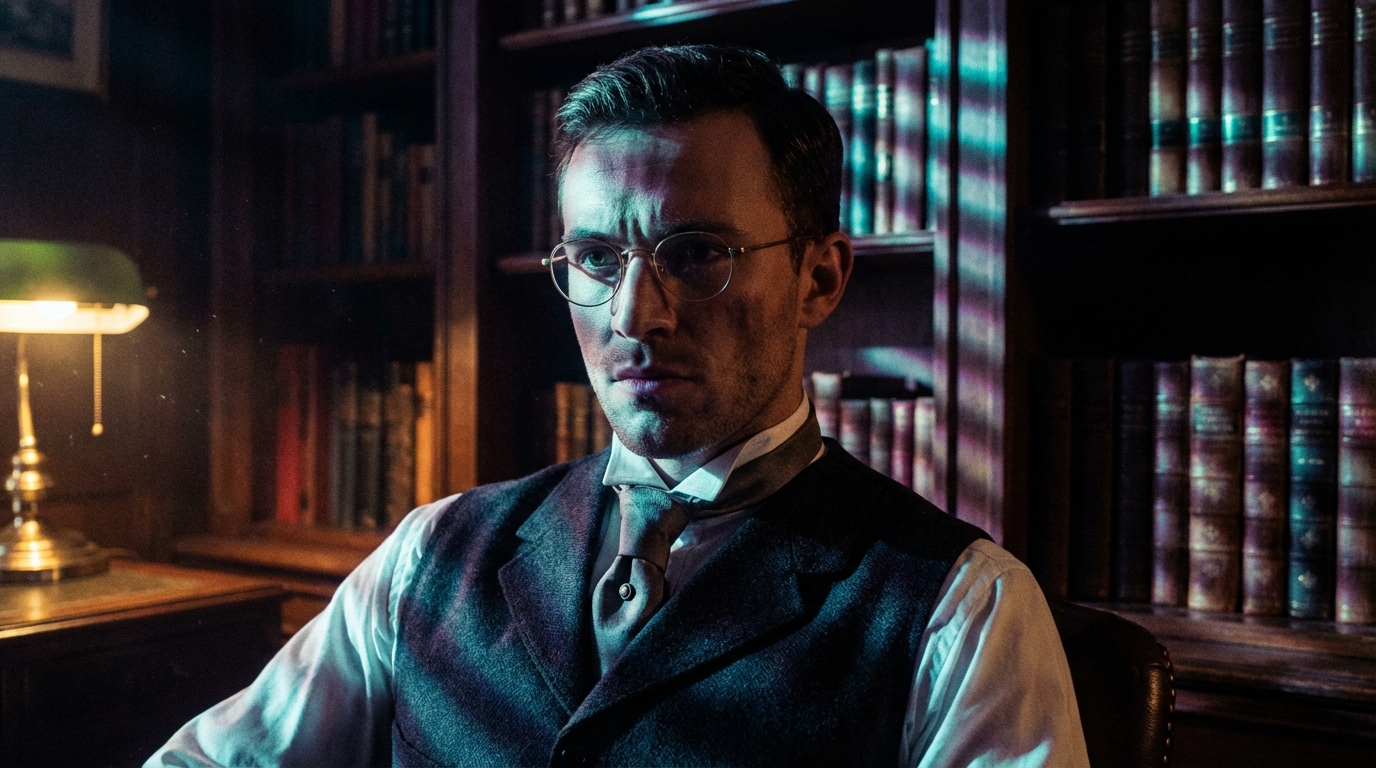
Thomas Alastair Blackwood (1871–1930) was the fourth-generation managing partner of Blackwood and Associates, the Hobart legal firm his grandfather had founded in 1866. Born into a dynasty whose professional expectations had sharpened with each generation, he sustained the practice through Federation, the Great War, and the early years of the Depression before collapsing at his desk at fifty-eight — an echo of his great-grandfather's death that the family recognised with the particular horror of a pattern confirmed.
Early Life and Family
Thomas Alastair Blackwood was born on 15 July 1871 in Hobart, Tasmania, the first child of Robert Cornelius Blackwood, managing partner of Blackwood and Associates, and Clara Winifred Blackwood, née Johnson, whose social intelligence and domestic management sustained both the household and the professional reputation it supported. His sister Evelyn Rose followed on 2 December 1873, and between the two surviving children there had been another — a girl, born in the autumn of 1872, who lived only six days. Thomas Alastair grew up, as his father had, in a household whose domestic rhythms were determined by the demands of the firm, and whose emotional character was shaped by a mother whose capabilities were essential and a father whose attention was chronically divided between the family he loved and the institution he felt responsible for sustaining.
The name was deliberate. Thomas — for the grandfather who had founded the firm and whose reputation cast the longest shadow across the family's professional life. Alastair — a Scottish form that Clara had preferred, an assertion of her own contribution to the child's identity that Robert had accepted without understanding its significance. The boy carried both names through his life, answering to "Thomas" in professional contexts and "Alastair" within the family, the division reflecting a split in identity that was characteristic of Blackwood men and that Thomas Alastair would navigate with less success than his forebears.
He was raised in the awareness — never formally stated but communicated through every assumption that structured the household — that he would enter the law, join the firm, and eventually assume leadership. The awareness was not experienced as pressure in the crude sense; no one sat the boy down and informed him that his future had been decided. It was experienced instead as the absence of alternatives — the sense that other careers were not forbidden but simply did not exist within the range of possibilities that the Blackwood name encompassed. Thomas Alastair absorbed this understanding as he absorbed the household's other certainties: that education mattered, that public service was obligatory, that professional competence was the medium through which the family expressed whatever it was that families were supposed to express.
Education
Thomas Alastair's early education began at Hutchins School in Hobart, where he proved a capable and diligent student whose academic performance satisfied his father's expectations without exciting them. He excelled in mathematics and classical studies, participated in the school's debating programme with the focused competence that was becoming the family's trademark, and rowed with sufficient determination to earn a place in the school crew without possessing the natural athleticism that might have distinguished him. His teachers regarded him as reliable, well-prepared, and slightly over-earnest — a boy whose effort was always visible in a way that suggested it was compensating for something, though no one at the time could have specified what.
In 1889, at the age of eighteen, Thomas Alastair enrolled at the University of Melbourne to read law. The Melbourne years exposed him to a larger world than Tasmania's island confines had provided — a broader legal curriculum, a more diverse student body, and the intellectual vitality of a city whose cultural and political energies exceeded what Hobart's more contained environment could generate. He was a conscientious student who graduated with distinction in 1893, his legal training reflecting the thorough preparation that his family's expectations demanded. He had not loved the law — the distinction is important — but he had mastered it, and the mastery was sufficient to satisfy everyone who was paying attention, which did not include anyone who might have asked whether mastery and vocation were the same thing.
Joining the Firm
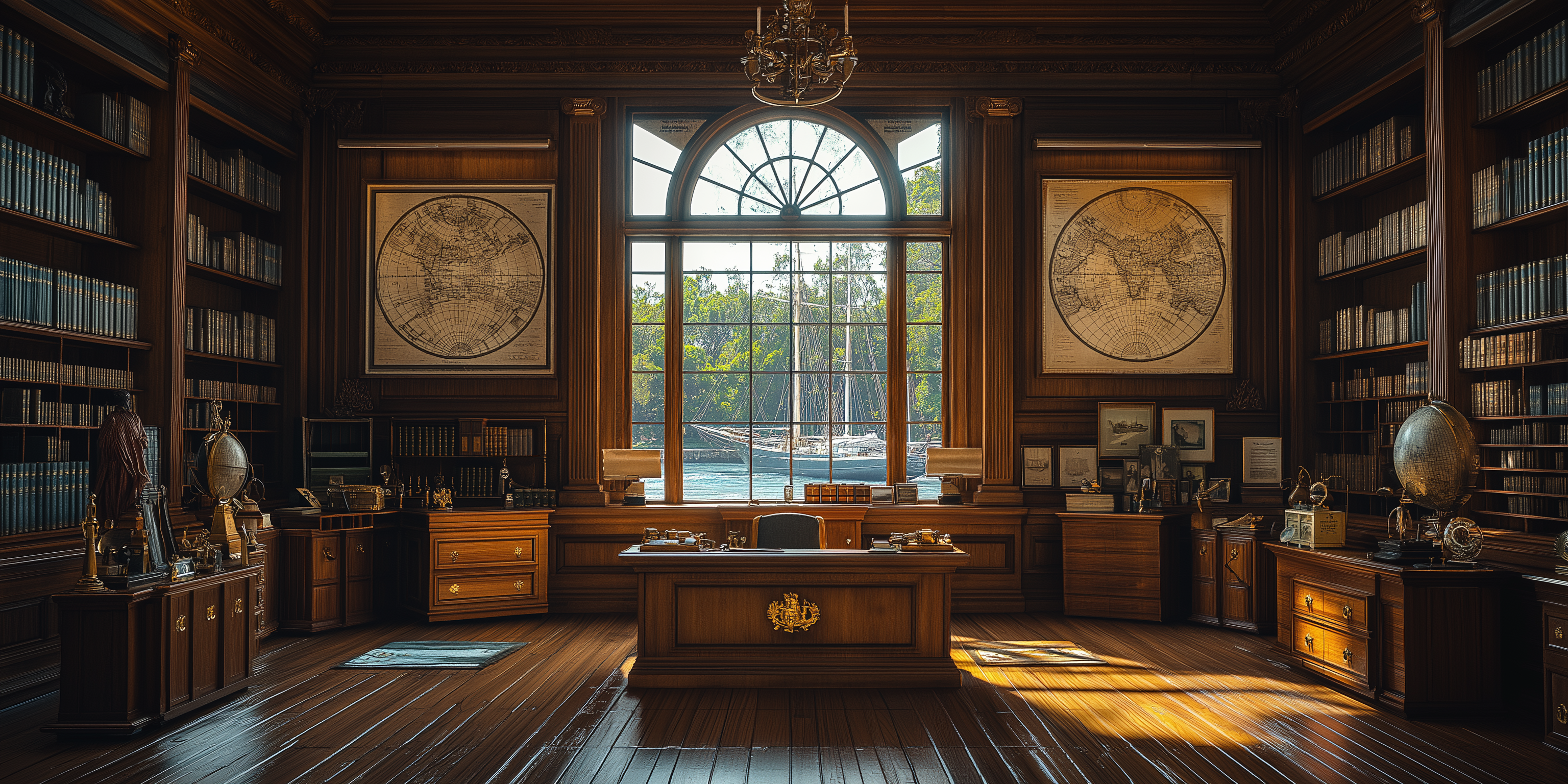
Thomas Alastair joined Blackwood and Associates as a junior partner in 1894, entering the institution that his grandfather had founded, his father had sustained, and that he was expected to carry into the twentieth century. The early years at the firm replicated, with uncomfortable fidelity, the dynamic that Robert had experienced with his own father Thomas Erasmus — the senior partner's methods clashing with the junior's training, the expectation of deference competing with the desire for autonomy, and the particular anxiety of working alongside a man whose approval constituted the standard against which all professional achievement was measured.
Robert's management of the father-son dynamic within the firm was characterised by the same methodical attention he brought to case preparation — structured, thorough, and emotionally opaque. He assigned Thomas Alastair cases of increasing complexity, reviewed his work with a precision that communicated standards rather than warmth, and maintained in chambers the same professional distance that he maintained at home. Thomas Alastair responded, as Robert had responded to Thomas Erasmus, by working harder — producing briefs of exhaustive thoroughness, preparing for court appearances with an intensity that his colleagues found both impressive and faintly alarming, and seeking through professional performance the parental approval whose emotional expression his family's culture did not provide.
The pattern was recognisable to anyone who knew the family's history, and invisible to the men who were living it.
Marriage to Mary Eleanor Thompson
In 1901, Thomas Alastair married Mary Eleanor Thompson, the eldest daughter of Arthur James Thompson, a Hobart banker whose financial institutions served many of the same commercial clients that Blackwood and Associates represented. Mary was twenty-six years old, educated at the schools that Hobart's professional class considered appropriate for their daughters, and possessed of a temperament that combined social grace with a private reserve whose depth Thomas Alastair would spend the rest of his marriage attempting, without complete success, to penetrate.
The marriage was arranged through the professional networks that connected Hobart's legal and banking establishments — families whose children were expected to marry within the class that their parents' achievements had defined. Mary brought to the union the social skills, the domestic competence, and the capacity for sustained emotional management that Blackwood wives had been providing for four generations, though she also brought an inner life whose independence Thomas Alastair sometimes found disconcerting. She read more widely than he did, held opinions about politics and social reform that she expressed at home with a directness she suppressed in public, and maintained friendships with women whose progressive views occasionally made Thomas Alastair wonder whether his wife's conventionality was a performance rather than a conviction. The question interested him without provoking him to investigate it, and the marriage functioned on the basis of their shared competence and their mutual understanding that some portions of each partner's inner world were not available for inspection.
They had three children, of whom two survived. Their first, a boy, was born in January 1905 but was stillborn — the cord wrapped twice around the neck, the delivery complicated by a physician whose competence Mary would question, privately and bitterly, for the rest of her life. Alastair Prometheus Blackwood arrived on 17 April 1910, a healthy boy whose unusual middle name — Prometheus, the fire-bringer — was Mary's choice, a declaration of ambition for her son that Thomas Alastair found excessive but could not bring himself to overrule. Edward Thomas Blackwood followed on 22 August 1912, his names a conventional reassurance after the flamboyance of his brother's.
Managing Partner
Thomas Alastair assumed the managing partnership of Blackwood and Associates following his father's gradual withdrawal from daily operations in the years after Clara's death in 1918. Robert remained nominally connected to the firm until his death in November 1923, but the effective transfer of authority had occurred several years earlier, and Thomas Alastair managed the transition with the competence that four generations of professional preparation had instilled. He was, by the assessment of his colleagues and the clients whose business he managed, an effective and conscientious leader — methodical in his administration, thorough in his legal work, and committed to the standards of professional conduct that the Blackwood name required.
He was not, by his own assessment, the lawyer his grandfather had been. Thomas Erasmus had possessed an intuitive legal brilliance that generated creative solutions to complex problems. Robert had compensated for the absence of that brilliance through institutional competence. Thomas Alastair inherited his father's compensatory approach without entirely escaping the comparison to the grandfather whose founding vision remained the firm's animating mythology. He managed the firm through the post-war adjustments of the early 1920s, expanded its practice areas to accommodate the changing commercial landscape, and maintained its position as one of Tasmania's most respected legal institutions. The work was genuine, the results were real, and the persistent sense that he was maintaining something rather than building it — the same doubt that had haunted his father — accompanied him through every professional decision he made.
The 1920s brought prosperity to the firm and to Hobart. Thomas Alastair capitalised on the economic growth that characterised the decade, expanding the client base and recruiting lawyers whose capabilities supplemented the areas where the firm's expertise was thinner. He was a good manager of people — better, in some respects, than either his father or grandfather had been, his capacity for sustained attention to the professional development of his staff reflecting a genuine interest in other people's capabilities that the more self-absorbed members of his family had not always demonstrated.
The Weight of the Name
The generational accumulation of professional expectation within the Blackwood family reached, in Thomas Alastair, something approaching critical mass. He was the great-grandson of Erasmus Percival, the empire builder. The grandson of Thomas Erasmus, the visionary founder. The son of Robert Cornelius, the diligent consolidator. Each generation had carried the weight of its predecessor's achievements and had transmitted that weight, augmented by its own contributions, to the next. By the time the burden reached Thomas Alastair, it included not merely the expectation of professional excellence but the accumulated emotional patterns of four generations of men who had expressed affection through provision, processed grief through work, and confused institutional achievement with personal fulfilment.
Thomas Alastair bore the weight conscientiously and at cost. He worked longer hours than his position strictly required, maintained a standard of preparation that his colleagues considered excessive, and brought to his professional responsibilities an intensity that left diminishing reserves for the domestic dimensions of his life. His sons grew up in conditions that replicated, with predictable fidelity, the childhood he had experienced himself — a household in which the father's work constituted the dominant presence regardless of whether the father himself was physically there. Mary managed the domestic world as Clara had before her, as Emily had before Clara, as Margaret Smithson had before Emily — the Blackwood wives forming their own dynasty of invisible competence, each generation providing the emotional infrastructure that allowed the men to maintain the fiction that professional achievement was a self-sustaining enterprise.
Alastair Prometheus, the elder son, showed from early childhood an intelligence that exceeded the family's established range — a capacity for abstract reasoning, a curiosity about the natural sciences, and an independence of mind that suggested he would not follow the path that four generations of Blackwood men had worn into the professional landscape of Tasmania. Edward Thomas, born two years later, was quieter, more compliant, and more conventionally suited to the expectations that the family's history imposed. Neither boy, as it transpired, would enter the law.
The Depression and Its Pressures
The economic downturn that reached Tasmania in 1929 tested the firm's resilience and Thomas Alastair's stamina in ways that the prosperous 1920s had not prepared him for. Clients defaulted on legal fees, commercial disputes multiplied as businesses failed, and the firm's income contracted at a moment when its fixed costs — premises, staff, the institutional infrastructure that Thomas Alastair had expanded during the growth years — could not be reduced without consequences that would damage the reputation he had spent his career maintaining. He responded as Blackwood men had always responded to crises: by working harder, sleeping less, and converting the anxiety that the situation generated into professional energy whose intensity his colleagues recognised as unsustainable but whose reduction they could not persuade him to accept.
Mary observed the deterioration with the particular alarm of a woman who understood the Blackwood pattern well enough to predict its consequences. She urged Thomas Alastair to delegate, to rest, to recognise that the firm's survival did not depend upon his personal destruction. He listened, acknowledged the wisdom of her counsel, and continued precisely as before — the pattern of self-destructive professional dedication proving, as it had proved in every previous generation, more durable than the arguments against it.
Death
On the morning of 30 March 1930, Thomas Alastair Blackwood collapsed at his desk at Blackwood and Associates in Hobart. He had arrived at the office at his usual hour, reviewed correspondence related to a client whose financial difficulties the Depression had made intractable, and was drafting a memorandum when his secretary, alerted by the sound of a chair overturning, found him on the floor of his office, unconscious. A physician was summoned from the adjacent building, but Thomas Alastair was pronounced dead within the hour. The cause was recorded as a massive cerebral haemorrhage. He was fifty-eight years old.
The manner of his death carried, for those who knew the family's history, a resonance that transformed private grief into something larger and more disturbing. Erasmus Percival Blackwood had collapsed at his desk in December 1850, dying two days later of an apoplectic seizure. Eighty years later, his great-grandson had fallen in the same posture — at work, mid-sentence, the body failing whilst the mind was engaged in the institutional labour that four generations had treated as the highest form of human activity. Whether the parallel reflected hereditary vulnerability, the accumulated physiological cost of the Blackwood approach to professional life, or merely the statistical inevitability that some patterns repeat across generations without requiring explanation, the family registered it as confirmation of something they had always suspected without articulating: that the firm consumed the men who served it, and that the consumption was the price of the legacy it provided.
Thomas Alastair was survived by his wife Mary, his sons Alastair Prometheus and Edward Thomas — aged twenty and seventeen respectively — and his sister Evelyn Rose. The firm continued under interim management, its institutional structures sufficiently robust to absorb the loss of its principal without immediate collapse. Neither of Thomas Alastair's sons would assume leadership. Alastair Prometheus, whose intellectual gifts had already oriented him toward the sciences rather than the law, would pursue a career in medicine whose ambition and moral complexity exceeded anything the Blackwood legal tradition had encompassed. Edward Thomas would follow his brother into medicine rather than his father into law. The dynasty that Erasmus Percival had begun, that Thomas Erasmus had institutionalised, that Robert Cornelius had consolidated, and that Thomas Alastair had maintained — the unbroken chain of Blackwood lawyers leading Blackwood and Associates — ended on the floor of a Hobart office on a March morning in 1930, in the body of a man who had given the firm everything it asked of him and whose reward was to die before he could discover whether anything else was possible.







