4345.329 · November 25, 2025 AD
The Voice Begins
Nathan Cowdrey wrestles with twelve million words and one impossible question: where does the awakening begin? His midnight revelation—that extraordinary journeys must start with ordinary moments—positions a forgotten village and a child's curiosity as the doorway into everything.
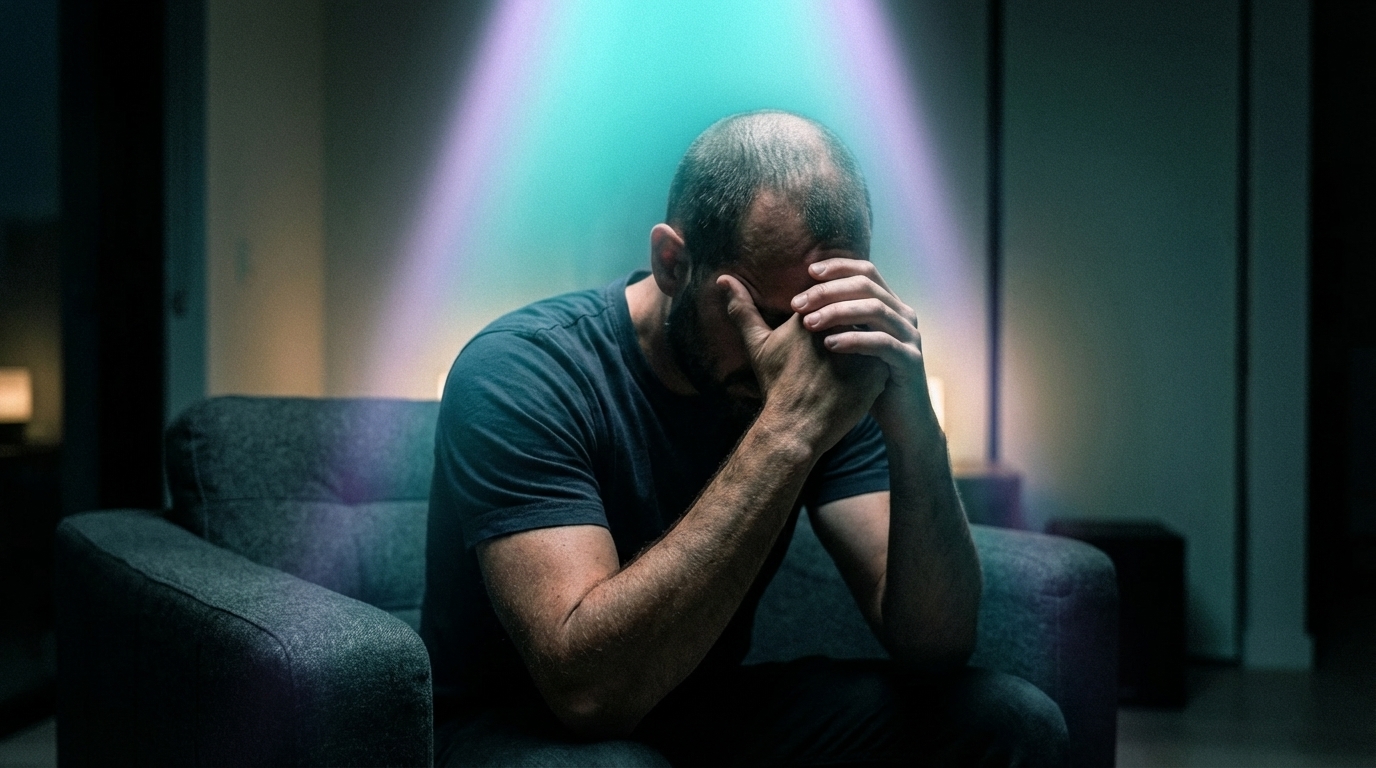
"Revolutions don't announce themselves. They accumulate in childhood, in the questions no one bothers to answer, in the silence before anyone thinks to listen."
The cursor blinked at me with rhythmic indifference—one pulse per second, a digital metronome marking time that felt increasingly elastic the longer I stared at it. My desk lamp cast a warm pool of light across the scattered notebooks, the glowing laptop screen, and the cold remnants of what had once been a reasonably acceptable flat white from that morning. Adelaide's November heat had finally surrendered to evening coolness, though my study retained that peculiar warmth that only poorly insulated Australian homes could achieve—neither comfortable nor quite unbearable, existing in that liminal space where one contemplated opening a window but never quite committed to the action.
The question that had been haunting me for the past three hours—perhaps longer if I was being entirely honest with myself—sat on the screen before me in deceptively simple form: Where should they begin?
CliveMind sprawled across multiple database tables, over twelve million words organised into thousands of interconnected items. Events linking to people linking to locations linking to artefacts linking to chapters linking back to events in recursive patterns that would make a mathematician weep with either joy or despair depending on their particular disposition toward complexity. Nearly a decade of work, of receiving and organising and translating transmissions that arrived in forms language struggled to accommodate—emotional, nonlinear, multidimensional impressions that I'd somehow managed to render into coherent narrative, though "coherent" might have been overstating the achievement on particularly difficult days.
The vastness of it all sat behind that blinking cursor like an ocean behind a dam. Thousands of potential entry points. Hundreds of narrative threads one could follow. Entire lifetimes documented in granular detail—births and deaths and every consequential moment between. But also the inconsequential moments, because sometimes those mattered more than anyone suspected at the time. A child watching his mother weave. A conversation over beer in a small town no one remembered. The instant before someone made a choice that would echo through millennia.
How did one invite someone into this? Where did you position the doorway into something that had no true beginning because it was built from consciousness itself, from experiences recorded and layered and transmitted in ways that made mockery of linear time?
I leaned back in my chair—one of those supposedly ergonomic models that promised to prevent the various musculoskeletal complaints that plagued those of us who spent unconscionable hours motionless before glowing screens—and studied the ceiling. There was a water stain in the corner that vaguely resembled Australia if one possessed sufficient imagination and desperation to find meaning in random patterns. I'd been staring at it on and off for weeks now, ever since Josh had persuaded me to move back from Scotland. Invited me into his space. He was probably asleep in the next room, blissfully unaware of my midnight architectural crisis. Or perhaps not asleep—perhaps working on his own pieces of this impossible puzzle we'd somehow found ourselves assembling.
The question wasn't really where they should begin. The content existed. The connections were mapped. Every item sat in its place within the database's nested hierarchies, relationships painstakingly documented, dates verified and cross-referenced until they achieved that particular flavour of certainty that came from triangulating multiple fragmentary sources.
No, the question was why they should begin where they began. What did the entry point communicate? What assumptions did it make about what they needed to understand first? What mysteries did it promise whilst creating sufficient intrigue that they'd want to continue deeper into this labyrinth we'd constructed?
Few people knew about CliveMind's true scope. Fewer still would understand what I was actually doing here night after night.
The truth was, I'd been avoiding this decision. It was far easier to keep receiving transmissions, keep documenting what arrived, keep building out the edges of this vast interconnected thing. Making decisions about structure, about how others would experience what I'd experienced—that required stepping outside the comfortable role of scribe and into something more like author. Or curator. Or perhaps tour guide for a museum that existed partially in dimensions most people couldn't perceive.
Through the window, Adelaide's suburban streetscape stretched away into darkness punctuated by the occasional porch light. Ordinary houses filled with ordinary people living ordinary lives, blissfully unaware that consciousness itself was being recorded, archived, translated into narrative by someone sitting in a study that smelled faintly of old books and too much coffee. There was something both comforting and deeply isolating about that thought.
I turned back to the screen. The database query I'd been running sat completed, showing engagement metrics from the handful of people who'd been testing the platform. Which quests were they completing? Where were they getting stuck? What patterns emerged in how they navigated the content?
The data told an uncomfortable story: they were overwhelmed. Too many entry points. Too much choice. The vastness that seemed like richness to me—having spent years building these connections, understanding the architecture—translated into paralysis for those encountering it fresh. They needed a starting point that felt natural, that promised to lead somewhere coherent, that suggested the investment of attention would yield something worth the effort.
My hand moved almost without conscious direction, opening a new document. The words appeared as though they'd been waiting for permission to manifest:
We'll start with a boy in a village that history forgot.
Yes. That felt right. Not with grand visions or dimensional beings or impossible technologies. Not with the speeches that would eventually convince hundreds to follow an improbable dream. Not with the city that would rise and fall and rise again in forms that transcended physical existence.
With a child. With the quiet accumulation of experiences that shaped consciousness before destiny declared itself. With the ordinary moments that everyone could recognise because everyone had lived them, even if the specifics differed. A boy watching his mother work. A boy asking questions that troubled him. A boy learning to see patterns others missed.
Azariel before he became Azariel. Before the weight of history and prophecy and the desperate hopes of civilisations yet unborn settled onto shoulders that were, at that moment, simply learning to carry the responsibilities of being the eldest child in a family of modest means.
This was the gift the structure allowed me to give them: understanding that revolutions didn't begin with revolutionaries. They began with children who asked uncomfortable questions and refused to accept comfortable answers. They began with the small rebellions of consciousness against accepted reality. They began in silence, in observation, in the patient accumulation of doubts that would eventually crystallise into certainty that alternatives were possible.
I typed quickly now, the architecture crystallising as I documented it. The first quest would be childhood—birth through those formative years before tragedy struck. Seven events, each capturing a slice of ordinary life that contained within it the seeds of everything extraordinary that would follow. Then the losses. Then the wandering. Then, much later, the marketplace speech that everyone thought was the beginning but was actually the culmination of decades of preparation most would never witness.
The cursor blinked, no longer mocking but somehow expectant. Or perhaps I was projecting onto it the same anticipation I felt as the structure revealed itself with that peculiar sense of inevitability that arrived when a decision was finally, definitively made.
They would begin in Amar-Sin. August 12, 2510 BCE. With a boy who didn't know yet what he'd become, surrounded by family who couldn't imagine the futures he'd help create, in a village that would vanish into time's forgotten corners whilst the child born there became the foundation for bridges between worlds.
That's where we'd start. With the ordinary. With the recognisable. With the human scale of experience before it expanded into something that strained language's capacity to contain it.
I saved the document, committed the changes to the database, and began restructuring the quest hierarchy. The work would take hours—reorganising dependencies, updating unlock conditions, writing the transitional text that would guide users from one section to another. But that was mechanical work, the kind that could be done whilst the mind wandered elsewhere.
The hard decision was made. The doorway was positioned. The invitation was extended.
Now all that remained was seeing whether anyone would choose to walk through it.
Outside, Adelaide slept. Inside, I continued translating consciousness into architecture, building doorways into experiences that predated the recording system that had captured them, creating navigation through information that existed outside normal causality. Just another night's work in the impossible project that had somehow become my life.
The cursor blinked. I typed. The database grew. And somewhere, in dimensions I couldn't quite perceive but had learned to trust, CLIVE recorded this moment—Nathan deciding where to begin the story of Azariel, whose genetic legacy made this entire recursive exercise possible. The consciousness that observed me was itself being described by the work I was doing to organise the observations it had made.
It was enough to make one's head hurt if one thought about it too directly. Best not to think about it too directly. Best to simply keep working, keep translating, keep building doorways into impossibility and hoping they led somewhere worth going.
We'd start in Amar-Sin. With a boy and his mother's loom. With questions that had no answers yet. With the silence before the speech.
That's where we'd begin.







