4127.105 · April 15, 1807 AD
The Twelve Who Wouldn't Look
The gallery is full. Portsmouth has come to watch. Elizabeth Jeffries sits in her Sunday clothes on a Wednesday morning, close enough to see her son's face when they bring him in. She has not slept. She has not eaten. She has rehearsed a thousand prayers, though she no longer knows if anyone is listening. The evidence seems clear. The verdict seems certain. But some in the crowd whisper of a man with copper-coloured hair who vanished before the constable struck.
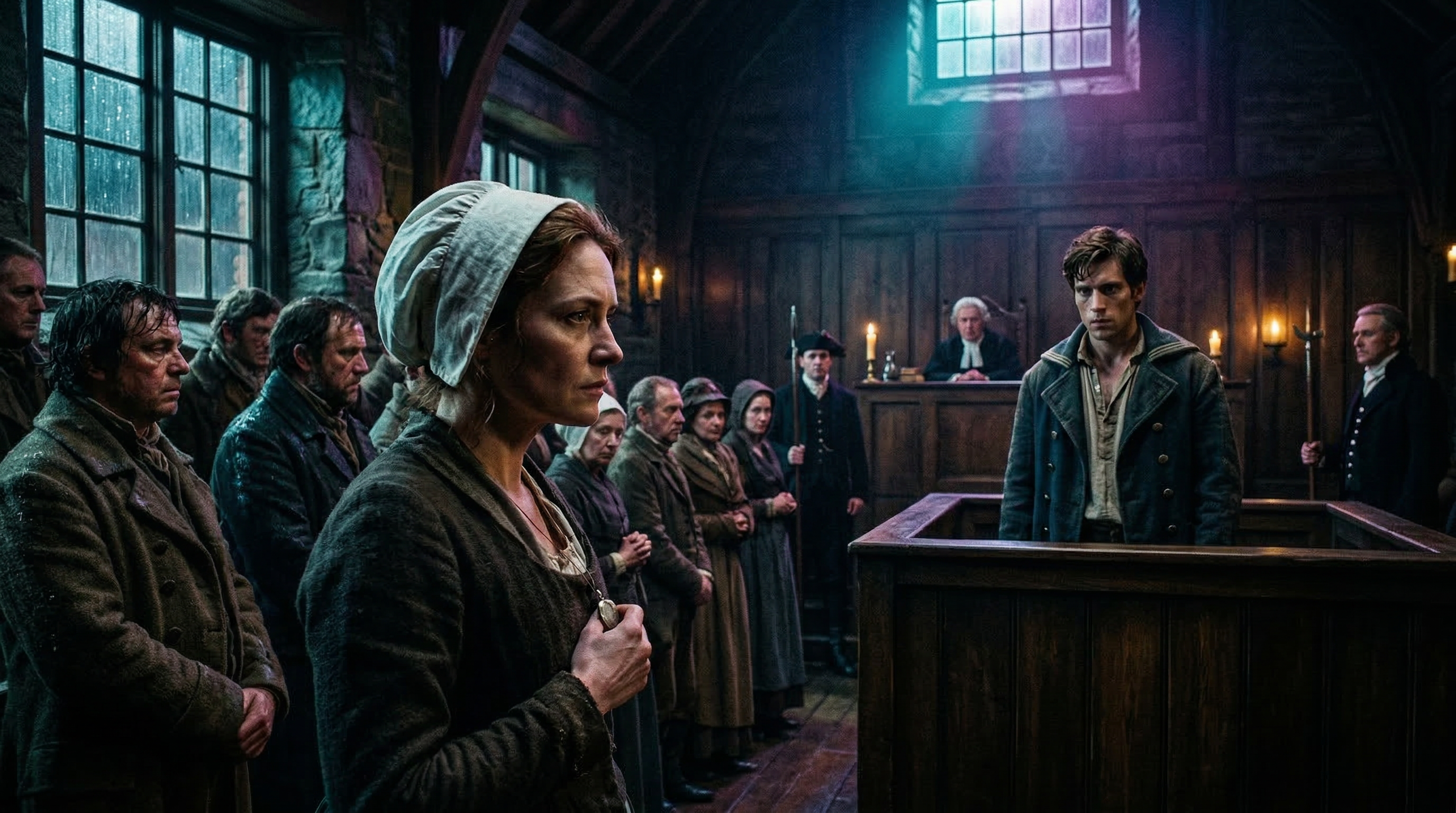
Thunder rolls across Portsmouth as the trial begins.
In the gallery, Elizabeth Jeffries watches her son stand in the dock—this boy she nursed through fevers, taught his letters by candlelight, loved with a ferocity that frightens her still. He is twenty-two years old. He looks like a stranger. The hollowness in his eyes speaks of something already lost, some essential part of him stripped away in the fortnight since the constables came.
The prosecution presents its case with confident precision. A stolen watch. A constable's testimony. A merchant's wounded pride. The evidence forms a net from which there seems no escape.
And yet.
There are whispers in the crowd. Questions that will not be asked from the witness stand. A figure glimpsed and then gone, copper hair catching the light before melting into shadow. The truth, if truth exists at all, wears more faces than the court will ever see.
The jury withdraws. The rain hammers against the windows. And Elizabeth Jeffries waits, her fingernails cutting crescents into her palms, knowing that when those twelve men return, nothing in her world will ever be the same.
Some verdicts are rendered in courtrooms. Others are written long before the gavel falls.






