4338.208 · July 27, 2018 AD
The House Always Watches
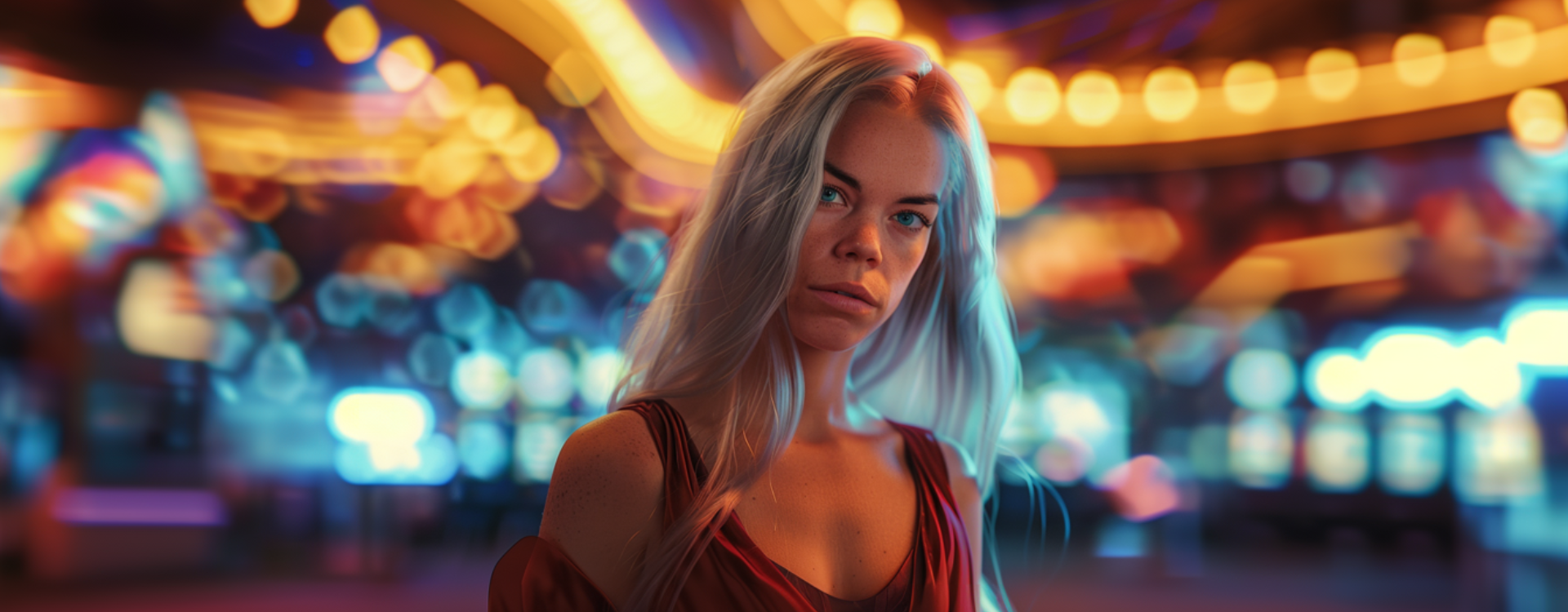
Beatrix walks into Wrest Point Casino not to play—but to take. Amidst the glittering chaos of neon and noise, she rediscovers an old fire, sharpens a plan, and sets her sights on reclaiming what was stolen. But this isn’t nostalgia. It’s war. And the first move has just been made.
"People come here hoping to win. I came to remember who I was before I lost."
Staring at the revolving glass door, its surface a mirror to the mundanity of the world outside, I felt a shift within me—subtle, seismic. The glass threw back my own reflection, warped slightly by the curve: a woman suspended mid-thought, jaw set, eyes unreadable. Behind that brittle transparency, the world continued on in its usual, indifferent rhythm. Strangers passed by, all in varying states of distraction—elbows clutched to coats as they emerged from taxis, heads ducked against wind that barely stirred me. Their outlines blurred into ghostly apparitions, insubstantial and hurried, flickering across the glass like shadows cast by a world I no longer belonged to.
They looked so far away. Not in distance, but in relevance.
The restless feelings that had prickled at the edges of my mind all day—the coiled anticipation, the low thrum of doubt, the sly, almost guilty excitement—began to ebb, like a tide retreating from the shore. There was no room for noise now, no room for feeling. Only clarity remained, clean and cold.
My pulse quickened, but it wasn’t fear that drove it. Fear had long ago lost its sting. This was something else. Sharper. Cleaner. An electric charge, threading itself through my veins with clinical precision. I felt honed—like a blade freshly whetted, ready to be tested.
I stepped forward.
The revolving door caught me in its arc, the sweep of glass smooth and almost ceremonial as it guided me through. A quiet exhalation escaped me—half breath, half surrender—as the building swallowed me whole.
And just like that, I was inside the belly of the beast—Wrest Point Casino.
The air inside was charged, thick with a kind of feverish electricity—part thrill, part threat. It hung in the space like perfume and cigarette smoke, clinging to skin, whispering in ears. This wasn’t simply a venue—it was a world unto itself, sealed off from consequence, pulsing to the rhythm of money changing hands. Neon lights cast lurid reflections on marble floors, flickering with manic precision, while the mechanical chimes of slot machines blended into a relentless symphony of greed and hope. Every surface glinted. Every face looked hungry.
Small groups gathered around the concierge desk, voices rising in a frenzied chorus—excitement twined with impatience, each person convinced of the importance of their reservation. Laughter rang out, brittle and performative. The acrid scent of cologne and cheap prosecco mingled in the air. Suitcases bumped ankles. Glossy pamphlets were clutched like sacred texts. It was the foyer of indulgence—everyone waiting for their curtain to rise, unaware that tragedy and farce wore the same mask here.
I turned, just slightly, and felt it—an elbow, careless and hard, jabbing into my arm. A flash of irritation shot through me. I glared, the expression instinctive and unfiltered. A young woman, twenty-something, oblivious and lacquered with overconfidence, breezed past with a shrill apology that wasn’t one. Her clutch of companions—heels too high, dresses too tight, voices already a pitch too loud—followed in her wake, stumbling and giggling like newborn deer with access to Daddy’s AmEx.
They barrelled along with the grace of a shopping centre conga line, heading straight for the Birdcage Bar—a gaudy beacon of artificial glamour nestled at the heart of the casino’s chaos. All mirrored walls and velvet booths, it beckoned like a siren to those with more bravado than depth. I could already picture them perched on chrome stools, sipping fluorescent cocktails, their mouths wide with laughter and shrill declarations of success. A tribe intoxicated by its own reflection.
They congratulated themselves on their faux-sophistication, mistaking volume for confidence, and gloss for charisma. It was pitiable, really. Transparent in its artifice. They were here to be seen. I was here for something far more deliberate.
They didn’t compare. Not really.
Not to my own carefully chosen attire—a short red dress, sleek and deliberate, cut to walk the razor’s edge between elegance and threat. Its understated plunge hinted, didn’t flaunt. The thin silver belt cinched at my waist was no mere accessory; it marked a boundary. Not to be crossed, unless invited.
In this ensemble, I wasn’t dressing to impress. I was dressing to dominate. A predator among sheep. Intentions sharpened. Resolve, steeled.
Despite my contempt for the youthful crowd—their shrieking laughter, their blissful detachment from consequence—there was something about their chaotic joy that seeped into the air around me. I hated that it was infectious. That it snuck past my defences. But even as I rolled my eyes at their shrill declarations and wobbly heels, I could feel it: a flicker. A pulse. Their energy bled into mine, uninvited, jolting something dormant awake. It wasn’t gratitude, nor admiration. Just momentum—reckless, unearned momentum—and I siphoned it like a thief in the night.
It rushed through me, foreign yet invigorating, igniting something primitive and raw. A flame of ambition. Of want. Of yes, still this. The excitement bubbling inside me felt almost rebellious, as if I’d slipped something illicit past my own internal censors.
But Brody is dead, and the antique shop is gone. What more do I have to lose? The thought arrived unbidden, cold and precise, like a scalpel dragged across scar tissue. It echoed—sharp, hollow—through the cavern that used to hold certainty. A cruel reminder of what I was now: adrift, stripped of my past, circling some dark centre of loss. And yet, there was freedom in the wreckage. A kind of unspoken permission.
As I walked deeper into the casino, each step felt like an act of defiance. Against grief. Against stasis. Against the unravelling that had masqueraded as fate. This place, with its dim corridors and fevered corners, had always been a crucible for risk—and tonight, I wasn’t merely visiting. I was staking a claim. Every heel-click on the tiled floor declared: I am still here.
The clinks of chips, the murmured promises, the low hum of hope and addiction… it all merged into a kind of soundtrack for my internal monologue. Even the lighting felt conspiratorial—low and sultry, flickering slightly above tables like candles at a séance. Shadows moved with intent. Every gambler a believer. Every moment a transaction with something unseen.
Leigh’s voice echoed from the day before, stubborn and sincere. His proposal—wrapped in promise, offered with quiet reverence—had dangled before me like a lifeline. But lifelines imply drowning. And I wasn’t ready to admit defeat, not yet. There was something too easy about it, too clean. Like scrubbing the blood from a crime scene without first naming the culprit.
Opting for Leigh’s plan would mean leaving this world behind—this messy, broken world where justice was personal and often unpaid. It would mean letting those who had hollowed me out walk free. No questions asked. No debts called in. It was an injustice I couldn’t stomach. Not after everything Brody and I had bled into that shop. Not after watching it all be shut off by people who’d never set foot in its soul.
The thought roiled in me like dark water. But then, amidst the wreckage of guilt and uncertainty, an idea began to surface. Something old, familiar. Maybe, just maybe, if the old instincts hadn’t fully deserted me… if I still had the hands for it, the nerve… maybe I could use Jarod. Not sentimentally. Not naively. Tactically.
Use him to help steal enough money to reclaim the antique shop.
The notion was wild. Risky. Utterly fraught. But it didn’t scare me. It thrilled me.
A flicker of excitement caught in my chest, dangerous and bright. The kind of spark that had once lit whole schemes. Maybe it still could.
Leigh was right about that part—it is rightfully mine! The memory of his conviction rang clear. It hadn’t been just comfort; it had been belief. In me. In what I’d built. What we’d all built.
This wasn’t just about bricks and display cases. This was about reclamation. About dragging something vital back from the edge. About proving—if only to myself—that I hadn’t been broken beyond repair. That what Brody saw in me hadn’t died with him.
It was time to find out if I still had teeth.
As I navigated through the crowd—an ever-shifting tide of suits, sequins, and the smell of burnt ambition—my mind was already sprinting ahead. Possibilities unfolded and collapsed like a house of cards in a stiff breeze, strategies forming, reforming, discarding themselves before the ink of intention had even dried. Every step was a calculation, my heels clicking a metronome for the kind of thoughts that usually only visited me in the dead of night. Dangerous ones. Irresistible ones.
The idea of leveraging Jarod—my errant twin flame of risk and recklessness—wasn’t just appealing. It was poetic. A heist. Something bold, theatrical. Not just to reclaim what had been taken, but to honour what had been built. Brody’s memory didn’t belong behind glass, gathering dust like one of our moth-bitten exhibits. It deserved motion. Defiance. Precision. He’d never believed in passivity. Why should I?
It was a gamble, yes. But wasn’t life already that? A roulette wheel of bad timing and worse decisions, with hope tossed in like loose change?
My resolve hardened, tempered by memory and loss. The injustice I’d endured wasn’t abstract—it had weight. Texture. It had stolen the calluses from my fingers and the warmth from my bed. It had left me gutted and bristling. And tonight, in this cathedral of risk, with its gaudy lights and synthetic laughter, I felt that anger crystallise into purpose.
The noise—the chimes of machines, the jubilant cries of temporary winners, the muttered oaths of those left emptier than they arrived—it wasn’t just background. It was my anthem. A chorus of want and waste, sung in the key of desperation. And I? I was the conductor now.
Tonight, the stakes were personal. And I was ready to bet it all.
Not just for revenge, or even restitution—but for something purer. For proof. That the fire still burned beneath the rubble. That I hadn’t been reduced to memory and mourning. That beneath the grief and the guilt, I was still sharp. Still dangerous. Still me.
In the grand theatre of Wrest Point Casino—with its brilliant façades and darkened corners, its illusion of glamour woven through with quiet ruin—I saw it clearly: a reflection. My own story rendered in neon. A life brilliant, fractured, hopeful, uncertain. The same current ran beneath both: risk. But risk was no longer the threat. It was the language.
And tonight, I would speak it fluently. One daring move at a time.







