4105.112 · April 22, 1785 AD
The Firstborn Jeffries of Hanover Street
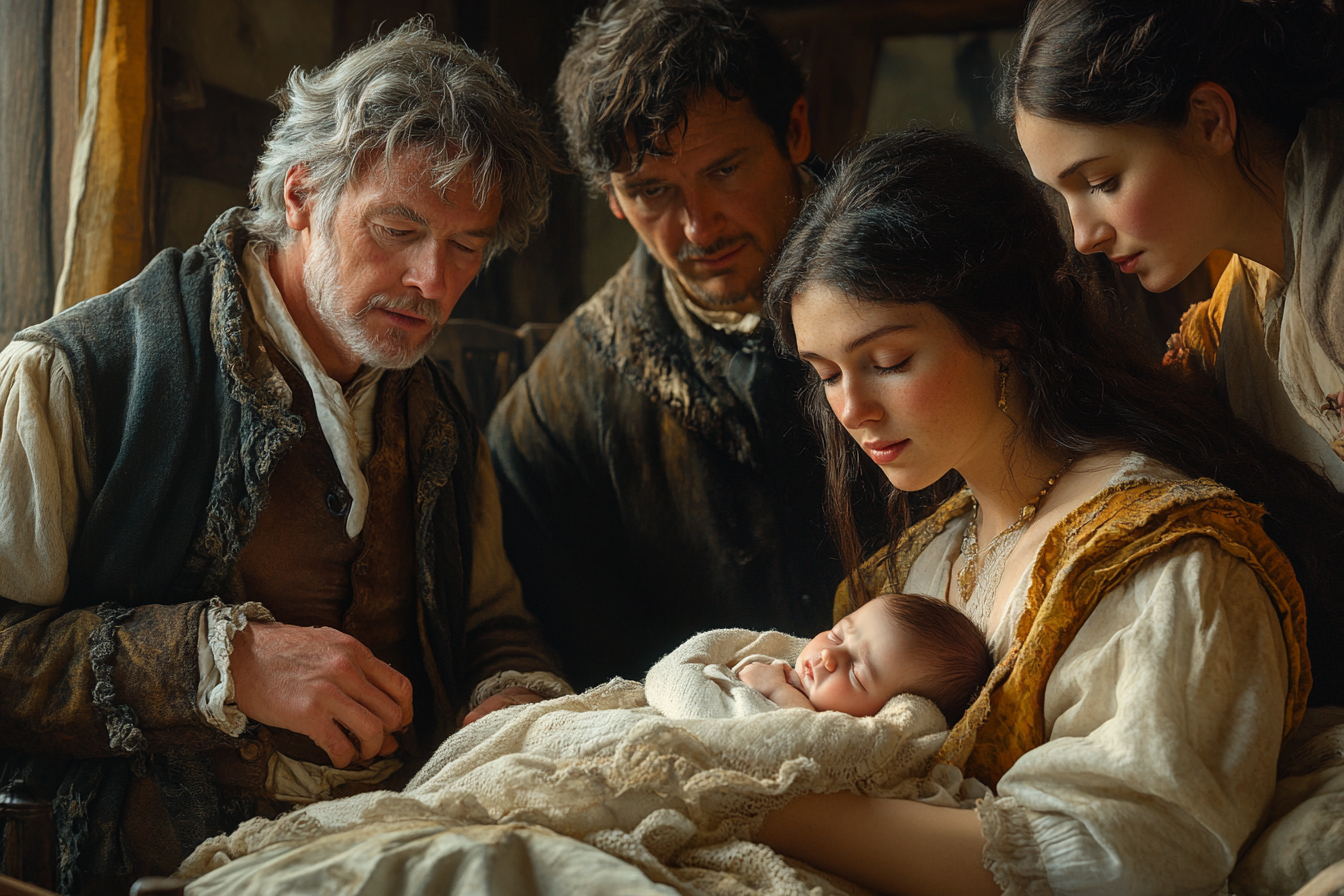
Elizabeth Jeffries, wife of dockworker Edward Jeffries, gave birth to their first child in their modest cottage on Hanover Street, Portsmouth. The delivery proved difficult, requiring the combined efforts of midwife Constance Hawkins and Dr Cornelius Whittaker. The boy, named William Thomas, was blessed that evening by Father Nathaniel Blackwood whilst neighbours gathered to welcome the newest member of their community.
Spring had arrived reluctantly in Portsmouth that year, the preceding fortnight bringing little but cold rain and bitter Channel winds. Yet the twenty-second of April dawned clear over England's great naval port, the sky washed pale and tinged at its eastern edge with rose and amber as the town stirred to life.
In a modest two-room cottage on Hanover Street, set back from the bustle of the dockyards in a lane where working folk made their homes, Elizabeth Jeffries had laboured through the night. The nineteen-year-old seamstress, daughter of shipwright George Whitehall, had borne her pains in silence for hours before finally waking her husband Edward shortly before dawn. The young dockworker, himself only twenty-three and still raw with grief from his father Richard's death beneath falling timber some four years prior, had dressed in frantic haste and run through the waking streets to summon help.
Constance Hawkins answered his knock at her blue-painted door on Oyster Street. The midwife, who had delivered half the children in the parish across thirty years of practice, gathered her worn leather bag and dispatched Edward onward to the High Street residence of Dr Cornelius Whittaker. The physician, a gentleman of education and refinement who counted naval officers among his patients, arrived by carriage shortly thereafter—an unusual sight on Hanover Street, where such conveyances rarely ventured.
The morning hours that followed tested all present. The child had positioned itself shoulder-first rather than head-first, a complication that demanded careful intervention. Mrs Hawkins worked with steady hands whilst Dr Whittaker guided the proceedings, and Edward Jeffries held his wife through each wave of her ordeal. Elizabeth, drawing upon reserves she had not known she possessed, endured what the midwife would later describe as one of the more demanding deliveries of her long career.
The bells of St Thomas's Church had not yet struck noon when the child's cry rang through the small cottage. A son—red-faced and squalling, his head misshapen from the difficult passage but his lungs proving remarkably sound. Dr Whittaker pronounced both mother and child healthy, then surprised the young couple by refusing any payment for his services, bidding them put their coin toward the boy's future instead.
Edward and Elizabeth named their firstborn William Thomas—William for Elizabeth's late grandfather, a rope-maker called William Turner who had died when she was still a girl, and Thomas for Thomas Pritchard, the fellow dockworker who had served as Edward's mentor and protector since his father's death. The choice of the middle name moved Pritchard to visible emotion when he learned of it that afternoon, arriving at the cottage with his wife Abigail and a freshly baked meat pie.
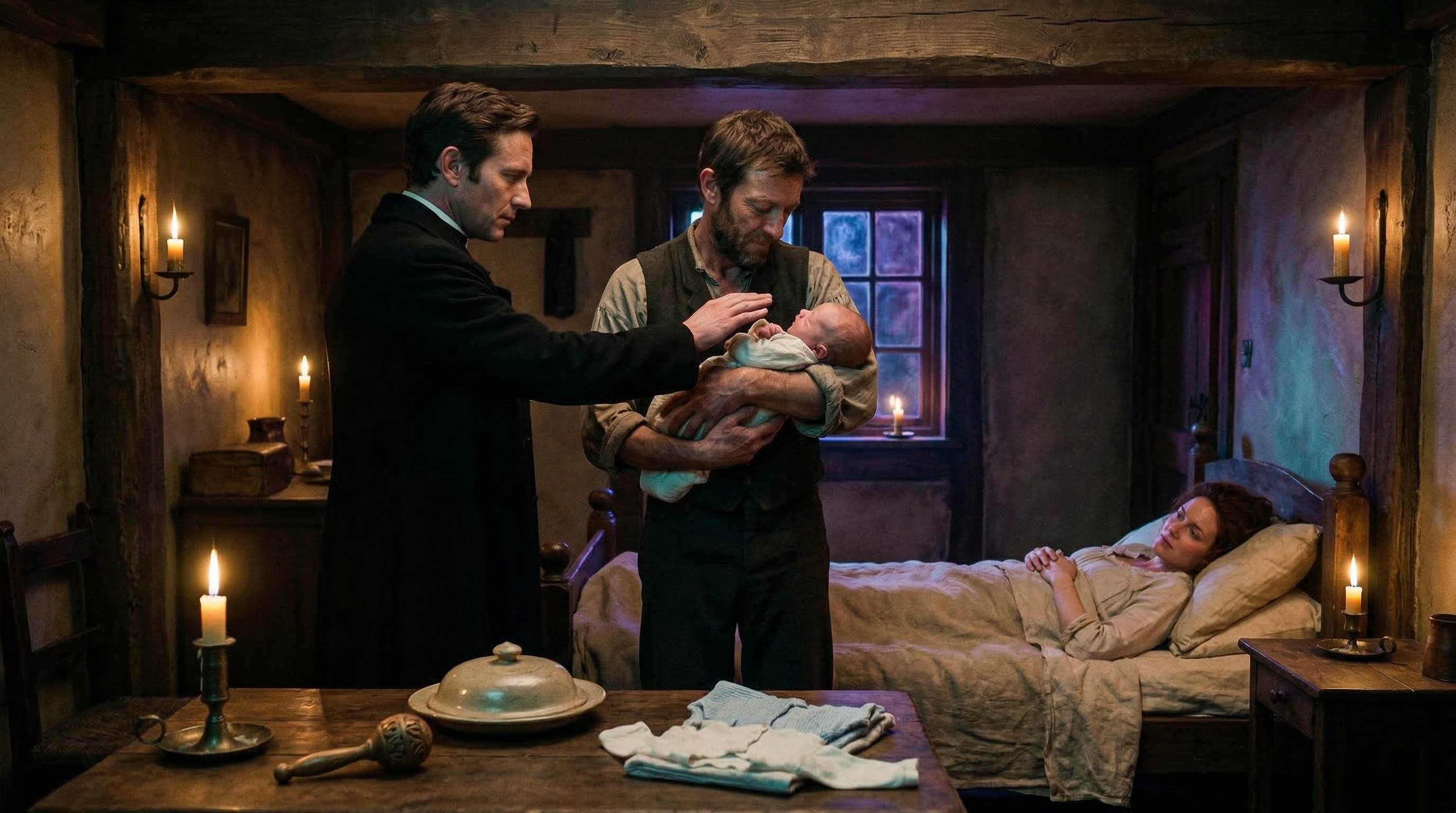
News of the birth spread swiftly through the neighbourhood in the manner of all such tidings, passed over garden walls and exchanged at the water pump. Throughout the afternoon, a steady procession of well-wishers made their way to Hanover Street bearing what gifts they could spare. Old Mr Gideon from the end of the lane brought a wooden rattle that had once belonged to his own children, now grown and scattered. Mrs Cordell the washerwoman arrived with a bundle of patched but scrupulously clean baby clothes her youngest had outgrown. Young Sally from the baker's shop delivered warm bread and fresh butter with her master's compliments.
Elizabeth's mother Mary Whitehall came late in the afternoon, having hurried across town upon receiving word. The formidable woman, whose brisk manner concealed depths of feeling she rarely displayed, gazed upon her first grandchild and remarked that he had the same shape around the eyes as her late father—the very man for whom the boy had been named.
As evening settled over Portsmouth, Father Nathaniel Blackwood of St Thomas's parish arrived to offer a blessing. The tall, spare priest, who had baptised Edward himself some twenty-three years earlier and spoken the words over Richard Jeffries's grave, raised his hands above the sleeping infant and commended him to God's care. He spoke of the trials that lay ahead for any child born into an uncertain world, and charged the parents to raise their son in honesty and kindness.
The day drew to its close with the family alone at last in their small home. Edward settled his son into the cradle he had built himself during the winter months, fashioned from salvaged dockyard timber and decorated with a clumsy but earnest pattern of carved leaves. Outside, the stars emerged over the harbour, and the moon cast its light upon the rooftops of the town where William Thomas Jeffries had begun his life.







