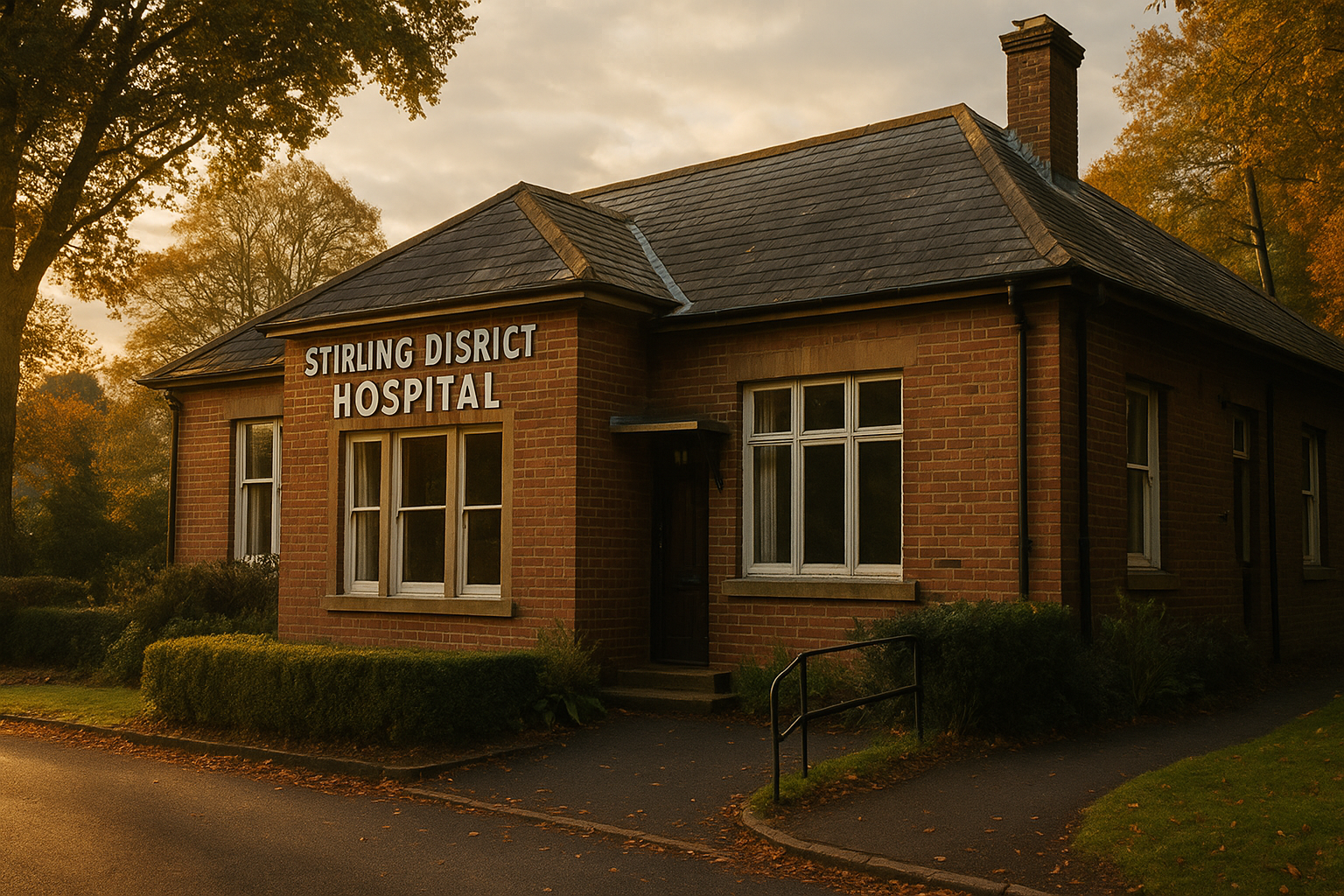
Stirling District Hospital, South Australia
Stirling District Hospital was a small timber cottage hospital that served the Adelaide Hills for eighty years, from its community-funded opening in 1911 until its closure in 1991. Run for most of its life by its matron, it delivered the district's children, mended its farm and road casualties, nursed its sick, and sat with its dying — a place small enough that every patient was known by name. It could never do very much, but it was near, and for generations of Hills families that was almost everything.
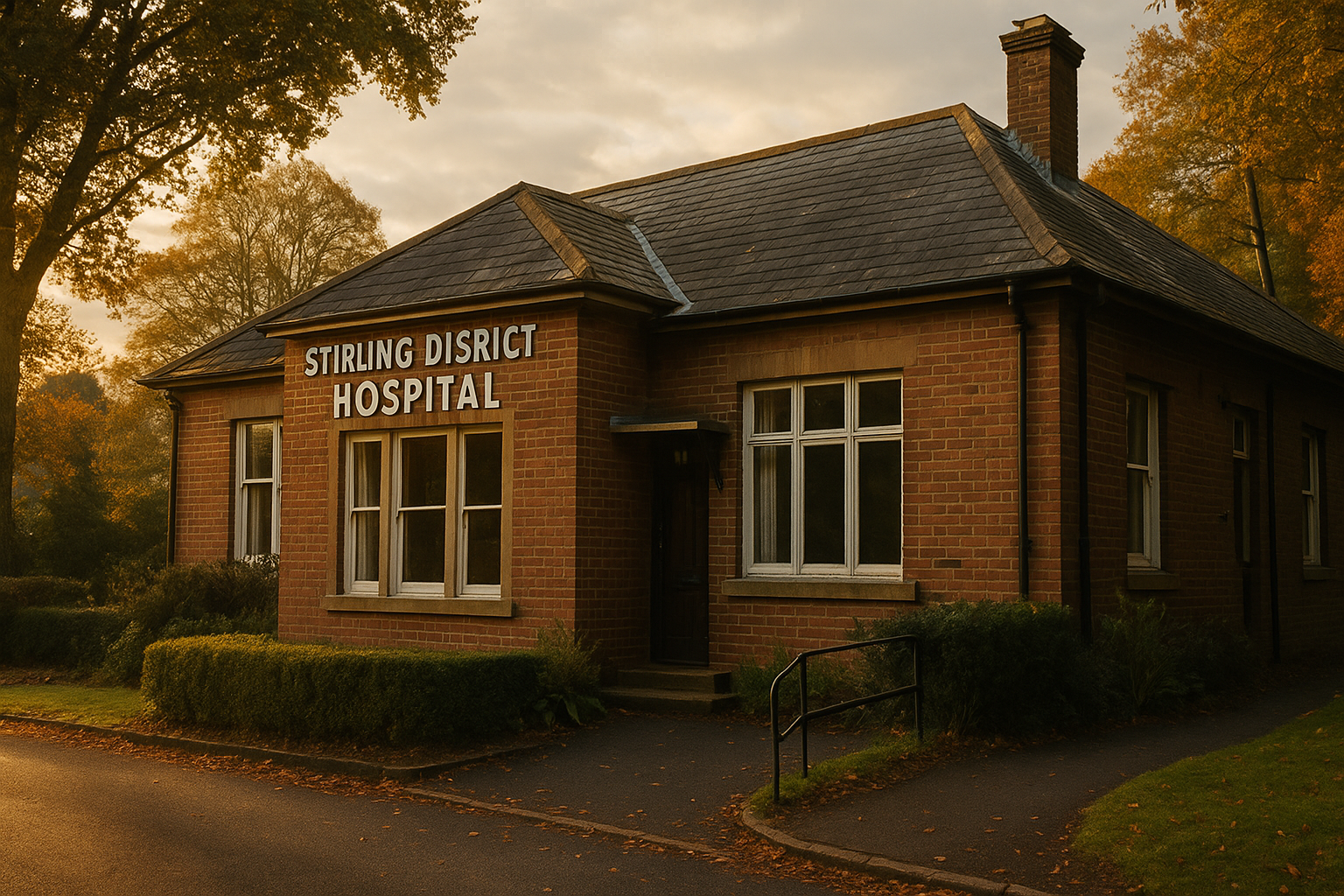
A Hospital for the Hills
The Adelaide Hills in the early twentieth century were a scatter of orchard blocks, dairy runs, sawmills and the summer houses of Adelaide's comfortable classes, linked by unsealed roads that turned to mud each winter. For anything beyond what a district nurse or a capable family could manage, the sick and the labouring faced a jolting buggy ride — later a slow motorcar — down to the city, a journey that more than one patient did not survive. By the early years of the twentieth century, the want of a local hospital had become a grievance the Hills districts were no longer willing to carry.
Stirling District Hospital opened on 18 September 1911, built where community feeling and community money met. It was funded the way such places usually were: by subscription and fête and the donated labour of men who could swing a hammer, raised on a quiet block on Wrenwood Lane a short walk from the Stirling township. The building was timber-framed and modest — a long weatherboard ward, a small theatre, a kitchen, a verandah that caught the afternoon sun — and it was never grand, but it was theirs, and it meant that a Hills woman could be delivered of a child, and a Hills man carried in from under a fallen tree, without first surviving the road to Adelaide.
A volunteer board of local worthies governed it without pay and with strong opinions — orchardists and a solicitor, the Anglican and Methodist ministers, and the wives who had done the greater part of the fundraising. There was no resident doctor in the early years; a general practitioner from Stirling or Aldgate attended when he was sent for, and between his visits the hospital ran, as country hospitals did, on its matron.
The Matron's House
For most of its life the hospital was, in every way that counted, the matron's house. She lived on the premises, in a room off the ward, and was never truly off duty; the place ran to her standards, her routines and her temper. She supervised a handful of nurses and domestic staff, kept the books and the linen and the drug cupboard, decided who was admitted and who was sent on to the city, and sat with the dying when there was no one else to do it. A good matron made the hospital, and over the decades Stirling District had several, the longest-serving of whom became local institutions in their own right, remembered in the district long after the patients they had tended.
It was a cottage hospital, and small even by that measure — a dozen or so beds at its largest, fewer for most of its life — and its character followed from its size. There was no anonymity in it. The nurse who took your blood pressure had gone to school with your sister; the woman in the next bed was known to you, and your business to her; the matron remembered your mother's confinement and would remind you of it. For many, this intimacy was the whole virtue of the place — to be ill among people who knew you, rather than processed by strangers in a city ward. For others it was the cost of it, a small world in which nothing stayed private and a misfortune became, by morning, the property of the district.
The building itself was plain and particular. Polished linoleum and scrubbed jarrah, walls of tongue-and-groove board painted the pale green that hospitals favoured, iron beds under white coverlets, and over all of it the mingled smell of carbolic and floor wax and the eucalypts outside the window. A slow-combustion stove held back the Hills winter, which the timber walls let in more readily than anyone liked; in summer the verandah doors were thrown open and the wards filled with the racket of magpies and the smell of cut grass. When it rained, and in the Hills it rained, the iron roof made a din that drowned conversation, and patients learned to wait it out. It was not a comfortable building. It was a familiar one.
The hospital knew its limits and mostly kept to them. It set fractures, delivered babies, nursed the convalescent and the dying, drained and dressed and stitched, and did all of it well. What it could not do — the birth gone badly wrong, the burst appendix, the chest that filled — it stabilised as best it could and sent down the hill, and not every patient reached the city in time. The staff carried those losses the way small communities carried such losses: personally, and for a long while.
Born, Mended, and Farewelled
The core of the work, year in and year out, was birth. Generations of Hills children began at the Wrenwood Lane hospital, delivered by the matron and her nurses with the doctor sent for if the labour turned difficult, and the register of births was the truest record the district kept of itself. Mothers stayed the better part of a fortnight, in the fashion of the day, the babies lined up in the small nursery, and the hospital's quietest pleasure was the steady traffic of fathers and grandmothers come to look through the glass.
Against the births ran the accidents, and the Hills supplied them generously. The sawmills took fingers and hands; horses and, later, motorcars took worse; orchard ladders and farm machinery and the long steep roads delivered their casualties to the verandah at all hours. A district hospital learned to be a place of sudden arrivals — a cart, a ute, a neighbour's car with the seat already ruined — and its staff learned the particular composure that let a person move quickly without appearing to hurry.
And it nursed the diseases of its century. In the early decades the wards saw diphtheria and scarlet fever, the lingering damage of the influenza that swept the country soon after the Great War, and the dreaded polio summers when frightened parents kept their children from the swimming holes. Later the pattern shifted, as it did everywhere, away from the infections of the young and toward the long complaints of the ageing.
It was also, quietly, a place to die. Hills people who did not wish to end their days among strangers in the city came home to the district hospital instead, and the matron and her nurses gave them what the era had to give — warmth, cleanliness, company, the management of pain by the lights of the day — and sat with them at the last. More than one generation of a Stirling family was both born and farewelled in the same timber ward.
The hospital felt the wider world chiefly through its staff. Nursing was one of the few professions open to a Hills girl who wanted work and a way out, and a steady line of local young women trained or began there before the city, or the world, drew them on. During the Second World War several left to enlist, and the hospital ran short-handed for years, the older nurses and the matron covering the gap as they covered every gap. The doctor of the day went to the war as well, and for a stretch the district made do with whatever locum could be found and with a matron who, as matrons did, simply did more.
The Busy Years
The hospital was at its fullest in the quarter-century after the Second World War. The Hills were filling with young families, the city creeping up into them, and the post-war rush of babies kept the little maternity wing busier than it had ever been. These were the years the district remembered best — the wards full, the nursery seldom empty, the fundraising fêtes well attended, the hospital secure at the centre of community life.
Its defining figure in this period was Matron Evelyn Lowe, who ran the hospital for many years with the unhurried, total competence the role demanded. She was not a warm woman in the easy sense, but she was exactly the presence a frightened patient was glad to have at the foot of the bed — precise, unflappable, entirely in command of her small kingdom — and she delivered a great many of the district's children with her own hands.
The district never stopped paying for it, either. Long after government money arrived, the hospital auxiliary — the same women, and in time their daughters — went on raising the funds for the things the budget would not stretch to: a new steriliser, cots for the nursery, a wireless for the ward, curtains, a refrigerator. The annual fête, the street stalls and the endless trays of sandwiches were the visible form of a quiet proprietorship. The hospital belonged to the district in a way no deed could express, and the district looked after its own.
Among the countless births she oversaw was that of a local biology teacher's first son, delivered on a still summer morning in February 1956 — one entry among thousands in the register, unremarkable on the day, as nearly all of them were. The hospital's significance lay precisely in that ordinariness. It was the place where the district's lives quietly began, accumulated and ended, a fixed point that asked to be noticed only when someone needed it.
The Slow Narrowing
What ended the hospital was not catastrophe but the slow logic that closed country hospitals across the state. From the 1960s onward medicine grew more specialised, more regulated and more expensive, and the small cottage hospital that had once been a district's pride became, by the new measures, a place that could not offer what a modern patient was taught to expect. Equipment a little hospital could never afford became the standard of proper care. Births, more and more, were booked into the larger hospitals at Mount Barker or down in the city, where an anaesthetist was on call and a theatre stood ready for the birth that went wrong, and the maternity wing that had been the heart of the place fell quiet.
And yet a place could be most needed just as it was being judged unnecessary. On 16 February 1983 the Ash Wednesday fires tore through the Adelaide Hills and Stirling burned, and for a few hours the little hospital was at once refuge and target — staff making ready to evacuate the helpless even as smoke thickened the wards and the power failed, the injured and the frightened arriving faster than a dozen beds could hold them, the telephones down and the roads cut. It treated burns and smoke and shock through that night and the grey days that followed with a steadiness that those present never forgot, well past anything its size or its equipment should have allowed. The fires spared the building. They did not spare the district, and for weeks afterward the hospital was a place people came not only to be treated, but to find one another.
The board, by then answerable to a health department rather than to its own subscribers, fought a long rear-guard action through the 1970s and 1980s — the perennial country fight to hold a local service against the arithmetic of centralisation. The hospital narrowed as it aged: fewer acute beds, and then none; a shift toward convalescence, aged care and the district's elderly; a steady redrawing of what it was permitted to do, until it was less a hospital than a name on a timber building that still smelt faintly of the wards it had been.
Each contraction was felt as a small bereavement by the people who had been born there, and who understood, rightly, that more than a service was being withdrawn. A district that lost its hospital lost a particular kind of self-sufficiency, and a particular reassurance — that its beginnings and its endings could be managed close to home, among its own.
After the Last Bed
Stirling District Hospital closed on 30 June 1991, after eighty years, its work consolidated into the larger district hospitals that modern medicine had come to require. The last patients were transferred, the last staff redeployed or retired, and the timber building on Wrenwood Lane fell silent for the first time since 1911.
It was not, in the end, abandoned. The community that had built it would not see it lost, and the buildings were kept and turned to gentler use — community health rooms, allied-health and visiting services, a base for the district nursing that had outlived the hospital it once supported, and care for some of the elderly who had once been its babies. The original ward was preserved, its verandah still catching the afternoon sun, and the honour boards and the old photographs were kept where they could be seen.
What it left was less a set of services than a habit of care and a stock of memory. For the families who had been delivered there, mended there, and had sat by its beds through their parents' last nights, the hospital remained a fixed point in the geography of their lives — a small timber building that had, for the better part of a century, held the district's beginnings and endings safely in one place. It had never been able to do very much. It had simply been there, and near, and for generations of Hills families that had been almost everything.







