Stefan Václav Novak
Stefan Novak, born 9 May 1975 in Ostrava, Czechoslovakia, emigrated to Adelaide with his father Pavel in 1987 and grew up in working-class Elizabeth. A parts-counter hand and warehouse worker whose drinking quietly dismantled every opportunity, he married Kylie Hammond in 1998 and fathered Taryn and Connor before walking out on the family in February 2010. He spent his remaining years drifting through the Murray Bridge river towns, estranged from the children he had abandoned.
The Boy From Ostrava
Stefan Václav Novak was born on 9 May 1975 in Ostrava, the smoke-blackened industrial city in the north-east of what was then Czechoslovakia, where the coke ovens burned through the night and the air carried the taste of iron. He was the only child of Pavel Novak, a fitter at the Vítkovice ironworks, and his wife Eva (née Dvořáková), a seamstress whose health was never robust. His middle name, Václav, had been his paternal grandfather's, and behind the grandfather stood the patron saint of Bohemia himself — a small, half-forgotten inheritance of nation and faith that Stefan would carry across the world and rarely think of again. The household was modest and orderly, and quietly strained in the particular way of a country where ambition was a liability and a careful man kept his head down to keep his job.
His earliest world was small. A two-room flat in a panelák block, the tram that rattled past the window, the long grey winters when fresh snow turned the colour of the chimneys within an hour of falling. Pavel was an undemonstrative father who measured love in provision rather than words, a habit his son absorbed without examination and never managed to break. Eva was the warmer parent, and whatever tenderness survived into Stefan's adult life came down from her.
That inheritance was tested early. Eva fell ill in the winter of 1984, a cancer of the stomach the doctors caught far too late, and she died the following spring, a few weeks short of Stefan's tenth birthday. He would remember the funeral chiefly as cold, and as the first time he watched his father weep — briefly, almost angrily — before folding the grief away somewhere it could not be reached again.
By then Pavel's elder brother Mikhail had already gone. Mikhail was the clever one, the one with the medical training, and he had left for Australia in 1985 to build a surgeon's life in Melbourne. His letters home described a country of sunlight and space and money, and they worked on Pavel like a slow tide. A widower with a son and little left to hold him, Pavel made his decision in 1987. He took the long flight south with twelve-year-old Stefan beside him, the boy clutching one suitcase and the handful of English words he had been made to memorise.
Family Tree
A New Country, Half-Claimed
They landed not in Mikhail's glittering Melbourne but in Adelaide's northern fringe, in Elizabeth, where the General Motors Holden plant took Pavel on and a fibro house on a shift-workers' street became home. The gap between the two brothers announced itself immediately and never closed. Mikhail had a Toorak address and a barrister wife; Pavel had a parts bin and a mortgage. Stefan grew up inside that comparison, absorbing his father's bruised pride as though it were a family trade.
School was an ordeal. He arrived mid-year into a system conducted in a language he barely held, a quiet, watchful boy with an accent the other children mimicked. He learned English quickly enough, but he never quite shed the sense of arriving late to a conversation everyone else had been having for years. He stopped raising his hand. He worked out, young, that it was safer to be the one who didn't try than the one who tried and was laughed at.
The house changed shape in 1989, when Pavel married an Australian woman named Dorothy Hennessy. Dorothy worked the canteen line at a Salisbury factory, had no children of her own, and took the motherless fourteen-year-old on without ceremony or fuss. She was plain-spoken and steady, and though Stefan never called her anything but Dorothy, she did the unglamorous work of raising him — packed his lunches, sat up when he came home late, absorbed his sullenness without returning it. He did not thank her for it. It would be decades before he understood that he should have.
Pavel rarely spoke of his brother, and the Melbourne Novaks remained an abstraction — a wealthier, luckier version of the family whose existence served mainly to measure everything this branch had failed to become. The Christmas cards thinned and then stopped. Stefan grew into the resentment without ever meeting the people it was aimed at. The name Novak, in his mouth, carried a faint and permanent grievance.
Counters and Cartons
He left Fremont High at the end of Year 10 in 1991, with no appetite for the classroom and a father who saw nothing wrong with a boy going to work. There was a brief apprenticeship at a panel-beating shop that he walked out of after a disagreement with the foreman, the first instance of a pattern that would define his working life — the job lost not through incompetence but through some smaller failure of temper or patience or staying power.
What he settled into was the trade of the parts counter. He had a genuine aptitude for it: a memory for catalogue numbers, an ease with the language of carburettors and brake assemblies, a way of talking to mechanics that made him useful. Through the middle nineties he worked the counters at a string of automotive suppliers across Adelaide's north, and when the counter work dried up he took the warehouse floors instead, picking and packing through long shifts under fluorescent light.
The drinking began in this period, unremarkably, the way it did for half the men he worked alongside. A few cans after a shift, a session on a Friday that bled into Saturday. It was years before it became a problem anyone named, and longer still before Stefan would admit it was the quiet architect of every door that closed on him. At twenty he was charming in a rough way, quick with a joke at the bar, the kind of man who was good company until the eighth schooner turned him sullen.
He was not a cruel young man, nor a stupid one. He was a man who had learned early that effort invited humiliation, who had watched his father swallow disappointment for a living, and who had decided somewhere below conscious thought that wanting things too openly was a kind of weakness. It made him passive in the face of his own life — a man to whom things happened, rather than one who made them happen.
Kylie
He met Kylie Hammond in the spring of 1997, in the front bar of a pub in Salisbury, where she had come with friends and he had come, as he came most nights, alone. He was twenty-two; she was nineteen, bright and unguarded and not yet tired of him. For a few months they were genuinely happy, in the uncomplicated way of two young people with no money and no plans, and that brief happiness would later become the thing Stefan measured all his failures against.
When Kylie fell pregnant that summer, marriage was less a decision than a current they let carry them. They were wed three months later in a registry office with Dorothy and a few friends in attendance and Pavel standing stiff at the back in a borrowed tie. Taryn Elise Novak arrived on 3 September 1998 at the Lyell McEwin Hospital, and for a short while Stefan held his daughter and believed, with the whole of his unreliable heart, that he would be a better man than his circumstances had made him.
The belief did not survive contact with the years. He loved Taryn — this was true, and it would remain true even through everything that came after — but he loved her in the only register he knew, which was provision, and provision was the precise thing he kept failing to manage. Money was always short. The arguments started early and never really stopped, voices climbing through the thin walls, Kylie crying in the bathroom afterwards, a small Taryn learning to read the weather of the house.
The Slow Unravelling
Their son Connor was born in 2003, in the middle of one of Stefan's longer stretches without work, and his arrival sharpened rather than softened the strain. The family moved twice in those years, each rental a little smaller and each suburb a little more frayed, until they landed in a Housing Trust property in Elizabeth Downs — not the worst street in the suburb, Stefan would tell himself, as though that were a thing to be proud of.
He was, by most measures available to him, a failure, and he knew it, and the knowing made him worse. The drinking deepened. He grew adept at the small dishonesties of a man living beyond his means — the bill paid late, the shift skipped and lied about, the tenner taken from Kylie's purse. He was not a violent man; his cruelties were the passive kind, the absences and the sulks and the promises made warmly and forgotten by morning.
The redundancy in 2008 broke something that did not mend. The warehouse he had worked at for three years closed its Adelaide operation, and Stefan, thirty-three and unqualified, found the counters that had once welcomed him now staffed by younger men who worked the computer systems he had never learned. He took casual work where he could find it, and he drank through the gaps, and the gaps grew longer. Kylie carried the household on a checkout wage and a fraying patience, and the man she had married receded a little further each month into someone she no longer recognised.
It was in this last grey stretch that he met Donna Pearce, a woman ten years his senior who tended bar at a hotel in Murray Bridge, an hour east along the river. There was nothing romantic in how it started, only the relief of being, for an evening, a man without a history of letting people down. He began finding reasons to be in Murray Bridge. He told himself it was about the work.
What He Took, What He Left
He left on a Tuesday morning in February 2010, a few months before Taryn's twelfth birthday. He told Kylie he was going to a shift, kissed neither child, and simply did not come back. There was no note and no telephone call. He had taken his clothes and emptied the joint account — eight hundred and forty-seven dollars, the whole of what they had — and left everything else behind, including a daughter and a son who would spend years assembling explanations for a thing that had none.
Kylie reported him missing after three days. The police found him within the week, unharmed and unhidden, living with Donna in a rented house in Murray Bridge. He had not run from danger or breakdown; he had simply walked out of a life he could no longer bear to fail at, into one where nobody yet knew his measure. It was the single most consequential act of his existence, and he had performed it the way he did everything — passively, without confrontation, by absence rather than declaration.
What he never let himself fully reckon with was the shape of the wound he left. Connor, six, was bewildered. Taryn was not. She took her father's leaving and forged it into something hard and durable and entirely her own, a refusal to become him that would carry her further than he had ever gone. Stefan, when he thought of his children at all in those first years, thought of them as a debt he had defaulted on, and a defaulter's instinct is to avoid the creditor.
Murray Bridge and the River Years
The life he had traded everything for did not, in the end, amount to much. He and Donna lasted four years. She had wanted a companion, not a project, and Stefan's drinking and his moods and the slow leak of his shame wore the thing down to nothing. When it ended in 2014 he stayed in Murray Bridge, then drifted between the river towns — Tailem Bend, Mannum, a spell at Murray Bridge again — taking storeman work and parts-counter shifts and, for one bad year, no work at all.
He attempted sobriety more than once. There was a stretch in 2016, after a fall that put him in the Murray Bridge hospital for a week, when he went to meetings in a church hall and stayed dry for nine months and felt, briefly, like a man who might still be redeemed. It did not hold. The drinking returned the way it always had, quietly, a single beer that proved it could be managed until it proved it could not.
He made two thin gestures toward his children across those years. He posted a birthday card to Taryn in 2013, with a twenty-dollar note inside and a few lines he rewrote four times, and it was never answered. Years later he found Connor on Facebook and typed a message and deleted it unsent. These were not the actions of a man without feeling; they were the actions of a man whose feeling had never once been equal to the courage that repair would have required. He wanted to be forgiven without having to ask.
His father died in November 2017, in a nursing home in Salisbury, three months before the granddaughter Stefan had abandoned began the university degree no Novak of their branch had managed. Stefan learned of the death from Dorothy, by telephone, and he drove up for the funeral and stood at the rear of the chapel and left before the wake, unable to meet the eyes of people who knew exactly what he had done. He and Pavel had never reconciled, because there had been no rupture to reconcile — only the long, mutual silence of two men who loved each other in a language neither could speak.
Dorothy outlived Pavel by seven years and died in her sleep in August 2024. Stefan did not go to her funeral. He told himself he could not face Taryn and Connor, who he knew would be there, and the excuse was true as far as it went, but beneath it lay the older cowardice. The woman who had raised him without obligation, who had asked nothing and given what she had, went into the ground unthanked by the boy she had taken in. He marked the day alone, in a flat in Murray Bridge, with the curtains drawn.
The Novak name surfaced strangely in January 2023, when his first cousin Julia — Mikhail's daughter, a Melbourne art collector he had never met — became the subject of a murder investigation, and the tabloids ran their family trees from Prague to the present. For a fortnight the wealthy Novaks and the poor ones shared a headline at last. Stefan followed the coverage in the local paper with a bitter, detached fascination, the old grievance stirring faintly. It changed nothing. He was a footnote to a footnote, a name on a chart, related to scandal and fortune alike by an accident of blood that had never once worked in his favour.
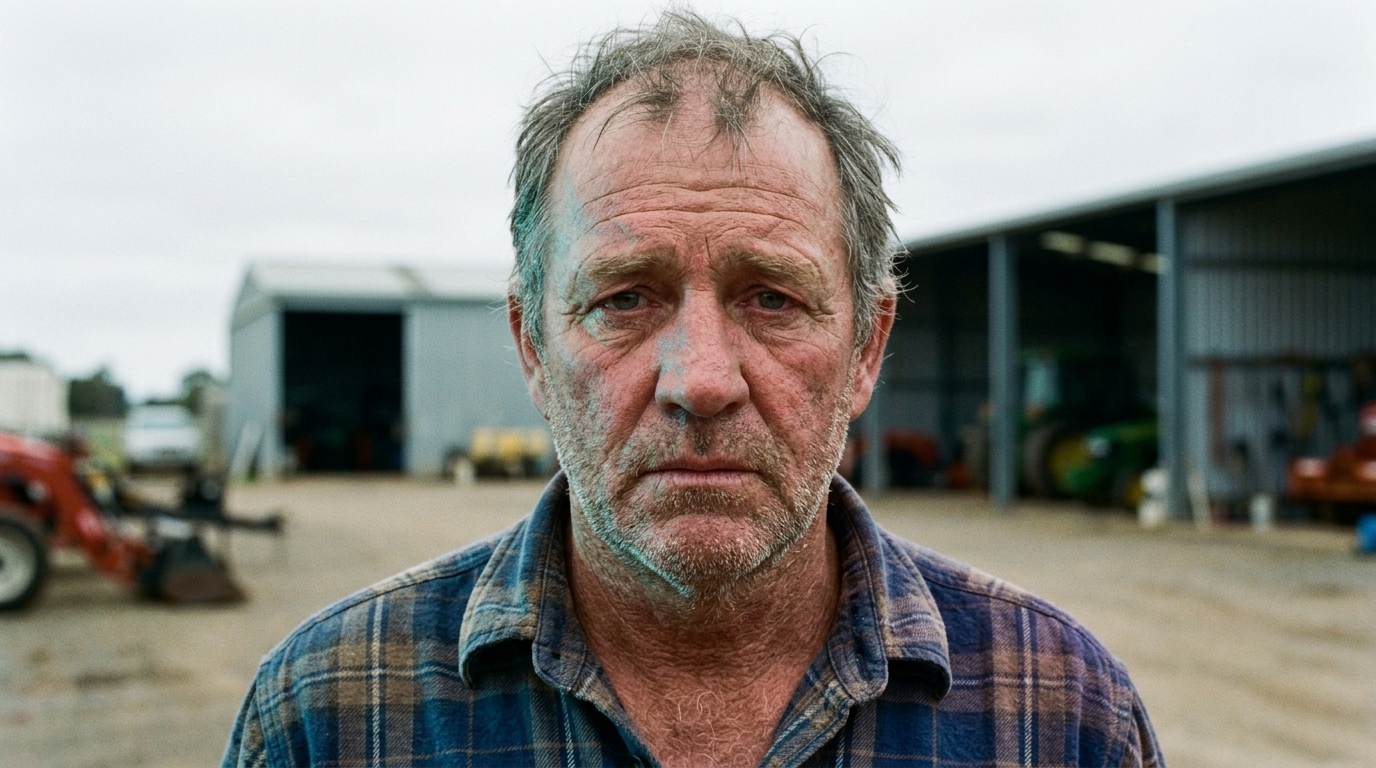
By 2026 Stefan Novak was fifty-one, and the shape of his life had long since set. He worked the storeroom of a farm-machinery dealership on the edge of Murray Bridge, a steady-enough job he had held for three years by keeping his head down, the lesson his father had taught him finally learned too late to matter. He lived alone in a one-bedroom unit, drank less than he once had and more than he should, and kept on a shelf a single photograph of two small children he no longer had any right to. He had not become a monster. He had become something quieter and more common — a man who had been handed an ordinary, repairable life and had let it fall, and who had spent every year since living in the silence where his children's voices should have been.







