Stacey Anne MacDougall
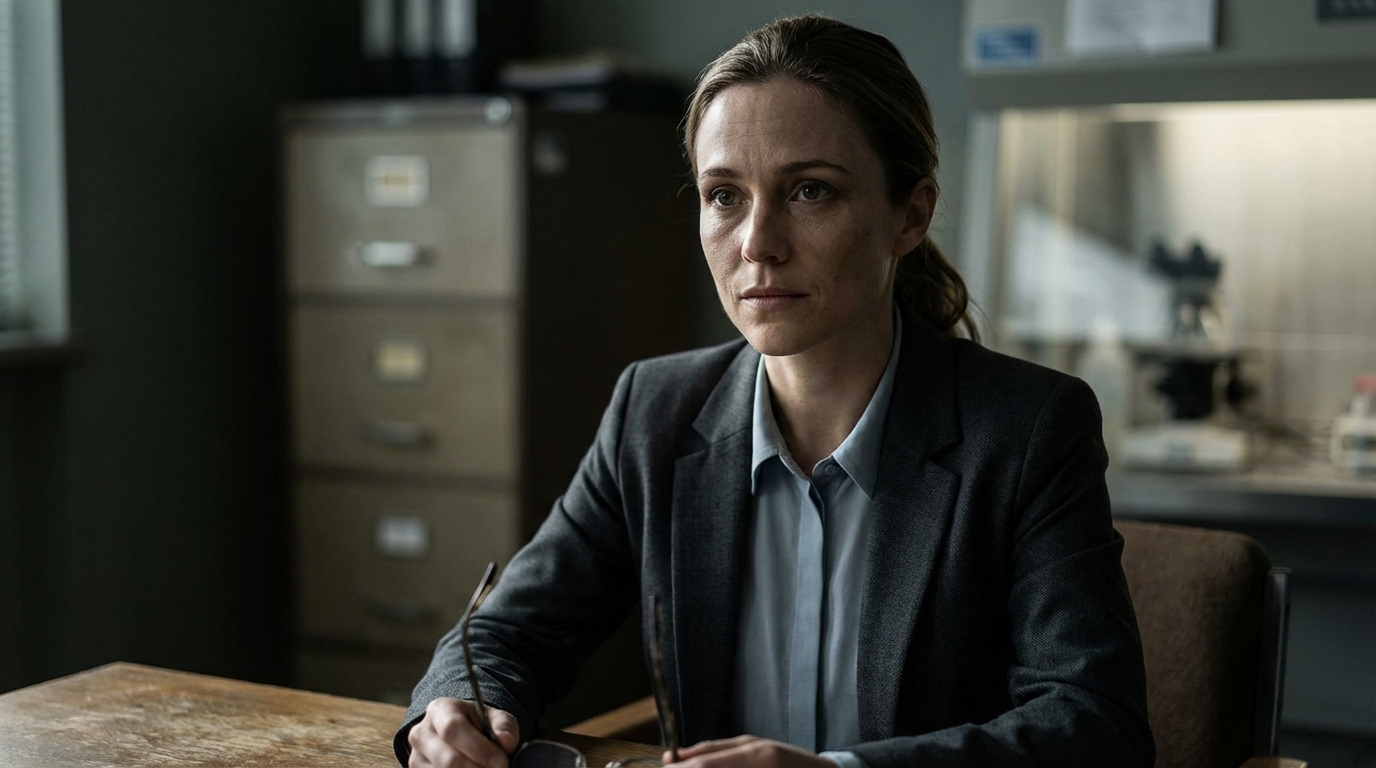
Stacey Anne MacDougall, born 14 September 1992 in Launceston, Tasmania, is a Forensic Technician specialising in crime scene photography and documentation at the Forensic Science Service Tasmania. The daughter of a professional photographer and a librarian, Stacey combines technical precision with artistic sensibility in her forensic work. Her meticulous approach to visual evidence collection, developed under the supervision of Senior Forensic Scientist Archer Donovan, proved invaluable during the July 2018 Derek Simmons investigation at the State Theatre.
Early Life and the Influence of Images
Stacey Anne MacDougall was born at 6:42 AM on 14 September 1992 at the Launceston General Hospital, arriving as the first and only child of Donald James MacDougall and Catherine Anne MacDougall (née Fitzgerald). The morning was overcast, typical of early Tasmanian spring, and Donald—having photographed his daughter's first moments of life with the same devotion he brought to his professional work—would later describe the images as among the most important he'd ever captured.
The MacDougall household occupied a modest weatherboard cottage in East Launceston, its back rooms converted into the darkroom where Donald processed his commercial photography work. Donald, born in 1958, had established MacDougall Photography in 1985, building a steady practice that combined wedding and portrait work with commercial assignments for local businesses and the occasional magazine commission. His approach to photography emphasised patience and precision—waiting for the perfect light, adjusting compositions until every element served the image's purpose, never pressing the shutter until the moment felt exactly right.
Catherine, born in 1960, worked as a librarian at the Launceston Library, where her responsibilities included cataloguing, archive management, and the particular kind of organisational thinking that large collections demanded. Her professional world consisted of systems and classifications, the satisfaction of knowing that everything had its designated place and could be retrieved through proper procedures. The household she maintained with Donald reflected these sensibilities—orderly without being sterile, efficient without sacrificing warmth.
Together, Donald and Catherine created an environment where precision and patience were valued equally. Family dinners involved discussions of composition and archival methods, of technical challenges overcome and systems refined. Stacey absorbed these conversations as naturally as she absorbed her parents' affection, developing from earliest childhood an appreciation for work that required getting details exactly right.
The darkroom became Stacey's childhood refuge. From the age of five, she would sit quietly whilst Donald processed film, watching images emerge from developer trays with a fascination that never diminished through repetition. The alchemy of it captivated her—the way light captured on film could be transformed into permanent record, the way moments could be preserved through careful chemical processing. Donald, recognising genuine interest rather than mere curiosity, began teaching her the fundamentals of photography before she started school.
By age eight, Stacey was processing her own black-and-white prints under Donald's supervision. By ten, she could operate the family's professional cameras with competence that impressed Donald's colleagues. By twelve, she was assisting at wedding shoots, managing equipment and capturing candid moments that Donald incorporated into final albums. The work taught her that photography served purposes beyond artistic expression—it documented, it preserved, it created records that mattered to people in ways she was only beginning to understand.
Education and the Discovery of Purpose
Stacey commenced her formal education at East Launceston Primary School in 1998, entering a classroom environment that quickly revealed her particular strengths and limitations. She excelled in subjects requiring systematic thinking—mathematics, science, any discipline where correct answers rewarded careful methodology. Creative writing proved more challenging; her compositions were technically proficient but lacked the imaginative flourishes that teachers sought. She preferred describing what was to inventing what might be.
Visual arts became her academic strength. Her photography projects consistently earned distinction-level marks, and her art teacher, Mrs. Elizabeth Brennan, recognised technical sophistication unusual in primary-school students. By Year 6, Stacey was producing documentary-style photo essays that demonstrated both compositional skill and the patience to capture subjects at their most revealing moments.
The transition to Launceston Church Grammar School in 2005 broadened her academic exposure whilst confirming her aptitudes. Science subjects engaged her thoroughly; she particularly enjoyed chemistry, where laboratory procedures demanded the same precision her darkroom work required. Photography remained her primary extracurricular commitment—she joined the school's photography club in Year 7 and led it by Year 10, organising exhibitions that showcased student work to the broader school community.
A pivotal moment arrived in Year 11, when the school hosted a careers presentation featuring Dr. Margaret Chen, a forensic scientist from Victoria Police. Chen's presentation described crime scene photography—the systematic documentation of evidence, the chain of custody requirements, the way images could speak for victims who could no longer speak for themselves. Stacey listened with growing recognition, understanding for the first time that her skills might serve purposes extending far beyond commercial or artistic photography.
The presentation sparked research that occupied her remaining school years. She investigated forensic science programmes, studied the role of documentation in criminal investigations, and began conceptualising a career pathway that would combine her technical capabilities with meaningful public service. Her Year 12 photography portfolio focused on forensic themes—staged crime scenes, evidence documentation exercises, explorations of how images could convey information that words struggled to capture.
Graduation from Launceston Church Grammar School in December 2010 came with strong results across scientific subjects and outstanding achievement in Visual Arts. Her ATAR of 88.65 qualified her for university programmes in forensic science, though her particular interest lay in the documentation and photography aspects rather than laboratory analysis.
University Years and Professional Preparation
In February 2011, Stacey enrolled in the Bachelor of Applied Science (Forensic Investigation) programme at the University of Tasmania's Hobart campus. The move from Launceston represented her first extended period away from family, and the adjustment proved more challenging than she'd anticipated. She found lodgings in Sandy Bay with three other students, learning to navigate shared living whilst managing the demanding coursework her programme required.
The degree combined theoretical criminology with practical forensic applications. Stacey engaged enthusiastically with courses examining crime scene methodology, evidence handling procedures, and the legal frameworks governing forensic work. Her particular strength emerged in photography and documentation modules, where instructors recognised capabilities that exceeded typical undergraduate performance.
Professor Alan Richards, who supervised the programme's forensic photography component, became an important mentor. Richards had spent twenty years with New South Wales Police before transitioning to academic work, and his instruction combined theoretical foundations with practical wisdom accumulated through thousands of crime scene documentations. He recognised in Stacey the patience and precision that distinguished excellent forensic photographers from merely competent ones.
Under Richards's guidance, Stacey developed specialised skills in evidence photography—the techniques required to capture items in ways that conveyed scale, context, and condition. She learnt the importance of systematic approaches: overall shots establishing scene geography, mid-range images showing spatial relationships, close-ups documenting specific items, each photograph building upon others to create comprehensive visual records. The work demanded the same methodical approach her father had demonstrated in his commercial photography, now applied toward purposes with genuine consequence.
Her practical placements provided exposure to operational forensic work. A summer attachment to Tasmania Police's forensic unit in 2013 introduced her to crime scene realities that classroom instruction could only simulate. She observed senior technicians processing burglary scenes, documented evidence under supervision, and began understanding the pressures that accompanied forensic work—the awareness that courts would eventually scrutinise every image, that defence attorneys would seek any flaw in documentation protocols, that mistakes couldn't be corrected once scenes were released.
The placement supervisor, Senior Constable Marcus Webb, provided a frank assessment that both encouraged and challenged her. Her technical work met professional standards; her composure under pressure required development. Webb observed that Stacey's hands trembled when processing her first scenes, that her movements betrayed anxiety she struggled to conceal. The feedback stung, but Stacey recognised its validity. She began deliberately placing herself in challenging situations—photographing under time pressure, processing scenes with simulated observers applying scrutiny, conditioning herself toward the steadiness that operational work demanded.
Graduation in December 2014 came with solid academic results and a growing sense of professional direction. Her honours project, supervised by Professor Richards, examined optimal lighting techniques for evidence photography in challenging environments—practical research that subsequent forensic practitioners would reference.
Early Career and the Path to FSST
The post-graduation job market proved challenging. Forensic positions in Tasmania were limited, and Stacey competed against candidates with more experience and established connections. She spent 2015 in a succession of photography-related roles—wedding assistance for her father's business, commercial work for Launceston retailers, and freelance assignments that paid bills without engaging her forensic training.
The interim period, though frustrating, proved valuable. Commercial photography demanded client management skills that academic training hadn't provided. Wedding work required performing under pressure whilst maintaining quality standards. Each assignment reinforced habits of preparation and precision that would serve her eventual forensic career.
A breakthrough arrived in early 2016 when the Forensic Science Service Tasmania advertised for a Trainee Forensic Technician. The position, based at FSST's Hobart facility, focused on crime scene documentation and evidence photography—precisely the specialisation Stacey had pursued throughout her education. She applied with a portfolio demonstrating both technical capability and artistic sensibility, supported by references from Professor Richards and her Tasmania Police placement supervisor.
The interview process proved rigorous. FSST's recruitment committee examined her technical knowledge, tested her practical skills through simulated documentation exercises, and assessed her capacity to perform under observation. The trembling hands that Webb had noted years earlier returned during practical tests, though less pronounced than before. The committee recognised both capability and areas requiring development.
In March 2016, Stacey accepted an offer to join FSST as a Trainee Forensic Technician. The appointment required relocation to Hobart—a move that proved easier than her initial university transition, her four years in the city having established familiarity with its geography and rhythms. She found lodgings in North Hobart, a modest one-bedroom flat close enough to FSST's facility for reasonable commuting.
FSST and the Development of Expertise
The Forensic Science Service Tasmania occupied modern facilities in Hobart's northern suburbs, its laboratories and processing areas equipped to national standards. Stacey entered an organisation whose history stretched back to 1978 and whose reputation reflected decades of accumulated expertise. Senior scientists like Dr. Margaret Lawson and Dr. Michael Donnelly had shaped forensic practice across Tasmania; their work established standards that newcomers were expected to meet.
Her initial supervisor, Senior Forensic Scientist Archer Donovan, approached training with characteristic thoroughness. Donovan, whose own career had begun with Victoria Police before returning to Tasmania, understood the gap between academic preparation and operational competence. He assigned Stacey to straightforward documentation tasks initially—property crime scenes, minor assaults, incidents where stakes were lower and learning opportunities abundant.
The work revealed both strengths and development areas. Stacey's technical photography skills exceeded expectations; her images demonstrated compositional awareness and lighting sensitivity that Donovan noted with approval. Her documentation protocols proved equally strong, reflecting Professor Richards's thorough instruction. However, operational pressure exposed vulnerabilities that controlled environments had concealed. Her hands continued trembling when she knew supervisors were observing; her movements tightened with self-consciousness that threatened to compromise efficiency.
Donovan addressed these concerns with the directness that characterised his professional approach. He acknowledged the physical symptoms as common amongst junior technicians—many experienced similar reactions when operational reality replaced training scenarios. The solution lay not in suppressing anxiety but in developing routines that channelled it productively. He encouraged Stacey to treat equipment setup as ritual, using the systematic positioning of tripods and lighting to anchor herself before confronting scenes that triggered emotional responses.
The advice proved transformative. Stacey developed preparation protocols that became almost ceremonial—placing tripod legs precisely, checking spirit levels methodically, adjusting spreads until equipment sat perfectly flush with surfaces. The routines created distance between herself and scenes' emotional weight, providing structured transition from arrival to active documentation. Colleagues observed what appeared to be ritualistic precision; Stacey knew it as the mechanism that allowed her to function effectively.
Her first year at FSST (2016-2017) accumulated experience across varied scene types. Property crimes predominated—burglaries, vehicle break-ins, vandalism—but occasional serious incidents provided exposure to work with genuine consequence. A fatal accident in Glenorchy required documenting a deceased victim for the first time; Stacey's hands shook violently during setup, then steadied once her camera began capturing images. The psychological compartmentalisation that Donovan had described proved possible, if never entirely comfortable.
Professional Development and Growing Competence
Confirmation as a full Forensic Technician came in March 2017, marking Stacey's transition from trainee to independent practitioner. The promotion brought increased responsibility—solo callouts to minor scenes, reduced supervision on routine assignments, and the expectation that she would begin training subsequent newcomers. Her technical skills had reached the standard FSST required; her operational composure, whilst still developing, had improved sufficiently for independent work.
The year following confirmation consolidated her professional standing. She processed dozens of scenes across southern Tasmania, developing efficiency that reduced processing times without sacrificing thoroughness. Her documentation packages—the photographs, diagrams, and reports that crime scenes generated—earned consistent approval from supervising scientists and prosecutors who received them. Defence attorneys rarely found grounds for challenging her evidence; her protocols and documentation proved difficult to attack.
Relationships with colleagues developed gradually. Stacey's reserved nature limited casual socialisation, but professional respect accumulated through demonstrated competence. Hazel Lockhart, a Senior Forensic Scientist whose DNA expertise complemented Stacey's photographic focus, proved particularly welcoming. Their shared commitment to methodical precision created natural affinity; conversations about evidence processing and documentation protocols substituted for the personal exchanges that sustained other workplace friendships.
Archer Donovan remained her primary professional mentor. His feedback—always direct, occasionally blunt, invariably accurate—guided her continued development. He assigned her to increasingly complex scenes, testing capabilities whilst providing support when challenges exceeded her current skills. A home invasion in Sandy Bay, where evidence suggested interrupted assault, pushed Stacey's emotional management to its limits; Donovan processed the scene alongside her, demonstrating how experienced practitioners maintained functionality despite disturbing content.
The incident prompted discussions about long-term sustainability. Forensic work extracted psychological costs that accumulated over careers; technicians who survived professionally developed mechanisms for managing accumulated exposure. Donovan shared strategies he'd developed through his own career—compartmentalisation techniques, decompression rituals, the importance of maintaining interests beyond forensic work. Stacey listened carefully, recognising that the career she'd chosen would demand ongoing attention to her own wellbeing.
July 2018: The State Theatre Scene
The morning of 20 July 2018 began with routine preparation. A call from Tasmania Police reported a body discovered at Hobart's State Theatre—an apparent unattended death requiring forensic processing. Archer Donovan assembled his team: Constable Sean Mackenzie for logging and perimeter duties, and Stacey for the photography and documentation that constituted her core responsibility.
The theatre's interior presented immediate complexity. A male victim occupied a front-row seat, his posture suggesting theatrical arrangement rather than natural collapse. The staging—too deliberate, too composed—registered as significant even before investigators arrived to formalise their observations. Detective Sergeant Charlie Claiborne was already present, his weathered authority establishing the investigative framework within which forensic work would proceed.
Hours of documentation followed. The body from every angle, its positioning preserved through systematic photography that future analysts would depend upon. The seats surrounding the victim, each a potential evidence source. The stage that dominated the theatre's forward space, empty yet somehow charged with significance the images couldn't fully convey. The doors through which someone had entered and departed, their surfaces potential repositories for fingerprints or other deposits.
The day extended beyond normal shift hours. Evidence collection, scene processing, and the administrative documentation that accompanied major incidents accumulated into an assignment that consumed the entire working day. When Stacey finally departed the theatre, the case's images existed in digital form on FSST storage systems—permanent record of circumstances that remained, at that moment, deeply mysterious.
Subsequent Casework and Professional Growth
The Derek Simmons investigation, as the State Theatre case became known, represented a formative experience in Stacey's development. Her documentation proved crucial to subsequent investigative work; prosecutors referenced her images throughout proceedings that extended well beyond the initial discovery. The experience demonstrated that junior technicians could contribute meaningfully to major investigations—that competence mattered more than seniority when evidence required preservation.
The months following the State Theatre scene brought continued professional development. August 2018's cascade of serious incidents—Detective Karl Jenkins's disappearance, Detective Sarah Lahey's death—demanded FSST resources at unprecedented levels. Stacey found herself assigned to peripheral aspects of these investigations: documenting locations connected to missing persons, processing scenes of secondary importance, contributing to the massive evidence collection that major cases generated.
The Lahey investigation particularly affected her. Outdoor crime scenes at Myrtle Forest presented technical challenges that tested her developing capabilities. Weather exposure, environmental contamination, and the investigative complications attending any officer death created conditions far removed from controlled training exercises. Donovan led the forensic response, but Stacey contributed documentation work that expanded her operational experience significantly.
By late 2018, she had accumulated the varied exposure that transformed capable technicians into reliable practitioners. Her portfolio documented scenes ranging from property crimes to homicides, from controlled indoor environments to challenging outdoor locations. The trembling hands that had characterised her earliest work appeared less frequently; when they emerged, she managed them through rituals that observers perceived as methodical preparation rather than anxiety management.
Personal Life and the Balance of Worlds
Away from FSST's facilities, Stacey constructed a life deliberately separate from forensic work's demands. The North Hobart flat she occupied remained sparsely furnished but thoughtfully organised, its shelves holding photography books and the occasional novel rather than forensic texts or case-related materials. She refused to bring work home in any form, understanding instinctively that sustainability required maintaining boundaries between professional and personal existence.
Her relationship with her parents remained close despite geographical distance. Monthly visits to Launceston allowed her to reconnect with Donald and Catherine, sharing meals at the family home where her childhood had unfolded. Donald's photography business continued operating, though with reduced volume as retirement approached; occasionally Stacey assisted with wedding shoots that recalled her teenage years assisting at such events. Catherine had reduced her library hours, transitioning toward retirement whilst maintaining the archival interests that had defined her career.
Photography outside work provided creative outlet that professional documentation couldn't satisfy. Stacey explored Tasmania's landscapes with the same patience her forensic work demanded, capturing images whose purposes were aesthetic rather than evidentiary. The Tasman Peninsula, Mount Wellington, the wilderness areas accessible from Hobart—each offered subjects that engaged her technical skills without requiring the psychological defences that crime scenes demanded.
Social connections developed slowly, constrained by Stacey's reserved nature and the demanding schedule that forensic work imposed. A small circle of acquaintances accumulated through work and photography interests—colleagues who shared her professional concerns, fellow photographers she encountered at exhibitions or workshops, neighbours whose casual friendliness required no deep engagement. Romantic relationships remained absent; the combination of introversion and shift work created obstacles she hadn't yet found means to overcome.
Her weekends, when work permitted, followed patterns that prioritised restoration over activity. Saturday mornings involved coffee at a favoured café in North Hobart, followed by photography excursions or quiet reading at home. Sundays typically included meal preparation for the coming week, calls with her parents, and the administrative tasks that sustained adult life. The routines provided structure that complemented work's unpredictability, creating stability amid demands that varied dramatically from day to day.
Professional Standing and Future Trajectory
By 2019, Stacey MacDougall had established herself as a reliable forensic technician whose particular strengths in photography and documentation distinguished her within FSST's technical staff. Her work consistently met the standards that courts required and prosecutors expected. Defence challenges to her evidence proved rare; her protocols and documentation created records difficult to attack.
Donovan's assessments reflected this development. She had progressed from trainee requiring constant supervision to practitioner capable of independent operation in most circumstances. Her technical skills exceeded the baseline FSST demanded; her operational composure, whilst still requiring conscious management, had reached acceptable levels. The trembling hands appeared rarely now, and when they emerged, her coping mechanisms contained them effectively.
Future possibilities remained uncertain but promising. Advancement within FSST required either specialisation in laboratory analysis—a pathway less suited to her particular skills—or continued development in scene documentation toward eventual supervisory responsibilities. The latter seemed more aligned with her capabilities, though the competitive nature of promotions meant nothing was guaranteed.
Professional development opportunities continued accumulating. She attended workshops on emerging photography technologies, completed certifications in specialised documentation techniques, and began contributing to FSST's training programmes for incoming technicians. The latter role proved unexpectedly satisfying; explaining protocols to newcomers reinforced her own understanding whilst allowing her to share strategies for managing the work's psychological demands.







