
Sophie Amelia Thompson (née Edwards)
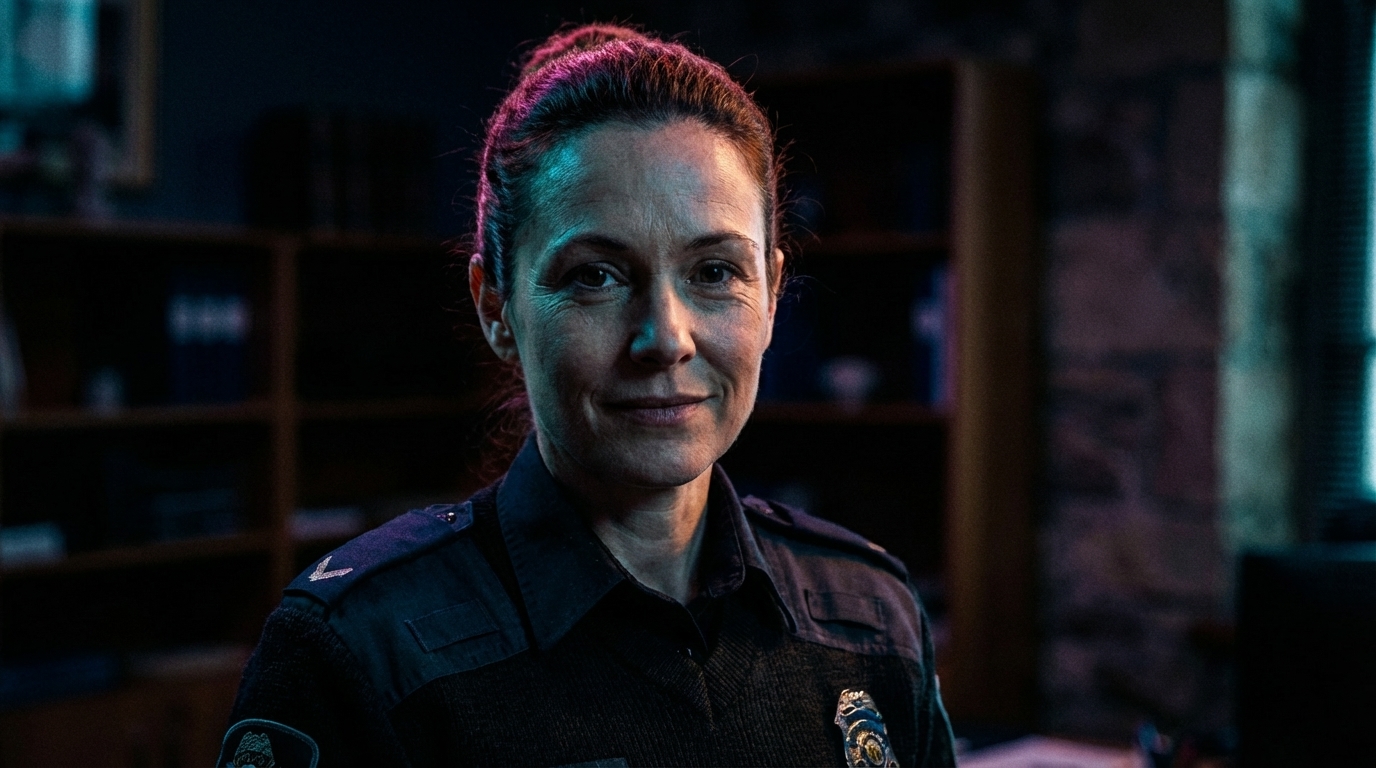
Constable Sophie Amelia Edwards, born on June 15, 1991, in Launceston, Tasmania, grew up with a deep-rooted sense of responsibility and a passion for justice, influenced by her solicitor father and social worker mother. Excelling in her studies at Launceston Church Grammar School and later at the University of Tasmania, Sophie pursued a degree in Policing and Emergency Management, focusing on criminal investigation and community policing. Known for her empathy, analytical skills, and commitment to service, Constable Edwards continues to impact her community positively through her work with the Tasmania Police and volunteer activities, including support at the Hobart Women's Shelter.
Early Life and Family Values
Sophie Amelia Edwards entered the world at 7:23 AM on 15 June 1991 at Launceston General Hospital, the first child of Michael Robert Edwards and Laura Anne Edwards (née Whitmore). The morning was unseasonably warm for a Tasmanian winter, and Michael, a junior solicitor at Morrison & Partners, arrived at the hospital still wearing his court tie, having rushed from the Launceston Magistrates Court when Laura's contractions began unexpectedly early.
The Edwards family home at 28 Trevallyn Road occupied a comfortable weatherboard cottage overlooking the Tamar River, its back garden sloping down towards the water in terraces that Michael had constructed over successive weekends. The house bore the marks of two professionals juggling demanding careers with family life: Laura's collection of child development texts lined the hallway shelves, whilst Michael's legal journals occupied precarious stacks in the study that doubled as a storage room.
Sophie's arrival as the eldest child established patterns that would persist throughout her childhood. Her sister, Emily Catherine, followed on 12 February 1994, and her brother, Thomas Michael, completed the family on 23 September 1996. As the firstborn, Sophie absorbed her parents' expectations whilst simultaneously developing a protective instinct towards her younger siblings. She walked Emily to school on her first day, held Thomas's hand through his childhood nightmares, and mediated disputes with a fairness that both siblings recognised even when they resented its conclusions.
The Edwards household operated on principles that both parents brought from their professional lives. Michael's work as a solicitor—he would eventually become a partner at Morrison & Partners in 2003—instilled respect for procedural fairness, the importance of evidence, and the recognition that justice required both truth and process. Laura's career as a social worker with the Department of Health and Human Services exposed her to society's vulnerabilities, teaching her that compassion without structure often failed those it sought to help. These complementary perspectives shaped dinner table conversations that Sophie absorbed before she could fully articulate their implications.
Sunday evenings became informal tutorials in ethics and responsibility. Michael would present hypothetical legal scenarios, asking his children to consider the perspectives of different parties. Laura would share anonymised case studies from her work, challenging them to identify what interventions might help without creating dependency. Sophie thrived in these discussions, her questions revealing an analytical capacity that impressed both parents. By age ten, she was arguing nuanced positions about proportional punishment and rehabilitation that wouldn't have embarrassed a first-year law student.
The family's modest prosperity—comfortable but not affluent—meant that Sophie understood the value of what they had without taking it for granted. Holiday destinations were Tasmanian camping trips rather than international flights, birthday presents were thoughtful rather than extravagant, and pocket money came attached to expectations about household contributions. These circumstances produced in Sophie an appreciation for earned achievement and a wariness of undeserved privilege that would inform her approach to policing.
Education and the Emergence of Purpose
Sophie commenced her formal education at Trevallyn Primary School in February 1997, entering a classroom environment that quickly revealed her particular strengths. Her Year 1 teacher, Mrs. Patricia Hogan, noted in Sophie's first report that she demonstrated "unusual social awareness for her age, often mediating playground disputes with remarkable fairness." This capacity for conflict resolution would become a defining characteristic, evident in contexts ranging from childhood games to adult interrogations.
Academic achievement came relatively easily to Sophie, though her engagement varied according to subject matter. She excelled in English and humanities, where analytical reading and persuasive writing aligned with her natural inclinations. Mathematics proved more challenging—not through lack of capability but through insufficient interest in abstract calculations divorced from practical application. Her Year 6 teacher, Mr. David Brennan, captured this dynamic precisely: "Sophie performs excellently when she understands why something matters. The challenge is helping her see relevance in subjects that don't immediately connect to her interests."
The transition to Launceston Church Grammar School in February 2003 introduced Sophie to a more rigorous academic environment and broader social dynamics. The school's emphasis on service and leadership resonated with values her parents had instilled, whilst its diverse student population exposed her to perspectives beyond her relatively sheltered upbringing. Sophie joined the school's debate team in Year 8, discovering that her capacity for seeing multiple perspectives translated effectively into competitive argumentation.
Her debating success—the team reached state finals in both 2006 and 2007—honed skills that would prove invaluable in police work. Learning to construct arguments under time pressure, anticipate opposing positions, and communicate complex ideas clearly to sceptical audiences provided training more applicable to witness interviews than any academy module would later offer. Her debate coach, Mr. Adrian Templeton, recognised her potential early: "Sophie doesn't just argue—she listens, processes, and responds to what's actually being said rather than what she expected to hear. That's rare at any age."
Beyond the formal curriculum, Sophie engaged extensively with community service initiatives. She volunteered with the school's outreach programme to Launceston City Mission, tutoring disadvantaged students on Saturday mornings throughout Years 10, 11, and 12. The experience exposed her to circumstances dramatically different from her own—young people whose families couldn't provide the stability the Edwards household took for granted, whose educational struggles reflected systemic failures rather than individual inadequacy. These encounters complicated Sophie's understanding of justice, teaching her that fairness required acknowledging unequal starting points.
Her Year 12 performance (2009) reflected sustained effort across diverse subjects. She achieved particularly strong results in Legal Studies—her essay on restorative justice approaches in juvenile cases earned distinction-level marks—and English, where her analytical writing demonstrated the precision her father's influence had encouraged. Her ATAR of 91.45 qualified her for competitive university programmes, though Sophie had already decided that her path lay through policing rather than law.
The decision crystallised during a careers session in Year 11, when a visiting sergeant from Tasmania Police described investigative work in terms that resonated with everything Sophie valued: systematic pursuit of truth, protection of the vulnerable, restoration of order from chaos. The presentation didn't romanticise policing—the sergeant was honest about the frustrations, the bureaucracy, the emotional toll—but Sophie recognised in his description a vocation that could channel her capabilities toward meaningful purpose.
University Years and the Formation of Identity
In February 2010, Sophie commenced her Bachelor of Policing and Emergency Management at the University of Tasmania's Sandy Bay campus in Hobart. The move from Launceston represented her first sustained period away from family, requiring adjustments to independence that challenged and ultimately strengthened her self-reliance. She resided at Christ College during her first year, the structured residential environment providing transitional support whilst she acclimated to university life.
The degree programme combined theoretical criminology with practical policing applications, a balance that suited Sophie's learning style. She engaged enthusiastically with courses examining criminal investigation methodology, community policing philosophy, and emergency response coordination. Her particular interest in criminal investigation emerged early, informed by both her father's legal background and her own analytical tendencies.
Former Detective Inspector John Hartley, who had retired from Tasmania Police to join the university's teaching staff, became Sophie's primary academic mentor. Hartley's thirty-two years of operational experience—including fifteen years in the Criminal Investigation Branch—lent his lectures an authority that purely academic instructors couldn't replicate. He presented case studies from his own career, walking students through the decision points where investigations succeeded or failed, the moments where intuition needed to complement procedure.
Sophie sought Hartley out during office hours with questions that extended well beyond course requirements. Their discussions ranged across investigation methodology, witness psychology, evidence evaluation, and the ethical complexities that textbooks often simplified. Hartley recognised in Sophie the qualities that distinguished exceptional investigators from merely competent ones: patience, observational acuity, genuine interest in understanding people rather than simply categorising them. He encouraged her to pursue honours, sensing that academic rigour would strengthen rather than dilute her operational instincts.
The social dimensions of university life proved more challenging than academic work. Sophie's natural reserve, combined with her focus on career preparation, limited her engagement with the casual socialising that characterised student experience. She maintained friendships with fellow policing students, participated in study groups, and attended occasional social events, but her weekends were more likely to involve library research than nightclub queues.
James Andrew Thompson entered Sophie's life during a second-year criminal justice tutorial in March 2011. He sat two rows ahead, a quietly confident student whose comments during discussions revealed thoughtful engagement with the material. Sophie noticed him first through his questions—substantive rather than performative, seeking understanding rather than instructor approval. Their initial conversations occurred in the margins of class time, brief exchanges about readings or assignments that gradually extended into coffee meetings and study sessions.
James, born 8 April 1990, had come to policing from a different trajectory. His father, Constable Senior Peter Thompson, served with Tasmania Police's Northern District, and James had grown up understanding police work's realities rather than its media portrayals. This insider perspective complemented Sophie's more theoretical approach, their discussions enriched by his practical knowledge of how investigations actually functioned in operational contexts.
Their relationship developed with deliberate care. Both were serious students, cautious about anything that might distract from career preparation, but their connection proved impossible to ignore. By the end of second year, they were acknowledged partners, studying together, supporting each other through examination stress, planning futures that increasingly assumed shared trajectories.
Sophie graduated in December 2013 with First Class Honours, her academic performance earning placement on the Dean's Roll of Excellence for consecutive years. Her honours thesis, supervised by Detective Inspector Hartley, examined community policing initiatives in Hobart's northern suburbs, analysing why some programmes succeeded whilst others floundered despite similar resources. The research involved extensive fieldwork—community interviews, programme observations, statistical analysis—that provided practical experience beyond classroom simulations.
Police Academy and Professional Beginnings
Sophie entered the Tasmania Police Academy at Rokeby as part of Intake 1/2014, commencing the twelve-month recruit training programme in January. The academy's transformation from civilian to constable proved demanding across multiple dimensions, though Sophie's university preparation and natural capabilities positioned her well for its challenges.
Physical training pushed her towards limits she hadn't previously tested. The obstacle course, defensive tactics, and fitness assessments required conditioning that her largely sedentary university years hadn't provided. Sophie approached these challenges with characteristic determination, arriving early for additional training sessions, accepting instruction without ego, and improving steadily throughout the programme. Her final physical assessment scores placed her in the upper third of her cohort—respectable rather than exceptional, but sufficient for operational requirements.
Academic components proved more comfortable terrain. Criminal law, evidence procedures, police powers, and administrative requirements aligned with her university preparation, allowing Sophie to support struggling classmates whilst consolidating her own understanding. Instructors noted her capacity for explaining complex material in accessible terms, a skill that would later prove valuable in witness communications.
Scenario-based training revealed Sophie's distinctive strengths most clearly. In simulated domestic violence responses, she demonstrated ability to de-escalate volatile situations through calm communication rather than command presence. In interview exercises, she built rapport with role-playing witnesses that experienced instructors recognised as genuine rather than performed. Her assessments consistently noted "exceptional empathy combined with analytical precision"—qualities that distinguished effective investigators from mere information-gatherers.
Sergeant Instructor Rebecca Walsh, who supervised Sophie's cohort through defensive tactics and operational scenarios, provided a pivotal assessment: "Edwards processes situations in real time rather than applying templates. She reads people, adapts her approach, and achieves outcomes through understanding rather than force. This capacity will serve her well in investigative work, though she'll need to develop confidence in command presence for situations where diplomacy fails."
Sophie graduated from the academy on 28 November 2014, receiving her badge and assignment to Hobart Police Station as a Probationary Constable. James had graduated six months earlier, already established at the station when Sophie arrived. The coincidence of their posting—not guaranteed, but hoped for—meant they could continue building both professional and personal futures together.
Probationary Period and Marriage
The probationary constable period (December 2014 to December 2015) immersed Sophie in operational realities that academy training could only simulate. Hobart Police Station, with its mix of urban challenges and community policing opportunities, provided comprehensive exposure to the spectrum of police work.
Her Field Training Officer, Senior Constable Marcus Jennings, guided Sophie through the transition from academy theory to street application. Jennings, a seventeen-year veteran with extensive patrol experience, emphasised observation over action, understanding over assumption. His mentorship reinforced lessons Hartley had provided academically: effective policing required seeing situations as they actually were rather than as templates suggested they should be.
Sophie's first significant incident occurred during her fourth week of active duty. A domestic violence callout in North Hobart brought her to a household where a woman had locked herself in a bathroom whilst her intoxicated partner demanded entry. Sophie's approach—calm communication through the closed door, patient de-escalation of the partner's aggression, eventual safe extraction of the victim—earned commendation from attending supervisors. The incident confirmed her instinct for situations requiring empathy alongside authority.
The probationary year also brought Sophie's first encounters with police work's darker realities. A sudden death in Moonah—elderly woman deceased for days before neighbours noticed—introduced her to mortality's mundane manifestations. A sexual assault investigation in Sandy Bay exposed her to trauma's long aftermath, the victim's shattered composure teaching Sophie that some wounds never fully heal. These experiences accumulated, building the emotional calluses that sustained police work demanded whilst threatening the sensitivity that made her effective.
James's parallel career progression created opportunities for shared understanding that civilian partners couldn't provide. Their evening conversations processed difficult shifts, debriefed troubling incidents, and maintained connection across the isolating demands of police work. They understood each other's frustrations without requiring explanation, celebrated each other's successes without jealousy, and built a partnership stronger for its professional foundations.
Sophie's confirmation as Constable came on 15 December 2015, marking her transition from provisional to permanent status. The ceremony, modest by civilian standards but significant within police culture, acknowledged her successful completion of the probationary period and her readiness for independent duties. James had received equivalent confirmation six months earlier; their shared status simplified administrative complications that might otherwise have constrained their relationship.
The couple married on 19 March 2016 at St David's Cathedral in Hobart, a ceremony that bridged their respective worlds with characteristic thoughtfulness. Sophie's parents—Michael maintaining judicial composure whilst Laura wept openly—sat alongside James's police family, the congregation mixing legal professionals, social workers, and uniformed officers. Detective Inspector Hartley attended as an honoured guest, his presence acknowledging the mentorship that had shaped Sophie's professional development.
Their honeymoon—a two-week driving tour through Tasmania's wilderness, camping at Cradle Mountain and Freycinet—established patterns that would characterise their marriage. Both preferred active engagement with the natural world over passive resort relaxation, finding in bushwalking and kayaking the physical release that sedentary desk work couldn't provide.
Professional Development and Specialisation
Following her confirmation, Sophie rotated through various duties at Hobart Police Station, accumulating experience across the breadth of policing operations. General duties patrol (2015-2017) provided foundation knowledge of the southern district's geography, its problem locations, and its regular characters. Traffic enforcement (early 2017) introduced her to a different enforcement modality, though Sophie found the work's punitive emphasis less satisfying than community-oriented alternatives.
Her transfer to community policing duties in mid-2017 aligned more closely with her strengths and interests. The role emphasised relationship-building over enforcement, prevention over response, understanding over assumption. Sophie thrived in contexts requiring sustained engagement rather than brief interventions, developing connections with community groups, schools, and social services that enhanced information flow across traditional boundaries.
Throughout this period, Sophie pursued opportunities for investigative experience whenever operational requirements permitted. She assisted detectives on several cases, her witness interview skills proving valuable in extracting information that more forceful approaches might have missed. Detective Sergeant Charlie Claiborne, who supervised these secondments, noted Sophie's "unusual patience combined with genuine curiosity about people's motivations—qualities that produce better evidence than aggressive interrogation ever could."
Her selection for the cold case task force in early 2018 represented recognition of these investigative capabilities. The assignment, part-time alongside regular duties, involved reviewing historical cases with fresh perspectives, identifying evidential gaps that contemporary technology might address, and re-interviewing witnesses whose memories might have clarified with temporal distance. Sophie approached this work with the systematic thoroughness her father's legal training had instilled, treating each case file as a puzzle requiring both analytical rigour and imaginative reconstruction.
Professional development extended beyond operational duties. Sophie completed Advanced Interview Techniques certification in 2017, the formal qualification validating skills she'd been developing since academy scenarios. Her participation in witness support training the same year reflected growing interest in victim services, the aspect of policing where her mother's social work influence manifested most clearly.
July 2018: The State Theatre Scene
On 20 July 2018, Sophie was among the first officers dispatched to the State Theatre on Campbell Street, Hobart, following reports of a suspicious death. The call came during an otherwise routine morning shift, transforming an ordinary Friday into something far more complex.
Sophie arrived alongside her patrol partner to find the theatre's ornate Victorian interior transformed into a crime scene. A male victim sat positioned in the front row of the auditorium, his posture suggesting theatrical staging rather than natural death. The body's arrangement—too deliberate, too composed—immediately registered as significant to Sophie's trained observation.
Her initial duties focused on scene security and preliminary documentation. She established the provisional cordon with meticulous attention, stretching tape across side entrances and checking each point personally. Detective Sergeant Charlie Claiborne, arriving subsequently to assume investigative control, observed her work with approval that needed no verbal expression—just the smallest nod acknowledging competence recognised.
When the Forensic Science Service Tasmania team arrived—Senior Field Officer Archer Donovan leading technicians and support personnel—Sophie managed the entry log with the same precision she'd applied to the cordon. Each arrival was documented, equipment inventoried, access points monitored. The handover protocols, those subtle negotiations of territory and trust that occurred beneath official procedures, proceeded smoothly under her coordination.
Claiborne's later report noted Sophie's professional composure throughout the morning's demands. Her capacity to maintain operational focus whilst processing the scene's disturbing elements—the staged corpse, the inexplicable circumstances, the implications that extended beyond routine investigation—demonstrated the emotional regulation that sustained police work required.
August 2018: The Jenkins Investigation
The events of August 2018 would mark Sophie's professional life in ways she couldn't anticipate when the month began. Detective Karl Jenkins's disappearance on 2 August, during an operation at Jeffries Manor in Granton, mobilised Tasmania Police resources in unprecedented configurations. Sophie found herself assigned to the search team dispatched to the manor that afternoon.
Sergeant Charlie Claiborne coordinated the search, his calm authority providing structure for an operation freighted with institutional anxiety. A detective had vanished during official duties; the implications for morale, for public confidence, for the missing man's family, demanded response beyond routine missing persons protocols.
The search yielded nothing. Hours of meticulous examination produced no trace of Jenkins, no evidence of what had occurred during the earlier operation, no explanation for a detective's impossible vanishing. When twilight forced the search's suspension, Sophie felt the particular frustration of effort unrewarded—not failure, exactly, but absence of the resolution that sustained investigative work.
Her final duty that day involved escorting Louise Jeffries, the property owner and key witness, back to Hobart Police Station for continued questioning. Sophie's empathetic approach proved valuable in managing a woman whose emotional state combined shock, confusion, and grief in proportions that shifted moment to moment. The drive provided opportunity for gentle conversation that eased Louise's distress whilst preserving potential evidential value.
Six days later, on 8 August 2018, Detective Sarah Lahey died at Myrtle Forest under circumstances that would generate investigations, inquiries, and speculation for years afterward. Sophie's involvement remained peripheral—outer cordon duties, distant from the incident's centre—but the death of a colleague, particularly one as young as Lahey, affected her profoundly.
The August 2018 events shadowed Sophie's professional consciousness long after their immediate demands faded. She had joined the police service expecting to protect others; instead, she had witnessed the service failing to protect its own. The investigation's aftermath—whispered speculation, institutional defensiveness, unanswered questions—complicated her understanding of the organisation she'd committed her career to serving.
Personal Life and Community Engagement
Beyond professional duties, Sophie and James maintained a marriage characterised by active engagement rather than passive coexistence. Their shared love of Tasmania's wilderness found expression in weekend bushwalking expeditions that provided physical release from the week's sedentary demands. The Overland Track, completed together in January 2019, represented both achievement and connection—shared hardship building bonds that comfortable circumstances couldn't replicate.
Sophie's volunteer work with the Hobart Women's Shelter, commenced during her probationary period and sustained through subsequent years, reflected the compassionate dimension of her character that policing alone couldn't fully express. The shelter provided support for women and children escaping domestic violence—precisely the population Sophie encountered professionally but couldn't assist beyond immediate intervention.
Her volunteer role involved practical support rather than professional services: cooking meals, minding children whilst mothers attended appointments, listening without judgement when women needed to process trauma in their own time. The work reminded Sophie why she'd entered policing—not for the authority it conferred but for the protection it might provide to those who couldn't protect themselves.
The Edwards family remained central to Sophie's life despite the geographical distance that Hobart imposed. Monthly visits to Launceston maintained connections that phone calls couldn't replicate—Sunday lunches at the Trevallyn Road house where Michael and Laura still resided, walks along the Tamar River that recalled childhood expeditions, conversations about siblings' lives that kept the family's dispersed members connected.
James's integration into the Edwards family proceeded smoothly, his police background providing common ground with Michael's legal perspective that might otherwise have created professional distance. Laura welcomed him as the son-in-law who shared her daughter's values, whose career choice she understood even when its demands concerned her.
Professional Standing and Future Trajectory
By late 2018, Sophie had established herself as a reliable, capable constable whose particular strengths in witness engagement and community relations distinguished her from peers focused primarily on enforcement. Her supervisors recognised investigative potential that cold case work had begun developing, though the traditional pathway to detective status required broader operational experience than her current duties provided.
Discussions with command about future career progression remained exploratory rather than concrete. Sophie expressed interest in CIB secondment, the investigative immersion that might accelerate her development, whilst acknowledging that general duties experience remained incomplete. The cold case task force assignment had whetted her appetite for sustained investigation, the systematic pursuit of truth that aligned so closely with her natural inclinations.
Detective Sergeant Claiborne, who had observed Sophie's work across multiple contexts, offered informal mentorship that supplemented official career guidance. His experience—decades of investigation spanning cases from routine to extraordinary—provided perspective that academy training couldn't replicate. Sophie absorbed his observations about investigative methodology, witness psychology, and the ethical complexities that textbooks simplified.
The August 2018 events complicated Sophie's professional trajectory in ways she was still processing. The institutional trauma of losing two officers under mysterious circumstances—Jenkins vanished, Lahey dead—raised questions about police work's costs that her optimistic early career hadn't fully confronted. She remained committed to the service, to the protection it might provide, to the justice it might achieve, but with a maturity that recognised such outcomes weren't guaranteed.







