4338.205 · July 24, 2018 AD
Shattered Bonds
Cody crosses back to Gladys's house in the dead of night and reads betrayal into two empty bottles and a sound from her room—only to find her alone in a nightmare, and himself, in trying to help, the very thing she wakes to fear. He blurts the truth about Clivilius and runs. Alone in the Portal Cave, he shatters the last of what they were against the rock, and knows it was his own hand that ended it.
"You can love someone and still be the worst thing that happens to them that night."
The colour drained off the fridge door and the kitchen went black around me, and for a breath I couldn't see a thing—just the after-print of the Portal swimming in the dark. Then my eyes caught up and the room came back in pieces: the window, the grey shapes of her cupboards, the bench. The house had a smell to it that stopped me where I stood. Burnt-down candle and red wine. The smell of an evening that had gone on a good while.
Two bottles stood empty on the bench, and two glasses beside them, and I knew before I'd crossed to them what I was looking at. I turned the second bottle to the window to be sure of it. Mine. The one I'd stood in her pantry that morning and told her we'd share later—the one I'd carried through two worlds meaning to open the night I finally told her all of it, told her what I was, and asked her to be it alongside me. Drunk down to the dregs, with somebody else's glass sitting next to it.
Something turned over in me then, hot and ugly, and I didn't try to stop it. I went through into the living room. The dark made a stranger of a house I'd been happy in—the archway I'd ducked through a hundred times looked like a mouth. And then, from down the hall, from her room, a sound. Soft. A woman's sound. It went into me like a splinter.
I stood in the dark of her living room and let it do its work on me. She was to be my Guardian—my partner in a thing the whole of her world would never know the weight of. Not half a day gone I'd knelt in a frozen cave and promised my daughter hope, and the hope had a name, and the name was hers. And here she was behind a door with someone who wasn't me.
The old grief came up under the new one and made it worse. Grace. I'd learned, burying Grace, exactly how much a man can lose and go on breathing after, and I'd sworn I'd never stand in that particular fire twice. Yet there I was, one hand gone white on the doorframe and the other clamped over my own mouth to keep the sound in, because if I let it out I couldn't say what shape it would take.
Don't, I told myself. It isn't what it sounds like. You're a good man, Cody—and if she knew you, if she truly knew you, she'd have chosen you. It held me steady for about as long as it took to hear the sound come again. And then the other voice, the one that always speaks lowest and always sounds so reasonable: She has to see. You have to make her see.
Thunder rolled in off the hills, a long way off yet, and I stood at the end of that hallway on the lip of something I couldn't see the bottom of. Don't be a fool. But I have to help her. She'll hate you for it. I have to. Every sensible thing left in me said turn round, cross back, leave her be—and I trod on all of it, one thought after the next, and walked to her door.
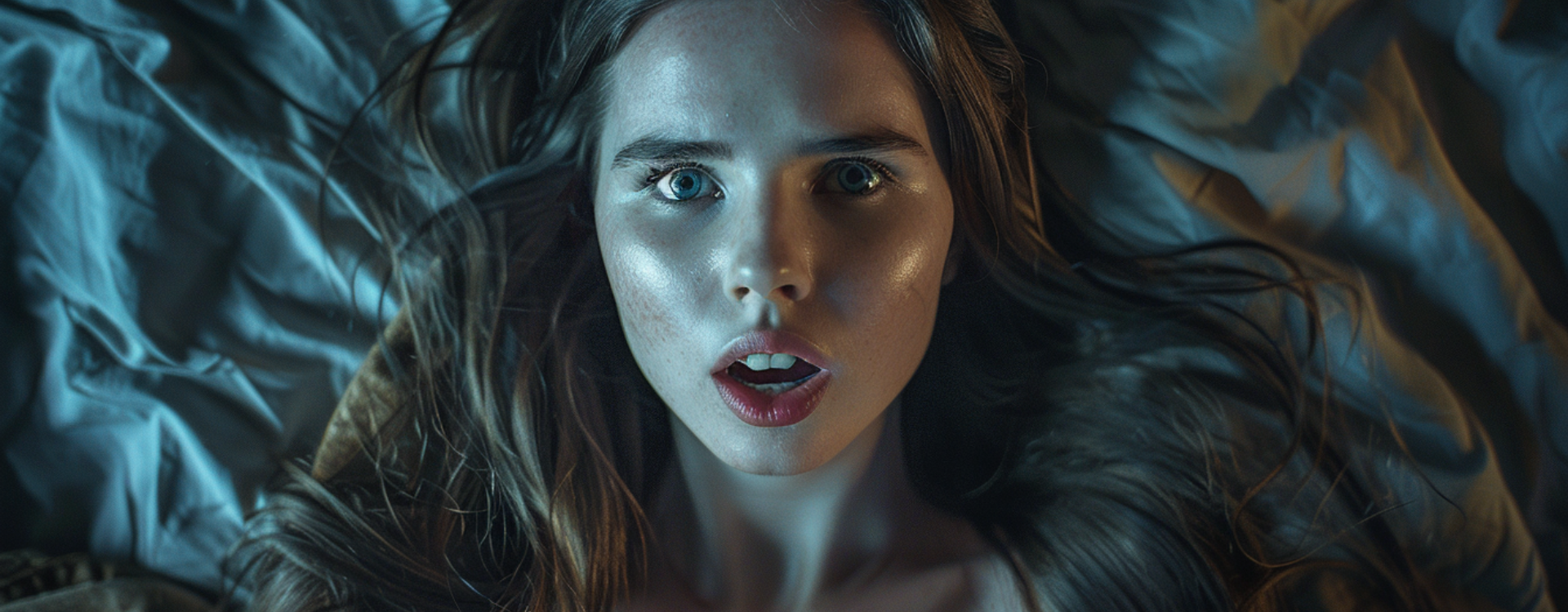
Inside, the sound was louder, and the shadows on the bed moved with it. Lightning went off outside the window, white and total, and in that one hard instant it showed me the truth of the thing: she was alone. There was no one else. Just Gladys, on her own, wound up in the bedclothes and fighting something that wasn't in the room.
Thunder came in right behind it, and she cried out—a small, broken sound with real fear down in it—and every other thing I'd been feeling went out like a pinched wick. A fit of some kind was my first thought, a seizure, her doing herself an injury in the thrash of it while I stood in the hall feeling sorry for myself. I went to her.
It went wrong the moment I laid hands on her. Every touch I meant to still her with only wound her tighter into it. The blanket fought me, or I fought the blanket; I couldn't get purchase, couldn't find where she stopped and the bedclothes started.
"Cody!" she cried, still down inside the dream, her voice torn ragged with it. "They're coming!"
I lost my feet on the twisted blanket and went down half across her, and my hands, reaching to save her, did the opposite of it—one came down over her mouth and shut off the sound. I felt her go rigid under me. Then teeth, hard, breaking the skin, a bright line of pain straight up through my palm.
"Gladys!" It came out of me low and hurt. "Stop!"
She went still. Her eyes came open and found mine in the dark, and I've worn a lot of hard looks in my time, from hard people, in hard places—and not one of them ever went through me the way that one did. Because it wasn't a stranger's fear in it. It was fear of me. Of Cody, who'd have laid down in the snow and let it take him before he let a thing touch her—and there she was, looking at me like the worst thing that had ever come into her house. Which, that night, was exactly what I was.
"Don't scream," I said, as quiet as I could get the words out, and took my hand off her mouth. "You were having a nightmare, thrashing about. I was worried you'd hurt yourself." And even saying it, some sour part of me hated that I'd had to hold her down at all to say it.
It didn't land. She was all the way awake now, and awake she was past terrified—she was furious. "What the fuck are you doing here? How did you get in my house?" She shoved me, hard, both hands flat to my chest, and I let her. I'd earned it and more.
There was no answering any of it, not in the time I had, and nothing I could've said wouldn't have sounded like madness coming out of a strange man crouched over her in the dark. So I gave her the one thing that mattered. "I can't stay long," I told her, fast and low. "You have to trust Luke. Clivilius is real. Do whatever he asks you to do."
Her eyes—gone near black in the dark—stayed hard on mine, half disbelief and half something with an edge to it. I pressed on while I still had her ear. "Trust me, Gladys. The lives of a thousand people are at stake. We need Luke."
"We? How do you know about Clivilius?" She'd caught it straight off. Quick, she always had been, even half-dragged out of a nightmare.
It was the one question I couldn't answer and still walk out of there. "I have to go," I said, and got to my feet.
I didn't look back at her. If I'd looked back I might not have gone at all. Going through the kitchen I took the empty bottle off the bench—mine, the toast that never got made—closed my hand round its cold neck, and lit the fridge door with the colours of the crossing. If she doubted every other word out of me, she'd have that much: the proof of it burning on her own kitchen wall. Then I stepped into the light and let it take me, and left her alone in the wreck of her room with a glowing door, no explanation, and every reason on God's earth to be frightened of me.
I came out the other side and my legs went from under me, and I let them go. I dropped onto the cave floor, into the thin skin of snow that reaches in past the mouth of it, and I stayed down. The cold came straight up through me and I didn't much care. The wind worked away at the entrance the way it always did, on and on, indifferent as weather is to anything a man might be feeling. I still had the bottle in my fist. I couldn't tell you how long I knelt there with it, shaking—some of it the cold. Most of it not.
I'd been in this cave on the worst night of my life once before. The night I carried two new babies out of a birthing that had taken their mother—came through with a boy in the one arm and a girl in the other and Grace not with us any longer—and I'd have told you then that a man gets one night like that and the world is at least decent enough not to hand him two. I'd have been wrong. This was worse. And I hated the truth of it even as I knew it for the truth, because how does a man sit in the snow and tell himself that losing a woman he'd known a few short months cuts deeper than losing his own wife?
But it did, and I knew the why of it. Grace was taken from me. There was no one to lay Grace at the feet of but the cold and the blood and a world that runs the way it runs. This one I'd done with my own two hands, out of my own fear—taken a good woman and frightened her half to death in her own bed—and there was no weather to blame for it, and no God, and no run of bad luck. Only me. Grace I'd got to grieve clean. This I'd carry knowing whose hand it was that broke it.
Something in me that had been holding a long, long time let go. I came up off my heels onto my knees, drew my arm back with the bottle in it, and I threw it—the whole of what I had behind it, all the fear and the shame and the wanting and the wasted years of hoping—at the wall of the cave.
It burst. One flat crack, too loud in that shut-in place, and the pieces went skittering off across the stone and settled, and then there was nothing. Quiet. Just the wind, and my own breath, and broken glass catching what little light there was. I stayed on my knees in front of it a good while, looking at what I'd done to a thing that hadn't done a thing to deserve it—the same way, an hour gone, I'd looked at what I'd done to her.
We were finished. I didn't have to reason it out; it had already gone into me, down where the cold lives, plain and settled as a fact of the weather. Whatever we'd been, whatever I'd let myself hope we might yet be—the Guardian at my shoulder, the one soul who'd know both my worlds, the not being alone in any of it—was over, and I was the one who'd ended it, and there was no crossing between any worlds that ever were that would carry me back to before I had.







