Sean Alexander Mackenzie
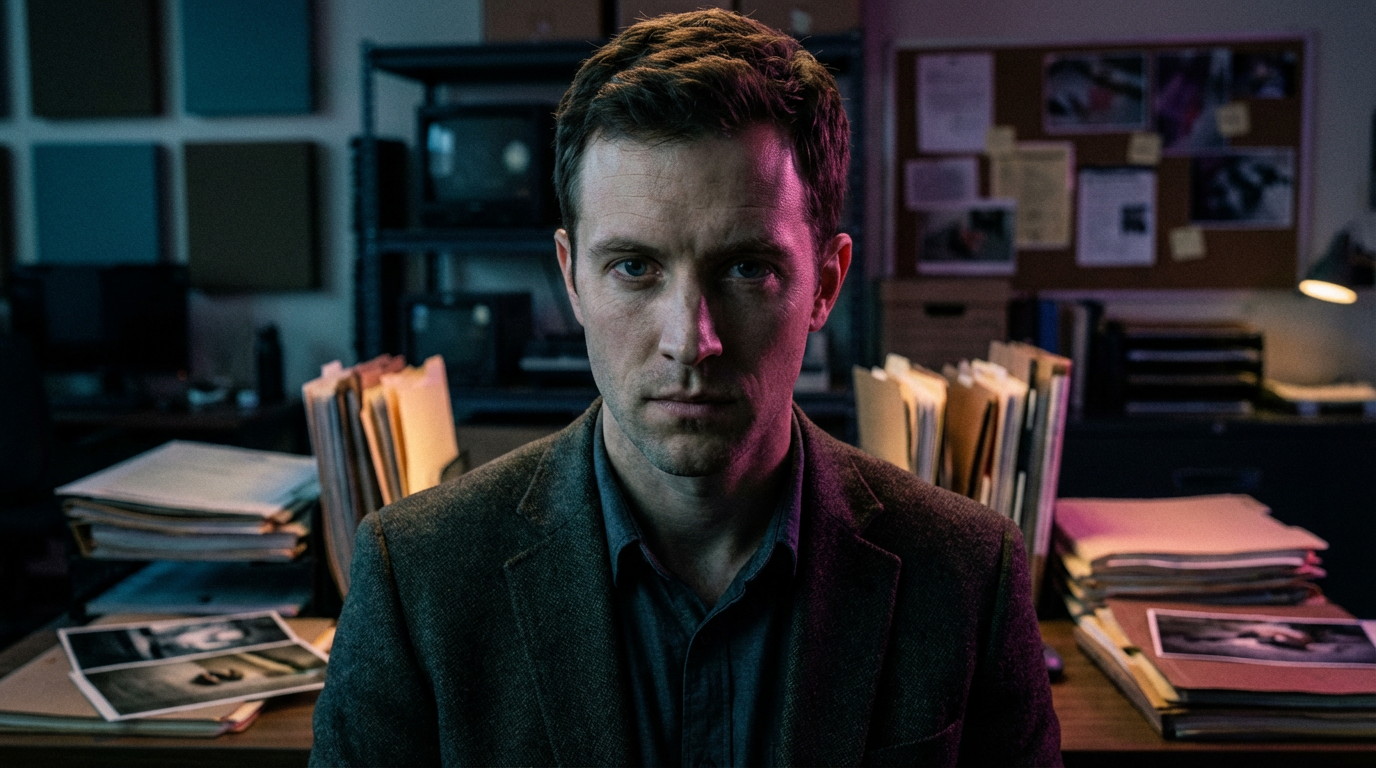
Born on 15 November 1993 in Launceston, Sean Alexander Mackenzie emerged from a family steeped in public service to become one of Tasmania Police's most community-focused constables. His journey from criminology student to frontline officer reflects an evolving philosophy of prevention over punishment. Assigned to Hobart Police Station in 2017, he witnessed the turbulent events of August 2018, including Detective Karl Jenkins's disappearance and Detective Sarah Lahey's death—experiences that reinforced his commitment to transparency and principled policing.
Early Life and the Inheritance of Service
The morning of 15 November 1993 brought early summer warmth to Launceston General Hospital, where Evelyn Margaret Mackenzie delivered her second child—a boy she and her husband Duncan would name Sean Alexander. The Mackenzie household in Trevallyn, a comfortable suburb overlooking the Tamar River, already contained two-year-old Fiona Jane, and would welcome Hamish David three years later in 1996. Into this household shaped by discipline and community obligation, Sean arrived with the particular fortune of parents whose lives modelled the values they would teach.
Duncan Ross Mackenzie had joined the Tasmania Fire Service in 1985, the year before Fiona's birth, beginning a career that would span thirty-three years and test every principle he held. His work brought him face-to-face with human tragedy in its most elemental forms—the 2009 Black Saturday fires in Victoria, where he deployed as part of interstate relief efforts, and the 2013 Dunalley fires that consumed Tasmanian communities whilst the nation watched in horror. By his retirement in 2018 as Station Officer, Duncan had accumulated the quiet authority of someone who'd repeatedly entered burning structures whilst others fled, his Fire Service Medal acknowledging decades of service that statistics could never fully capture.
Evelyn Margaret Mackenzie, née Patterson, brought different but complementary gifts to the household. Her twenty-seven years teaching Year 3 at Trevallyn Primary School (1988–2015) demonstrated the same sustained commitment her husband showed in emergency services. She developed innovative literacy programmes that attracted attention from educational researchers, and her particular dedication to students with learning difficulties earned her reputation as someone who saw potential where others saw problems. The children who passed through her classroom remembered not just her lessons but her faith in their capacities.
Sunday dinners in the Mackenzie household became informal tutorials in public service. Duncan would describe the previous week's callouts—structure fires, road accidents, the miscellaneous emergencies that punctuated a firefighter's existence—whilst Evelyn shared classroom challenges and victories. The children absorbed these conversations as naturally as they absorbed table manners, understanding from earliest awareness that work meant more than wages, that community demanded participation, that privilege carried responsibility.
Sean's paternal grandfather added another dimension to this inheritance. Alistair Mackenzie had served as a police sergeant in Scotland before emigrating to Tasmania in 1967, bringing with him stories of post-war policing that captured young Sean's imagination. The photograph that hung in Duncan's study—Alistair in formal uniform, expression stern but eyes betraying warmth—became a touchstone for the boy who would eventually follow a similar path, though in circumstances his grandfather could never have imagined.
Education and the Emergence of Character
Sean commenced his formal education at Trevallyn Primary School in 1999, entering a building where his mother's colleagues had watched her raise two children and expected the third to meet established standards. The pressure could have proven burdensome; instead, Sean navigated it with the diplomatic skill that would characterise his adult approach to difficult situations. Teachers noted his tendency to resolve playground disputes through conversation rather than escalation, an unusual capacity in a child his age. His Year 6 teacher, Marcus Chen, captured this quality in Sean's final report: "Demonstrates maturity beyond his years in understanding multiple perspectives and finding common ground."
The transition to Launceston Church Grammar School in 2006 tested different capacities. The school's expectations extended beyond academic achievement to encompass sporting participation, leadership development, and the cultivation of civic responsibility. Sean met these varied demands with apparent ease, though those who knew him well recognised the discipline underlying his success.
The cricket field revealed competitive instincts his gentle manner often obscured. By Years 11 and 12, Sean captained the First XI, leading them to the 2011 Northern Tasmania Schools Championship with a bowling average of 18.3 that would remain a school record long after his graduation. His left-arm medium pace deliveries troubled batsmen accustomed to predictable attacks, the same unpredictability that would later serve him when facing volatile situations on Hobart's streets. Rugby union demanded different skills—the physical contact and structured aggression of the inside centre position—and Sean's selection for the Tasmanian Schools representative side in 2010 demonstrated his capacity to excel in contexts requiring controlled force rather than diplomatic resolution.
Academically, Sean achieved an ATAR of 92.35, strong enough for competitive university programmes but not so exceptional as to mark him for purely scholarly pursuits. His particular strength lay in Legal Studies, where his High Distinction reflected genuine intellectual engagement with questions of justice, evidence, and institutional accountability. The Year 12 project that won the 2011 Tasmanian Schools Law Society Prize—"Restorative Justice in Indigenous Communities: Lessons for Mainstream Policing"—announced interests that would shape his entire career. At seventeen, Sean was already questioning whether punishment served justice better than restoration, whether communities might participate in their own safety rather than simply receiving police protection.
His appointment as School Prefect in 2011 provided opportunity to translate values into action. The "Grammar Gives Back" programme he initiated—partnering with Launceston City Mission to provide tutoring for disadvantaged youth—continued long after his graduation, eventually supporting over three hundred students. The programme reflected Sean's emerging philosophy: that privilege demanded service, that education should flow outward rather than simply accumulate, that community connection mattered more than individual advancement.
Gap Year and the Education of Experience
Following graduation in November 2011, Sean deferred university enrolment for what he termed his "education in reality"—a year designed to test classroom assumptions against lived experience. The decision puzzled some who knew his academic capabilities, but Sean understood instinctively that the policing career he increasingly contemplated would require understanding that textbooks couldn't provide.
From January to June 2012, he worked with Aboriginal communities in the Northern Territory through the Youth Development Programme, stationed at Maningrida in Arnhem Land. The posting challenged every comfortable assumption his Launceston upbringing had permitted. Here, conventional policing approaches had demonstrably failed—sometimes catastrophically—and Sean witnessed alternative models of community governance, conflict resolution, and youth engagement that bore little resemblance to what Australian police services typically employed. The experience didn't romanticise Indigenous communities or dismiss their challenges; it complicated his understanding of law enforcement's possibilities and limitations in contexts where colonial history had fractured traditional social structures.
The remainder of 2012 took Sean southward on a motorcycle journey from Darwin to Hobart via the western coast—a route that maximised distance, minimised comfort, and exposed him to Australian communities far removed from the cities where most policy was made. He funded the journey through casual farm work, absorbing rhythms of rural life whilst covering thousands of kilometres through landscapes ranging from tropical to temperate.
Near Ceduna in South Australia, the journey nearly ended permanently. A kangaroo struck Sean's motorcycle at dusk, the impact sending him sliding across bitumen whilst the bike tumbled separately. The resulting injuries included lacerations that would leave a permanent scar across his left shoulder, but the greater impact was psychological. Lying on outback road whilst emergency services responded, Sean experienced emergency response from the receiving end. The paramedics who treated him, the police who secured the scene, the strangers who stopped to help—their professionalism and compassion modelled service he hoped to emulate. The scar would remain as permanent reminder of how quickly circumstance could transform observer into participant, helper into helped.
University Years and the Architecture of Understanding
In February 2013, Sean commenced his Bachelor of Arts in Criminology and Criminal Justice at the University of Tasmania's Sandy Bay campus. The choice reflected strategic thinking about his intended career; criminology provided theoretical frameworks that would inform policing practice, whilst the university's location in Hobart positioned him for the Tasmania Police recruitment he planned to pursue.
His academic performance demonstrated genuine intellectual engagement rather than mere grade accumulation. Professors noted his willingness to challenge conventional criminological theories through reference to his gap year experiences—the Indigenous community work, the cross-country observations, the accident that had made emergency response personal. His presence on the Dean's Roll of Excellence in 2014 and 2015 acknowledged this achievement, as did his semi-finalist placing in the 2014 Australian University Debating Championships.
The honours thesis that occupied his final year (2015) earned the Tasmanian Institute of Law Enforcement Studies Prize for Best Undergraduate Thesis. "Beyond the Thin Blue Line: Community Co-Creation of Public Safety in Tasmania" examined three Hobart neighbourhoods' experiences with community policing initiatives from 1995 to 2015. Supervised by Dr Rachel Thornton, the research involved extensive interviews with both police personnel and community members, revealing significant disconnects between police intentions and community perceptions. The thesis's recommendation for "embedded officers" who lived in their patrol areas eventually influenced Tasmania Police's Community Integration Pilot Programme—evidence that academic research could shape institutional practice when conducted with rigour and practical focus.
University life extended beyond coursework. Sean resided at Dobson Hall on campus during 2013 and 2014, participating in residential community life before sharing a house in North Hobart with fellow criminology students in his final year. Financial necessity led to part-time employment as a security officer at Wrest Point Casino on Thursday and Friday nights from 2013 to 2015. The work proved unexpectedly educational; observing the intersection of gambling, alcohol, and crime provided insight into human behaviour under pressure that no classroom could replicate. The casino's controlled environment—where security cameras captured everything and protocols governed responses—taught Sean about institutional frameworks for managing disorder, lessons he would later apply in contexts far less controlled.
Building Foundations for Service
Graduation with First Class Honours in December 2015 presented immediate career choices. Sean could have applied directly to Tasmania Police, his academic credentials and gap year experience strengthening his candidacy. Instead, he chose to accumulate additional practical experience whilst awaiting the optimal recruitment intake.
From January to December 2016, he worked as a Youth Support Worker at the Hobart Youth Centre on Warwick Street, primarily with young offenders aged fourteen to eighteen participating in court-mandated programmes. The work exposed him to youth crime's human dimensions—the family dysfunction, the educational failures, the accumulated disadvantages that often preceded criminal behaviour. His caseload included several high-risk youth whose outcomes would haunt him long after he'd moved to policing.
One success story emerged through persistent effort. "Bradley," a sixteen-year-old with multiple theft convictions, initially resisted every intervention Sean attempted. But steady presence, consistent boundaries, and genuine interest in Bradley's interests eventually created connection. Sean mentored him through to successful apprenticeship completion, demonstrating that patient engagement could redirect lives seemingly destined for institutional cycling.
But Tyler's story ended differently. Another mentee, Tyler had shown promising engagement before an overdose in September 2016 claimed his life despite Sean's intensive support efforts. The loss devastated Sean, challenging his emerging belief that the right intervention could always produce positive outcomes. Tyler's death taught harder lessons: that some trajectories proved immune to intervention, that external factors could overwhelm even genuine connection, that helping professionals sometimes had to accept limitations whilst continuing to help. These lessons would prove essential when Sean eventually encountered similar frustrations in policing.
Concurrently, Sean volunteered with Neighbourhood Watch Southern Tasmania, participating in monthly meetings across Hobart's suburbs and assisting with crime prevention presentations. His analysis of break-in patterns in Sandy Bay, presented to Tasmania Police in August 2016, contributed to the arrest of a serial burglar who had been targeting elderly residents. The success demonstrated that civilian analysis could support police operations—precisely the kind of community-police partnership his honours thesis had advocated.
Tasmania Police Academy and the Forging of Identity
Sean entered the Tasmania Police Academy at Rokeby as part of Intake 2/2016, commencing on 21 November 2016—six days after his twenty-third birthday. The twelve-month programme represented a significant expansion from the traditional thirty-one-week course, reflecting Tasmania Police's commitment to comprehensive officer preparation in an era of increasingly complex policing demands.
The training tested Sean across multiple dimensions. His academic performance placed him third of twenty-four recruits overall, strong enough to demonstrate capability without marking him as disconnected from practical concerns. Physical assessments proved solid rather than exceptional—his obstacle course completion time of 4:42 ranked fifth fastest in the intake, respectable but not remarkable. Firearms qualification earned him Marksman rating with the Glock 22 service weapon, demonstrating competence with equipment he hoped rarely to deploy. But his true distinction emerged in scenario training, where evaluators awarded him "Best De-escalation" in final practical assessments, recognising his capacity to resolve volatile situations through communication rather than force.
The academy's location adjacent to the K9 Training Centre provided occasional exposure to canine unit operations. Though the programmes remained separate, recruits sometimes observed demonstrations, including Jargus-9B's remarkable scent discrimination exercises in July 2017 under Director Claire Morgenstern's supervision. Sean later reflected that watching the human-animal partnership influenced his understanding of non-verbal communication in policing—the way body language, tone, and presence could defuse tension before words proved necessary.
A critical incident during training tested Sean's ethical commitments. During a simulated domestic violence response in September 2017, his scenario partner, Recruit Bradley Hutchins, deployed excessive force against an actor playing an aggressive spouse. Sean intervened physically, stopping Hutchins and later reporting the incident to instructors despite significant peer pressure to remain silent. The decision required courage—recruit cohorts developed intense loyalties, and informing on a colleague violated unspoken codes. But Sean understood that tolerance for excessive force in training would enable it in operational policing, that his silence would make him complicit in whatever Hutchins later did.
Hutchins was subsequently dismissed from the programme. The incident earned Sean respect from instructors, including Sergeant Jennifer Walsh (defensive tactics), Inspector David Nguyen (legal studies), Constable Maria Rodriguez (community policing), and Sergeant Timothy Brooks (emergency response). But it created lasting tensions within the recruit cohort that would persist into operational service. Some colleagues viewed Sean as principled; others saw him as a threat. He would carry both reputations forward.
Probationary Years and the Weight of Reality
Sean graduated from the academy on 17 November 2017, two days after his twenty-fourth birthday, receiving his badge and employee identification as Probationary Constable 4412 assigned to Hobart Police Station. His Field Training Officer, Senior Constable Rebecca Thompson, guided him through the crucial transition from academy theory to street reality—the gap between what training scenarios simulated and what actual human beings in crisis demanded.
His first arrest came on his third shift. A domestic violence perpetrator in Battery Point had breached an intervention order, confronting his former partner with escalating aggression. When Sean and Thompson arrived, the offender wielded a broken bottle, his intoxication making his movements unpredictable. Sean's calm demeanour during the confrontation—the steady voice, the controlled movements, the patient negotiation—eventually enabled safe arrest without injury to anyone. Senior Sergeant Patricia Murphy commended his performance.
But the aftermath revealed vulnerabilities training hadn't addressed. Sean spent the post-shift period vomiting behind the station, his body processing adrenaline that his professional demeanour had contained. Thompson found him there and offered assurance: this was more common than anyone admitted, the physical cost of maintaining control whilst facing violence. The vulnerability connected them; Sean learnt that experienced officers had navigated the same difficulties without anyone acknowledging the struggle publicly.
The probationary period brought encounters that would mark his developing perspective. In March 2018, he attended his first fatal accident—a teenager killed on the Southern Outlet. The scene itself demanded professional detachment, but afterward Sean spent hours with the grieving parents, his compassionate presence noted in official reports that rarely captured such contributions. In July 2018, he talked down a suicidal man from the Tasman Bridge after a two-hour negotiation, receiving a Commissioner's Commendation that validated his belief in communication over force.
December 2018 demonstrated different capabilities. During routine patrol in Sandy Bay, Sean noticed anomalies that suggested concealed activity in a residential property. His subsequent investigation discovered a methamphetamine laboratory, leading to three arrests and seizure of $2.3 million in drugs. The discovery combined observational skill with procedural competence—exactly the combination Tasmania Police sought in its officers.
In April 2019, Sean testified in Supreme Court for the first time, maintaining composure under aggressive cross-examination in an assault case. The defence attorney attempted to discredit his observations, challenge his training, and suggest bias in his evidence collection. Sean responded with the calm precision that characterised his street interactions, neither flustered nor defensive, simply presenting facts whilst acknowledging appropriate limitations. The experience taught him that policing extended beyond incident response into institutional processes where credibility determined outcomes.
August 2018: Witnessing Institutional Trauma
The events of August 2018 marked Sean's professional innocence in ways he would only fully understand later. Though a probationary constable with limited investigative involvement, he witnessed the investigation that would define Tasmania Police's most traumatic modern chapter.
On 2 August 2018, Detective Karl Jenkins disappeared during an operation at Jeffries Manor in Granton. Sean was assigned to the search team that scoured the manor's gardens and outbuildings throughout that afternoon, working alongside Constable Sophie Edwards under Sergeant Charlie Claiborne's coordination. The manicured grounds yielded nothing; hedgerows and garden structures revealed no trace of the missing detective. When twilight forced the search's suspension, Constable David O'Neil tasked Sean and Constable Emily Rogers with securing the scene overnight—hours of solitary vigilance in a location that seemed to resist explanation.
Six days later, on 8 August 2018, Detective Sarah Lahey died at Myrtle Forest under circumstances that would generate investigations, inquiries, and speculation for years afterward. Sean's involvement remained peripheral—outer cordon duties, far from the incident's centre—but the death of a fellow officer, particularly one as young as Lahey, affected him profoundly. He had joined the service expecting to protect others; instead, he witnessed the service failing to protect its own.
The investigation's aftermath proved equally educational. Sean observed the station dynamics that followed Jenkins's disappearance and Lahey's death: the whispered speculation, the closing of ranks, the unspoken pressure to avoid asking questions that command preferred unanswered. Internal Affairs scrutiny created tension that experienced officers navigated through studied silence whilst newer officers like Sean struggled to understand what they'd witnessed and what it meant for the institution they'd joined.
These experiences reinforced commitments Sean had carried since the academy incident with Hutchins. Transparency mattered, even when institutional culture discouraged it. Accountability couldn't be subordinated to loyalty, however strong the pressure. The officers who died or disappeared deserved truth, not convenient narratives. Sean couldn't change what had happened, but he could ensure his own conduct reflected principles that August 2018 seemed to have compromised.
Full Constable Service and the Craft of Prevention
Confirmed as Constable on 17 November 2019, Sean faced career decisions that would define his professional trajectory. The traditional pathway to advancement required rotating through specialist units—traffic, investigations, various operational assignments—accumulating breadth whilst demonstrating capability for increased responsibility. His academy performance and university credentials suggested rapid progression was possible; some colleagues expected him to pursue detective training or apply for specialist positions.
Instead, Sean chose to remain in general duties. The decision puzzled supervisors who saw his potential and confused peers who understood career advancement's conventional mechanics. But Sean believed that broad frontline experience proved essential to effective policing, that understanding patrol work's daily rhythms—the community contacts, the minor incidents, the accumulated knowledge of particular streets and populations—created foundations that premature specialisation would weaken. "Understanding the whole comes before mastering the parts," he explained to those who questioned his choice.
His first year as full Constable coincided with senior personnel changes following the August 2018 investigations' fallout. Working primarily Hobart CBD day shifts, Sean became a familiar presence along the Elizabeth Street Mall and Salamanca Place. His approach exemplified community policing principles that training often preached but officers rarely practised: knowing shopkeepers by name, remembering homeless individuals' circumstances, checking on elderly residents who lived alone. These interactions built relationships that paid operational dividends—information flowed more freely when communities trusted the officers patrolling their streets.
A significant challenge arose in February 2020 when Sean arrested Marcus Chen, son of prominent businessman David Chen, for assault outside a Salamanca nightclub. The Chen family's political connections created pressure for what senior officers euphemistically termed "discretion" in Sean's statement. He maintained accurate reporting despite suggestions that career advancement might depend on flexibility. The subsequent internal investigation vindicated his position, confirming that the arrest was lawful and properly documented. But the incident created lasting tensions with certain command elements who remembered Sean's unwillingness to accommodate their preferences.
Pandemic Policing and Moral Complexity
COVID-19's arrival in early 2020 fundamentally altered Tasmanian policing. The border controls, lockdown enforcements, and quarantine supervision demanded skills that academy training hadn't anticipated. Sean was assigned to duties at Hobart Airport from March to June 2020, processing returning residents and enforcing restrictions that changed daily as public health understanding evolved.
The work proved emotionally taxing in ways violent crime rarely matched. Separating families at borders, denying desperate travellers entry to their home state, enforcing rules that seemed to shift weekly—these tasks required officers to suppress natural empathy whilst maintaining legal authority. Sean processed hundreds of individuals during those months, each encounter carrying emotional weight that accumulated despite professional detachment.
During lockdown, Sean pioneered "Virtual Neighbourhood Watch," using video conferencing to maintain community connections when physical meetings became impossible. The programme, initially dismissed by some colleagues as "Zoom Policing," proved effective in identifying isolation-related mental health crises and domestic violence escalations that conventional policing would have missed. Tasmania Police subsequently adopted the model force-wide, though Sean received limited recognition for his innovation.
A personal low point occurred in August 2020 when circumstances required Sean to arrest James Morrison, his former university housemate, for breaching lockdown restrictions to visit his dying mother. The arrest was legally correct—Morrison had violated enforceable health orders—but it haunted Sean long after the paperwork was filed. James had been trying to say goodbye to his mother; the law said he couldn't; Sean's duty demanded enforcement. The incident crystallised moral ambiguities inherent in law enforcement that no training could fully address. Sometimes duty and compassion pointed in opposite directions, and officers had to choose.
Youth Crime Prevention and Developing Expertise
Post-pandemic, Sean increasingly focused on youth crime prevention, the area where his background and instincts aligned most productively. In 2021, he established the "Future Forward" programme in partnership with Hobart City Council, targeting children aged ten to fourteen showing early offending indicators. Unlike traditional scared-straight approaches that relied on deterrence through fear, Future Forward employed mentorship, skill development, and adventure therapy—building connection rather than creating distance.
The programme's success with participants like Mitchell Davis attracted national attention. Mitchell had arrived with a record of serial shoplifting, defiance toward authority figures, and circumstances that predicted continued criminal trajectory. Through Future Forward's structured engagement—outdoor challenges, skill-building projects, consistent adult presence—Mitchell progressed to apprentice carpenter by 2023, his talents channelled toward construction rather than destruction.
But failures remained painful. Jesse Thompson, a programme participant who had shown genuine engagement, committed suicide in March 2022 despite intensive support efforts. The loss devastated Sean in ways that recalled Tyler's death during his Youth Centre work. Some trajectories proved immune to intervention; external factors overwhelmed even genuine connection; helping professionals sometimes had to accept limitations whilst continuing to help. Sean undertook additional mental health first aid training following Jesse's death, acknowledging that his skills required expansion if he was to survive this work emotionally.
Sean's methodical approach attracted attention from unexpected quarters. During a 2022 joint operation between general duties and K9 units searching for a missing child in Mount Wellington Park, Director Claire Morgenstern observed his search pattern organisation and coordination of diverse resources. She flagged him for future K9 handler consideration, though Sean remained unaware of this assessment whilst continuing his prevention-focused work.
Professional Standing and Institutional Tension
By 2023, Sean had developed a reputation as Southern Division's unofficial "youth whisperer." Detectives regularly requested his assistance with juvenile interviews, recognising his capacity to establish rapport with young people who resisted conventional interrogation approaches. Schools sought his input on violence prevention strategies, his presentations combining academic knowledge with practical experience. His address to the 2023 Australian Police Youth Workers Conference—"Beyond Enforcement: Relational Policing with At-Risk Youth"—received standing ovation and subsequent publication in the Australian Policing Journal.
This specialisation created career tensions. The traditional pathway to sergeant required rotating through traffic, investigations, and other units, demonstrating breadth rather than depth. Sean's resistance to leaving general duties, where he believed he made the most difference, potentially limited promotion prospects. Some colleagues viewed this as professional immaturity; Sean understood it as conscious sacrifice, prioritising impact over advancement.
A critical test came in November 2023 when Sean led the response to a school stabbing threat at Hobart College. His decision to approach the situation through peer mediation rather than tactical response initially drew criticism from Special Operations Group personnel who favoured conventional intervention. But the peaceful resolution—and subsequent revelation that the "weapon" was a replica—validated Sean's judgment. The incident demonstrated that de-escalation approaches could succeed even in scenarios that appeared to demand tactical force.
His 2024 submission to the Tasmania Police Cultural Review generated significant controversy. The document, intended as confidential input to institutional reform processes, was leaked to media. Sean's criticism of "persistent cowboy culture" and "promotion systems rewarding arrests over prevention" appeared in headlines that identified him as the source despite anonymity provisions. While the leak's origin remained unknown, Sean faced substantial internal backlash from colleagues who viewed his critique as betrayal of institutional solidarity.
Personal Life and the Challenge of Balance
Away from duty, Sean maintained a disciplined routine designed to sustain both physical capability and mental resilience. His morning runs along Hobart's waterfront commenced at 6:00 AM regardless of weather, the solitary exercise providing transition time between personal and professional identities. His 2019 completion of the Point to Pinnacle race in 2:47:33 reflected this commitment, though recurring knee injury from his rugby years increasingly limited his running distances.
His South Hobart apartment—a modest two-bedroom space chosen for proximity to both the station and the communities he served—reflected his personality in its organisation. Cricket memorabilia from school and club days shared wall space with criminology texts and a guitar he described as "perpetually learning" to play. The space was ordered without obsession, functional without sterility, the home of someone who valued efficiency but hadn't sacrificed warmth to achieve it.
Relationships proved more complicated than career decisions. A two-year relationship with nurse Hannah Mitchell (2019–2021) ended when shift work and Sean's emotional investment in his cases proved incompatible with partnership. Hannah wanted presence he couldn't provide; he wanted understanding she couldn't sustain. The separation was amicable but definitive, teaching Sean that policing extracted costs his training hadn't mentioned. Subsequent dating remained sporadic; colleagues noted his tendency toward isolation during difficult cases, a pattern concerning to those who'd witnessed other officers' mental health struggles.
His commitment to youth mentorship extended beyond professional duties into personal time. He coached the under-16 cricket team at South Hobart Cricket Club, dedicating Saturday mornings to teaching both sporting and life skills. Several team members were Future Forward participants, creating continuity between professional and personal mentoring that blurred boundaries in ways Sean found professionally problematic but personally essential.
Family connections remained strong despite geographical distance. Monthly video calls with his parents and siblings maintained relationships that roster demands would otherwise erode. His attendance at all family milestones—despite shift complications—demonstrated priorities that colleagues sometimes questioned. His father's 2018 retirement ceremony, where Duncan received the Fire Service Medal after thirty-three years of service, particularly moved Sean. Watching his father receive recognition for sustained commitment reinforced Sean's own dedication to service despite its costs.
Philosophy, Challenges, and an Uncertain Future
Sean's policing philosophy centred on prevention over punishment, relationships over enforcement, and understanding over judgment. He frequently quoted Sir Robert Peel's principle that "the police are the public and the public are the police," viewing his role as community member with particular responsibilities rather than external authority figure imposing order on populations he didn't truly know.
This approach generated ongoing tensions. Older officers like Sergeant Malcolm Fraser dismissed his methods as "social work, not policing," preferring traditional enforcement models that measured success through arrests rather than crimes prevented. Hardliners questioned whether university education had disconnected Sean from street realities, whether his emphasis on communication reflected strength or weakness. Conversely, younger officers increasingly sought his mentorship, recognising that changing community expectations required evolved approaches.
Statistical analysis supported Sean's methods. Youth reoffending rates in his patrol areas decreased 23 percent between 2021 and 2024, compared to 8 percent force-wide. Future Forward participants showed 67 percent lower reoffending than control groups. Yet these successes rarely translated to commendations or promotions, raising questions about institutional performance metrics that rewarded reactive enforcement over proactive prevention.
His January 2025 public criticism of proposed youth crime mandatory sentencing laws drew official censure, the department reminding him that officers served government policy rather than critiquing it publicly. But many frontline officers privately supported his position, recognising the gap between political rhetoric and operational reality. The tension between Sean's evidence-based, preventative philosophy and political demands for "tough on crime" responses continued to define his career challenges.







