Sarah Barnes (née Woolley)
Sarah Barnes, née Woolley, was born in Wootton, Oxfordshire, on 21st October 1807, the fourth of eight children of Thomas and Agnes Woolley. She emigrated with her family to Van Diemen's Land aboard the Morley in 1820 and married Joseph Barnes in 1828. Her life was defined by the management of a husband whose ambitions consistently exceeded his abilities, surviving two bankruptcies whilst raising eight children through relentless domestic labour. She died in Hobart on 8th September 1883, aged seventy-five.
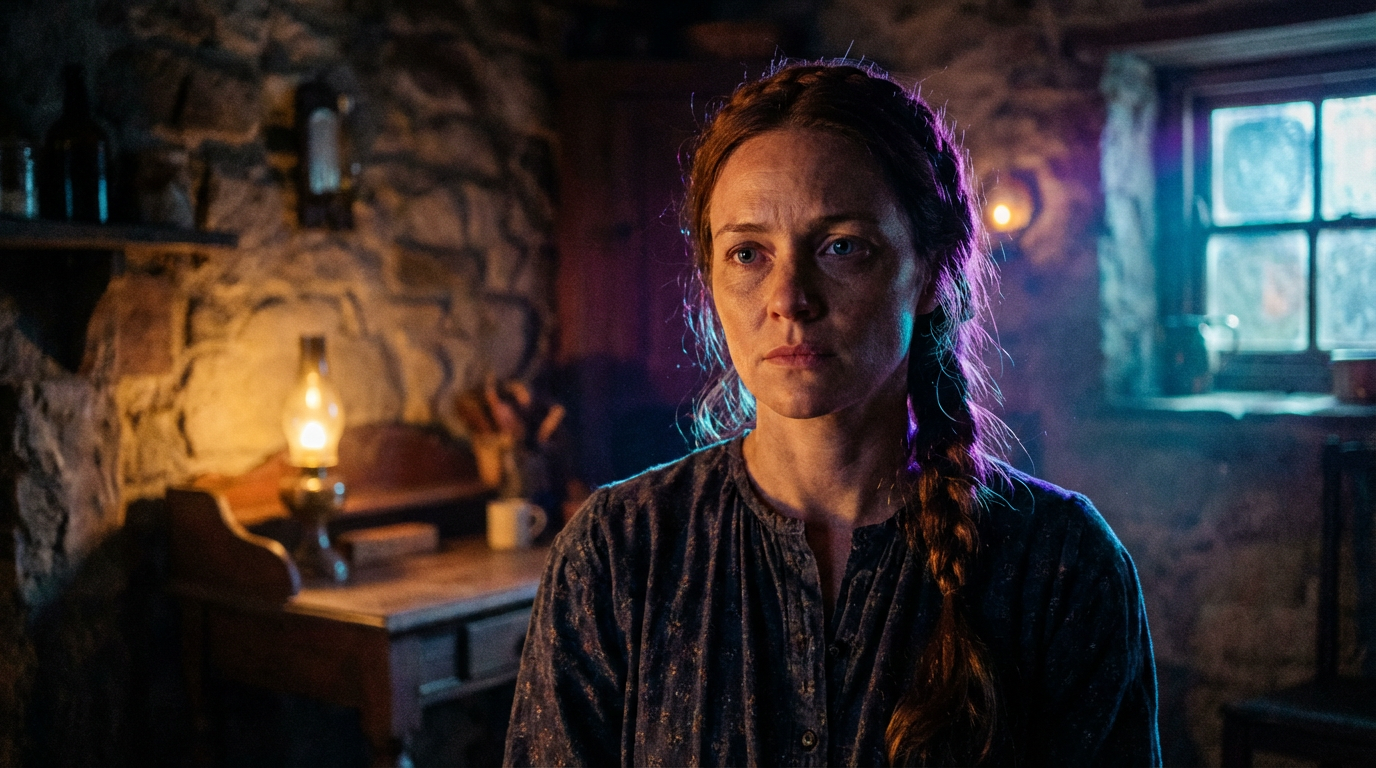
Sarah Woolley entered the world on 21st October 1807 in the cottage on Pound Lane, Wootton, Oxfordshire, arriving as the fourth of what would eventually be eight children born to Thomas Woolley Sr. and his wife Agnes, née Evans. Elizabeth was six, Henry four, Frederick two—the cottage already straining at its seams when Sarah added her small weight to its burden. Her father's cobbling business had been declining since grandfather William Woolley's death would leave debts rather than assets the following year, and Agnes's midwifery practice, though growing, could not compensate for the workshop's dwindling custom. Into this atmosphere of managed insufficiency, another daughter arrived—healthy, unremarkable, and immediately absorbed into the household's machinery of survival.
Her earliest memories centred on competition. The cottage's two rooms required that children sleep wherever space permitted—beneath the table, beside the cooling hearth, stacked together in arrangements that shifted nightly according to who was ill, who had been punished, and who had claimed territory first. Sarah learned to eat quickly before portions vanished, to hide whatever small possessions she acquired from siblings who would appropriate them without malice, simply because scarcity made everything communal whether its owner consented or not. These early lessons in the economics of want would define her approach to every subsequent relationship: take what you can, protect what you have, expect nothing.
As the eldest daughter after Elizabeth, Sarah inherited domestic obligations without the compensating authority that came with being firstborn. Elizabeth was their mother's acknowledged deputy, managing the household with a competence that left no room for a second-in-command. Sarah occupied the position beneath—useful but subordinate, expected to assist without directing, to labour without deciding. By five she could tend a fire, mind a toddler, and stretch porridge to serve more mouths than the pot had been intended to feed. By seven, when John arrived in 1809, she was effectively managing the younger children during her mother's absences at births, interpreting her father's moods by the weight of his tread on the flagstones and shepherding brothers to safety when the footfall promised one of his dark retreats.
The subsequent arrivals of Thomas Jr. in 1812, George in 1814, and Mary in 1817 pushed the household beyond anything that could reasonably be called functional. Sarah, growing through childhood without the eldest's privilege or the youngest's indulgence, existed in the compressed middle ground where one learned to make do. She received none of the education her brothers were intermittently afforded at the parish school; her literacy, such as it was, came from the family Bible and her mother's remedy book, her arithmetic from tracking household expenses that never balanced. The post-Napoleonic depression that devastated rural Oxfordshire eliminated whatever remaining marriage prospects a girl without dowry or particular beauty might have entertained. She watched village friends find husbands whilst she remained trapped by obligation, her youth evaporating into an endless sequence of tasks that no one noticed unless they were left undone.
The Voyage and Colonial Girlhood (1820–1827)
The decision to emigrate terrified Sarah more viscerally than it affected her older siblings. At twelve, she understood enough to recognise that the unknown rarely improved upon the familiar, however difficult. She had built small networks in Wootton—other girls who shared scraps of gossip, a farmer's wife who occasionally provided fabric remnants, the quiet satisfactions of knowing which merchant would extend credit and which would not. Emigration meant surrendering these carefully assembled resources for nothing but the promise that things might be different, a promise Sarah had already learned to distrust.
The Morley departed Deptford on 15th February 1820 and delivered the Woolley family to Hobart Town on 18th June after four months that compressed Sarah's remaining childhood into a series of brutal lessons about vulnerability. The ship's confined spaces eliminated privacy; the hierarchy between crew and passengers, between men and women, between those with resources and those without, operated with a directness that Wootton's social structures had at least dressed in courtesy. Sarah learned to move through the vessel without attracting attention, to keep her developing body unremarked upon, to occupy as little space as possible whilst remaining available for whatever labour the household required. These skills in tactical invisibility—being present enough to be useful, absent enough to avoid notice—would serve her throughout a marriage that demanded exactly this calibration.
The Goulburn Street cottage in Hobart provided the family with more physical space than they had known in England, though the emotional geography remained unchanged. Thomas Sr.'s dark moods, which in Wootton had been constrained by village scrutiny, found new latitude in the colony's rougher social fabric. Agnes's midwifery practice expanded rapidly—colonial Hobart's desperate need for competent birth attendants ensured steady demand—and her increasing absences left Sarah managing the household for days at a stretch. At thirteen, fourteen, fifteen, she was cooking for ten, negotiating credit with merchants, maintaining the appearance of respectability that distinguished free settlers from the convict population whose labour built the streets around them.
The colonial marriage market operated on mathematics that Sarah understood with depressing clarity. She possessed neither beauty nor dowry—those twin currencies that might have secured a comfortable match. Her face was pleasant but unremarkable, her figure sturdy rather than graceful. Her skills in cooking, cleaning, and child management were universal among colonial women and therefore commanded no premium. Her only genuine assets were her free settler status and her family's modest but respectable standing, advantages that diminished as each arriving ship deposited more eligible women into the colony's demographic imbalance.
Marriage to Joseph Barnes (1828)
Joseph Barnes entered Sarah's life in 1827 through the extended network of Oxfordshire emigrants who maintained connections across Van Diemen's Land. A year older than Sarah, he worked as an overseer on agricultural properties near Hobart whilst saving—he claimed—toward establishing his own holding. He was neither handsome nor especially intelligent, but he was free, Protestant, and employed, qualities that in the colonial context made him acceptable if not inspiring. Their courtship, conducted during church gatherings and the social events that marked colonial life's limited calendar, proceeded with the predictability of two people who recognised that their options were narrowing and that delay would only narrow them further.
The wedding on 15th March 1828 at St David's Church was modest by any standard. Sarah wore a dress her mother had altered from her own, the fabric showing its years despite Agnes's careful work. Joseph had saved enough for a proper ceremony and a breakfast at a respectable establishment, though half the attendees were his employer's connections rather than genuine well-wishers. Thomas Sr. attended but contributed nothing beyond his silent, diminished presence. Elizabeth stood as witness, her sharp assessment of the groom visible to anyone who knew how to read the set of her mouth.
Their first home—two rooms provided as part of Joseph's overseer compensation on his employer's land—established the template for what would follow. Sarah transformed the rough space through relentless effort: whitewashing walls, sewing curtains from sacking, constructing furniture from salvaged timber and packing crates. Every improvement represented hours stolen from domestic obligations, but the alternative was accepting a standard of living that would mark them as failing. Joseph observed her labour with satisfaction rather than gratitude, interpreting her industry as natural rather than heroic, as though the transformation of squalor into respectability were something that simply happened rather than something that someone made happen.
Children and the Pattern of Disappointment (1829–1847)
Margaret's arrival on 12th January 1829, barely ten months after the wedding, established the rhythm that would govern Sarah's next two decades. The birth was difficult—protracted, requiring forceps, leaving Sarah haemorrhaging and bedridden for weeks—and it set a pattern of traumatic deliveries that would characterise all her pregnancies. Joseph's response to fatherhood revealed qualities their courtship had not exposed: resentment of the baby's disruption, complaints about noise that disturbed his sleep, the expectation that Sarah would maintain previous domestic standards whilst recovering from an ordeal that had nearly killed her. More troublingly, his dreams of land ownership—constantly discussed, never pursued—transformed into criticism of Sarah's household management, as though her failure to perform miracles with inadequate resources was the obstacle between him and prosperity.
William followed on 3rd August 1831, Thomas on 15th November 1833, Sarah Jane on 22nd February 1836, Henry on 9th May 1838, Agnes Elizabeth on 17th October 1840, Frederick on 4th June 1843, and finally Joseph Jr. on 23rd January 1847. Eight children in eighteen years, each pregnancy more punishing than the last, each recovery longer, each birth extracting a physical toll that accumulated into permanent exhaustion. Sarah managed through systems designed to maximise efficiency at the cost of everything else: cooking in bulk when strength permitted, training older children to tend younger ones, hiding small sums from Joseph's awareness to build reserves against the emergencies he refused to acknowledge were coming.
The first bankruptcy arrived in 1843. Joseph had leased farmland in 1840 without consulting Sarah, investing their modest savings into ground he did not know how to work. The crops failed because he planted at the wrong time. The livestock died because he could not afford proper feed. Sarah, recovering from Frederick's birth—a thirty-six-hour labour during which Agnes had been attending another woman across the colony—dragged herself to neighbouring properties to take in washing, earning pennies that purchased bread whilst Joseph raged against the weather, the government, and Sarah's alleged inability to manage better. The bankruptcy proceedings humiliated him but relieved her. The loss of the failed farm meant returning to overseer work, to steady wages and a cottage maintained by someone else. Sarah rebuilt their domestic life with mechanical determination, understanding that survival required accepting Joseph's version of events—that circumstances rather than incompetence had caused their ruin.
The Middle Years (1845–1870)
The family's relocation to Hobart in 1845, where Joseph secured warehouse employment, provided the stability he had never been able to create independently. Regular wages, even if modest, permitted Sarah to establish domestic routines that agricultural uncertainty had made impossible. She supplemented the household income through sewing, selling eggs from chickens kept in their small yard, and the careful financial management that years of scarcity had made instinctive. Every penny was allocated before it arrived, every surplus concealed against future need, every expenditure weighed against alternatives that might prove more urgent tomorrow.
The older children began contributing as soon as age permitted. Margaret entered domestic service at sixteen, sending half her wages home. William found dock work at fourteen, bringing back damaged goods that could be repaired or repurposed. These contributions, individually small, collectively provided the margin between bare survival and genuine destitution. Sarah coordinated these income streams with the efficiency of a quartermaster, ensuring that no resource was wasted and no obligation forgotten. Joseph, meanwhile, occupied himself with plans that never materialised—business ventures discussed endlessly in taverns, partnerships proposed to men who recognised his inadequacy even when he could not, schemes that required capital he did not possess and judgement he had never demonstrated.
The deaths of her parents—Thomas Sr. on 22nd May 1853, Agnes on 9th August 1855—affected Sarah with different intensities. Her father's passing barely registered emotionally; their relationship had been defined by his darkness and her navigation of it, and his death merely formalised an absence that had been operative for decades. Agnes's death struck with genuine force. Her mother had been model, counsellor, and intermittent financial support—the woman who understood, without Sarah needing to explain, what it cost to maintain a household around a man who consumed more than he contributed. The small legacy from Thomas Sr.'s estate went directly to settling debts Joseph had accumulated without Sarah's knowledge, a final indignity that even death could not prevent.
Sarah's relationship with her siblings, maintained through Elizabeth's correspondence network, provided the only emotional sustenance her marriage did not. When Joseph's behaviour became intolerable, it was Elizabeth she wrote to—letters that combined domestic updates with carefully coded pleas for advice. Henry in Launceston, prospering in the grain trade, represented the success that Joseph endlessly discussed but never achieved. Frederick's quiet competence in the postal service demonstrated that steady application could build a respectable life without the dramatic gestures Joseph mistook for ambition. Even John, struggling with his own difficulties in the Huon district, managed a dignified self-sufficiency that threw Joseph's failures into sharper relief.
Agnes Elizabeth's death from scarlet fever in 1862, aged twenty-two and recently married, broke something in Sarah that would not mend. Her namesake daughter—the child who had most resembled her in temperament and appearance—died calling for her mother whilst Sarah was nursing Joseph through one of his periodic collapses. The guilt of absence, of choosing husband over daughter even at the end, settled into her bones alongside the exhaustion and the grief and the accumulated resentment of thirty-four years spent maintaining a man who had never once maintained her.
The Second Bankruptcy and Widowhood (1870–1883)
Joseph's attempt in 1870 to establish an import business with borrowed money he had not disclosed to Sarah produced their second bankruptcy. He was sixty-four; she was sixty-three. The pattern was so familiar that Sarah felt only weary recognition—the grandiose plan, the borrowed capital, the inevitable collapse, the humiliation of proceedings that stripped them of whatever modest comfort she had assembled through decades of domestic labour. When bailiffs inventoried their possessions, she observed without protest, having already concealed the few items that carried genuine value: her mother's midwifery notes, a locket containing Agnes Elizabeth's hair, the small reserve of hidden money that fifty-five years of marriage had taught her to keep beyond any husband's reach.
The shame of bankruptcy at their age meant relocating to a tenement in one of Hobart's poorer districts. Sarah, who had spent five decades maintaining respectability through effort that no one witnessed or acknowledged, discovered in the collapse of pretension something approaching relief. Without status to defend, she could be honest about their poverty. Without Joseph's reputation to protect, she could accept charity from the church and her children without the elaborate fictions that had previously disguised need as temporary inconvenience. The freedom was imperfect—she still cooked, cleaned, and managed Joseph's deteriorating health—but it was freedom nonetheless, the first she had known since girlhood.
John's death on 19th March 1864 from injuries sustained in a farming accident had already demonstrated the precariousness that shadows even the most careful lives. Frederick's death on 5th January 1870 removed the brother whose steady postal service career had represented everything Joseph was not. Mary's death on 4th May 1875—worn down by her own difficult marriage to Edward Clarke—grieved Sarah with the particular sympathy of recognition. Elizabeth's death on 19th December 1876 severed the connection that had sustained Sarah through her worst years. Without Elizabeth's letters, without the knowledge that someone understood precisely what her life cost, Sarah felt genuinely alone for the first time—surrounded by children and grandchildren but isolated in the specific way that only the loss of the person who knew you best can produce.
Joseph's death on 4th April 1882 arrived with the quiet inevitability of a long-anticipated event. Sarah nursed him through his final illness with the professional competence absorbed from decades of watching her mother attend the dying—changing soiled linen, administering medicines, maintaining dignity that the patient himself had long since abandoned. The funeral drew sparse attendance. Their children who could afford the journey came from obligation; neighbours attended from curiosity. Sarah stood through the service without tears, listening to a eulogy that praised Joseph's pioneering spirit and dedication to family—phrases so disconnected from the man she had known that she wondered briefly whether the minister had prepared remarks for someone else.
The seventeen months of widowhood that followed provided Sarah with the only period of genuine contentment in her adult life. Living on modest contributions from her children and the parish, she answered to nobody, maintained no pretences, and spent her days in the company of other elderly women whose husbands' deaths had liberated them into the same quiet freedom. They shared stories they had never told whilst their men were living, laughed at observations that would have drawn punishment in younger years, and discovered in each other's company the companionship that marriage had been supposed to provide but rarely did.
Death and Burial
Sarah Barnes's final illness began in August 1883 with a chest infection that would not clear. She faced the prospect of death with the pragmatism she had applied to every other trial—distributing her few possessions according to instructions prepared years earlier, ensuring that the hidden savings accumulated across half a century of vigilant economy were divided equally among her surviving children, providing specific directions for her funeral that reflected her understanding of what respectability demanded and what their finances permitted.
She died on 8th September 1883 in the tenement room she had shared with Joseph, attended by a charity nurse who did not know her history and a granddaughter who had arrived too late to hear whatever final words she might have offered. She was seventy-five years old, and she had spent sixty of those years in the service of other people's needs.
The funeral on 11th September at St David's Church drew more mourners than anyone had expected. Women she had helped through difficulties, neighbours who recalled small kindnesses delivered without ceremony, grandchildren who remembered her as the quiet presence who could stretch a meal to feed whoever arrived—they came to honour a life built on endurance rather than achievement, on the particular courage required to maintain a household and raise children when the person who was supposed to share that burden had instead become its heaviest component.
She was buried beside Joseph in Cornelian Bay Cemetery, the shared headstone recording only names and dates. The simplicity would have satisfied Sarah. She had spent seventy-five years understanding that women's work—the cooking, the cleaning, the bearing and raising of children, the management of men who could not manage themselves—was designed to be invisible, noticed only in its absence and never in its performance. In death, as in life, she asked for nothing more than to have done what was necessary.







