Sarah Anne Thornton (née Mitchell)
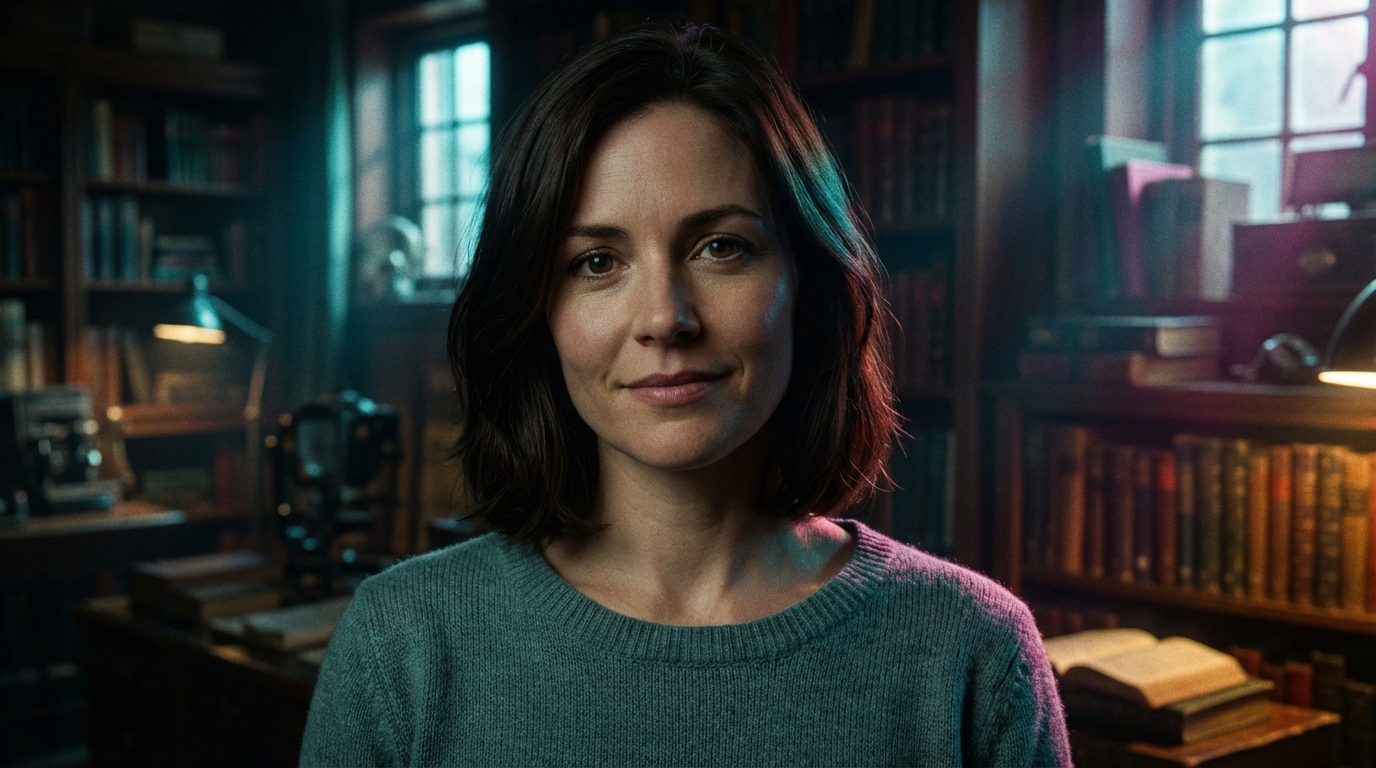
Sarah Anne Mitchell (born 1963) is the middle child of Richard and Margaret Mitchell, a registered nurse whose career at Broken Hill Base Hospital spanned three decades of caring for the sick and dying. Positioned between her pragmatic elder brother Bill and her supernatural-sensing younger brother Ethan, Sarah inherited her father's reliability and her mother's empathy in equal measure—becoming the family's emotional translator, the one who understood what others couldn't articulate and forgave what others couldn't accept. Her protective warmth toward Ethan provided him sanctuary when their father's disappointment and Bill's dismissal might otherwise have left him entirely alone.
Birth and Early Years
Sarah Anne Mitchell was born on 17 September 1963 at Broken Hill District Hospital, the second child and only daughter of Richard and Margaret Mitchell. Her arrival transformed the family's dynamics in ways both immediate and lasting—Bill, three years old and already displaying his father's serious temperament, gained a sibling whose nature would prove fundamentally different from his own.
From infancy, Sarah displayed the sensitivity that would characterise her entire life. She responded to emotional atmospheres that other children seemed not to notice, growing fussy when tension filled the household and settling into contentment when warmth prevailed. Margaret recognised something of herself in this responsiveness, though Sarah's expression of it would take practical rather than mystical forms. Where Margaret perceived unseen currents, Sarah simply felt what others were feeling—a gift less dramatic than supernatural sensitivity but no less real.
The cottage on Garnet Street provided a childhood shaped by contrasts. Richard's pragmatic certainty occupied one pole of her experience; Margaret's folkloric imagination occupied the other. Sarah learned early to navigate between these worldviews, understanding that her father's love expressed itself through provision and protection while her mother's manifested in stories and attention. Neither parent was wrong, she came to believe; they were simply different languages for the same essential care.
Bill proved a distant older brother during these early years, already focused on the practical pursuits that would lead him toward engineering. Sarah followed him around when permitted, absorbing his serious approach to problems while remaining puzzled by his lack of interest in the emotional dimensions of experience. Their relationship was cordial but never close—separated not merely by three years but by fundamentally different orientations toward the world.
The Arrival of Ethan
Sarah was five years old when Ethan was born in February 1968, and her reaction to her new brother differed markedly from Bill's unease. Where the elder sibling regarded the infant with puzzled wariness, Sarah embraced him with protective affection that would never diminish. Something in Ethan called to something in her—perhaps the same sensitivity to emotional currents that had marked her own infancy, recognising itself in amplified form.
As Ethan grew, the differences between him and other children became increasingly apparent. He stared at empty corners as if watching something invisible; he spoke to presences no one else could perceive; he displayed the distant absorption of someone listening to conversations occurring beyond the range of normal hearing. Bill grew uncomfortable around these behaviours; Richard grew frustrated; only Margaret and Sarah accepted them without requiring explanation.
"He's not strange," Sarah told her father once, during a confrontation about Ethan's latest peculiarity. She was perhaps twelve years old, already displaying the diplomatic courage that would characterise her adulthood. "He's just different. Like Mum is different from you."
Richard had no response to this observation, which captured something true that he preferred not to acknowledge. The comparison unsettled him—his wife's folkloric interests were one thing, harmless eccentricities in an otherwise sensible woman, but Ethan's behaviours suggested something more fundamental and more troubling.
Sarah positioned herself as Ethan's protector and interpreter from those early years onward. She couldn't explain what he experienced—couldn't perceive the whispers he heard or the presences he sensed—but she believed him when he described them, and belief proved more valuable than understanding. In a household divided between pragmatists who dismissed the supernatural and a mother who encouraged it, Sarah offered something different: simple acceptance without either dismissal or elaboration.
Education and Emerging Vocation
Sarah attended Broken Hill Public School and later Broken Hill High School, distinguishing herself neither through academic excellence like Bill nor through the artistic intensity that marked her mother's student years. She was a solid student—competent in most subjects, exceptional in none—whose real gifts lay in the interpersonal rather than the intellectual realm. Teachers noted her ability to comfort distressed classmates, to mediate conflicts, to sense when someone needed help before they asked for it.
Her career aspirations crystallised during a childhood illness—a severe bout of pneumonia at age eleven that required hospitalisation and introduced her to the world of nursing. The women who cared for her during those feverish weeks embodied something Sarah recognised and admired: practical competence combined with genuine compassion, the ability to address physical suffering while attending to emotional needs. She decided then that she would become one of them.
The decision pleased both parents for different reasons. Richard appreciated the practicality of nursing—a respectable profession with clear utility, unlike his wife's storytelling or his youngest son's supernatural obsessions. Margaret saw in Sarah's choice echoes of the healing tradition her own mother had practised, though expressed through modern medical frameworks rather than folk remedies. Both parents supported her ambition without fully understanding its roots.
Sarah completed her secondary education in 1981 and enrolled in the nursing program at Adelaide's Royal Adelaide Hospital School of Nursing. The training proved rigorous—long hours, demanding instructors, exposure to suffering and death that tested every student's commitment—but Sarah thrived in ways that surprised even herself. The work felt right in her hands, as if she had been designed for precisely this purpose.
The Death of Great-Aunt Alice
In October 1981, during Sarah's first year of nursing training, Richard's aunt Alice Mitchell died at her cottage on Crystal Street. Sarah returned to Broken Hill for the funeral, observing the family's varied responses to the old woman's passing. Richard attended out of obligation, his relationship with his eccentric aunt having been distant at best. Margaret mourned genuinely, having appreciated Alice's connection to traditions that Richard dismissed. Bill expressed appropriate respect without visible emotion.
But Ethan—thirteen years old, standing at the graveside with an expression Sarah couldn't read—Ethan seemed transformed by the death. Something had shifted in him, something that went beyond ordinary grief. In the weeks following, when Sarah returned for visits between her training rotations, she noticed changes in her youngest brother that others attributed to adolescent moodiness but which she suspected ran deeper.
"She speaks to me now," Ethan told Sarah during one of these visits, his voice carrying the certainty of someone describing observable fact rather than imagining possibility. "Grandmother Alice. I can hear her, along with the others."
Sarah didn't know how to respond. She believed Ethan—his sincerity was unmistakable—but she couldn't validate an experience so far beyond her own perception. She chose the response that would become her pattern throughout their lives: acceptance without elaboration, presence without pretence.
"That must be overwhelming," she said. "Having more voices than before."
Ethan looked at her with something like gratitude. It was, apparently, exactly what he needed to hear.
Nursing Career
Sarah completed her nursing training in 1984 and returned to Broken Hill to accept a position at the Base Hospital where she had been born. The decision to return home rather than pursue opportunities in larger cities reflected both her character and her sense of responsibility. Her parents were ageing; Ethan needed someone who understood him; even Bill, despite his self-sufficiency, benefited from her mediating presence. The family required her in ways that no Adelaide or Sydney position could satisfy.
Her early years at the hospital focused on general ward nursing—the foundational work of caring for patients across a range of conditions, from post-surgical recovery to chronic illness management. She proved skilled at the technical aspects of the profession, but her real strength lay in the relational dimension that no amount of training could teach. Patients trusted her; families found comfort in her presence; physicians valued her observations about the emotional states that affected physical recovery.
By the late 1980s, Sarah had begun specialising in palliative care—the branch of nursing devoted to patients whose conditions could not be cured, only managed as death approached. The work suited her temperament in ways she hadn't anticipated. She possessed an unusual comfort with mortality, perhaps inherited from a mother who had spent her life collecting stories of the dead, and this comfort allowed her to be present with dying patients in ways that others found difficult.
"You help them let go," a supervising physician observed after watching Sarah attend to a particularly challenging case. "Most nurses help patients fight. You help them accept."
It was meant as a compliment, and Sarah received it as one. She had witnessed enough suffering to understand that acceptance was sometimes the greatest gift a caregiver could offer—not resignation but recognition, the acknowledgment that dying was as natural as living and deserved the same quality of attention.
The Murder of Violet Dallow
When news broke in October 1988 that Violet Dallow had been murdered—and that Ethan had been secretly involved with the sixteen-year-old—Sarah's response differed from the rest of her family's. Richard retreated into disappointed silence; Bill's worst suspicions seemed confirmed; Margaret tried to offer comfort but found her own grief and confusion overwhelming. Sarah simply went to her brother.
She found him in his small cottage on the outskirts of town, unwashed and unsleeping, his eyes carrying the hollow look of someone whose world had collapsed. He didn't speak when she entered, didn't acknowledge her presence, but neither did he turn her away. She sat with him through that first terrible night, saying nothing, offering only the companionship of someone who would not judge or demand explanation.
In the weeks that followed, Sarah became Ethan's primary connection to the functioning world. She ensured he ate, supervised his basic self-care, intercepted well-meaning but clumsy attempts by others to help. She didn't ask about Violet, didn't probe the nature of their relationship, didn't require Ethan to justify or explain. He would share what he needed to share when he was ready; her job was simply to keep him alive until that time arrived.
"Everyone thinks I should have known," Ethan said finally, weeks after Violet's funeral, his voice rough from disuse. "The whispers warned me. I told her to stop investigating. But I couldn't—I couldn't make her listen."
Sarah heard the guilt beneath his words—the conviction that his supernatural awareness should have prevented the tragedy, that somehow his gifts had failed both him and the girl he loved. She couldn't address the supernatural dimension of his grief, couldn't engage with questions of whether the whispers were real or what they might have told him. But she could address the guilt.
"You warned her," Sarah said. "You did what you could. What she chose to do with that warning wasn't your responsibility."
It wasn't enough—nothing would ever be enough to heal this particular wound—but it was something. Ethan looked at her with eyes that had seen too much death, and for a moment the isolation that surrounded him seemed to thin. His sister couldn't enter his world of whispers and spirits, but she could wait at its border, and waiting was its own form of love.
Marriage and Family
Sarah married David Thornton in 1991, a quiet wedding at St Peter's Anglican Church attended by family and close friends. David was a paramedic she had met through work—a practical man with a gentle disposition, whose exposure to emergency medicine had given him perspective on life's fragility similar to her own. Their courtship had been gradual and undramatic, two people recognising in each other the qualities they valued most: reliability, empathy, shared understanding of what truly mattered.
The marriage proved stable and sustaining in ways that neither partner felt the need to articulate. David understood the demands of Sarah's work and the complexities of her family; she understood his own professional stresses and his need for quiet restoration after difficult shifts. They built a life together that accommodated both their vocations, supporting each other through the accumulated weight of caring for others in crisis.
They had two children: James, born in 1993, and Rebecca, born in 1996. Sarah approached motherhood with the same practical warmth she brought to nursing—attentive without being anxious, structured without being rigid, present without being suffocating. David proved an equally capable father, his paramedic training translating into calm responsiveness to the minor emergencies of childhood.
The children grew up aware of their extended family's dynamics without fully understanding them. Uncle Bill was the serious one who talked about mining; Uncle Ethan was the strange one who lived alone and spoke of things that made Grandpa Richard uncomfortable. Sarah explained these differences in age-appropriate terms, neither defending nor condemning, simply acknowledging that people experienced the world differently and family meant accepting those differences.
Caring for Richard
Richard's declining health through the late 1990s drew increasingly on Sarah's professional expertise. His lung disease—the accumulated damage of decades underground—progressed with the relentless inevitability that she had witnessed in countless patients. She watched her father diminish, his once-formidable presence shrinking as breath became precious and effort became exhausting.
She helped manage his care with the competence born of years at the bedside, coordinating with his physicians, explaining medical realities in terms her parents could understand, ensuring that his dignity was preserved even as his independence eroded. Margaret appreciated this intervention more than she could express; Richard accepted it with gruff acknowledgment that masked deeper gratitude.
The final weeks of October 2002 found Sarah at her father's bedside more often than not. She was there when he was admitted to hospital, there through the gradual deterioration that followed, there on the morning of 27 October when his breathing finally ceased. Margaret sat on one side of the bed, holding Richard's hand; Sarah sat on the other, monitoring signs that required no monitoring because she already knew what they meant.
His last words were spoken to her: "Don't let them make a fuss." She promised, and she kept that promise—ensuring the funeral was simple, the eulogy delivered by Bill was brief and practical, the farewell conducted in the manner Richard would have wanted.
The Years Between
The years following Richard's death saw Sarah assume a role she had been preparing for all her life: the family's emotional centre, the one who held the scattered pieces together. Margaret remained on Garnet Street, supported by Bill's practical assistance and Sarah's regular presence. Ethan continued his solitary existence on Broken Hill's margins, his grief for Violet Dallow having settled into permanent residence rather than departing with time.
Sarah maintained connection with all of them, translating between worldviews that could not otherwise communicate. She helped Bill understand that Ethan's strangeness was not a choice or a failing but simply who he was; she helped Ethan understand that Bill's dismissal came from incomprehension rather than malice. She kept Margaret company during the long afternoons when the house felt too empty, listening to stories she had heard countless times before, understanding that repetition was its own form of comfort.
Her nursing career continued through these years, her reputation in palliative care growing as she accumulated experience that no training program could provide. She trained younger nurses, supervised difficult cases, and maintained the same quality of presence with dying patients that had distinguished her from the beginning. The work never became easier—death was death, and grief was grief—but it became more integrated, a natural part of existence rather than an interruption of it.
David remained her constant partner through these responsibilities, his own work demanding enough to prevent resentment of her family obligations while leaving enough energy for genuine support. James and Rebecca grew into young adulthood, pursuing their own paths, visiting their extended family with the tolerant affection of grandchildren who had inherited their mother's gift for acceptance.
Caring for Margaret
When Margaret's heart disease was diagnosed in 2011, Sarah's palliative experience informed her response. She understood the trajectory ahead—the gradual limitations, the careful management, the eventual decline that medicine could slow but not prevent. She began preparing, quietly, for another deathbed vigil.
The final years of Margaret's life saw mother and daughter spend more time together than they had since Sarah's childhood. Margaret was compiling her life's work, organising the notebooks that would pass to Ethan, and she wanted Sarah to understand what she was preserving even if she couldn't share in its supernatural dimensions. Sarah listened as her mother explained the patterns of disappearance she had tracked, the folklore she had collected, the connections between past and present that most people preferred not to see.
"I don't have what Ethan has," Sarah said during one of these conversations. "I can't hear what he hears."
"No," Margaret agreed. "But you have something he doesn't. You can be with people in their pain without needing to understand it. That's its own kind of gift."
It was perhaps the most direct acknowledgment Margaret had ever offered of Sarah's particular abilities—the capacity for presence that required no supernatural perception, only the willingness to remain when remaining was difficult. Sarah carried those words with her through the months that followed, as her mother's strength waned and the end approached.
Margaret died on 8 August 2015, with her children gathered around her hospital bed. Bill stood near the door, his grief private and contained. Ethan sat close to the bed, his expression suggesting he was listening to something beyond the audible. Sarah occupied the middle space, as she always had, holding her mother's hand and watching the monitors that confirmed what her training already told her.
When it was over—when Margaret's breathing had ceased and her pulse had flattened and the formal machinery of death had concluded—Sarah remained at the bedside for several minutes while Bill stepped into the corridor and Ethan sat in silence that might have been communion with presences Sarah couldn't perceive. She had performed this vigil for countless patients over three decades of nursing. Performing it for her mother felt both utterly familiar and completely unprecedented.
She was fifty-two years old, an orphan now in the technical sense though the word seemed strange applied to someone her age. Both parents lay in Broken Hill Cemetery, their graves side by side, their headstones marking the end of a marriage that had somehow survived its fundamental contradictions. Sarah had been present for both deaths, had performed the final services that her profession equipped her to provide, had ensured that neither parent died alone or uncared-for.
It was, she supposed, what she had been born to do.







