Sanctuary Supply Depot, BWS
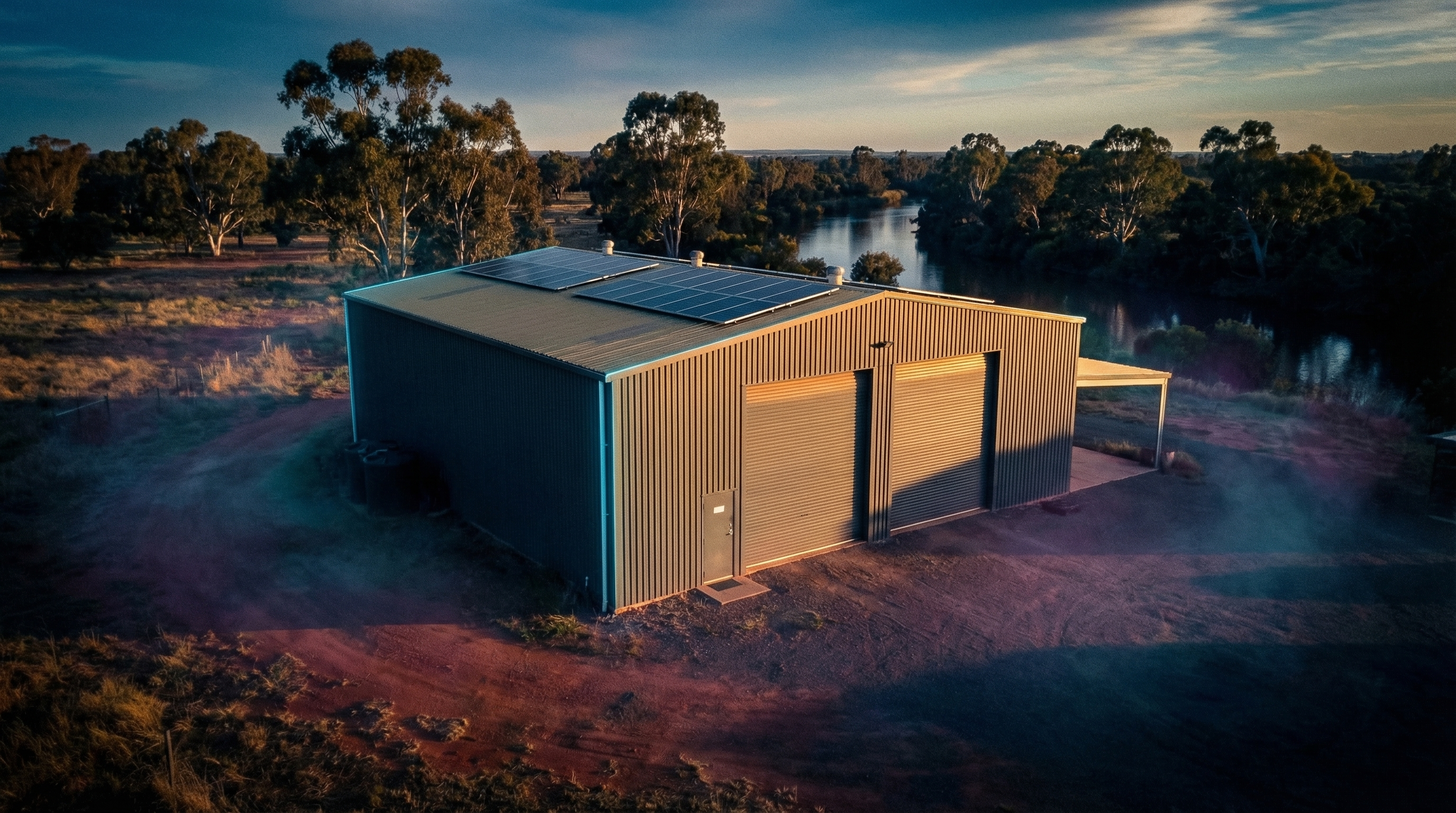
The Sanctuary Supply Depot was the first permanent structure completed at the Bixbus Wildlife Sanctuary, built between 29 August and 17 September 2018 by a construction crew led by New Edinburgh foreman Alastair Drummond under the supervision of Adrian Pafistis. The steel-framed, corrugated-iron building provided centralised storage for tools, construction materials, animal feed, and veterinary supplies, including walk-in freezer and cooler units powered by rooftop solar panels. Every subsequent facility at the sanctuary was built from materials stored within it.
Construction and Purpose
The Sanctuary Supply Depot was the first building constructed at the Bixbus Wildlife Sanctuary and the first permanent structure on the sanctuary site. Grant Ironbach's master project plan identified it as the essential prerequisite for everything that followed — without secure, organised storage for tools, construction materials, and supplies, the ambitious building programme he had designed could not function. The depot's construction commenced on 29 August 2018, the same afternoon as the sanctuary's groundbreaking ceremony, and the completed building was handed over on 17 September.
The building occupied a 15 x 30 metre footprint on the sanctuary's western periphery, near the Norong River. Its construction was overseen by Adrian Pafistis, the Clivilius Lead Council's Construction Engineer, and built by a crew of tradespeople from New Edinburgh — part of a group of skilled workers that the Stewartshire settlement had sent to assist with Bixbus's early development following first contact between the two communities. Alastair James Drummond served as site foreman, managing the day-to-day construction whilst Adrian rotated between the sanctuary and other settlement projects. Hamish Robert Kincaid handled the foundation work, bringing a masonry specialist's understanding of Clivilian ground conditions to the concrete slab that would support the building. Ewan Alexander Maitland contributed his carpentry skills to the formwork and interior finishing. Callum George Baird and Jerome Smith provided general labour throughout the build. Tavish William Renfrew, a welder and fabricator whose craft descended from New Edinburgh's Ironhold metalworking tradition, joined the crew for the steel frame assembly.
Construction proceeded in four stages. The first stage — site clearing, levelling, formwork, drainage, and the concrete foundation pour — occupied the period from 29 August to 1 September. The 450-square-metre slab then required seven days of curing before it could bear structural load, during which the crew shifted to begin site preparation for the Sanctuary Operations Hub twelve metres to the north. The steel frame was erected from 8 September, with prefabricated components delivered through portal logistics and assembled on site by Tavish Renfrew and the crew. Corrugated iron cladding — walls, roof, and roll-up doors — followed over three days. The final stage comprised interior fit-out: steel shelving, lighting, ventilation, and the installation of cold storage units by specialist HVAC and electrical technicians delivered through the portal.
Facility Layout
The building was a steel-framed structure clad in galvanised corrugated iron, with a concrete slab floor. Two wide roll-up steel doors on the eastern face provided vehicle access for deliveries and equipment movement. A smaller staff entry door on the northern side served daily foot traffic.
The interior was divided into functional zones. Steel shelving along the eastern and southern walls stored tools, hand equipment, construction materials, fencing supplies, and enclosure maintenance items. The northwest corner housed the cold storage facilities: a walk-in freezer and a walk-in cooler, each occupying a three-by-three-metre footprint with insulated panel walls, heavy-duty doors, and magnetic gaskets. The cold storage units were powered by eight rooftop solar panels connected to an inverter and battery bank on the building's western interior wall. A locked cabinet near the staff entrance stored veterinary supplies.
Ventilation fans in the upper walls provided air circulation, and LED strip lighting along the underside of the roof trusses illuminated the interior. Fire extinguishers were mounted at four points throughout the building, and a first-aid kit was bolted to the wall near the staff entrance — a detail insisted upon by Alastair Drummond, following a New Edinburgh building tradition that no structure was considered complete until it contained the means to treat an injury sustained within it.
Operational Role
The Supply Depot became operational on the day of its completion, with tools and materials that had been stored under tarpaulins since the groundbreaking moved onto its shelving within hours of the final walkthrough. From that day forward, every construction project at the sanctuary drew its materials from the depot's stores, and every portal delivery of supplies was processed through its doors.
As the sanctuary grew, the depot's role expanded correspondingly. Initial stores of construction materials and basic tools gave way to an increasingly diverse inventory: animal feed in bulk, specialist veterinary medications and equipment, enrichment materials for enclosures, horticultural supplies for habitat planting, and seasonal stocks of fodder crops supplied by Tree Acres. The walk-in freezer and cooler, originally sized for a facility housing fewer than fifty species, were supplemented with additional refrigeration capacity in 2020 when the sanctuary's collection outgrew the original cold storage.
The building received incremental upgrades over the years. The original standalone solar power system was replaced by a connection to the Bixbus electrical grid in April 2020, providing more reliable power for the cold storage units. Additional shelving was installed in 2021 to accommodate the growing inventory. The exterior cladding was repainted and weather-sealed in 2023. The fundamental structure, however, remained as Adrian Pafistis and the New Edinburgh crew built it — the steel frame that Tavish Renfrew welded in September 2018 continued to carry the building's load, and the concrete slab that Hamish Kincaid poured and Callum Baird watered twice daily for a week still formed its floor.
The Supply Depot was not open to the public and occupied no place in the sanctuary's visitor experience. It sat behind the operational areas, visible from the staff pathways but unmarked by signage and unmentioned in educational materials. Its significance was entirely functional — the logistical backbone of a facility that could not have operated without it. Grant Ironbach's project plan listed twenty-two facilities across four construction phases. The Supply Depot was the first because it made every subsequent one possible.







