Samuel "Sam" Woolley
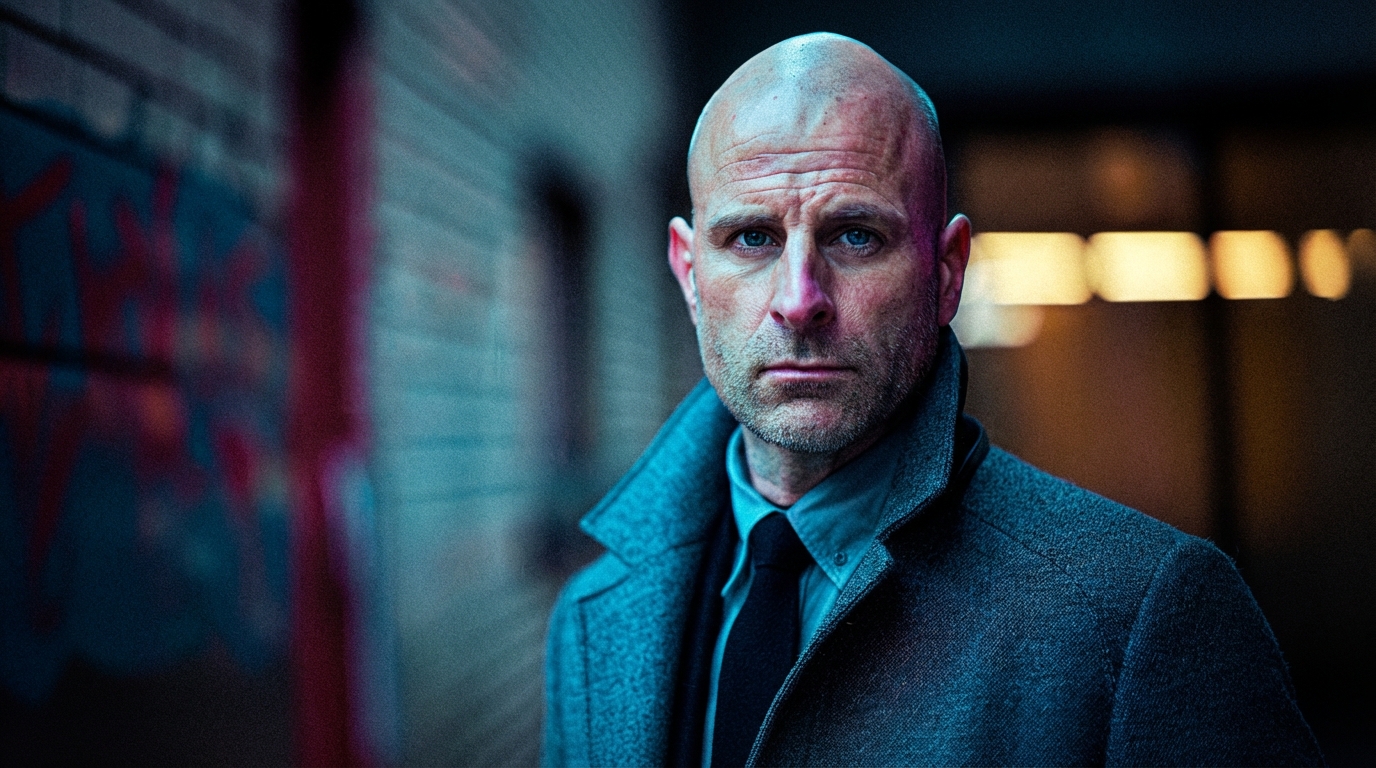
Born in Launceston in 1974 into a family whose connection to Tasmania Police stretched back two generations, Samuel Woolley followed his father and grandfather into law enforcement and rose to the rank of Inspector by the age of forty-one. His career combined investigative skill with institutional fluency, qualities that placed him at the centre of the most consequential crisis in the force's modern history — the events of August 2018 — and shaped the complex legacy he carried into the years that followed.
A Launceston Inheritance
Samuel Woolley was born on 15 June 1974 at the Launceston General Hospital, the eldest of three children born to John Michael Woolley and Sarah Louise Woolley (née Carter). His father, a constable with Tasmania Police at the time of Sam's birth, had been called away to a burglary scene on his night shift and arrived at the hospital still in uniform, having driven across Launceston with the kind of urgency that the job rarely permitted for personal matters. His mother, a social work graduate who had put her career on hold for the birth, would later describe the first hours of Sam's life as a preview of the decades that followed — the police force arriving late, apologising briefly, and expecting everyone to carry on.
The Woolley family lived in Mowbray, in a brick house that John's father Robert James Woolley had helped them secure through contacts at the local bank. The street was quiet, suburban, unremarkable — the kind of neighbourhood where children rode bicycles after school and families gathered for backyard barbecues on weekends. Robert, a retired sergeant who had served with Tasmania Police from the late 1940s through to the early 1980s, lived nearby and visited regularly, bringing with him the stories and habits of a man whose entire adult life had been shaped by the institution his grandson would eventually join. Sam grew up surrounded by policing — not as an abstract concept but as the rhythm of the household, the reason his father missed dinners and worked Christmas Days and spoke in a particular measured tone when the telephone rang after dark.
His mother Sarah provided the counterweight. A social worker who specialised in juvenile justice, she brought to the family a perspective that complicated the assumptions police households sometimes developed about the world and the people in it. Her work placed her alongside young offenders whose circumstances were more nuanced than charge sheets suggested, and she carried that complexity home with a quiet insistence that shaped all three of her children. Sam, the eldest, absorbed both influences — his father's institutional loyalty and his mother's belief that institutions were only as good as the people they served.
School, Melbourne, and the Decision
Sam's younger siblings arrived in the years that followed: Michelle Louise Woolley in September 1977, and Trent Michael Woolley in December 1980. The household expanded accordingly — a third bedroom converted from the study, the family car upgraded, the camping holidays to the East Coast becoming louder and more logistically demanding with each addition. Sam, seven years older than Trent and three years older than Michelle, occupied the eldest child's familiar territory: the one expected to set the example, carry the responsibility, and absorb the parental attention that arrived first and most intensely.
He attended Launceston Church Grammar School from 1985 to 1991, where he proved a capable if unspectacular student academically and a natural athlete on the sports field. Cricket was his game — he opened the batting for the school's First XI in his senior years with a technique that his coaches described as solid rather than elegant, built on patience and an ability to read the bowler's intentions before the ball left the hand. He was well liked by his peers, comfortable in groups, and possessed the kind of easy social confidence that came from growing up in a household where visitors were frequent and conversation was expected. His reports suggested a boy who could have achieved more in the classroom if the classroom had engaged him the way the cricket pitch did.
After completing his secondary education in 1991, Sam enrolled at the University of Melbourne to study a Bachelor of Arts in Criminology, a decision that reflected both his family's expectations and his own growing awareness that modern policing demanded more than the academy alone could provide. Melbourne was a revelation — the first extended period he had spent away from Launceston, away from the gravitational pull of the Woolley name and its associations. He lived in a share house in Carlton with three other students, attended lectures in the Gothic halls of the Parkville campus, and discovered that the world contained perspectives on justice, crime, and institutional power that Mowbray had not prepared him for. He graduated with Honours in 1994, returning to Tasmania with a degree that his father respected without entirely understanding its value and his mother regarded as the best decision he had made so far.
The Academy and Early Career
Sam entered the Tasmania Police Academy at Rokeby in early 1995. His university education gave him an advantage in the academic components that many of his fellow recruits lacked, though he was careful not to advertise it — the academy valued practical capability and collegiality over credentials, and a graduate who carried his degree too visibly risked alienating the officers he would need to work alongside for the rest of his career. He graduated with a Diploma of Policing in 1996, near the top of his intake, and was posted to Launceston as a Probationary Constable.
The early years were formative in the way that early years in any demanding profession tended to be — not through dramatic incidents but through the accumulation of experience that gradually replaced theoretical understanding with practical knowledge. Sam walked beats, responded to domestic disturbances, processed minor offences, and learned the particular rhythms of community policing in a regional city where the officers and the people they served frequently knew each other by name. His father, now a Senior Sergeant and rising through the ranks himself, was a presence in the same institutional landscape — close enough to cast a shadow, distant enough that Sam could develop his own reputation without it being attributed entirely to the family connection.
In 1998, Sam was promoted to Senior Constable and transferred to the Criminal Investigation Branch, where his university training and his developing investigative instincts found their natural application. He worked serious crime — armed robberies, assaults, a string of commercial burglaries that occupied the CIB for the better part of a year — and earned a reputation as a thorough, methodical detective who built cases carefully and presented evidence with the kind of structured clarity that prosecutors valued. His approach was analytical rather than intuitive, grounded in the frameworks his criminology degree had provided and refined by the practical realities of Tasmanian policing.
Lucy, and the Years That Didn't Hold
Sam married Lucy Anne Whitfield in March 2000, at a ceremony at the Country Club Tasmania in Launceston that drew guests from both the policing and legal communities. Lucy was a paralegal at a Launceston law firm, a woman Sam had met through mutual friends at a function in 1997 and courted with the steady, unhurried approach he applied to most things outside the office. She was sharp, sociable, and possessed a directness that Sam found refreshing after the institutional circumspection that characterised his professional life.
The marriage did not survive the demands that the following years imposed. Sam's promotion to Sergeant in 2003 and his appointment to lead the Organised Crime Squad brought with it a workload that consumed evenings, weekends, and the spaces in between that marriages required to function. The Organised Crime role involved coordinating complex undercover operations, managing intelligence networks, and targeting drug trafficking and money laundering activities that did not observe business hours or respect personal commitments. Lucy, whose own career had been progressing steadily, found herself married to a man who was present in the house but absent from the relationship — a pattern she recognised, with increasing frustration, as the same one that had defined his parents' marriage and that Sam seemed unable or unwilling to see.
They separated in 2005 and divorced in 2006. There were no children. The separation was civil but final, conducted with the controlled efficiency of two people who understood that prolonging the process would not improve the outcome. Sam moved to Hobart, where his career was increasingly based, and rented a flat in Sandy Bay that he furnished with the minimal attention of a man whose domestic priorities had been comprehensively deprioritised. Lucy remained in Launceston, remarried in 2009, and the two maintained the kind of distant, cordial non-relationship that former spouses sometimes achieved when the failure had been situational rather than personal.
Hobart, Promotion, and Institutional Authority
The move to Hobart coincided with Sam's appointment as Senior Sergeant and his assumption of command over the Hobart Criminal Investigation Branch in 2009. The role placed him at the centre of the city's major investigations — case allocation, resource management, liaison with forensic services and external agencies, and the mentorship of junior detectives whose careers he now had the authority and responsibility to shape. He was good at it. His analytical mind, his institutional fluency, and his ability to manage competing demands without visible strain made him effective in a role that required as much administrative capability as investigative skill.
In 2002, while still working in the CIB, Sam had enrolled in a part-time Master of Criminology and Criminal Justice at the University of Tasmania, graduating with distinction in 2004. The qualification, combined with his operational experience and his growing reputation within the force, positioned him for the senior leadership pathway that his father had followed before him. John Michael Woolley had retired as Superintendent in 2008 — the year before Sam took the Hobart CIB command — and the symmetry was not lost on either of them. The son was building a career in the same institution that the father had spent four decades serving, carrying the same name through the same corridors, navigating the same tensions between operational reality and institutional politics.
Sam was promoted to Inspector in 2015, assuming oversight of policing operations across the Hobart metropolitan area. The role was strategic rather than investigative — developing crime reduction strategies, managing public order, coordinating with government agencies and community organisations, and representing Tasmania Police in the media engagements and public forums that senior officers were expected to navigate. He approached it with the same methodical competence he had brought to every previous role, though those who worked closely with him noted that the distance between Inspector Woolley and the street-level policing he had once practised was widening, and that the institutional perspective was increasingly shaping the operational one rather than the other way around.
August 2018
The events of August 2018 placed Sam Woolley at the intersection of institutional authority and operational crisis in ways that no amount of career preparation could have fully anticipated. The disappearance of Detective Karl Jenkins from the Jeffries Manor property on 2 August initiated a sequence that would test every aspect of his leadership — and raise questions about the nature of that leadership that would persist long after the immediate crisis had passed.
Sam's role during the first week of August involved managing the institutional response to an investigation that was expanding beyond the capacity of any single detective to control. On 3 August, a directive was communicated through Sam to Detective Sergeant Alexander Stout, withdrawing access to the Jeffries Manor property — a decision whose origins remained opaque and whose effect was to place a barrier between the investigating officer and the one location most likely to yield answers. On 8 August, Detective Inspector Sienna Blackwood and Detective Sergeant Stout delivered the news of Detective Sarah Lahey's death at Myrtle Forest, and Sam absorbed the briefing with the controlled composure of a man who understood that his response in that moment would set the tone for everything that followed. He stood before the media that same day and delivered the press conference confirming Lahey's death, the arrest of Gladys Cramer, and the force's commitment to a thorough investigation — carrying the weight of a public statement that balanced institutional transparency with operational necessity.
On 12 August, following the massacre at Jeffries Manor that claimed six lives, Sam took direct command of the crime scene investigation, positioning himself between the mass homicide inquiry and Stout's ongoing missing persons case. The confrontation that followed — in which Stout requested access to evidence emerging from the manor and Sam directed him to receive information through appropriate channels — crystallised the tension between investigative need and institutional control that had been building since the crisis began.
Catherine, and the Life That Followed
The aftermath of 2018 reshaped Sam Woolley's professional and personal landscape in ways that were not immediately visible but became apparent over the months and years that followed. The internal reviews, the coronial inquiries, the media scrutiny, and the quiet institutional recalibrations that major crises produced all passed through his office, and the cumulative weight of managing them — while carrying the private knowledge of decisions made and directives followed during those weeks — left its mark.
He met Catherine Elizabeth Driscoll in early 2020, at a fundraising dinner for the Police Legacy Foundation that Sam attended in his capacity as a board member and Catherine attended as a guest of the event's corporate sponsor. Catherine was forty-three, a senior policy adviser with the Tasmanian Department of Justice, divorced with a daughter from her first marriage — Madeleine, then twelve — and possessed of the kind of calm, observant intelligence that recognised immediately the difference between the public version of Sam Woolley and the private one. She had grown up in Hobart, attended the Friends' School, studied law at the University of Tasmania, and spent her career in the intersection between government policy and the justice system — a professional landscape adjacent to Sam's own but viewed from a different angle.
Their relationship developed with the cautious deliberation of two people whose previous marriages had taught them what happened when careers were allowed to consume everything else. Catherine understood institutional pressure — she worked within it daily — and she understood that Sam's silences were not indifference but the habit of a man who had spent decades in a profession that required information to be managed rather than shared. What she offered was not a demand for openness but a willingness to be present without requiring explanation, and Sam, who had not realised how much he needed that kind of patience until he encountered it, responded with a gradual lowering of the defences he had maintained since Lucy's departure.
They married in April 2022, in a small ceremony at the Royal Tasmanian Botanical Gardens attended by family and close friends. John and Sarah drove down from Launceston — John at seventy-four, moving more slowly than the man Sam remembered from childhood but still carrying himself with the upright bearing of a retired superintendent who had never entirely left the force behind. Michelle flew from Melbourne with her husband David Carter and their twin daughters. Trent, now a cardiothoracic surgeon at the Royal Hobart Hospital, served as best man with the quiet competence that characterised everything he did. Madeleine, who had accepted Sam's presence in her mother's life with the wary pragmatism of a teenager who had already navigated one parental transition, read a poem at the ceremony and surprised everyone, including herself, by crying.
Sam and Catherine settled in a weatherboard house in South Hobart, on a sloping street with views towards the river that Sam appreciated in theory and Catherine appreciated in practice, spending weekend mornings on the back deck with coffee while Sam checked his phone and pretended he wasn't. Madeleine occupied the upstairs bedroom and tolerated her stepfather with increasing warmth as the months passed, discovering that the man her mother had married was quieter, funnier, and more uncertain than the institutional title suggested.
The Later Career
Sam's promotion to Superintendent came in 2021, extending his oversight beyond the Hobart metropolitan area to encompass the Southern District command that his father had held in the north two decades earlier. The appointment carried both professional recognition and the particular weight of a role that required him to manage the institutional consequences of decisions made during and after 2018 — the personnel changes, the procedural reforms, the ongoing investigations whose threads continued to surface in unexpected places.
He oversaw the implementation of revised evidence-handling protocols that emerged from the post-2018 reviews, supervised the restructuring of the CIB's intelligence-sharing arrangements, and managed the force's public communications during a period when media interest in the Jeffries Manor case and the Jenkins disappearance periodically reignited. In 2023, he led Tasmania Police's contribution to a national task force examining cross-jurisdictional missing persons cases, a role that drew on his operational experience and his academic background in criminology while requiring the diplomatic skill that multi-agency cooperation demanded.
The Australian Police Medal, awarded in the 2019 Queen's Birthday Honours, recognised his sustained contribution to law enforcement — a distinction that sat alongside the Tasmania Police Service Medal in the display case Catherine insisted on placing in the hallway, over Sam's objection that medals belonged in drawers. The recognition was genuine, though Sam received it with the ambivalence of a man who understood that careers in policing were measured by more than the commendations they accumulated, and that some of the most consequential decisions he had made would never appear on any citation.
Family and Private Life
The Woolley family gatherings grew larger and more complicated as the years passed. John and Sarah's seven grandchildren — Michelle's twins born in 2008, Trent's three children born between 2012 and 2018, and Madeleine, whom John and Sarah absorbed into the extended family with the unhesitating warmth of grandparents who understood that families were built by choice as much as by blood — gathered at the Riverside property in Launceston for Christmas and Easter, filling the waterfront house with the noise and chaos that John, now in his late seventies, received with the quiet satisfaction of a man whose life's work extended well beyond the service record.
Sam visited Launceston regularly, driving the two and a half hours north with Catherine and Madeleine on long weekends, falling back into the patterns of the Mowbray household that had shaped him — the conversations about policing that he and his father conducted in the garden while Sarah orchestrated the kitchen, the gentle sparring with Michelle about criminal justice philosophy that neither of them entirely treated as a joke, the companionable silence with Trent that required no explanation. His mother's health remained strong, her opinions remained robust, and her ability to identify the precise moment when a conversation about work was becoming a substitution for a conversation about feelings remained undiminished by retirement.
Sam maintained his cricket involvement through the Hobart veterans' competition, playing occasional weekend matches with the declining athleticism and increasing tactical awareness that characterised sportsmen who refused to acknowledge that their bodies had renegotiated the terms of engagement. He walked the trails around kunanyi/Mount Wellington on Sunday mornings when the weather and his schedule permitted, usually alone, using the physical effort and the silence to process whatever the preceding week had deposited. He read widely — history, biography, the occasional crime novel that Catherine left on his bedside table with a raised eyebrow and a suggestion that he might find the procedural errors entertaining.
Those who worked with Superintendent Samuel Woolley in the years following 2018 encountered a man whose competence was unquestioned and whose motivations were not always transparent. He was respected for his judgment, trusted for his consistency, and regarded with the particular wariness that subordinates reserved for senior officers who understood the institution well enough to use it as both shield and instrument. The events of August 2018 remained the defining chapter of his career — not because they were the only significant work he had done, but because they had placed him at the centre of decisions whose full consequences were still unfolding, and whose full context remained, like so much else in the Woolley family tradition, a matter of institutional record that was not entirely available for public examination.







