
Ryan Murray Clarke
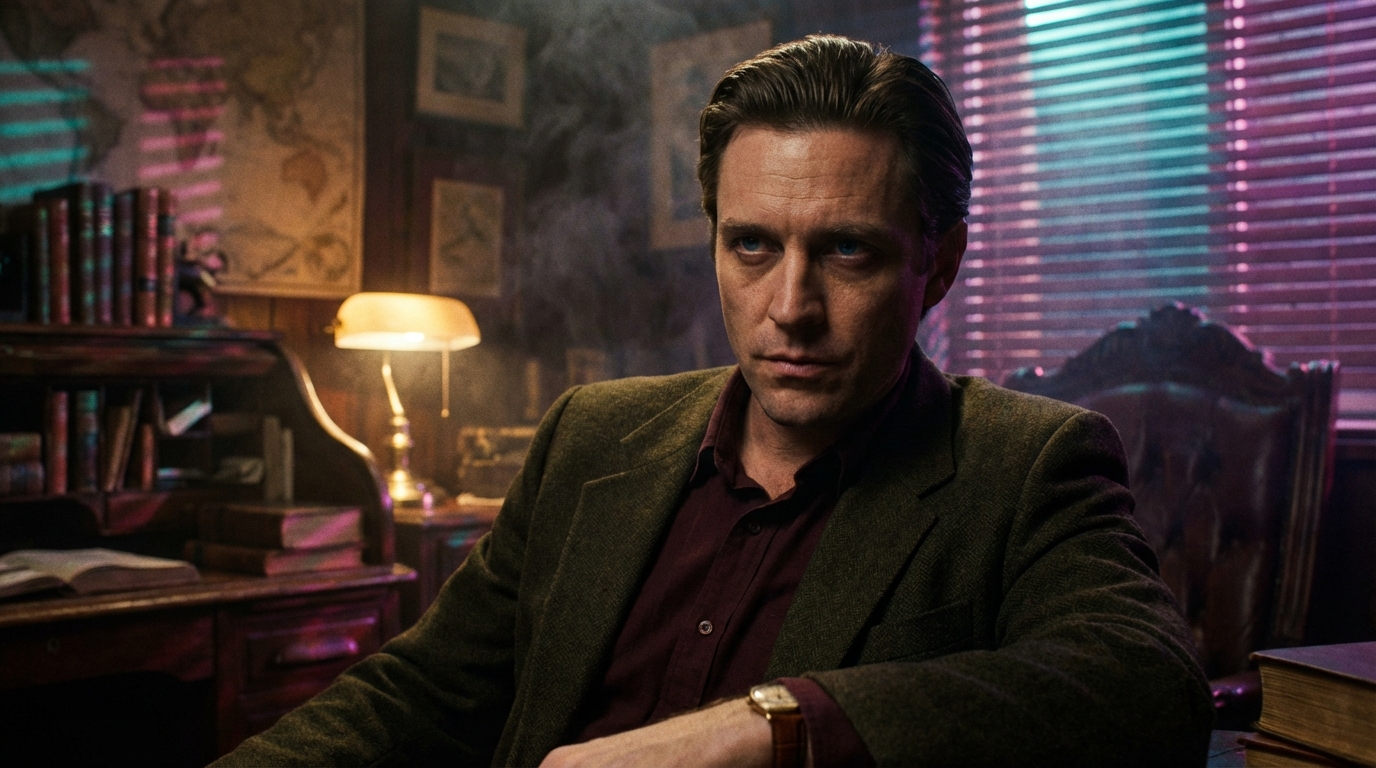
Ryan Murray Clarke (born 1954) is a Broken Hill High School history teacher whose obsession with local disappearances masks darker appetites—a man who uses his position to groom and abuse vulnerable male students whilst harbouring knowledge of Project Ironsand that terrifies him more than exposure of his crimes, living a meticulously constructed life where his marriage serves as camouflage, his classroom becomes hunting ground, and his detailed knowledge of historical vanishings comes from whispered family secrets about his grandfather who worked the sealed sections of the mines in 1943, making him both predator and prey in a town where some truths are more dangerous than murder.
The Sydney Years
Ryan Murray Clarke entered the world on 12 June 1954 at Royal Prince Alfred Hospital in Sydney, born into a family that carried secrets like genetic inheritance. His father, Edward Clarke, worked as a mining engineer whose personnel file contained unexplained gaps between 1942 and 1945. His mother, Martha (née Blackwood), came from a family whose wealth originated from wartime contracts that no one discussed at dinner parties. The Clarke household in Mosman was respectable, comfortable, and haunted by conversations that ended when children entered rooms.
Edward Clarke's drinking began before Ryan could remember its absence. Not the public drunkenness of a failure but the measured consumption of a man dissolving memories in scotch. Late at night, young Ryan would hear his father muttering about "the sealed levels" and "what we moved in the dark" before Martha would quiet him with urgent whispers about "the boy hearing." These fragments lodged in Ryan's consciousness like splinters, painful to touch but impossible to ignore.
The family's 1959 relocation to Broken Hill was presented as career opportunity but felt like exile. Edward had been "offered" a position with mining companies that seemed more like sentence than employment. Ryan watched Sydney disappear through the rear window of their Holden, his mother crying silently whilst his father drove with grim determination toward something that felt less like future than penance.
The Broken Hill Adolescence
Broken Hill in the 1960s was a town that understood silence. The mining families lived with unspoken hierarchies—those who worked the open levels, those who worked the deep levels, and those who didn't discuss where they worked at all. The Clarke family occupied an ambiguous position, welcomed but watched, included but isolated. Edward's job, ostensibly managing ventilation systems, required security clearances that exceeded logical explanation for moving air through tunnels.
Ryan's adolescence was shaped by this atmosphere of careful boundaries. At Broken Hill High School, he excelled academically whilst failing socially, too observant for comfort, too knowing for innocence. Teachers noted his "unusual maturity" and "disturbing intensity" in reports that praised his grades whilst expressing unnamed concerns. His fascination with local history, particularly disappearances, struck adults as morbid but was actually hereditary—seeking in historical mysteries the explanation for his father's nightmares.
The discovery of his sexuality came wrapped in shame that the 1960s amplified into terror. His attraction to other boys wasn't just social suicide but existential threat in a mining town where masculinity was performed daily in the shafts. He learned to hide desire behind academic achievement, channelling forbidden impulses into historical research that provided an acceptable excuse for isolation. The school library became a sanctuary where he could exist without performing heterosexuality he couldn't feel.
At sixteen, a encounter with an older student in the abandoned Wilson building taught him that desire and power intertwined in ways that both thrilled and repulsed him. The student, whose father worked in "restricted sections," shared more than physical intimacy—he whispered about tunnels that went nowhere, about cargo that weighed nothing, about his father coming home with dust that glowed faintly in the dark. These revelations, mingled with fumbling sexuality, created associations in Ryan's mind between forbidden knowledge and forbidden pleasure.
The University Escape
The University of Sydney represented liberation from Broken Hill's suffocating scrutiny. Ryan arrived in 1972 with an academic scholarship and desperate hunger for anonymity that cities provided. He studied History and Education with genuine brilliance whilst exploring Sydney's hidden gay culture with a combination of desire and disgust that would define his sexuality. The parks at night, the coded advertisements, the bars that didn't officially exist—he moved through this shadow world like a tourist in his own desires.
His academic focus on Australian industrial history brought him repeatedly to one inexplicable gap: the years 1942-1945 when production records showed impossible discrepancies. His professor, noting his obsession, suggested he abandon this research thread with an urgency that seemed disproportionate. When Ryan persisted, he found himself suddenly failing courses he'd been excelling in, his scholarship threatened, his thesis supervisor mysteriously reassigned. The message was clear: some history wasn't meant to be studied.
University also introduced him to Elizabeth Harding, a fellow education student whose attraction to him seemed like salvation from desires he couldn't accept. She was intelligent, kind, and most importantly, completely unaware that his reciprocal interest was a performance rather than passion. Their relationship provided the cover that homosexuality in 1970s Australia required. He could be the man holding Elizabeth's hand whilst his eyes tracked the male students passing by.
The teaching degree came with honours that should have opened positions anywhere in Australia. Yet the only offer came from Broken Hill High School—the place he'd desperately escaped. The letter of appointment arrived with an addendum suggesting his family connections made him "uniquely suited" for this position. Edward's phone call that night was brief: "Come home. There are things you need to understand." The command in his father's voice brooked no refusal.
The Inherited Knowledge
Ryan's return to Broken Hill in 1974 coincided with Edward's final decline. The alcohol had corroded his father's discretion along with his liver. In the months before his death, Edward shared fragments of truth that explained everything whilst revealing nothing. He spoke of his own father, Ryan's grandfather Wallace Clarke (no relation to the Trenholm investigation, though the name similarity haunted), who'd worked Level Five of the North Mine in 1943 when it was sealed without explanation.
"We moved things that shouldn't exist," Edward confessed during one particularly drunk evening. "Ore that weighed wrong. Metals that sang in frequencies that made men sick. Crates that had to be moved at specific times or they'd... go somewhere else." He described Project Ironsand not as a name but as lived experience—the terror of handling materials that vanished, the payments that bought silence, the families that disappeared when silence broke.
The knowledge came with warning: "They watch the bloodlines. The families who know. We can't leave, can't speak, can't forget. But we survive if we're useful. If we're quiet. If we pretend the past is just history instead of ongoing crime." Edward died two weeks later, officially of liver failure, though Ryan noticed the autopsy was performed by doctors he'd never seen before who cremated the body with unusual haste.
This inheritance of terrible knowledge transformed Ryan's teaching. His lessons about local history carried the weight of lived experience disguised as academic interest. He spoke of disappearances with an intimacy that came from knowing some of them weren't mysterious but deliberate. His obsession with historical patterns was actually a search for understanding of the ongoing conspiracy he'd inherited involvement in without choice.
The Double Life
Ryan married Elizabeth Harding in 1975 in a ceremony that consecrated his disguise. She believed she was marrying a devoted historian with a passion for education. He knew he was acquiring camouflage that small town survival required. Their wedding night established a pattern of minimal physical intimacy that Elizabeth attributed to his "reserved nature" rather than complete absence of heterosexual desire.
The marriage provided perfect cover for his actual appetites. As respectable married teacher, he was above suspicion when he offered "extra tutoring" to struggling male students. His selection process was precise—boys from troubled homes who needed father figures, whose gratitude could be groomed into compliance, whose silence could be assured through a combination of shame and dependence. He learned to identify vulnerability with a predator's instinct, offering support that transformed into exploitation.
The abuse followed patterns that maximised control whilst minimising exposure. Private tutoring sessions that gradually introduced physical contact. Historical discussions about "Greek mentorship" that normalised inappropriate relationships. Gifts and attention that created emotional dependence. By the time sexual abuse began, victims were too invested, too confused, too ashamed to resist or report. He maintained multiple victims simultaneously, each believing they were unique, special, chosen.
His wife Elizabeth, lost in her own world of English literature and later their children, never suspected. The separate bedrooms, attributed to his "insomnia and late-night marking," eliminated intimate moments that might have revealed his complete lack of desire for her. His occasional performances of husbandly duty, conducted with eyes closed and mind elsewhere, produced two children who served as further evidence of his heterosexuality.
The Classroom Predator
Ryan's history classroom became a carefully constructed hunting ground. The posters of ancient civilisations included subtle homoerotic imagery that most wouldn't notice but certain students would recognise. His lesson plans included topics that allowed discussion of "alternative relationships throughout history." He identified potentially vulnerable or receptive students through their reactions to these signals, noting who lingered after class, who sought additional help, who responded to attention with desperate gratitude.
His reputation as an inspiring teacher provided the perfect cover. Students who excelled under his tutelage credited his mentorship. Parents appreciated his interest in their sons' education. Colleagues admired his dedication to staying late, offering extra support, going "above and beyond." The very excellence of his teaching created the unassailable position from which to operate. Who would suspect the teacher winning teaching awards of systematic abuse?
The victims rarely overlapped, carefully cycled to prevent collaboration. By the time one graduated, another was already being groomed. The abuse was calculated to create complicity—photographs that implicated victims as much as perpetrator, experiences that felt consensual despite power imbalance, shame that silenced more effectively than threats. Several victims later reported feeling "special" even whilst knowing the relationship was wrong, a confusion that prevented disclosure.
His knowledge of Project Ironsand added another layer to his predation. He would occasionally hint at "dangerous knowledge" and "family secrets" that made him seem mysterious and powerful. Victims felt they were being trusted with important information, not realising these hints were psychological manipulation designed to create false intimacy. The actual secret—that Broken Hill sat atop an inter-dimensional smuggling operation—was never revealed, just suggested enough to create an atmosphere of conspiracy that justified secrecy.
The September 1988 Confrontation
Violet Dallow represented an unprecedented threat not because she suspected his abuse but because she'd connected historical patterns that pointed toward Project Ironsand. Her questions about Silverton disappearances, about details he'd foolishly included in lessons, about connections between past and present murders, threatened to expose not just his crimes but the inherited knowledge that kept his family alive.
When she confronted him on 28 September 1988, he was with Timothy Hunt, a Year 11 student whose father worked in mine administration. The boy's presence during Violet's interruption created a cascading crisis. Timothy couldn't be allowed to hear what Violet might say about Ironsand. Violet couldn't be allowed to see what Timothy's presence revealed about Clarke's nature. The solution—performing amplified abuse while maintaining eye contact with Violet—was calculated terrorism designed to traumatise her into silence.
The ripping of his shirt, the deliberate exhibition, the maintenance of assault whilst being watched—all intended to contaminate her knowledge with trauma that would make reporting impossible. Who would believe a sixteen-year-old girl describing such a scene? How could she explain what she'd witnessed without revealing she'd watched? The psychological violence exceeded the physical, designed to create silence through shame rather than fear.
What Clarke didn't calculate was Violet's resilience. Her return to the door, her witnessing of the complete act, her refusal to be cowed despite trauma—these marked her as a threat that transcended his usual victims. She'd seen too much, understood too little, and possessed courage that made her dangerous. His fevered consideration of options that night ranged from murder to confession, though he ultimately chose monitoring over action.
The Post-Violet Reality
Violet's disappearance and murder on 30 September 1988, just two days after their confrontation, sent Clarke into a psychological crisis that nearly exposed everything. The timing was too convenient, the connection too obvious. He waited for police to arrive with questions about their confrontation, about what she might have told friends, about what he might have done. But the investigation focused on a separate, yet equally disturbing pattern, never connecting to their Thursday encounter.
The relief mixed with paranoia that perhaps her death wasn't coincidence but a warning. Had his inherited watchers eliminated her to protect Project Ironsand? Or had Violet been randomly selected, the one student who threatened exposure? The uncertainty drove him toward a breakdown that Elizabeth attributed to "sensitive nature" and "dedication to his students." His grief, genuine but complicated, provided the perfect cover for psychological disintegration that had nothing to do with loss and everything to do with fear.
Timothy Hunt's silence after the incident confirmed Clarke's psychological control but also created new vulnerability. The boy withdrew, grades plummeting, behaviour becoming erratic. When Timothy attempted suicide six months later, Clarke experienced terror that the hospital psychological evaluation might reveal their relationship. The boy's survival and continued silence felt like reprieve, though Clarke never approached another student with the same boldness.
The Long Decline
The years following 1988 saw Clarke's teaching excellence maintained whilst his predatory behaviour evolved toward greater caution. He continued identifying vulnerable students but limited exploitation to psychological manipulation rather than physical abuse. The satisfaction decreased but so did risk. He became expert at creating emotional dependence without crossing legal boundaries, damaging young men in ways that wouldn't constitute crimes.
His marriage to Elizabeth continued its hollow performance. She developed her own interests, her own friendships, her own life that barely intersected with his. The children grew up in household where parents coexisted without connection, modelling the relationship dysfunction they'd carry into their own lives. Daniel displayed concerning behaviours that suggested either inheritance or observation of his father's nature. Rebecca developed hyper-vigilance and trust issues that would require years of therapy to address.
The approach of retirement in 2009 brought relief tinged with existential crisis. Without the classroom, without access to victims, without the role that justified his existence, who was he? The answer came in historical research that returned to Project Ironsand, though now from a position of trying to understand rather than hide. The internet had made information harder to suppress, patterns easier to identify. He found others asking questions, though none with inherited knowledge that made connections clear.
The Contemporary Existence
Ryan Clarke lives in enforced retirement that feels like prison without walls. His house on Chloride Street, inherited from Edward, contains three generations of suppressed documentation about Project Ironsand. He spends days researching, connecting patterns, understanding finally the full scope of what his grandfather witnessed and his father feared. The knowledge brings no peace, only deeper understanding of complicity inherited through bloodline.
His relationship with Elizabeth exists as careful politeness between strangers who share an address. She maintains her garden, hosts her book club, and pretends not to notice his increasing isolation. The children visit rarely—Daniel from Sydney where he works in finance with success that seems to require similar compartmentalisation, Rebecca from Melbourne where she counsels abuse survivors with insight that suggests recognition if not memory.
The young men he damaged over decades occasionally appear in Broken Hill's streets, now middle-aged and carrying wounds that never healed. Some confrontation seems inevitable—meeting in Woolworths, recognition across decades, accusation or silence equally possible. He rehearses responses to allegations that haven't come, apologies for crimes that can't be apologised for, explanations that explain nothing.
The Waiting
Ryan Clarke waits in his Broken Hill home for conclusion that feels inevitable but never arrives. Whether it will be police finally investigating decades of abuse, journalists connecting him to larger conspiracies, or forces that eliminated Violet coming for him, he doesn't know. The waiting itself has become punishment—each knock potentially arrest, each phone call possibly exposure, each day another opportunity for past to destroy the present.
His knowledge of Project Ironsand, inherited and researched, sits in documents that could expose truth about Broken Hill's real industry. But revelation would destroy not just him but entire families whose survival depends on silence. The moral weight of this knowledge—whether exposure that might save lives justifies destroying innocents who inherited complicity—paralyses him. He remains suspended between confession and concealment, neither brave enough to speak nor strong enough to forget.
The history teacher who taught lessons about disappeared people has become one of them—present but absent, visible but unseen, existing in the margin between truth and lies where Broken Hill's real history lives. His biography continues but his story ended in September 1988 when a brave girl looked through a crack in the door and saw exactly who he was. Everything since has been aftermath, the slow dissolution of a man who was exposed but never caught, guilty but never charged, known but never named.
Ryan Murray Clarke remains in Broken Hill because leaving would require explaining why he stayed so long. He teaches no more students but continues the performance of respectability that his survival requires. He is a predator without prey, keeper of secrets without purpose, living reminder that some inherit sins they didn't commit but can't escape. In the mining town that sits atop impossible truths, he is perhaps the most impossible—the monster who got away with everything except freedom from what he's done.







