
Royal Devon and Exeter Hospital, England
The Royal Devon and Exeter Hospital is one of England's oldest hospitals, founded in 1741 by Dean Alured Clarke on a site in Southernhay given by the local benefactor John Tuckfield. Granted the Royal prefix in 1899 after a visit by the Duke and Duchess of York, the hospital relocated to its present Wonford campus in 1974. Now part of the Royal Devon University Healthcare NHS Foundation Trust, it serves as a major teaching hospital and the principal acute care facility for over six hundred thousand people across Devon.
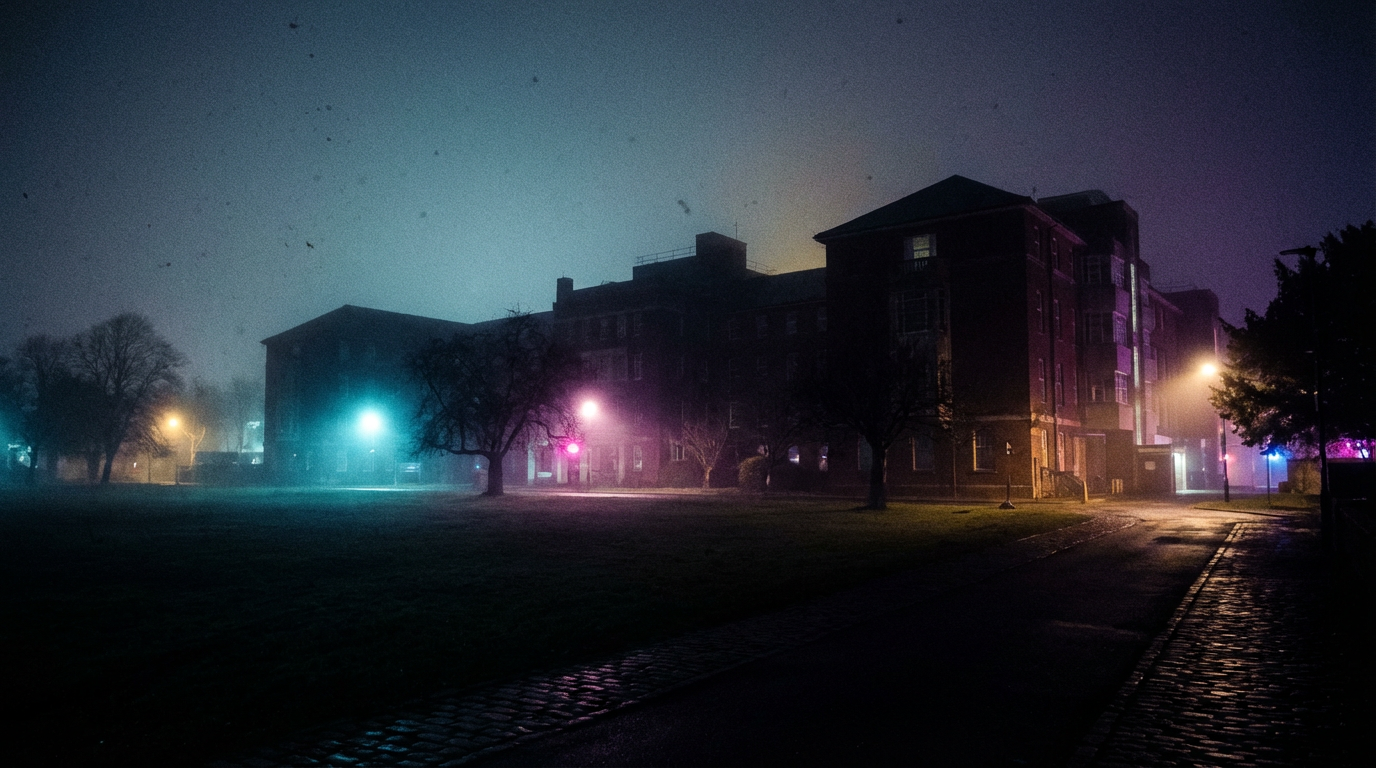
Foundation and Early History
The story of the Royal Devon and Exeter Hospital begins on 23 July 1741, when Alured Clarke, the newly appointed Dean of Exeter — who had already been instrumental in founding the Royal Hampshire County Hospital at Winchester — convened a meeting of interested local gentlemen with a view to establishing a hospital in Exeter for the treatment of the sick poor. Support came swiftly. John Tuckfield donated a large area of land in Southernhay, on the southern edge of the city centre, which had formerly served as a tilt yard and a public space for fairs and horse shows. Just thirty-five days after the initial meeting, the foundation stone was laid on 27 August 1741 in a ceremony described as very solemn, with a party of soldiers saluting with three volleys of small arms to mark the occasion. The plan for the new hospital was drawn up by John Richards, a builder and subscriber, who offered his services as Clerk of Works free of charge. The original building comprised an administration block flanked by ward wings.
The Devon and Exeter Hospital, as it was initially known, was among the earliest provincial hospitals in England, founded during the same wave of charitable endeavour that produced many of the great London teaching hospitals. Its opening in 1743 placed it in direct competition with the Exeter City Hospital, a rival institution established by the City Corporation in the former workhouse at Heavitree — a competition the Devon and Exeter Hospital comfortably won, with the City Hospital closing by 1754 for lack of funds and patients. At its opening, the medical staff consisted of six physicians, five surgeons, and an apothecary employed at thirty pounds per year, while the physicians and surgeons served on an honorary basis, maintaining their own private practices elsewhere. The nursing staff comprised a matron and two nurses, increasing to eight nurses for fourteen wards by 1752. Night duties were performed by outside women who would rouse the ward nurse from her cubicle if an emergency arose.
Growth and the Royal Prefix
Through the eighteenth and nineteenth centuries, the hospital expanded steadily on its Southernhay site, though its buildings were repeatedly stretched beyond capacity by growing demand. The Devon and Exeter Medical Society, whose earliest recorded reference dates to 1783, held its clinical meetings in the hospital's library, fostering a tradition of medical education and discourse that would endure for centuries. The hospital became a centre for the training of physicians and surgeons serving the wider south-west, and its reputation grew alongside the city itself.
In 1899, the Duke and Duchess of York visited the hospital, and in recognition of the occasion the institution was granted the prefix Royal, becoming the Royal Devon and Exeter Hospital — the name it has carried ever since. The original Southernhay building, which served as the hospital's home for over two hundred and thirty years, is now known as Dean Clarke House, in honour of its founder.
Wartime and the NHS
The Royal Devon and Exeter Hospital escaped direct damage in the devastating Exeter Blitz of May 1942, when German bombing raids destroyed much of the city centre. The hospital played a critical role in treating casualties from the raids, which killed over 250 people and left thousands homeless, while other historic institutions around it were reduced to rubble. On 24 August 1948, the last board meeting of the hospital's governors was held before the institution was absorbed into the newly established National Health Service, ending over two centuries of governance by voluntary subscription and charitable donation.
The Move to Wonford
By the 1960s, the Southernhay buildings had become wholly inadequate for the demands of modern medicine. Construction of a new hospital began by 1969 on a site in the grounds of the former Wonford House Hospital — originally a lunatic asylum — which offered twenty acres of land on the eastern fringe of the city. The move to the new facility took place in July 1974, involving a fleet of ambulances shuttling patients from Southernhay to Wonford over the course of more than a week, with the casualty and accident surgical wards the last to transfer. The relocation ran over eight weeks behind schedule owing to delays in the delivery of vital equipment caused by the Three-Day Week imposed during the coal miners' strike. The new hospital comprised fourteen wards and twelve operating theatres, housed in a tower block rising above a single-storey podium of services and outpatient departments. In its early days, night staff complained of gunfire from the nearby Wyvern Barracks, where the army maintained a shooting range.
The original 1974 tower block proved short-lived. Problems with the concrete used in its construction — a condition known as concrete cancer — were discovered in the mid-1980s, and a replacement hospital was built immediately to the south, designed to the standard nucleus model developed by the Department of Health. The new buildings, of two storeys with pitched roofs arranged around a lattice of internal courtyards, opened in two phases in 1992 and 1996. The Peninsula College of Medicine and Dentistry followed in 2004, establishing formal clinical training on site. In June 2007, a new maternity, neonatal, and gynaecology unit — the Centre for Women's Health — opened at Wonford at a cost of £31.5 million, transferring maternity services from the Heavitree site.
The Modern Hospital
In April 2022, the Royal Devon and Exeter NHS Foundation Trust merged with the Northern Devon Healthcare NHS Trust to form the Royal Devon University Healthcare NHS Foundation Trust, creating an integrated organisation responsible for acute, community, and specialist services across North, East, and Mid Devon and Exeter. The trust manages approximately 1,328 beds across its sites, including 1,268 general and acute beds and 60 maternity beds, and serves a population of over 615,000 people. The hospital's accident and emergency department at Wonford, designated as a trauma unit, treats approximately 90,000 adult and paediatric patients annually; a major three-storey extension of 3,500 square metres completed in 2022 added eight new resuscitation bays and dedicated theatre space, and a new children's emergency department area opened in February 2025.
The hospital serves as the lead clinical partner for the University of Exeter College of Medicine and Health, and maintains teaching affiliations with the University of Plymouth Peninsula Medical School, training medical students, nurses, midwives, and allied health professionals. Renal services, pioneered at the hospital since Harry Hall first administered dialysis to a patient in 1964, now support some four hundred patients across Devon through specialist units at Wonford, Heavitree, Torquay, Honiton, South Molton, and Taunton. The Heavitree site — the former Exeter City Hospital, itself descended from the workhouse that once competed with Dean Clarke's original foundation — continues to operate as a satellite facility offering elective procedures, outpatient clinics, and community-based services.
Among the many thousands born at the hospital and its associated maternity facilities is Margaret Elizabeth Rothschild, née Wainwright, the botanical artist born on 14 February 1956 whose later emigration to Tasmania and career in environmental illustration and community education entwined her life with landscapes far removed from Devon — though shaped, as she has herself reflected, by the careful, observant traditions of the women who raised her in a city where the past is never far beneath the surface.







