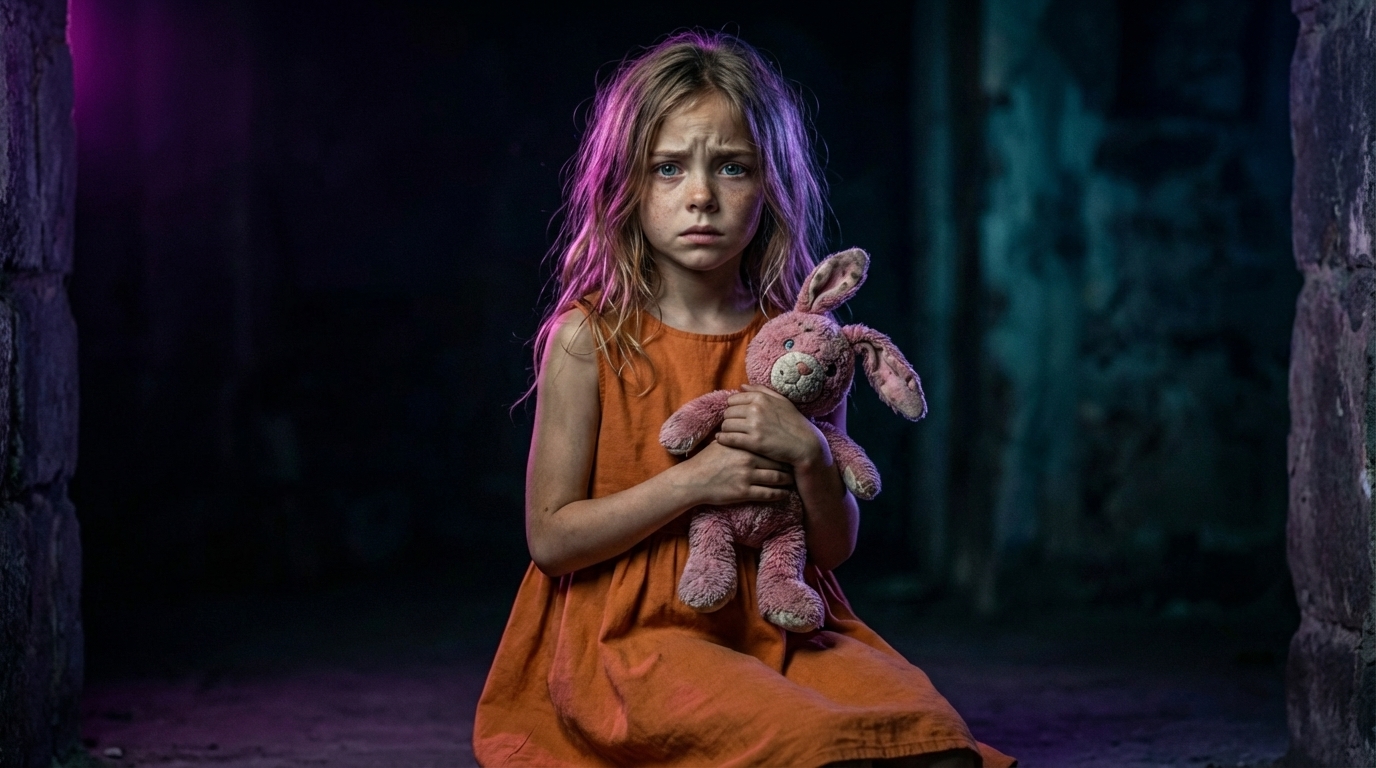
Rose Abigail Smith
Rose Abigail Smith (12 February 2012 – 21 August 2018) was a bright and curious six-year-old whose infectious laughter and boundless energy brought immense joy to her family. With her love for animals, her protective relationship with her older brother Mack, and her natural empathy for others, Rose touched everyone she met. Her life was tragically cut short during an accident at the Portal area near Bixbus, leaving a legacy of love that continues to inspire those who knew her.
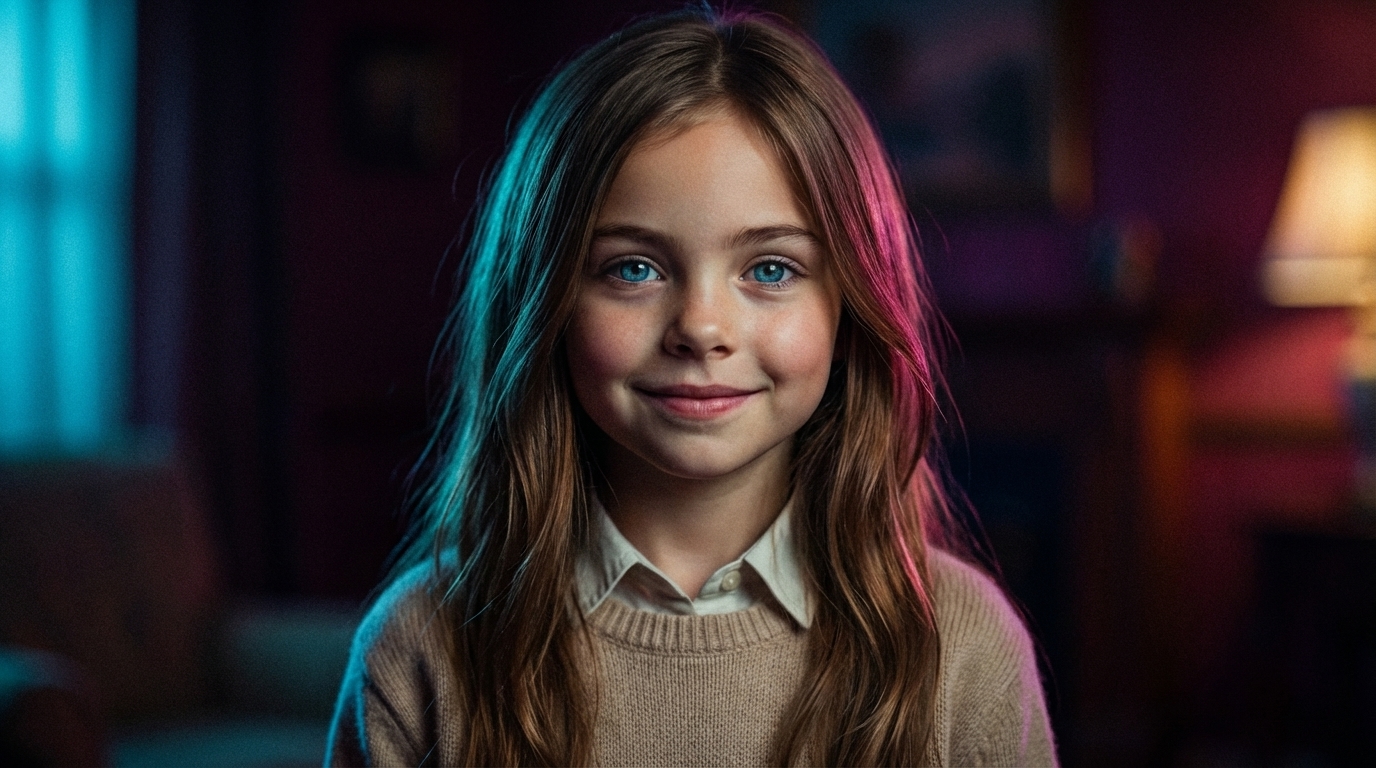
Early Life and Family
Rose Abigail Smith was born on 12 February 2012 at the Broken Hill Base Hospital in New South Wales, the second child and only daughter of Paul Samuel Smith and Claire Elizabeth Smith (née Clift). From the moment she entered the world, Rose radiated a light that seemed to touch everyone around her. The younger sister of Mack William Smith, born three years earlier in 2009, Rose was a bright and bubbly child whose curious nature and boundless energy brought joy and laughter to the Smith household.
The family lived in Broken Hill, a remote mining town in far western New South Wales where the red earth stretched to distant horizons and the harsh desert landscape contrasted sharply with the warmth of the close-knit community. Paul, a talented pianist and businessman, had built a life centred on music, entrepreneurship, and family, whilst Claire ran a successful dance school that had become central to Broken Hill's cultural life. The Smith home was filled with the sounds of Paul's piano compositions and the rhythm of Claire's choreography, creating an environment where creativity and expression flourished.
Rose arrived into a family already marked by complexity and quiet tensions. Her parents' marriage, whilst appearing stable from the outside, carried fractures that had existed from the start—Paul's performance of Mormon faith without genuine conviction, Claire's interpretation of his emotional distance as personal rejection, and communication patterns marked by careful avoidance rather than genuine intimacy. Yet these adult complications existed in a realm Rose couldn't perceive. To her, the world was simple and wonderful: she had a mother who danced, a father who played beautiful music, and a brother who included her in his adventures.
Appearance and Personality
With her wavy chestnut-brown hair falling in soft ringlets and her large brown eyes that sparkled with wonder, Rose was often described as angelic in appearance. Petite and graceful, her movements were imbued with a natural poise that belighted her young age, a trait that delighted Claire, who often dreamt of Rose following in her footsteps as a dancer. Rose loved wearing bright, colourful dresses that reflected her sunny personality, and she would often insist on adding her own touch with mismatched accessories or a flower picked from the garden.
Her infectious laugh could fill a room with warmth, transforming even the most mundane moments into occasions of joy. Rose possessed an innate ability to find delight in small things—the way sunlight filtered through curtains, the texture of the family dog Charlie's fur, the colours in her father's sheet music, the swish of her mother's dance skirts. This capacity for wonder made her presence feel like a gift to those around her, a reminder that the world contained endless sources of fascination if one only looked with the right eyes.
Rose's personality combined natural curiosity with remarkable empathy for such a young child. She noticed when others were sad or troubled, would ask earnest questions about their wellbeing, and offer comfort in ways that suggested emotional intelligence beyond her years. She worried about injured animals, cried over sad stories, and insisted on helping whenever she perceived someone in need. This sensitivity, whilst beautiful, also made her vulnerable to the emotional undercurrents in her family that adults thought they were successfully hiding.
Relationship with Family
Rose adored her older brother Mack with the intensity particular to younger siblings who see their elder brother as the centre of their universe. Though they shared the typical love-hate dynamic of siblings close in age—Rose often teasing Mack for his experiments and grand ideas, Mack occasionally finding his little sister's constant presence annoying—she idolised him and cherished the moments when he included her in his adventures. When Mack conducted scientific experiments in the backyard, Rose served as his assistant, handing him materials and asking endless questions. When he climbed trees or explored the scrubby bushland around Broken Hill, Rose followed as best she could on shorter legs, determined not to be left behind.
Mack, for his part, felt protective of Rose in ways he didn't quite understand or articulate. He looked after her at family gatherings, made sure she didn't wander into dangerous situations, and defended her fiercely if anyone was unkind. Their relationship, whilst marked by typical sibling squabbles, contained genuine affection and loyalty that would prove essential during the traumatic events that would later unfold.
Rose's relationship with her mother Claire was characterised by physical affection and shared creativity. She loved helping Claire with chores around the house, copying her mother's dance movements with unselfconscious enthusiasm, and curling up beside her for stories and cuddles. Claire encouraged Rose's dreams and ambitions, frequently telling her daughter how clever and capable she was, nurturing the confidence that allowed Rose to approach the world with such openness. Claire saw in Rose everything she'd hoped for in a daughter—creativity, grace, warmth, and the potential to become anything she chose.
With her father Paul, Rose shared quieter but equally profound connection. She loved curling up next to him for bedtime stories, where she would often beg for "just one more" chapter, her small hand tucked in his. Paul taught her to count stars on clear desert nights, explained how his piano worked, and created stories that made her giggle with delight. For Paul, whose adult life was marked by performance and careful control, Rose's unconditional love and unselfconscious joy provided moments of genuine connection that his marriage increasingly failed to supply. In her presence, he could be playful, spontaneous, and emotionally present in ways his guarded adult self usually suppressed.
The Smith family's beloved Kelpie, Charlie, was Rose's constant companion and confidant. She would tell the dog her secrets, dress her in makeshift costumes for elaborate games, and insist he needed to be included in all family activities. The uncomplicated affection between girl and dog represented the kind of pure, simple relationship that Rose valued—no hidden tensions, no confusing adult emotions, just straightforward love and companionship.
Dreams and Aspirations
An inquisitive and empathetic child, Rose had a natural curiosity about the world around her. She loved animals, especially the "cute ones," and often spoke of becoming a vet or a doctor when she grew up. Her fascination with caring for living things manifested in endless questions about how bodies worked, why creatures got sick, and what could be done to help them heal. She collected injured insects in jars, worried over sick birds, and cried when the family's goldfish died, insisting on a proper funeral with flowers and a ceremony.
Claire encouraged this dream, telling Rose how clever and capable she was, how her empathy and curiosity would serve her well in medicine or veterinary science. Paul supported her ambitions whilst gently explaining the long education required, secretly proud that his daughter aspired to professions requiring both intelligence and compassion. Rose absorbed these encouragements, building elaborate fantasies about the animal hospital she would run, the creatures she would save, the difference she would make in the world.
Her dreams extended beyond professional ambitions. She wanted to travel to places with exotic animals—Africa to see elephants, the Arctic to meet polar bears, the rainforest to discover colourful birds. She wanted to learn to dance like her mother, to play piano like her father, to conduct scientific experiments like her brother. The world felt infinite with possibility, and Rose approached it with the absolute certainty that she had time to explore all of it, to become all the things she imagined.
Daily Life in Broken Hill
Rose's early years were spent in the warm and close-knit community of Broken Hill, where she thrived amongst friends, family, and familiar routines. She attended local kindergarten, where teachers noted her enthusiasm for learning and her ability to make friends easily. She participated eagerly in Claire's dance classes, twirling with abandon and caring more about joy of movement than technical precision. She helped in her mother's studio, greeting students and parents with sunny welcomes that made everyone feel valued.
The Smith household operated around rhythms of music and dance. Mornings often began with Paul playing piano whilst Claire prepared breakfast, Rose and Mack drifting from their bedrooms, drawn by the music and the promise of food. Afternoons might find Claire teaching dance classes whilst Rose practised alongside, or Paul helping Mack with homework whilst Rose drew pictures at the kitchen table. Evenings centred on family dinners, bedtime stories, and the comforting routines that made childhood feel safe and predictable.
Yet even in this apparently stable environment, adult tensions existed beneath the surface. Paul and Claire's marriage had been fracturing for years, their intimacy—both emotional and physical—characterised by gaps and silences. Paul threw himself into work, using business demands as refuge from uncomfortable questions about satisfaction and authenticity. Claire channelled her energies into the dance school and the children, finding in professional success and maternal role the validation that her marriage increasingly failed to provide. Neither was happy, exactly, but both remained committed to maintaining the structure of their life together for the children's sake.
Rose, sensitive to emotional undercurrents even when she couldn't name or understand them, sensed that something wasn't quite right. She noticed when her parents spoke to each other with careful politeness rather than genuine warmth, when conversations ended abruptly when she entered rooms, when her father spent increasing time in his study rather than with the family. These observations troubled her in ways she couldn't articulate, creating a low-level anxiety that manifested as clinginess with Claire and extra enthusiasm in seeking Paul's attention.
The Abduction
In early August 2018, Rose's life took a horrifying turn. Claire had brought the children to a local park, desperate for normality, for moments where they could simply be children playing rather than victims of circumstance they couldn't understand. Rose was on the swings, laughing with the kind of uncomplicated joy that had become increasingly rare, when Beatrix Cramer approached.
The abduction was swift and efficient. Beatrix engaged Rose with gentle words and kind smiles, creating trust with practised ease. Before Claire could react, before Mack could intervene, Rose was being led away, pulled towards a shimmer in reality that shouldn't exist. Claire's screams, Mack's desperate sprint towards his sister, the confusion of other park-goers—all of it happened too quickly for intervention.
Rose, confused and frightened, called for her mother as she was pulled through the Portal aperture. The crossing itself was disorienting—bright rainbow colours, sensations of stretching and compression, sounds that seemed to come from inside her own head. Then she emerged into Clivilius: red dust, blue sky, her father's shocked face as he realised what Beatrix had done.
For Rose, the relief of seeing Paul was immediately complicated by the strangeness of her surroundings and the absence of her mother and brother. Where was Mummy? Where was Mack? Paul tried to comfort her, to explain in terms a six-year-old might understand, but how do you explain to a child that they've been transported to another dimension, that return isn't possible, that everything they've ever known exists now on the other side of an impossible threshold they can't cross?
The Catastrophic Crossing
What Paul hadn't anticipated—what no one could have anticipated—was that Claire and Mack would follow through the Portal in desperate attempt to reach Rose. Claire, driven by maternal terror and fury, managed to commandeer a motorhome and drive it towards the Portal's location. Their crossing went catastrophically wrong.
The Portal's integrity was compromised during their transit. Instead of smooth passage, vehicles began materialising in Clivilius with violent force. The motorhome appeared first, arriving with bone-jarring impact on Clivilius's unforgiving surface. Before anyone could react, a silver car arrived, crashing into the motorhome with devastating force. Then came a bus, hurtling through the dimensional aperture with enough momentum to create a multi-vehicle collision that left metal twisted and bodies broken.
Rose, standing in the red dust with Paul and Greta (her grandmother, who had also been brought to Clivilius), watched in horror as her mother was thrown from the motorhome by the impact. The sounds—screaming metal, shattering glass, Claire's cry of pain—would haunt Rose for the remaining weeks of her life. She ran towards the wreckage, Paul catching her before she could reach the dangerous site, holding her as she sobbed and struggled, desperate to get to her injured mother.
Claire survived the initial injuries, but barely. The primitive medical resources available in the Bixbus settlement were inadequate for the severity of her trauma. She lingered between life and death for days whilst Paul maintained vigil, caring for two traumatised children who needed explanations he couldn't provide, stability he couldn't offer, reassurance that everything would be alright when nothing was alright and perhaps never would be again.
For Rose, those days represented a nightmare from which she couldn't wake. Her mother lay broken and unconscious in a makeshift medical facility. Her father, whilst present, was consumed with guilt and grief that made him emotionally unavailable. Mack, emerging from the wreckage physically intact but psychologically damaged, withdrew into silence. Rose found herself in an alien world with her family shattered around her, the adults unable to provide the security and comfort she desperately needed.
Greta became Rose's primary caregiver during this period, the grandmother figure providing what stability she could. She held Rose when the child woke screaming from nightmares, distracted her with games and stories when the waiting became unbearable, tried to create small moments of normality in circumstances that defied normal entirely. Yet even Greta's loving attention couldn't shield Rose from the reality that her world had fundamentally broken in ways that couldn't be repaired.
Life in Clivilius
In the approximately six weeks between Rose's arrival in Clivilius and her death, she experienced existence in a dimension that shouldn't exist according to Earth's physical laws. The Bixbus settlement, whilst growing more structured with each passing day, remained fundamentally a refugee camp for people torn from one world and stranded in another.
Rose struggled to adapt. She missed her bed, her toys, her friends from kindergarten, the familiar streets of Broken Hill. She asked repeatedly when they could go home, when life would return to normal, whether this was all just a very long, very strange dream.
Paul tried to make Clivilius bearable for his children. He played music and told stories. He involved Rose in small tasks around the settlement, giving her sense of purpose and usefulness.
Rose formed connections with other children in Bixbus, though these friendships were complicated by shared trauma and the abnormal circumstances of their existence. One particular friend, Charlotte, became important to Rose during those final weeks—another young girl who'd been brought to Clivilius through circumstances beyond her control, who understood Rose's confusion and fear without need for explanation.
Claire recovered sufficiently to be conscious and mobile, though the physical injuries healed faster than the psychological devastation. The loss of her daughter to abduction, followed by the traumatic crossing and ongoing medical trauma, combined with realisation that Paul's choices had led directly to Rose's kidnapping, created a rift between the parents that could never heal. Claire could barely look at Paul without rage and grief overwhelming her. Their marriage, already fractured before Clivilius, was effectively destroyed.
For Rose, watching her parents' relationship disintegrate added another layer of trauma to an already unbearable situation. The adults tried to hide the worst of their conflicts from the children, but Rose was perceptive enough to understand that Mummy and Daddy could barely speak to each other, that something fundamental had broken beyond repair. She blamed herself, as children do—if she hadn't let that lady lead her away, if she'd run back to Mummy faster, if she'd been better behaved, maybe none of this would have happened.
The Final Day
On 21 August 2018, approximately six weeks after Rose's arrival in Clivilius, a new Guardian crossed through the Portal. Leila Grantley would become the fifth and final Guardian of Bixbus, one of only five people capable of traversing between Earth and this impossible other world.
Rose was near the Portal area with Greta and Charlotte. Violence erupted on the Earth side of the Portal during Leila's crossing. Gunfire—a conflict whose origins and participants remain mysterious—occurred in close proximity to the Portal's aperture.
Rose, in a moment of childlike spontaneity, broke free from Greta's hand. She was giggling, running towards the Portal perhaps drawn by the fascinating colours that appeared during active crossings, perhaps simply moving with the unselfconscious energy that had always characterised her. She tripped on the uneven ground, stumbling forward at precisely the wrong moment.
A bullet flew through the open Portal, striking Rose in the forehead. Death was instantaneous.
Paul was the first to reach her, cradling her small body in his arms as grief overwhelmed him. The other bullet had struck Greta, though her injuries proved non-fatal. But for Paul, nothing existed except his daughter's lifeless form, the blood on red dust, the terrible recognition that he had brought her to this place, had created the circumstances that led to her death.
The gathered community stood in shocked silence. Mack stood frozen, unable to process when he heard the news. Claire, still recovering from her own injuries, collapsed when word reached her. The death was senseless, tragic, a confluence of impossible circumstances that had aligned to steal a six-year-old's life.
Legacy and Aftermath
Rose's death devastated everyone who'd known her. The guilt Paul carried was absolute and crushing—every decision he'd made had led to this moment. Asking Beatrix to bring the children. Prioritising his own loneliness over their safety. Failing to anticipate the dangers that existed in Clivilius. The weight of responsibility for his daughter's death became a burden he would carry for the rest of his life.
For Claire, Rose's death represented the final destruction of everything. The daughter she'd carried, birthed, raised, delighted in—gone because of Paul's choices, because of incomprehensible circumstances, because of violence that had followed them from Earth to this impossible world. Whether Claire would survive long-term remained uncertain. The physical injuries would heal, but the psychological trauma of losing Rose might prove insurmountable.
Mack, at nine years old, had crumbled at his sister's death. The trauma transformed him, creating wounds that would shape his entire future. The adventurous, curious boy who'd conducted backyard experiments and climbed trees became someone more guarded, more cautious, carrying grief and guilt that no child should have to bear.
Greta carried her own guilt—Rose had been in her care, had broken free from her hand, had died whilst Greta was meant to be protecting her. The fact that the circumstances made prevention impossible didn't alleviate the crushing sense of responsibility.
The Bixbus community, already struggling with the trauma of forced relocation to another dimension, now had to process the death of a child in their midst. Rose's passing became a marker, a before-and-after moment that divided the community's history. People who'd known her spoke of her infectious laugh, her boundless energy, her capacity to find joy even in impossible circumstances. Those who'd arrived after her death still heard stories, still felt her absence as a tangible presence in the community's collective memory.
Paul channelled his grief into building Bixbus with intensified focus. If Rose had died here, then this place had to become more than just a settlement of traumatised refugees. It had to become a real community, a society, something approaching civilisation. Perhaps if Bixbus succeeded, if it became stable and safe and worthwhile, then Rose's death might be justified—or at least bearable. The work provided refuge from grief too overwhelming to face directly.
The funeral and memorial services followed customs adapted from Earth traditions but necessarily modified for Clivilius's environment. Rose was buried in what would become Bixbus's cemetery, her grave marked with stones and flowers that grew in the red soil. The service included music—Paul playing pieces that Rose had loved—and stories from those who'd known her. Mack spoke, his voice breaking as he described his sister's laughter and her love for animals. Claire, barely able to stand, said nothing, but her presence communicated grief beyond words.
In the years following Rose's death, her memory became woven into Bixbus's identity. Parents told their children about the bright, curious girl whose life had been cut short, using her story to explain why the Portal area was restricted, why security measures existed, why the community took protection of children with such deadly seriousness. Her grave became a place of pilgrimage, where people left flowers and small tokens, where grieving parents brought their own sorrows knowing they weren't alone.
Rose's brief life touched people in ways that extended beyond her death. The empathy she'd shown, the joy she'd radiated, the curiosity she'd embodied—these qualities inspired those who'd known her to be more present, more loving, more attentive to the precious fragility of life. In a community built on loss and trauma, Rose's memory served as reminder that love and connection mattered, that children deserved protection, that joy was possible even in impossible circumstances.







