Richard Murray Longey
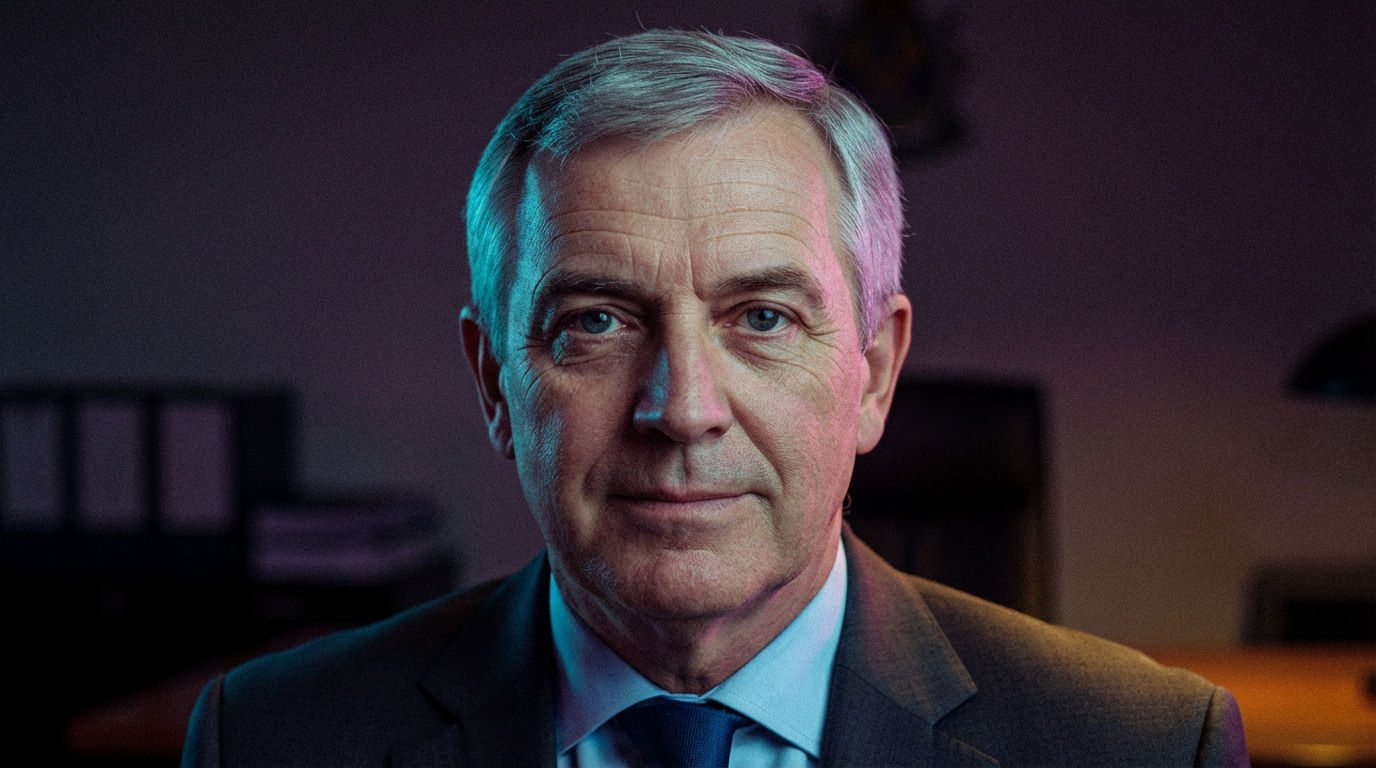
Richard Murray Longey, born 11 October 1959 in Glenorchy, Tasmania, exemplifies three decades of dedicated service as a detective with Tasmania Police's Southern Division. A methodical investigator and devoted family man, Richard shaped both his profession and his household through unwavering commitment to justice and truth. His marriage to Linda Lahey created a family rooted in public service, whilst his mentorship of son James bridged traditional detective work with modern technological investigation, establishing a multigenerational law enforcement legacy.
Early Life and the Foundation of Service
Richard Murray Longey entered the world on 11 October 1959 at the Queen Alexandria Hospital in Hobart, the second of three children born to William "Bill" Longey and Margaret Longey (née Davidson). The family home in Glenorchy represented the aspirations of Tasmania's post-war working class—a modest weatherboard house with a quarter-acre block where vegetables grew alongside flowering gums, and where Sunday roasts marked the rhythm of family life.
Bill Longey worked shifts at the Electrolytic Zinc Works in Lutana, the industrial complex that dominated Hobart's northern shore and provided steady employment for thousands of Tasmanian families. The work was hard, the hours long, but it offered the security that allowed working families to plan futures beyond mere survival. Margaret supplemented the family income through dressmaking, her Singer sewing machine humming late into evenings as she altered clothing for neighbours and created school uniforms that needed to withstand the rough play of suburban childhoods.
Richard's elder brother Peter, born in 1956, embodied the physical strength valued in industrial Tasmania—he would follow their father into the Zinc Works before eventually establishing his own plumbing business. His younger sister Catherine, born in 1962, possessed the academic inclination that would lead her to nursing school and eventually to a senior position at Royal Hobart Hospital. Richard occupied the middle ground, neither as physically imposing as Peter nor as academically gifted as Catherine, but possessed of a particular quality of observation and determination that would define his future path.
The Glenorchy of Richard's childhood was a community in transition. The suburb had grown rapidly after the Second World War, filling with young families drawn by affordable housing and proximity to industrial employment. It was a place where everyone knew their neighbours, where children played cricket in the streets until darkness fell, and where the local football club provided both entertainment and identity. Richard absorbed these community values—the importance of knowing your neighbours, of looking out for one another, of maintaining order through collective responsibility rather than external authority.
Education and the Seeds of Investigation
Richard's education began at Glenorchy Primary School in 1965, a short walk from the family home through streets lined with similar weatherboard houses and carefully maintained gardens. He proved a steady rather than spectacular student, displaying particular aptitude for subjects requiring systematic thinking and careful observation. His Year 4 teacher, Mrs Patricia Hughes, noted in a report card that Richard "possesses unusual patience for detailed work and notices things other children overlook."
The transition to Glenorchy High School in 1972 coincided with significant changes in Tasmania's educational landscape. The state government's investment in technical education meant new opportunities for working-class children, and Richard found himself drawn to subjects that combined practical application with analytical thinking. His woodwork teacher, Mr Graham Foster, became an unexpected mentor—not for the carpentry skills he imparted but for his approach to problem-solving, teaching Richard to work backwards from desired outcomes to understand necessary steps.
It was during these high school years that Richard first encountered formal law enforcement. A break-in at the school in 1974 brought detectives to interview students, and fifteen-year-old Richard found himself fascinated not by the drama of crime but by the methodical process of investigation. Detective Sergeant Ronald Campbell, who led the investigation, took time to explain to interested students how evidence was gathered, patterns identified, and conclusions reached through systematic analysis rather than intuition alone.
This encounter planted seeds that would germinate slowly. Richard completed Year 10 in 1975 with solid results—not university material by the standards of the time, but certainly capable of further education. The expectation within the Longey household was that Richard would follow Peter into trade work or industrial employment. Bill Longey had witnessed too many workplace injuries to romanticise factory work, but it provided reliable income and respected social position within working-class Glenorchy.
The Path to Policing
Richard's journey to law enforcement began indirectly. After leaving school, he took a position as a junior clerk with the Tasmanian Government Insurance Office in 1976, work that involved processing claims and investigating suspicious cases. The job required attention to detail, ability to spot inconsistencies, and patience with paperwork—skills that would prove invaluable in his future career. More importantly, it brought him into regular contact with police officers filing accident reports and insurance investigators working alongside detectives on fraud cases.
During this period, Richard also met Linda Lahey at a church social dance in New Norfolk in August 1978. Linda, then completing her teaching degree at Hobart Teachers' College, came from a large, established Tasmanian family with deep roots in the Derwent Valley. The Laheys represented a different strand of Tasmanian society—rural rather than industrial, with traditions stretching back to colonial settlement. Linda's warmth, intelligence, and grounded nature attracted Richard immediately, whilst she found his quiet strength and dry humour refreshing after the pretensions of some college contemporaries.
Their courtship unfolded against the backdrop of late-1970s Tasmania—Saturday evening dances at local halls, picnics at Mount Field National Park, and long drives through the Derwent Valley where Linda introduced Richard to her extended family. The Lahey clan initially viewed this city boy from industrial Glenorchy with some scepticism, but Richard's respectful manner and obvious devotion to Linda gradually won acceptance.
The decision to join Tasmania Police crystallised in early 1980. Richard had spent four years in insurance work, becoming increasingly involved in investigation rather than administration. Several police officers he'd worked with suggested he consider formal law enforcement training, recognising his aptitude for investigation and his temperament suited to police work. The conversation that sealed his decision came from Detective Campbell—the same officer who'd investigated the school break-in years earlier—who remembered Richard's interest and encouraged him to apply.
Police Academy and Early Career
Richard entered the Tasmania Police Academy at Rokeby in March 1981 as part of Intake 1/1981, a class of thirty-two recruits that included only three women—reflecting the slowly changing demographics of Australian policing. At twenty-two, Richard was neither the youngest nor the oldest recruit, occupying the middle ground that seemed to define much of his life. The twenty-week training programme encompassed law, procedure, self-defence, and firearms training, but also emphasised community policing principles that were beginning to reshape Australian law enforcement.
Academy instructors noted Richard's particular strengths: exceptional report writing, careful attention to evidence preservation, and ability to remain calm under pressure. His physical fitness scores were respectable rather than outstanding—he could meet all requirements but would never win the academy athletics trophy. What distinguished him was consistency; Richard never failed an assessment, never required remedial training, and never created disciplinary issues that plagued some recruits adjusting to quasi-military structure.
He graduated in August 1981, receiving his warrant card and badge number (TAS-1847) in a ceremony attended by Bill and Margaret Longey, Linda Lahey, and Catherine—Peter being unable to leave work. The pride on his parents' faces reflected not just Richard's achievement but the family's advancement; their son had moved from industrial labour to professional service, wearing a uniform that commanded respect rather than simply protecting against workplace hazards.
Richard's probationary placement at Glenorchy Police Station represented both homecoming and challenge. Policing the streets where he'd grown up meant encountering former schoolmates in unfortunate circumstances, responding to domestic disputes in houses he'd visited as a child, and maintaining professional boundaries within a community that knew him as "Bill Longey's boy." The experience taught valuable lessons about separating personal history from professional duty, about maintaining respect whilst enforcing law, about serving community without becoming either alienated from or absorbed by it.
Marriage and Family Foundation
Richard married Linda Lahey on 12 February 1983 at St Andrew's Church in New Norfolk, a ceremony that united two significant Tasmanian families. The wedding reflected both families' values—traditional without ostentation, celebratory without excess. Linda's brother Greg served as groomsman alongside Richard's brother Peter, whilst the reception at the New Norfolk Town Hall featured the kind of country supper dance that had marked Tasmania social life for generations.
The young couple established their first home in a rented cottage in Moonah, chosen for proximity to both Richard's work and Linda's teaching position at Moonah Primary School. Those early years required careful budgeting—a constable's salary and beginning teacher's wage didn't stretch far in 1980s Tasmania—but they built a foundation of partnership that would sustain them through coming challenges.
Richard's approach to marriage reflected the same methodical care he brought to police work. He maintained clear boundaries between professional and personal life, ensuring that the darkness he sometimes encountered didn't contaminate the home he shared with Linda. This wasn't emotional absence but rather protective presence—Richard understood that bringing work home meant bringing danger, trauma, and cynicism into spaces that should remain sanctuary.
The balance wasn't always easy to maintain. Police work meant shift work, missed dinners, and cancelled plans when investigations demanded attention. Linda's teaching schedule provided more predictability, and she became the family's organisational anchor whilst Richard navigated the unpredictable demands of law enforcement. Her understanding of his dedication to duty, rooted in her own family's tradition of service, prevented the resentment that poisoned many police marriages.
Their first child, James William, arrived on 24 October 1991, after eight years of marriage and several heartbreaking miscarriages that had tested their resilience. Richard was thirty-two, established in his career and ready for fatherhood in ways he wouldn't have been earlier. He approached parenting with the same thoughtful dedication that characterised his professional life, reading child development books, attending prenatal classes with Linda, and preparing the nursery with meticulous attention to safety details that amused and touched his wife.
The Detective Years
Richard's transition from uniform duties to detective work came in 1987, following six years of patrol experience and numerous commendations for investigative initiative. His appointment to the Criminal Investigation Branch represented recognition of particular aptitudes—the ability to see patterns others missed, patience with complex investigations, and skill in interview techniques that drew confessions through methodical pressure rather than confrontation.
Working as a detective in late-1980s Tasmania meant confronting the darker currents beneath the island's peaceful surface. The tourist brochures promoted pristine wilderness and colonial charm, but Richard investigated domestic violence that crossed all social boundaries, drug distribution networks that exploited geographic isolation, and financial crimes that revealed sophisticated criminal enterprises operating behind legitimate facades.
His investigative approach developed distinctive characteristics. Richard maintained comprehensive notebooks that documented not just facts but impressions, patterns, and connections that might prove significant later. He developed networks of informants through patient cultivation rather than coercion, understanding that reliable intelligence came from trust rather than fear. Most importantly, he never stopped learning, attending every training opportunity available and reading widely about developments in investigative techniques.
The birth of Thomas Edward on 7 September 1994 and Emily Jane on 15 April 1997 completed the Longey family whilst adding complexity to Richard's professional-personal balance. Three children under six meant Linda couldn't return to teaching immediately, placing financial pressure on the household that Richard addressed through overtime and secondary employment teaching security courses at technical college. The exhaustion showed in deepening lines around his eyes, but never in diminished attention to either investigation or family.
Mentoring James: The Intersection of Generations
As James grew, Richard recognised in his eldest son the same quality of systematic observation that had defined his own path to investigation. But where Richard's generation had relied on notebooks and intuition, James's world involved computers and digital footprints. Rather than resenting this technological shift, Richard embraced it as evolution rather than replacement of investigative principles.
Their father-son relationship developed unique dimensions through shared analytical nature. Richard would present hypothetical scenarios during dinner conversations—not actual cases but puzzles designed to develop investigative thinking. "If you found a bicycle abandoned but undamaged," he might begin, "what would you look for to understand why it was left?" These exercises taught James to think beyond obvious explanations, to consider multiple possibilities, and to gather evidence before reaching conclusions.
When James expressed interest in joining Tasmania Police's technical team after completing his computer science degree in 2013, Richard felt pride tempered with concern. He understood the burden of law enforcement service—the accumulated weight of witnessed tragedy, the erosion of innocence, the challenge of maintaining faith in humanity whilst confronting its worst expressions. But he also recognised that James brought capabilities essential to modern policing, skills that could transform investigation in ways Richard's generation couldn't fully grasp.
The 2018 Crisis: Family Tragedy and Professional Challenges
The events of July and August 2018 tested Richard in ways three decades of policing hadn't prepared him for. His nephew Sarah Lahey's involvement in the mysterious Greyson-Jeffries disappearances created tensions between family loyalty and professional duty. Richard had watched Sarah grow from a traumatised child after her parents' death to a capable detective, seeing in her the same drive for truth that motivated the best investigators.
When Internal Affairs began investigating Sarah's actions, Richard found himself in an impossible position. His professional standing meant his opinions carried weight, but family connections made objectivity suspect. He chose characteristic middle ground—cooperating fully with official investigations whilst privately supporting Linda as she grappled with her niece's increasingly dangerous situation.
Sarah's death on 8 August 2018 struck the Longey household with devastating force. Linda collapsed with grief at losing another family member to untimely death, whilst Richard struggled to reconcile the official narrative with his knowledge of Sarah's character. The classified nature of circumstances surrounding her death meant he couldn't access investigation files, creating the unusual situation of a senior detective excluded from information about his own family member's death.
The impact rippled through professional relationships as well. Colleagues who'd worked with both Richard and Sarah struggled to navigate the complexity—expressing condolences whilst maintaining operational security, acknowledging loss whilst investigating potential misconduct. Richard's dignified handling of this situation, neither demanding special consideration nor withdrawing from duty, earned deep respect from fellow officers who recognised the strength required to maintain professional composure amid personal tragedy.
Approaching Retirement: Legacy and Transition
As Richard approaches retirement in 2025, after forty-four years of service, his legacy extends beyond cases solved or criminals convicted. He represents a bridge between eras of policing—from typewriters to computers, from local crime to global networks, from intuition-based investigation to evidence-driven prosecution. His greatest contribution might be demonstrating that technological advancement needn't replace human insight but can amplify it when properly integrated.
His relationship with James has evolved into something approaching partnership between equals. They discuss cases within classification limits, Richard offering perspective from decades of experience whilst James explains technological capabilities that seem almost magical to his father's generation. These conversations, often conducted during fishing trips to the Derwent where mobile phones can't intrude, represent knowledge transfer that formal training can't replicate.
Richard's influence on Tasmania Police extends through numerous junior officers he's mentored, investigators who learned patience from his example, and procedures he helped establish that balance thorough investigation with respect for civil liberties. He never sought promotional glory—remaining a Detective Senior Sergeant when contemporaries pursued higher ranks—understanding that his satisfaction came from investigation rather than administration.
Linda watches her husband prepare for retirement with mixture of relief and concern. She's seen the accumulating weight of witnessed tragedy, the sleepless nights when cases won't resolve, the careful compartmentalisation required to function after processing crime scenes that would traumatise civilians. But she also recognises that Richard's identity intertwines with his profession in ways that make complete separation impossible. Retirement means not just leaving a job but transforming an identity built over four decades.







