Rebekah Elise Jeffries (née Thompson)
Rebekah Elise Thompson was born on 23rd November 1949 in Sorell, Tasmania, the youngest child of a schoolteacher and his wife. Her marriage to Charles Jeffries in 1969 drew her into Tasmania's most powerful dynasty, where she spent three decades creating warmth within Jeffries Manor's formal walls whilst navigating her husband's increasing volatility and eventual abandonment. She bore two children, Thomas and Emily. After relocating to Melbourne in 2003, she established herself as a novelist of quiet distinction. She died peacefully on 18th October 2021, aged seventy-one.
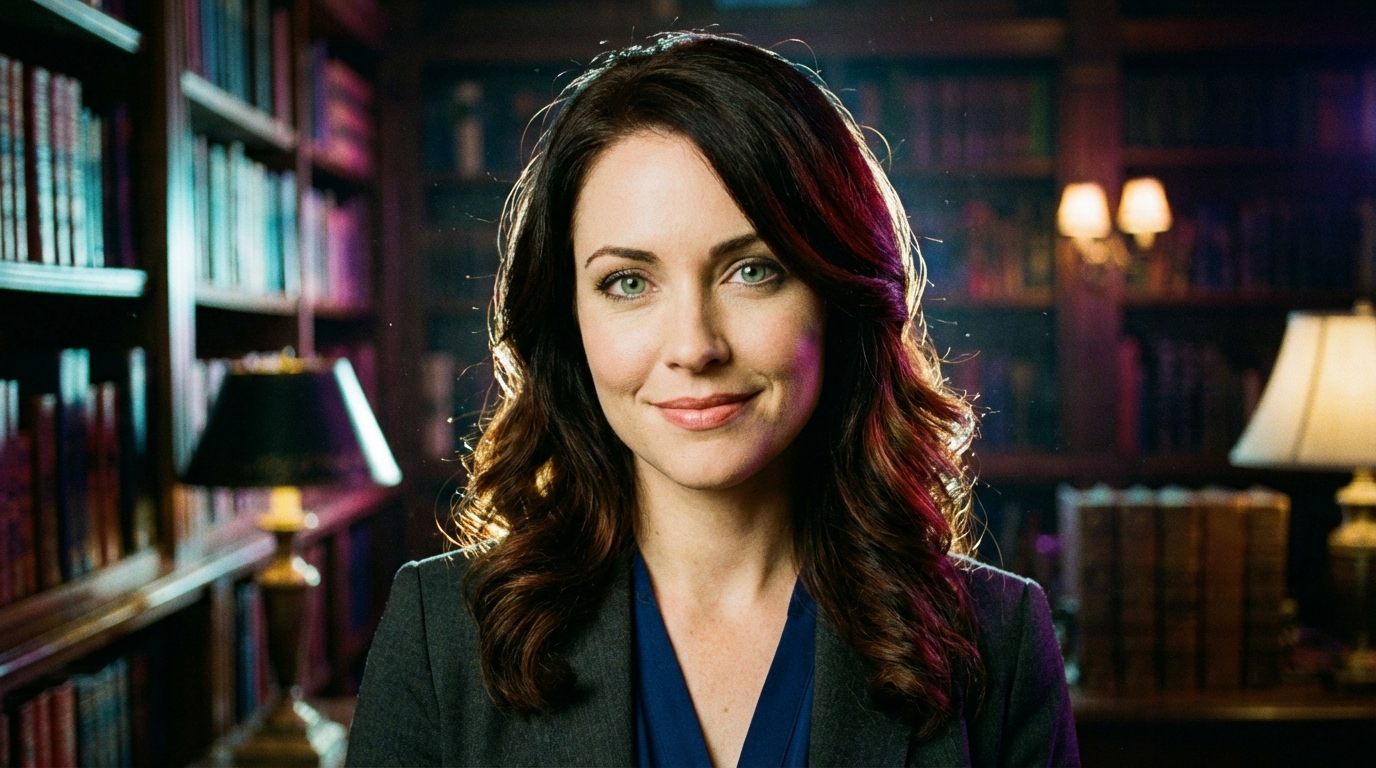
The Schoolteacher's Daughter (1949–1967)
Rebekah Elise Thompson was born on 23rd November 1949 in Sorell, a small town on Tasmania's south-eastern coast whose distance from Hobart was measured less in kilometres than in the particular quality of provincial quietness that characterised communities built around a church, a school, and the rhythms of agricultural life. She was the youngest of three children born to Robert Thompson, who taught at the local school with the steady dedication of a man whose ambitions had been satisfied by modest but genuine usefulness, and his wife Elise, née Wilson, whose management of the household provided the stability that Robert's modest salary required and that their children's upbringing depended upon.
Her older siblings — James, born in 1943, and Sarah, born in 1946 — had established the family's patterns before Rebekah's arrival, and she grew up in the particular comfort of a household where expectations were clear, resources were limited, and affection was expressed through consistency rather than extravagance. Robert's professional commitment to education infected his domestic life: books filled the Thompson house with a density that exceeded its modest dimensions, and the children were raised with the understanding that learning was both obligation and privilege. Rebekah absorbed this environment with an intensity that her siblings did not share — James was practical and outdoor-inclined, Sarah sociable and competent in the domestic arts — developing from an early age a relationship with language and literature that would prove, over the course of her life, both her greatest resource and her most reliable refuge.
She attended Sorell District School, where her father's colleagues recognised abilities that exceeded the institution's capacity to develop them. She read voraciously, wrote with a facility that made her school compositions remarkable for their age, and demonstrated the observational sensitivity that distinguishes natural writers from merely competent students. Her teachers encouraged university ambitions that the Thompson family's circumstances made ambitious but not impossible — Robert's position, whilst modestly compensated, carried the social capital that educational achievement conferred in small Tasmanian communities, and Rebekah's academic record was sufficient to secure a place at the University of Tasmania.
Charles Jeffries (1967–1970)
Rebekah enrolled at the University of Tasmania in 1967 to study for a Bachelor of Arts with a focus on English literature and creative writing, entering an institution whose social hierarchies reflected Tasmanian society's broader stratifications with uncomfortable precision. The daughter of a Sorell schoolteacher occupied a particular position within this hierarchy — respectable but unremarkable, educated but not elevated, present by merit rather than connection. It was an environment in which the Jeffries name carried a weight that Rebekah, raised in the uncomplicated values of a teacher's household, was initially ill-equipped to assess.
She met Charles Jeffries through the university's social networks during their overlapping years of study. Charles was completing his commerce degree, his intelligence and ambition already evident in the particular intensity he brought to subjects that engaged him and the indifference he displayed toward everything else. Their initial connection reflected the attraction that complementary temperaments sometimes generate — his analytical sharpness drawn to her emotional warmth, her literary sensibility intrigued by his strategic intelligence, both recognising in the other qualities they did not possess and might, through proximity, acquire.
The courtship developed with a momentum that concerned the Thompson family. Robert and Elise were aware of the Jeffries name — in Tasmania's small society, awareness of the state's most powerful dynasty was unavoidable — and their wariness reflected not snobbery but a protective instinct sharpened by the understanding that the social gulf between a schoolteacher's daughter and a dynastic heir was not merely a difference of wealth but a difference of world. The Jeffries reputation carried associations — with mystery, with obsession, with the particular darkness that accumulated around families whose power exceeded the normal boundaries of colonial success — that a careful father might reasonably wish his youngest daughter to avoid.
Rebekah's own assessment was less cautious and more complicated. She saw in Charles not the heir to a troubled dynasty but a young man whose intelligence was genuine, whose emotional needs were visible beneath the controlled surface he presented to the world, and whose vulnerability — which he concealed with the efficiency of someone who had learned early that vulnerability invited exploitation — appealed to the nurturing instincts that her upbringing had cultivated. She believed, with the confidence of someone who had not yet learned what the Jeffries inheritance demanded of the women who married into it, that warmth and steadiness could transform what ambition and expectation had damaged.
They married in 1969, at Jeffries Manor, in a ceremony whose scale reflected the Jeffries family's expectations rather than the Thompson family's preferences. Robert and Elise attended with the composed discomfort of people whose Sunday best was insufficient for the occasion and whose reservations about the match were simultaneously confirmed and rendered irrelevant by the grandeur of the setting. James III and Thelma received their new daughter-in-law with the warmth that Thelma brought to all her interactions and the more complex assessment that James — who recognised in Rebekah's steadiness the qualities his own mother Grace had possessed, and who understood from Grace's experience what the Jeffries household would require of them — could not entirely conceal.
Jeffries Manor (1970–1998)
Thomas Charles Jeffries, born on 15th November 1970, arrived within a year of the marriage and established Rebekah in the role that the dynasty demanded above all others: mother of the heir. The birth event's summary captured something of the atmosphere — "the weight of heritage, expectation, and strained intimacy" pressing upon the young family — and Rebekah received her son with a love uncomplicated by the dynastic calculations that governed how others in the household assessed the child's significance. A daughter, Emily, followed in 1978, completing a family whose domestic surface maintained the appearance of stability that Rebekah's considerable efforts sustained.
She devoted herself to creating, within Jeffries Manor's formal grandeur, the kind of home she had known in Sorell — warm, book-filled, governed by routines whose purpose was comfort rather than ceremony. She read to Thomas in the library, planted gardens with him on the manor's extensive grounds, and worked to provide both children with experiences of ordinary childhood despite the extraordinary circumstances that surrounded them. The portraits lining the manor's corridors — generations of Jeffries ancestors whose expressions seemed to evaluate every inhabitant's worthiness — served as daily reminders that ordinary was not a condition the household willingly accommodated. But Rebekah persisted, understanding that the alternative — allowing the manor's atmosphere of accumulated expectation to subsume her children's development — would produce precisely the emotional damage that the Jeffries inheritance had inflicted upon every previous generation.
Charles's transformation from the intellectually engaging young man she had married into the volatile patriarch he became was gradual enough to forestall decisive action and comprehensive enough to ensure that, by the time its full dimensions were apparent, the domestic infrastructure she had built around her family was insufficient to withstand the pressures he generated. His long hours at Jeffries Industries left her managing the household alone for stretches that expanded as his career progressed. His emotional availability — never abundant — contracted as his commercial authority grew, the intensity he brought to business consuming the resources that domestic life required without replenishing them. The periods of engaged fatherhood that punctuated his absences created an inconsistency more damaging than uniform neglect would have been, training the children to calibrate their expectations to his schedule rather than their needs and teaching Rebekah that the reliability she valued most was the quality her husband was least capable of sustaining.
Her relationship with Thelma provided essential support during these years. The two women — both having married into the Jeffries family from modest origins, both navigating the demands that dynastic expectation imposed upon wives whose primary function was to sustain households whose complexity exceeded anything their upbringings had prepared them for — developed a bond built on shared experience and mutual recognition. Thelma, three decades Rebekah's senior, offered the counsel that only someone who had survived similar circumstances could provide, and Rebekah's presence at the manor gave Thelma a companion whose understanding of the household's dynamics did not require the explanations that outsiders would have demanded.
James III's investment of attention and hope in Thomas — his grandson, in whom he perceived the possibility of breaking the patterns that had consumed every Jeffries generation — registered with Charles as favouritism and with Rebekah as confirmation that the family's emotional resources would always be directed toward succession rather than distributed according to need. She observed the growing tension between her husband and his father with the helpless precision of someone positioned between two forces whose collision she could predict but not prevent. The writing she pursued in the privacy of her study — journals and short stories documenting the interior life that the manor's public demands obscured — provided the outlet that her circumstances otherwise denied. She wrote about isolation, about the particular loneliness of inhabiting a grand house surrounded by people whose attention was directed elsewhere, about the gap between the life she had imagined when she married and the life she actually occupied.
Charles's departure in the late 1990s — abrupt, unexplained, and complete — inflicted upon Rebekah the wound she had spent decades learning to anticipate without ever developing the capacity to absorb. He severed contact with his family with a finality that left no room for negotiation, explanation, or the gradual adjustment that separation, however painful, normally permits. Rebekah was left at Jeffries Manor with the consequences of thirty years of marriage to a man whose departure clarified, with brutal retrospective precision, how thoroughly his presence had governed the household's emotional economy — not through the warmth he provided, which had been inconsistent at best, but through the management his volatility demanded, which had consumed her energy so completely that its sudden removal left her uncertain what to do with the resources it freed.
Melbourne (2003–2018)
Rebekah remained at Jeffries Manor for several years after Charles's departure, held by the combination of inertia, maternal obligation, and the practical difficulty of disentangling a life from an estate whose complexity exceeded normal domestic arrangements. Thomas, already established within Jeffries Industries and building his own family with Louise Greyson, was positioned to assume the responsibilities that Charles had abandoned. Emily was forging her own path. The children no longer needed the daily management that had justified Rebekah's continued residence, and the manor itself — without Charles, without the purpose his presence had imposed upon her domestic efforts — had become a monument to a marriage that existed now only in legal documentation and accumulated habit.
In 2003, Rebekah sold her share of the Jeffries estate to Thomas and relocated to Melbourne, purchasing a small apartment whose dimensions represented liberation rather than diminishment. She was fifty-three years old, and the life she began constructing in Melbourne bore almost no resemblance to the one she had inhabited for three decades — not because the new life was better, necessarily, but because it was hers in a way that life at Jeffries Manor had never been. The choices she made — what to read, whom to see, how to spend her time — were governed for the first time since her marriage by her own preferences rather than by the demands of a household, a dynasty, and a husband whose needs had structured her existence whether he was present to generate them or absent in ways that generated different needs entirely.
The writing that had sustained her privately during the Jeffries Manor years became, in Melbourne, a public vocation. She published novels whose themes — isolation within privileged circumstances, the interior lives of women whose external situations appeared enviable, the particular damage that unacknowledged expectation inflicts upon families — drew upon her experience without reproducing it directly. The critical reception was warm rather than spectacular, her work appreciated for the precision of its psychological observation and the restraint of its prose. She found, in the modest literary community that formed around her publications, the kind of companionship she had lacked at Jeffries Manor — people who valued her for what she produced rather than for the name she carried.
She maintained contact with Thomas and Emily, visiting Tasmania and hosting them in Melbourne with the regularity that geographical distance and the complications of the Jeffries family's ongoing dramas permitted. She watched Thomas's trajectory with the concern of a mother who recognised in her son's increasing absorption in Jeffries Industries the patterns she had observed in his father — the same intensity, the same prioritisation of commercial obligation over domestic presence, the same emotional withdrawal that ambition seemed to require. She worried about his marriage to Louise, about his children, about the escalating paranoia that Charles's 2008 disappearance had triggered. But the distance she had chosen — geographical, emotional, deliberate — limited her capacity to intervene, and the lessons her own experience had taught her suggested that intervention, even when motivated by love, was unlikely to redirect forces whose momentum exceeded what any individual could oppose.
After the Massacre (2018–2021)
The Jeffries Manor Massacre of 11th August 2018 reached Rebekah in Melbourne through the mechanisms that deliver catastrophic news to people who are not present to receive it in person — a phone call, fragments of information, the progressive revelation of details whose full dimensions could not be absorbed in the timeframe that shock permits. Her daughter-in-law Louise, her granddaughters Rebecca and Emily — the children whose births she had celebrated, whose childhoods she had observed with the particular attention of a grandmother alert to the patterns she feared they might inherit — were dead. Her son Thomas had vanished the day before. Her former mother-in-law Thelma and great-granddaughter Katie were missing.
The grief compounded with the particular cruelty of a tragedy whose causes resisted comprehension and whose scope exceeded what any single loss, however devastating, could encompass. Rebekah had left Jeffries Manor fifteen years earlier in part to escape the darkness she sensed accumulating within its walls, and the massacre confirmed that the instinct had been accurate whilst delivering the punishment that escape apparently could not prevent. She had saved herself but not her family — a calculation whose arithmetic she would spend her remaining years attempting to reconcile with the knowledge that remaining would not have saved them either.
She withdrew from public life in the years following the massacre, her health declining along trajectories that grief accelerated and that the physical toll of seven decades — the last three spent carrying the weight of losses that no novelist's imagination could have invented — made irreversible. The apartment overlooking the Yarra River, which had represented liberation in 2003, became in her final years the quiet space in which a woman who had spent her life creating warmth in cold environments prepared for the cessation of warmth entirely.
Rebekah Elise Jeffries died peacefully in her sleep on 18th October 2021, aged seventy-one. She had outlived her husband's disappearance, her son's vanishing, and the violent deaths of family members whose loss she had carried with the quiet competence that had defined her approach to every burden the Jeffries name had imposed upon her. The obituaries noted her literary accomplishments and her connection to the Jeffries dynasty, reducing a life of sustained endurance and private courage to the biographical coordinates that public records preserve. Those who had known her — in Sorell, at Jeffries Manor, in Melbourne's literary community — understood that the woman whose novels had explored the interior costs of privileged isolation had been writing, with the restraint that characterised everything she produced, from experience whose full dimensions she never permitted the page to contain.







