Rebecca Anne Baker
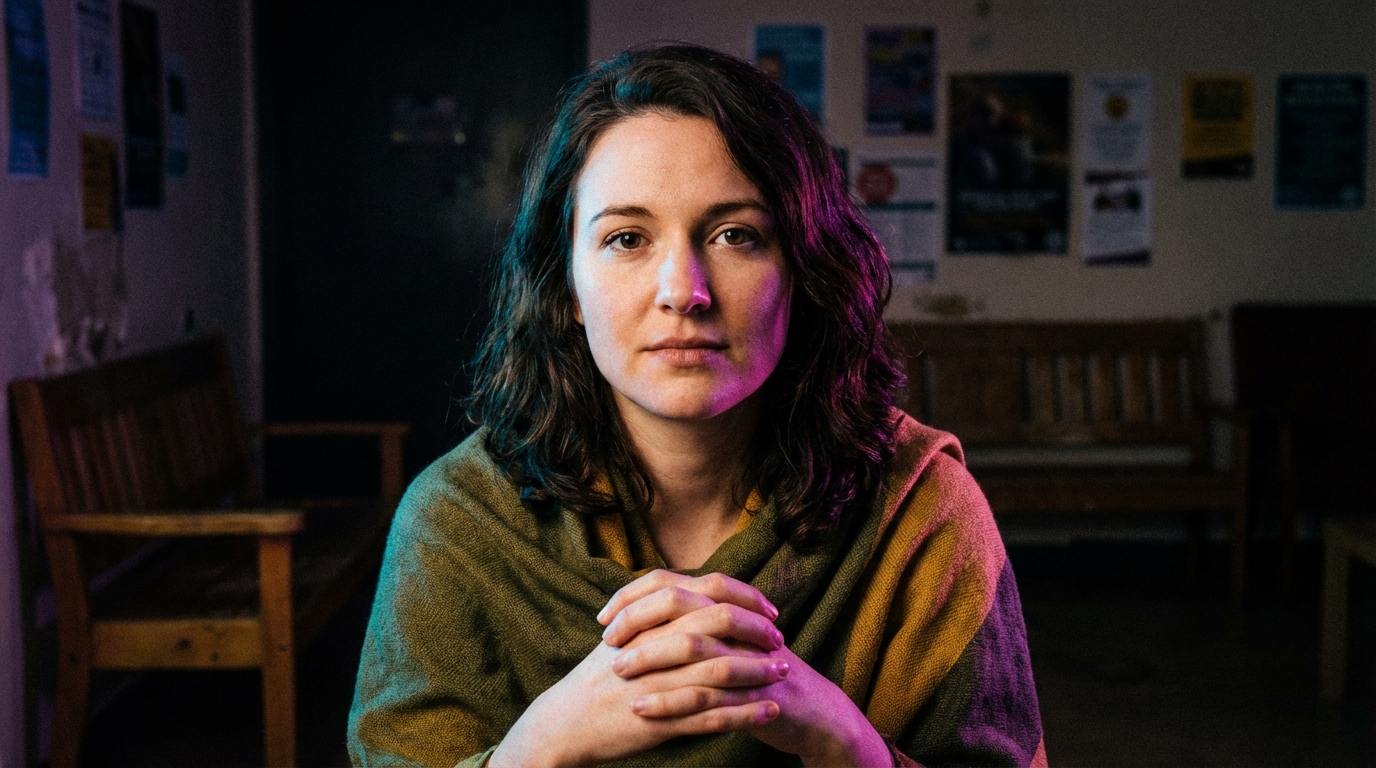
Rebecca Anne Baker, born 11 October 1998 in Adelaide, South Australia, is the fifth of seven children in the Baker household of Smithfield. The middle daughter in a family of seven, she grew up translating between older siblings' authority and younger sisters' needs, developing diplomatic instincts that would later serve her well. Her eighteen-month mission to the Philippines deepened a faith that had always been more her mother's gift than her own discovery, and she returned in mid-2018 expecting to pursue social work studies—only to find her family caught up in events she couldn't comprehend. When her parents relocated to Clivilius in early 2019, Rebecca followed, carrying abandoned university plans and a calling she would have to reimagine. Now twenty-seven, she serves as a senior caseworker at the Bixbus Welcome Centre, helping newcomers and refugees navigate the displacement she knows intimately.
Birth and Early Childhood
Rebecca Anne Baker was born on 11 October 1998 at the Lyell McEwin Hospital in Elizabeth, the fifth child and third daughter of Jonathan Edward Baker and Evelyn Margaret Dawson Baker. Her arrival continued the rapid expansion of the Baker household—Lydia would follow eighteen months later, Chloe eleven months after that—completing the trio of younger daughters who would form their own subset within the larger sibling constellation.
Her position in the family was distinctly middle: old enough to remember life before the household reached its full chaos, young enough to have always known the competition for attention that characterised large-family dynamics. Above her stood Amelia, Benjamin, Nathaniel, and Samuel—established presences with defined roles and claimed territories. Below her came Lydia and Chloe, the babies who required protection and absorbed parental energy. Rebecca occupied the space between, neither commanding authority nor demanding care, learning early to navigate rather than dominate.
The Smithfield house that shaped her childhood was a place of constant negotiation. Seven children meant seven sets of needs, seven competing claims on limited resources of space, attention, and parental bandwidth. Rebecca developed strategies for existing within this complexity: reading moods accurately, anticipating conflicts before they erupted, positioning herself as bridge rather than barrier. Her mother would later recognise these skills as diplomatic gifts; at the time, they were simply survival mechanisms.
Her relationship with her parents reflected the realities of her birth position. Her father Jonathan, reserved and methodical, was a familiar presence without being an intimate one—she knew his routines, respected his workshop sanctuary, understood that his love expressed itself through provision rather than conversation. Her mother Evelyn was more accessible but perpetually divided, her attention distributed across Relief Society responsibilities and the endless demands of household management. Rebecca learned not to require what couldn't be given, developing self-sufficiency that looked like maturity but sometimes felt like loneliness.
Growing Up in the Middle
Rebecca's middle position granted her a particular kind of social education that her siblings at either end of the birth order didn't receive. She learned to translate between generations—interpreting the older children's perspectives for the younger ones, advocating for the younger ones' needs to the older ones, serving as conduit and interpreter in a household where direct communication often failed.
Her closest relationships developed with the sisters bracketing her: Lydia, eighteen months younger, and Chloe, nearly three years her junior. The three girls shared bedrooms, clothes, and the particular experience of being the younger daughters in a household where older siblings had already established precedents and claimed resources. Rebecca functioned as their leader by default—old enough to set direction, young enough to remember what it felt like to be overlooked.
With Lydia, the relationship was protective and practical. Lydia's calm, observant nature complemented Rebecca's more active engagement; where Rebecca spoke up, Lydia listened; where Rebecca organised, Lydia supported. They developed the wordless coordination of siblings who had shared space since infancy, anticipating each other's needs without explicit communication.
With Chloe, the relationship was more complex. The youngest Baker possessed an intensity that set her apart—a quiet intelligence that sometimes felt like judgment, a spiritual depth that seemed to bypass normal developmental stages. Rebecca loved Chloe whilst not always understanding her, providing the practical care that came naturally whilst recognising that Chloe inhabited internal spaces Rebecca couldn't access.
Her relationships with older siblings were more distant, shaped by age gaps that mattered more in childhood than they would in adulthood. Amelia had functioned as a second mother during Rebecca's early years—competent and slightly intimidating, more authority figure than peer. The brothers occupied their own sphere: Benjamin quiet and bookish, Nathaniel absorbed in technology, Samuel the most accessible of the three but still separated by gender and years. Rebecca observed them from across the divide of childhood's hierarchies, learning their patterns without fully knowing their interior lives.
School provided Rebecca with opportunities to exercise social skills she had developed at home. She was never the most academically gifted student—that was Chloe's territory—but she was reliably capable, and her real strengths lay in the interpersonal realm. She navigated friendship groups with ease, mediated conflicts others couldn't resolve, remembered details about people that made them feel seen. Teachers noted her "natural leadership" and "emotional intelligence," qualities that would later inform her vocational direction.
Education and the Emerging Calling
Rebecca attended Smithfield Primary School and then Craigmore High School, following paths her older siblings had worn. Her academic performance was solid without being exceptional—she worked conscientiously, met expectations, excelled in subjects that engaged her social and verbal strengths. English, history, psychology: the human subjects that helped her understand people and their motivations.
The emergence of social work as a vocational direction came gradually through her teenage years. Her mother's Relief Society leadership had modelled service-oriented life; watching Evelyn support women through crises had demonstrated what purposeful care could accomplish. But Rebecca's calling felt less spiritual than practical—she saw need and wanted to address it, recognised suffering and wanted to alleviate it. The religious framework was context rather than cause.
By her final years of high school, she had identified social work as her intended university path. The profession combined her interpersonal gifts with structured contribution, offering ways to help that didn't require the technical skills her siblings possessed. She researched programmes, visited university campuses, imagined herself in lecture halls and field placements. The future felt legible in ways it hadn't before.
But before university came mission. In the Latter-day Saint tradition Rebecca had inherited, serving a mission was an expected step for young adults—particularly young women whose mothers had served, whose family culture centred on faith-driven service. Rebecca had always assumed she would go; the question was when and where, not whether.
She submitted her mission papers in early 2017, shortly after her eighteenth birthday. The assignment that came back surprised her: the Philippines, specifically the Manila Mission. She had expected somewhere English-speaking, somewhere less dramatically foreign. Instead, she would spend eighteen months on the other side of the world, learning a new language, navigating a culture vastly different from suburban Adelaide.
Mission to the Philippines
Rebecca entered the Missionary Training Centre in late 2017, beginning the intensive preparation that would precede her Philippine service. The weeks of language study, doctrinal instruction, and practical preparation compressed her world to essentials: scripture, Tagalog vocabulary, the mechanics of missionary work. She discovered capacities she hadn't known she possessed—an ear for language that made Filipino more accessible than expected, a resilience that sustained her through homesickness and exhaustion.
The Philippines itself was overwhelming and transformative in equal measure. Manila's density and poverty shocked a girl from Adelaide's northern suburbs; the heat, the noise, the press of humanity in streets and jeepneys and markets challenged every assumption about what normal life looked like. But the people she served—the families who welcomed missionaries into modest homes, the investigators who studied scripture with genuine hunger, the members whose faith persisted through circumstances that would have crushed lesser conviction—these encounters reshaped her understanding of what mattered.
Her missionary service followed the patterns established by generations of Latter-day Saint missionaries: door-to-door contacts, street approaches, teaching discussions in borrowed spaces, follow-up visits that sometimes led to baptism and sometimes led to gentle rejection. Rebecca discovered that she was genuinely good at the work—her interpersonal gifts translated across cultures, her ability to read people and situations helping her navigate interactions that frustrated companions with less social intuition.
But she also encountered complexity that missionary training hadn't prepared her for. The poverty she witnessed wasn't amenable to spiritual solutions alone; the problems people faced required material intervention that missionaries couldn't provide. She found herself wanting to do more than teach doctrine—wanting to address the systemic conditions that kept families struggling, wanting to offer practical help alongside spiritual counsel. The seeds of her social work calling, planted in Adelaide, grew deeper roots in Manila's complicated soil.
Her faith deepened during those eighteen months, but not in straightforward ways. She believed more certainly in service, in the value of showing up for people in their struggles. She believed more ambiguously in some doctrinal particulars, finding that direct experience complicated teachings that had seemed clear from distance. She returned to Australia in mid-2018 with testimony that was genuine but less tidy than it had been—a faith tested by reality rather than preserved in abstraction.
Return and Upheaval
Rebecca landed in Adelaide in July 2018, expecting to resume the life she had paused eighteen months earlier. She would live at home, recover from mission intensity, apply to university programmes, begin the social work training she had long anticipated. The future still seemed legible, even if the present required adjustment.
What she found instead was a household transformed by events she couldn't immediately comprehend. Her parents were preoccupied with something they wouldn't fully explain. Chloe, the youngest sister, had become central to family discussions that stopped when Rebecca entered rooms. There were references to Charles Smith, the young man Chloe had been close to before Rebecca left, in contexts that seemed disproportionate to teenage relationship. The atmosphere carried weight she couldn't identify.
The months that followed were disorienting in ways that post-mission adjustment couldn't explain. Rebecca had expected some difficulty re-entering normal life—returned missionaries universally described the challenge of translating mission intensity into mundane existence. But this was different. Her family was changing around her, pulled toward something she could sense but not see.
She pieced together fragments: conversations overheard, explanations partially offered, the growing certainty that her parents were planning something significant. When they finally explained—the portal, Clivilius, the relocation they believed necessary—Rebecca's first response was disbelief, followed by something closer to betrayal. She had given eighteen months to the Church's mission programme, had served faithfully in a foreign country, had returned expecting stability. Instead, her family was preparing to leave Earth entirely.
The decision about whether to follow wasn't really a decision at all. Rebecca had spent eighteen months learning to trust spiritual direction even when it contradicted personal preference. Her parents' conviction, however inexplicable, carried the same quality she had learned to recognise in mission contexts: the sense that larger purposes were at work, that obedience mattered more than understanding. She would go because they were going, because family unity mattered more than individual plans, because the social work degree could be abandoned more easily than the relationships that defined her.
Transition to Clivilius
The family's relocation in early 2019 brought Rebecca to Bixbus, the settlement where her parents would establish their new life. The transition stripped away everything familiar: not just geography and culture, which her mission had prepared her to lose, but also the future she had imagined, the professional path she had planned, the identity she had been constructing.
She was twenty years old, returned from mission, with skills that didn't obviously translate and plans that no longer applied. The university programmes she had researched didn't exist here; the professional structures that would have shaped her social work career were absent. She possessed interpersonal gifts, cross-cultural experience, and a calling that had lost its institutional framework.
The grief of this loss surprised her with its intensity. She had thought herself prepared for sacrifice—mission had taught her to surrender comfort for purpose. But surrendering a future felt different from surrendering convenience. The social work degree represented not just career path but identity, a way of being useful that she had spent years anticipating. Its absence left her uncertain about who she was supposed to become.
The first months in Clivilius were defined by this disorientation alongside the practical demands of settlement life. Everyone was adjusting, everyone was contributing whatever they could, everyone was building community from scratch. Rebecca's contributions were interpersonal: helping families navigate relocation stress, supporting individuals through adjustment difficulties, doing informally what she had hoped to do professionally. It was meaningful work, but it felt improvised rather than intentional—service without structure, calling without credential.
Her faith during this period was complicated. The dramatic confirmation of spiritual realities that relocation represented should have strengthened testimony; instead, it raised questions she hadn't previously considered. If other dimensions existed, if portal travel was possible, what else might be true that her religious framework hadn't encompassed? The certainties she had carried through mission became uncertainties in a world that exceeded her categories.
The Welcome Centre and Finding Purpose
The work that would become Rebecca's vocation took structured form in 2021, when the Bixbus Welcome Centre was established. The settlement had grown rapidly since its 2018 founding, but many arrivals struggled to adjust without systematic support. Sergio Aveskamp and Lisa Kendrick—née Smith, and sister to Charles, who had married Rebecca's youngest sister Chloe—recognised this gap and co-founded the Centre to offer guidance, resources, and belonging to those starting lives in Clivilius.
The family connection proved providential. Lisa had observed Rebecca's informal welfare work over the preceding two years—the way she helped families navigate housing crises, supported individuals through adjustment difficulties, brought her mission-honed cross-cultural skills to bear on the challenges newcomers faced. When the Welcome Centre moved from concept to reality, Lisa approached Rebecca about joining the founding team.
The invitation felt like answered prayer, though Rebecca's relationship with prayer had grown complicated. Here was structure for her calling, institutional form for skills she had been exercising ad hoc. The Welcome Centre couldn't grant her the social work credential she had once anticipated, but it could provide something perhaps more valuable: a defined role within a recognised organisation, colleagues who shared her commitments, and the resources to help people systematically rather than sporadically.
Rebecca joined the Centre in its earliest days, working from the modest repurposed warehouse near the settlement's main plaza that served as its first home. Her initial focus was housing assistance—one of the Centre's most pressing priorities, given the thousands of settlers living in the expanded Tent Community whilst awaiting permanent accommodation. She learned to navigate the Bixbus Housing Authority's allocation systems, to advocate for families with particular needs, to manage expectations when demand vastly exceeded supply.
But her particular gifts drew her toward a different specialisation as the Centre's services expanded. Refugees from failed settlements began arriving in increasing numbers—individuals and families displaced when communities elsewhere in Clivilius collapsed. These were people who had already made one impossible transition, from Earth to this world, only to face another when their settlements failed. They carried compounded trauma, accumulated loss, the particular grief of serial displacement.
Rebecca understood something of their experience. Her own adjustment had taught her that displacement accumulated, that each loss echoed previous losses. Her mission had prepared her to connect across cultural difference, to build trust with strangers, to accompany people through transitions. She became the Centre's primary caseworker for refugee resettlement, developing expertise in the specific challenges these arrivals faced.
The work brought her into contact with cases that would reshape her understanding of what helping meant. She processed the paperwork for families who had lost everything—not once, but twice. She sat with individuals whose communities had dissolved around them, who arrived in Bixbus with nothing but the hope that this settlement might prove more durable than the last. She learned that her role wasn't to fix unfixable losses but to witness them, to provide practical support alongside human presence, to help people rebuild when rebuilding felt impossible.
By 2023, when the Welcome Centre moved into its permanent facility within Unity Plaza's South Commercial Wing, Rebecca had become one of its most experienced staff members. The expanded space provided dedicated offices, a resource centre, and communal gathering areas—infrastructure that transformed what had been improvised operation into professional service. Sergio Aveskamp's structured orientation programmes complemented the individual casework Rebecca and her colleagues provided, ensuring that new arrivals received both systematic guidance and personalised support.
Her collaboration with Lisa deepened through these years of shared work. The family connection that had opened the door became genuine professional partnership, two women with complementary gifts building something that mattered. Lisa's event planning background and community-building instincts shaped the Centre's social integration programmes; Rebecca's casework expertise and cross-cultural skills strengthened its direct services. They weren't close friends—their temperaments and life circumstances differed too much for easy intimacy—but they were effective colleagues who respected each other's contributions.
Faith and Its Evolution
Rebecca's relationship with faith evolved significantly through her Clivilius years. The institutional Mormonism she had grown up with—the ward structures, the temple ceremonies, the hierarchical organisation—didn't exist in this new world. What remained was something more personal and less defined: values rather than doctrine, community rather than institution, service rather than ritual.
She found this evolution both liberating and disorienting. The certainties that had structured her mission—the clear doctrines, the defined practices, the confident assertion that this particular path led to eternal truth—had softened into something more humble. She still believed in service, still valued the moral framework her upbringing had provided, still found meaning in the spiritual practices she had inherited. But she held these beliefs more loosely now, recognising them as tools for living rather than absolute descriptions of reality.
Her mother's faith had weathered the transition differently—Evelyn carried conviction that seemed unshaken by changed circumstances, finding in Clivilius confirmation rather than complication of her beliefs. Rebecca respected this certainty without sharing it. She had learned on mission that faith could be genuine without being complete, that service mattered regardless of theological precision, that helping people was its own justification independent of eternal frameworks.
This evolved spirituality informed her Welcome Centre work. She approached displaced people without religious agenda, offering practical support rather than doctrinal instruction. She had seen too much variety in human experience to believe that any single framework captured truth adequately; she had witnessed too much suffering to pretend that faith alone resolved material problems. Her service was grounded in compassion rather than conversion, in presence rather than prescription.







