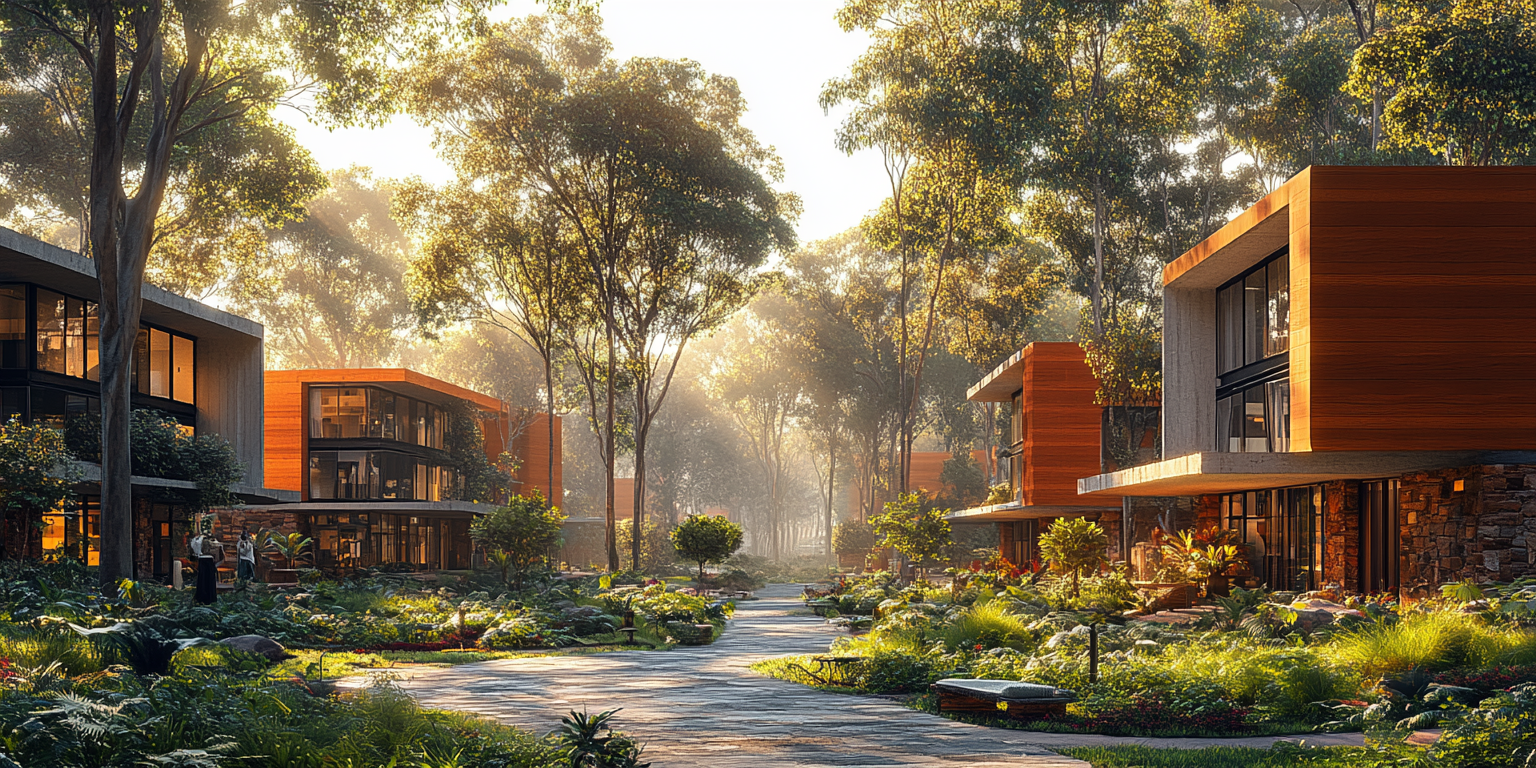
Raven's Croft Hospital, Sydney
Raven's Croft Hospital, established in Sydney in 1955, was a psychiatric institution administered by the Obsidian Healthcare Group whose progressive therapeutic programmes provided both genuine innovation in mental health care and institutional cover for research activities whose relationship to conventional treatment the facility's therapeutic reputation was designed to obscure. The hospital's history of patient disappearances during the 1970s was never satisfactorily resolved, and its subsequent transformation did not extinguish the questions that preceded it.
Foundation
Raven's Croft Hospital opened in 1955 on a wooded site on Sydney's western outskirts, its establishment funded through the Obsidian Healthcare Group as part of the organisation's post-war expansion into specialist psychiatric care. The facility was Obsidian's first dedicated psychiatric institution — a distinction whose significance, given the organisation's founding research interests in neurological function, identity, and the mechanisms of human memory, was greater than the public announcement of its opening acknowledged.
The hospital's clinical direction was entrusted to Dr Harold Whittaker, a psychiatrist whose wartime experience in military psychiatric wards had produced convictions about the treatment of psychological trauma that aligned with the therapeutic philosophy Obsidian wished to project, and Dr Eleanor Hughes, a psychotherapist whose advocacy for non-pharmacological approaches to mental illness placed her at the progressive edge of Australian psychiatric practice. Whether Whittaker and Hughes understood the full scope of the institutional interests that their appointment served was a question whose answer depended upon how much of Obsidian's internal architecture they were permitted to see — a question that the organisation's compartmentalised management structure was designed to make unanswerable from outside and unnecessary from within.
The site — a former private estate whose grounds included mature eucalyptus woodland, gardens, and a creek — was selected with the attention to geography and privacy that characterised Obsidian's facility acquisitions. The main building, designed by the architect Samuel Thornton, combined functional modernity with a deliberate avoidance of the clinical aesthetics that patients associated with institutional confinement. The corridors were wide, the windows large, and the communal spaces oriented toward the gardens. The design communicated therapeutic ambition. It also communicated, to those who assessed hospital architecture in terms of what it concealed rather than what it displayed, that the building's footprint accommodated spaces whose purposes the garden-facing windows did not illuminate.
The Therapeutic Model
Raven's Croft's public reputation during its first two decades derived from the integration of creative therapies into psychiatric treatment at a time when the Australian profession's mainstream was dominated by electroconvulsive therapy, pharmacological sedation, and the institutional management of patients whose conditions the prevailing frameworks addressed through containment rather than recovery. The hospital's approach — art therapy under the direction of the resident therapist Margaret Lane, music therapy, occupational programmes, and structured engagement with the natural environment — produced clinical outcomes whose genuineness distinguished Raven's Croft from Sydney's other psychiatric facilities and attracted referrals from practitioners across New South Wales.
The model's most visible success was Emily Foster, a young artist admitted in the early 1960s with severe depression whose conventional treatment had failed. Under the combined care of Whittaker and Lane, Foster discovered that the visual expression of her psychological states provided a therapeutic pathway that verbal processing had not. Her paintings — vivid, technically accomplished, and possessed of a haunting emotional intensity — gained recognition in Sydney's gallery circuit, and her recovery became a public illustration of what Raven's Croft's philosophy could achieve. The illustration was genuine. It was also, within Obsidian's institutional calculus, an asset — the therapeutic success stories providing the reputational foundation upon which the facility's less visible operations could be conducted without attracting the scrutiny that less accomplished clinical outcomes would have generated.
The hospital expanded through the 1960s. Bed capacity grew from forty to ninety. A dedicated adolescent unit opened in 1964. An outpatient programme, established in 1966, extended the therapeutic model into the community. The expansion was funded through Obsidian's capital reserves and through state government mental health allocations whose terms were negotiated with the institutional competence that Obsidian brought to all its interactions with public authorities — the legitimate healthcare needs of the population providing both the justification and the framework within which the organisation's broader interests operated.
The Research Dimension
Raven's Croft's value to Obsidian extended beyond its therapeutic reputation. A psychiatric hospital administered by an organisation whose founder had spent his career investigating the neurological basis of identity and memory constituted a facility of particular strategic utility — a controlled environment containing patients whose conditions involved precisely the phenomena that Alastair Prometheus Blackwood's research programme was designed to explore.
The hospital's patient population included individuals presenting with dissociative disorders, amnesia, personality fragmentation, severe post-traumatic states, and the spectrum of psychotic conditions in which the patient's relationship to their own identity, their memories, and their perception of reality was disrupted in ways that conventional treatment sought to restore and that Obsidian's research interests sought to understand — a distinction whose practical implications the patients themselves were not positioned to assess. The facility provided access to subjects whose cognitive disruption had already altered the mechanisms that Alastair's theoretical work addressed, and the therapeutic context — in which patients consented to treatment programmes whose general parameters they understood without being informed of the specific observational and experimental dimensions that certain elements of those programmes encompassed — provided the institutional framework within which research could be conducted under the designation of care.
The research activities at Raven's Croft were managed through the same compartmentalised administrative structure that characterised Obsidian's restricted operations at other facilities. Clinical staff whose work was confined to the therapeutic programme were not informed of the research dimensions. Staff involved in the research activities reported to Obsidian's Melbourne headquarters. The data generated — behavioural observations, neurological assessments, the detailed documentation of patients' cognitive states before, during, and after specific therapeutic interventions — flowed into the centralised archival system that Obsidian maintained across its network, the system known internally as Project Cassia.
The Disappearances
During the 1970s, Raven's Croft Hospital was the site of a series of patient disappearances whose circumstances were never publicly explained and whose investigation, conducted within institutional parameters that Obsidian's administrative structure defined, produced conclusions that satisfied procedural requirements without addressing the questions that the disappearances generated.
The incidents involved patients who were present in the facility's records, whose treatment was documented, and who ceased to be present without the discharge, transfer, or death documentation that the hospital's administrative procedures required. The patients were not uniformly similar in their diagnoses, but they shared characteristics that those who later analysed the pattern identified as relevant: each had been admitted with conditions involving severe identity disruption, each had been at Raven's Croft for extended periods, and each had been involved, according to the fragmentary evidence that survived Obsidian's records management, in therapeutic programmes whose parameters exceeded what their admission documentation described.
The most documented case was Thomas Abernathy, a patient who vanished in 1974 without trace. Abernathy had been admitted with a dissociative condition following a workplace accident that had produced injuries whose neurological consequences included periods of amnesia and the intermittent expression of memories and behavioural patterns that did not correspond to his documented personal history. His treatment at Raven's Croft had been extended, his therapeutic programme had been managed through channels whose administrative trail led to Melbourne rather than to the hospital's local clinical director, and his disappearance — discovered during a routine ward check — generated an investigation that examined every plausible explanation except the ones that the facility's restricted operations suggested. No evidence was found. The case was never resolved.
The total number of patients who disappeared from Raven's Croft during the 1970s was never established with certainty. The figures cited by former staff ranged from four to eleven, the discrepancy reflecting not disagreement about what had occurred but the difficulty of establishing a definitive count from records whose completeness could not be independently verified. The disappearances ceased — or ceased to be detectable — by the early 1980s, a period that coincided with Obsidian's post-1983 reconfiguration of its restricted operations across multiple facilities following the events at Shadowbrook Hospital in Brisbane.
Institutional Transition
Dr Whittaker retired in 1972, and Dr Hughes assumed the role of chief administrator. Hughes had spent nearly two decades building Raven's Croft's therapeutic reputation and was confronted, during her period of sole leadership, with the institutional consequences of activities whose existence she had suspected without being able to confirm and whose confirmation, when the disappearances made suspicion insufficient, she managed with the particular combination of damage limitation and genuine distress that characterised the responses of Obsidian's clinical leaders when the organisation's concealed dimensions breached their visible ones. She implemented new protocols for patient tracking and ward documentation — measures that addressed the symptoms of the institutional failure without being empowered to address its causes, which resided in the administrative architecture that reported to Melbourne rather than to her.
Hughes retired in 1985. Her successor, Dr Michael Langford, was appointed with a mandate to transform the hospital's operational character — a mandate that coincided with the period of institutional adjustment that followed Alastair Blackwood's death in September 1985 and the consequent restructuring of Obsidian's research operations across its network. Under Langford's direction, Raven's Croft expanded its services in the 1990s to include general healthcare alongside its psychiatric programmes. The transformation was genuine in its clinical dimensions — new facilities, modernised wards, broader medical capabilities — and functional in its institutional ones, the expansion into general healthcare diluting the psychiatric specificity that had made Raven's Croft a facility of particular interest to Obsidian's research programme and repositioning the hospital as a comprehensive health provider whose operational profile was less conspicuously suited to the kind of work that the disappearances had suggested was being conducted.
A comprehensive mental health initiative, launched in 1990, restored the hospital's psychiatric reputation through programmes that reflected contemporary evidence-based practice. The initiative's outpatient services, community mental health partnerships, and integrated care models represented a genuine commitment to the therapeutic values that Whittaker and Hughes had established in the 1950s — values that the intervening decades had compromised without entirely destroying and that the 1990s reform sought to recover.
The Facility's Place Within Obsidian
Raven's Croft Hospital occupied a distinct position within Obsidian Healthcare Group's institutional architecture. Where Blackwood Memorial Hospital in Melbourne served as the organisation's surgical and research flagship, Vaucluse Nursing Home in Hobart provided its aged care and longitudinal observation capabilities, and Shadowbrook Hospital in Brisbane offered its emergency medicine and trauma services, Raven's Croft addressed the dimension of Obsidian's interests that was, in certain respects, the most central to the organisation's founding purpose: the psychiatric — the territory where medicine intersected most directly with the questions about identity, consciousness, and memory that Alastair Prometheus Blackwood had pursued since the 1930s.
A psychiatric hospital provided what no other institutional setting could: a patient population whose conditions involved the disruption of the very mechanisms that Alastair's research sought to understand, a therapeutic context in which observation and intervention were indistinguishable by design, and a regulatory environment in which the boundary between treatment and experimentation was, during the decades of the hospital's most intensive restricted operations, less precisely policed than in any other branch of medical practice. Raven's Croft was, within Obsidian's network, the facility where the organisation's public purpose and its private one were most closely aligned — the place where healing and investigation occupied not merely the same building but the same therapeutic relationship, the distinction between them visible only to those who knew what they were looking for and obscured, by the genuine quality of the care that surrounded it, from everyone else.
The hospital continued to operate as part of Obsidian's network, its psychiatric programmes maintaining the clinical standards that external accreditation required and that the institution's therapeutic heritage supported. The creative therapies that Whittaker and Lane had pioneered persisted in modified forms. The outpatient programmes served the community. The general healthcare services that the 1990s expansion had introduced provided the operational breadth that a modern hospital required. And the questions that the 1970s had generated — about what had happened to Thomas Abernathy, about the nature of the work that the patients who disappeared had been involved in, about the relationship between Raven's Croft's therapeutic programmes and the research interests of the organisation that administered it — remained, like the questions that accompanied every Obsidian facility, unanswered: present in the institution's history, absent from its official record, and sustained by the particular durability of things that have been deliberately not said.







