Rachel Ann Colton (née Marshall)
Rachel Ann Marshall was born on 5th March 1986 in Salt Lake City, Utah, the third child and only daughter of insurance adjuster Gregory Marshall and schoolteacher Margaret Jensen. She graduated in nursing from the University of Utah before serving an eighteen-month Latter-day Saint mission in Auckland, New Zealand, and built a career in paediatric nursing at Primary Children's Hospital, where she rose to charge nurse of the intensive care unit. She married civil engineer Andrew Colton in 2013, and they raised three children in the Avenues neighbourhood.
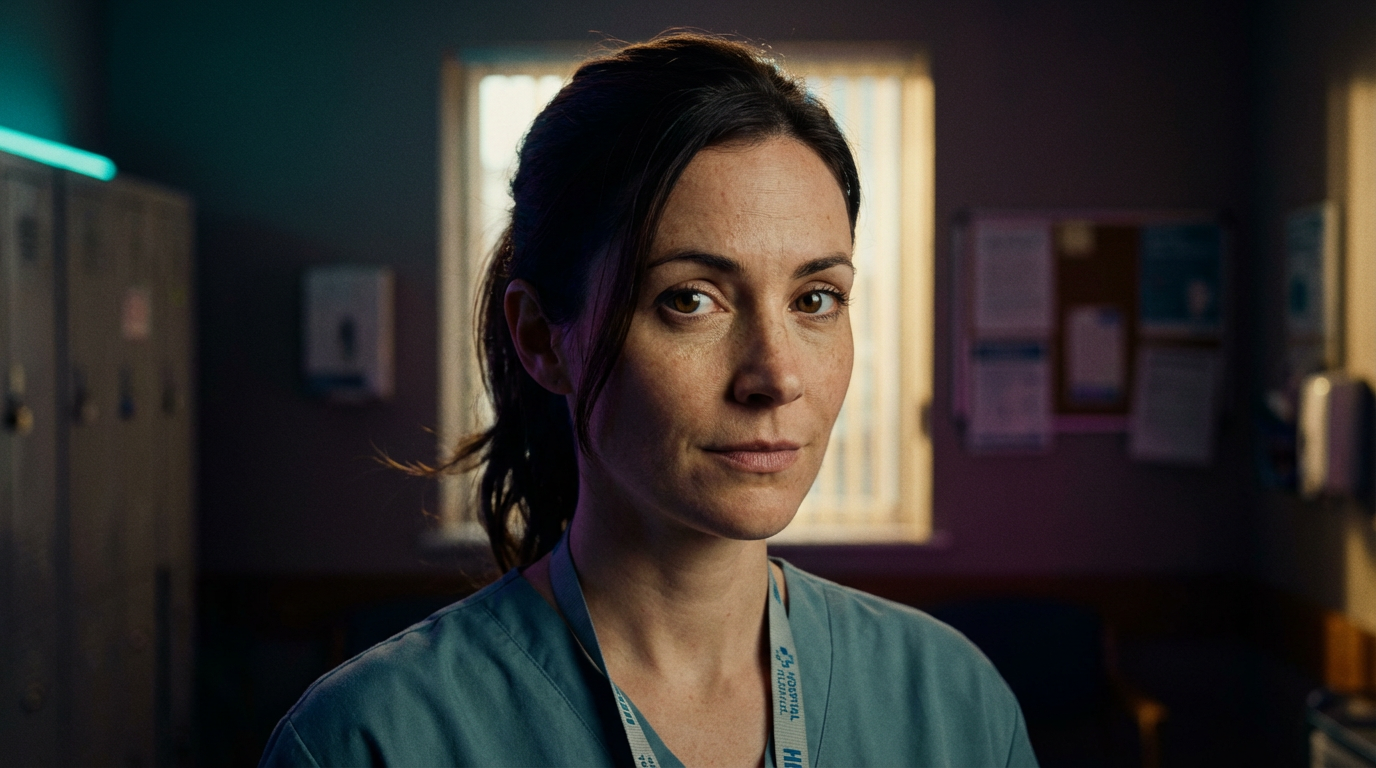
The Room at the End of the Hall
Rachel Ann Marshall was born on 5th March 1986 at LDS Hospital in Salt Lake City, Utah, the third child and only daughter of Gregory Alan Marshall and Margaret Louise Marshall (née Jensen). She arrived between two brothers — Michael, who was twenty months old and already disassembling kitchen utensils with a cheerful disregard for their intended purpose, and David, who at four was learning to tie his shoes with a seriousness that suggested he considered the task a moral obligation. The household in the Avenues neighbourhood had not yet reached its full capacity, but it was already loud, and Rachel, from the beginning, seemed less bothered by the noise than determined to organise it.
Gregory, born on 2nd April 1955, had been a lifeguard and swim instructor before transitioning to a career as an insurance adjuster, and he approached parenthood with the methodical rigour of a man who believed that discipline could solve most problems and that the ones it couldn't solve were probably someone else's fault. Margaret, born on 19th August 1958, taught third grade at Wasatch Elementary with a patience she extended generously to other people's children and somewhat less generously to her own, though this was a matter of energy rather than affection. Three children under five tested the supply of both. Rachel's arrival did not simplify the logistics. What it did, in ways that would only become visible years later, was provide Margaret with an ally.
The Marshall household expanded behind Rachel with the regularity of a family that regarded large families not as a lifestyle choice but as a religious expectation met with willing compliance. William Jacob arrived on 12th September 1989, quiet and self-contained, destined for the pool. Eric Daniel followed on 9th November 1992, analytical and watchful, happier with a chessboard than a conversation. Jared Nathan completed the set on 15th May 1995, screaming with such conviction that Michael, then eleven, declared the baby louder than the fire alarm and twice as persistent. Rachel was nine when Jared was born. She had already, by that point, assigned herself responsibilities that no one had asked her to carry and that no one, once she was carrying them, could imagine reassigning.
She was the only girl. In a household of five brothers, this distinction meant a room of her own — the small bedroom at the end of the upstairs hall, while the boys doubled and tripled in the larger rooms — and a particular kind of solitude that was neither loneliness nor privacy but something between the two. Rachel kept the room immaculate. Her books were alphabetised by the time she was eight. Her clothes were folded with a precision that Margaret found impressive and faintly worrying, because an eight-year-old who folded clothes like that was either naturally tidy or anxious about disorder, and the difference mattered. She had a desk that Gregory built for her tenth birthday, and she used it for homework with the same rigour that David applied to debate preparation in the family study. The difference was that nobody expected Rachel to be rigorous. She simply was.
Gregory's expectations for his daughter were both less specific and less demanding than those he imposed on his sons. He wanted her to be good, to be faithful, to marry well and in the temple. He did not expect her to lead, to achieve, to compete. This was not cruelty but the inherited assumption of a man raised in a household where his sister Katherine had been loved and educated and ultimately expected to support rather than pursue. Rachel absorbed these expectations, examined them with the careful attention she brought to everything, and declined to be limited by them. She did not rebel. She simply expanded the territory of what was expected until it included everything she intended to do anyway.
Rosters and Routines
Rachel entered Wasatch Elementary in the autumn of 1991, joining the school where her mother had been teaching third grade for over a decade. Margaret's presence down the hall was a fact Rachel navigated with more grace than most children would have managed — she did not seek her mother out during the day, did not trade on the connection, and treated the overlapping worlds of home and school as separate jurisdictions with different rules. Her teachers found her organised, articulate, and slightly bossy, the last quality expressed with enough charm that it was usually forgiven and occasionally welcomed. She was the child who reminded the teacher about the permission slips, who sorted the art supplies without being asked, who noticed when another child was upset and intervened with the brisk efficiency of a triage nurse — a comparison that would prove more prescient than anyone realised at the time.
Her academic performance was strong without being spectacular. She was not David, whose gifts were intellectual and whose ambitions were legible from childhood. She was not Eric, whose aptitude for numbers would later set him apart. Rachel's intelligence was practical and social — she understood systems, logistics, people. She could organise a classroom project, mediate a playground dispute, and manage the competing demands of five brothers at the dinner table with a competence that Margaret recognised as a mirror of her own skills and Gregory recognised as useful without quite understanding where it came from.
At Bryant Middle School, which she entered in 1997, Rachel discovered two things that would shape the next decade of her life. The first was biology. The school's science programme introduced her to human anatomy and physiology with a specificity that fascinated her in a way that mathematics and English composition did not. She liked the body. She liked its systems — circulatory, respiratory, nervous — the way they interlocked, the way failure in one cascaded through the others, the way knowledge of how things worked was the first step toward keeping them working. The second discovery was more personal. Her mother's younger sister, Katherine Marie Jensen, had died in a car accident at eighteen, years before Rachel was born. Margaret rarely spoke of it, but Rachel found a photograph in a drawer during a visit to her grandmother Alice's house and asked questions that produced, over several careful conversations, a grief that Margaret had carried for two decades without resolution. Rachel did not know what to do with this information. She knew only that her mother's sadness had a shape and a source, and that understanding it felt like something she was supposed to do.
West High School, which Rachel attended from 1999 to 2003, consolidated her direction. She excelled in biology and chemistry, took every available health science elective, and volunteered at a free clinic near the university during her junior and senior years — rolling bandages, filing paperwork, watching nurses and doctors work with the focused attention of someone who recognised her future. She maintained a social life that was wide but selective. Her friends knew her as reliable, funny in a dry way that surfaced unexpectedly, and absolutely certain about how group projects should be managed. She attended the junior prom with a boy named Tyler who spent the evening agreeing with everything she said, and she did not attend the senior prom because she had a shift at the clinic and considered the trade-off self-evident.
At home, her role was crystallising. David was at university, then law school in Denver. Michael was training in aviation maintenance, then on his mission. Rachel, at sixteen and seventeen, was the oldest child in the house for long stretches, and she filled the operational vacuum with a competence that made Gregory uncomfortable and Margaret grateful. She managed the younger boys' schedules, ensured homework was completed, arbitrated disputes between Will and Eric with the measured authority of someone who had been settling arguments since she could talk. Gregory observed this and said nothing, because acknowledging Rachel's capability would have meant acknowledging that the household needed managing in ways he could not provide, and that admission was not available to him.
Two Wards
Rachel graduated from West High in the spring of 2003 and enrolled at the University of Utah that autumn, pursuing a Bachelor of Science in Nursing. The choice surprised nobody. The programme was demanding — four years of anatomy, pharmacology, clinical rotations, and the particular exhaustion of learning to care for strangers while maintaining the emotional boundaries that separated professional competence from personal collapse. Rachel managed it with the same organisational discipline she brought to everything. Her study schedules were colour-coded. Her clinical notes were immaculate. Her instructors found her thorough, confident, and occasionally impatient with peers who hadn't prepared with comparable rigour.
She graduated in the spring of 2007, twenty-one years old and newly eligible for the missionary service she had been planning since her freshman year. Unlike Jared, whose refusal to serve would later detonate across the family, and unlike David and Michael, whose compliance had been largely automatic, Rachel's decision to serve was active and deliberate. She believed. Not with Gregory's rigid conviction or Margaret's intuitive warmth, but with a practical faith that expressed itself in action — in service, in showing up, in the conviction that people needed help and that the gospel, whatever else it was, was a framework for providing it. She submitted her papers in the summer of 2007 and received her call to the New Zealand Auckland Mission.
New Zealand disarranged her neatly ordered expectations. The Auckland Mission covered the upper North Island — volcanic coastline, subtropical bush, and communities where Maori and Pacific Islander families lived alongside the descendants of European settlers in arrangements more complicated than any of the simple narratives Rachel had been taught. She worked among Tongan and Samoan communities in South Auckland, where the Church had deep roots and the poverty was deeper, and she discovered that her organisational gifts, while useful, were not the thing that made people trust her. They trusted her because she listened. Because she peeled potatoes in their kitchens without being asked. Because she held their babies with the unforced confidence of a woman who had been holding babies since she was nine years old and Jared was the screaming centre of the Marshall household. Her mission president described her as one of the most capable sisters he had supervised, noting her leadership during a cyclone response that required the mission's resources to be redirected toward emergency community support. Rachel didn't talk about the cyclone much afterwards. She talked about the family in Otara whose daughter had a heart condition, and the long drives to the hospital in Auckland, and the night she sat in a waiting room with the mother while the surgeons worked and discovered that prayer, for her, was not a performance but a necessity.
She returned to Salt Lake City in January 2009 and began work at Primary Children's Hospital that spring, hired as a paediatric nurse on the general ward. The work was the hardest thing she had ever done and the thing she was most suited for. Sick children required everything she had — the organisational precision, the emotional steadiness, the capacity to be fierce on behalf of someone who couldn't fight for themselves. She worked night shifts for the first two years because the pay differential helped with her student loans, and the quiet of the ward between midnight and dawn became a space she found oddly restorative. She was good. Her supervising nurse told her so. The parents told her so. The children, when they were old enough to articulate it, told her so. Rachel accepted the praise with the same brisk efficiency she brought to everything else and went home to an apartment in the Avenues, three blocks from her parents' house, and slept until her alarm woke her for the next shift.
Colton
She met Andrew James Colton at a ward barbecue in the summer of 2011. Andrew, born on 17th April 1984, was a civil engineer from Bountiful who had served a mission in Brazil and recently taken a position with a firm that designed water treatment infrastructure for small Utah municipalities. He was quiet in a way that was different from Will's contained intensity or Eric's analytical reserve — Andrew's quiet was the unhurried ease of a man who had nothing to prove and no interest in performing confidence he already possessed. Rachel found this initially frustrating, then intriguing, then necessary. He did not compete with her energy. He did not try to manage her. He simply existed alongside her with a steadiness that made her realise, for the first time, how exhausting it was to be the person who managed everything.
Their courtship lasted two years, longer than Rachel had planned — she had, characteristically, allotted eighteen months — because Andrew would not be hurried and Rachel, for once, did not insist. They were married on 15th June 2013 at the Salt Lake Temple, in a ceremony that Rachel organised with military precision and that Andrew endured with the particular grace of a man who understood that his role on this occasion was to arrive on time and stay out of the way. Gregory approved of Andrew — his faith, his profession, his steadiness were the qualities Gregory valued above all others. Margaret loved him because he made her daughter laugh in a way Margaret had not heard since Rachel was a child, before the organising had begun, before the clipboard had replaced the doll.
Their first child, Grace Margaret Colton, was born on 8th August 2014, named for Andrew's maternal grandmother and for the woman Rachel loved most fiercely and understood most completely. Rachel approached motherhood with the same competence she brought to nursing, which was to say she was excellent at it and initially terrible at accepting that excellence didn't prevent exhaustion, self-doubt, or the three o'clock realisation that the baby was crying and the answer was not a better system but simply endurance. Andrew, whose temperament treated domestic chaos the way it treated a difficult engineering problem — calmly, one variable at a time — became the counterweight Rachel needed. Will built a rocking chair for Grace, a beautiful piece of cherry wood with curves so gentle that Rachel ran her hand along the arm and said nothing, because the craftsmanship said enough about the kind of uncle Will intended to be.
Their son, Samuel Andrew Colton, arrived on 2nd February 2016, and the household on Kensington Avenue — a narrow Craftsman bungalow three streets from Primary Children's, purchased in 2014 with the combined savings of two professionals who had lived frugally through their twenties — expanded into the organised chaos that Rachel had been training for her entire life. She returned to work three months after each birth, reducing her hours to part-time during the children's early years but never leaving entirely, because nursing was not a job she did but a thing she was, and the ward needed her almost as much as her children did. A third child, Alice Jane Colton, was born on 11th November 2020, named for Margaret's mother, Alice Marie Jensen. The timing — nine months into a pandemic that had stretched Primary Children's resources to breaking point — was not ideal, but Rachel, who had never waited for ideal conditions to act, managed it the way she managed everything. Andrew took paternity leave. Margaret came daily, masked and cautious, holding Alice with the particular tenderness of a grandmother who found the practice no less astonishing for the repetition.
The Call List
Rachel Ann Colton, née Marshall — though her brothers never stopped using the surname they'd grown up with — was the sibling everyone called first. Not because she was the closest, or the wisest, or the most available, but because she answered. Michael fixed things. David advised. Eric analysed. Jared showed up. Will endured. Rachel answered the phone, assessed the situation, and issued instructions, and the fact that her instructions were almost always correct did not make them any less annoying to receive.
When Lisa departed through the Portal in September 2018, Rachel's response was immediate and layered. She drove to Will's house that evening, arriving with a casserole that neither of them ate and a presence that Will needed more than he knew. She sat with him in the kitchen while he explained the impossible — a portal, another dimension, a wife who had chosen her family over their marriage — and she listened with the focused attention she had learned in New Zealand, when listening was the only useful thing she could offer. She did not tell him it would be fine. She did not offer theological explanations. She held his hand across the table and said, "Tell me what you need," which was the question she had been asking since she was nine years old and Jared wouldn't stop crying and Margaret was too tired to stand up.
In the weeks that followed, she visited three times a week, bringing meals and managing practical matters — bills, insurance calls, the dog's vaccination schedule — with the same efficiency she brought to her clinical work. She also tried to reconnect Will to the ward. It was not a manipulation. She believed that faith helped. She had seen it help in Auckland, in the hospital, in her own darkest nights when Samuel was three weeks old and wouldn't sleep and she sat on the bathroom floor at four in the morning and prayed because she had run out of strategies. But Will's faith had already receded past the point where a ward activity or a bishop's visit could reach it, and Rachel, who understood systems, eventually understood that her brother's spiritual architecture had shifted in ways her own had not, and that loving him required accepting this rather than correcting it.
Jared's mission refusal in 2013 had tested her differently. She called him twice in the week after the announcement — not to argue, though part of her wanted to, but to ensure he was eating and sleeping and not spiralling into the particular shame that the Marshall household could produce when someone deviated from the expected path. She disagreed with his decision. She loved him entirely. She held both positions without discomfort, because Rachel had spent her whole life holding contradictions — fierce and gentle, organised and spontaneous, faithful and clear-eyed about the imperfections of the institution she served — and had never found them incompatible.
By 2026, Rachel was forty, a charge nurse in the paediatric intensive care unit at Primary Children's, responsible for overseeing a team of twelve nurses and managing the most critical young patients in the state. The promotion had come in 2022, recognition of a career spent doing the hardest work in the building with a consistency that her colleagues found both admirable and slightly exhausting. Andrew had advanced to principal engineer at his firm, their combined income finally reaching the point where money was a topic of planning rather than anxiety. Grace was eleven, developing her mother's organisational gifts and her father's patience in a combination that teachers found remarkable. Samuel was ten, interested in insects and football and profoundly uninterested in schedules. Alice was five, starting kindergarten at Wasatch Elementary — the same school where Margaret had taught for thirty-one years, where Rachel herself had once reminded the teacher about the permission slips.
Margaret had retired from Wasatch in 2020, after a career that had spanned most of Rachel's life. Rachel still called her every morning at seven. The conversations lasted four minutes on average — a logistics check disguised as a chat, covering Gregory's blood pressure, the state of the house, whether anyone needed anything. Margaret, who had spent sixty-seven years being taken care of by other people's systems, accepted her daughter's oversight with a grace that was also, perhaps, a quiet acknowledgement that Rachel had inherited the best of her: the patience, the attention, the willingness to carry what others couldn't. What Rachel had not inherited — what she had built entirely on her own — was the fierceness. Margaret had endured. Rachel acted. The distinction had cost her sleep, friendships, the ability to sit in a room without cataloguing what needed to be done. It had also saved a ward full of children, a family of eight, and a brother whose wife had left for another dimension and who needed, more than anything, someone who would answer the phone.







