Queen Victoria Hospital, South Australia
The Queen Victoria Hospital served as South Australia's pioneering institution for women's and children's healthcare from its founding in 1899 until its merger with the Adelaide Children's Hospital in 1989. Located in Adelaide, the hospital developed particular expertise in obstetric and gynaecological services, welcoming generations of South Australians into the world within its maternity wards. Its legacy endures through the Adelaide Women's and Children's Hospital and the individuals whose lives began within its walls.
Founding and Mission
The Queen Victoria Hospital opened its doors in 1899, established at the close of the nineteenth century to address the particular healthcare needs of women in a colonial society where such services had long been inadequate. Named in honour of the reigning monarch whose era was drawing to a close, the hospital embodied progressive ideals about women's health that were gaining currency in South Australia—a colony already distinguished by its advanced position on women's suffrage.
The hospital's founding mission centred on obstetric and gynaecological services, recognising that women's health required dedicated facilities staffed by practitioners trained in the specific challenges of pregnancy, childbirth, and the conditions that affected female patients. In an era when maternal mortality remained distressingly common and complications of childbirth often proved fatal, the establishment of a specialist women's hospital represented a significant advancement in the medical infrastructure available to South Australian families.
From its earliest years, the Queen Victoria Hospital developed expertise in complicated pregnancies and difficult deliveries, becoming the referral destination for cases that exceeded the capabilities of smaller facilities throughout the state. Country doctors facing obstetric emergencies arranged transfers to Adelaide, knowing that the Queen Victoria Hospital offered the best chance of survival for mothers and infants in crisis.
Location and Setting
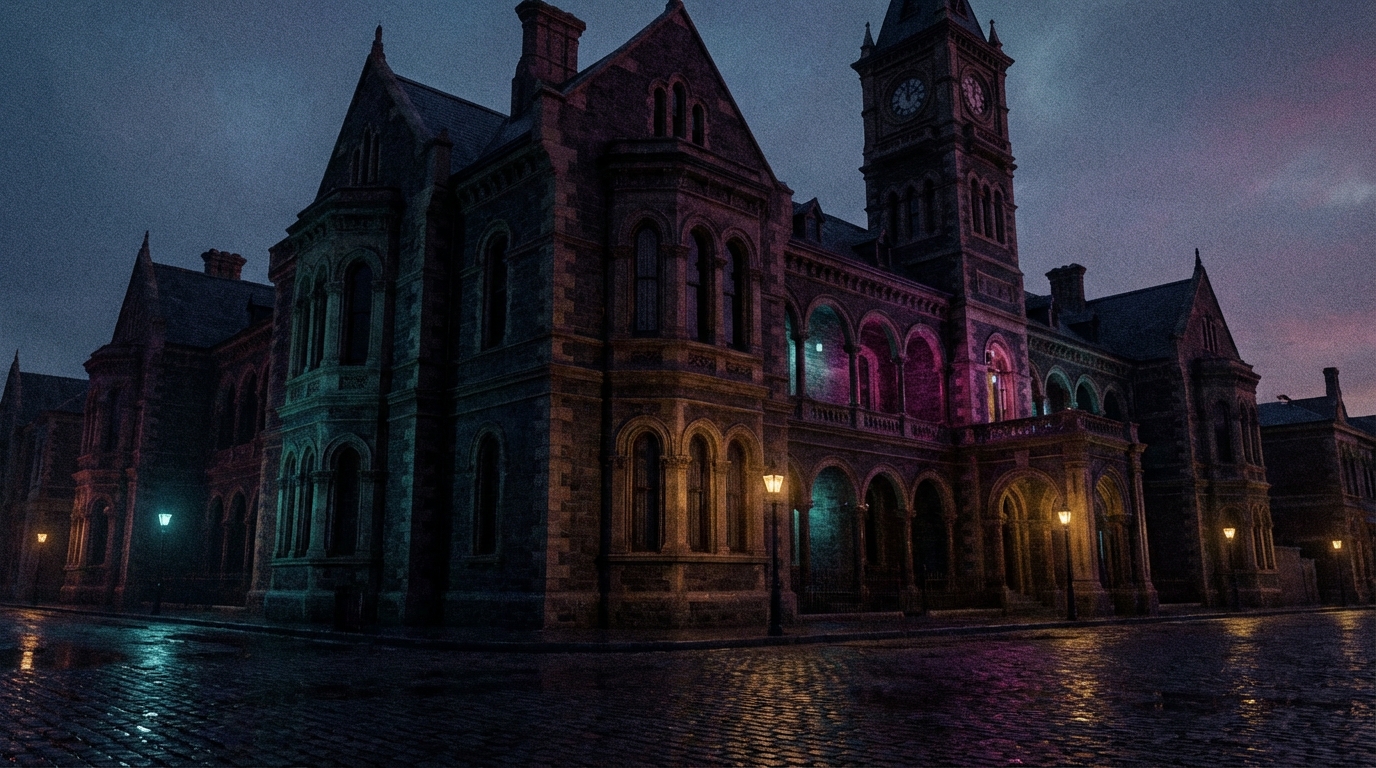
The Queen Victoria Hospital occupied a site in Adelaide that became synonymous with the beginning of life for generations of South Australians. Within its maternity wards, the sounds of newborn cries mingled with the quiet conversations of nurses attending to mothers recovering from the physical demands of childbirth. The hospital's architecture reflected the institutional aesthetics of its era—solid, functional buildings designed to accommodate the specific requirements of women's healthcare whilst projecting the permanence and reliability that patients and families sought in medical institutions.
The hospital's position within Adelaide connected it to the broader social fabric of South Australia. Families from across the state made their way to its doors when pregnancy complications demanded specialist attention, whilst Adelaide residents knew the hospital as the place where neighbours, friends, and family members gave birth and received care for conditions that earlier generations had suffered in silence or treated with remedies of uncertain efficacy.
Services and Specialisation
Throughout its ninety-year existence, the Queen Victoria Hospital accumulated expertise in the full spectrum of women's health services available in each successive era. Obstetric care remained the institution's foundation, with maternity wards accommodating the routine deliveries that constituted most of the hospital's work alongside the complicated cases that required intervention.
Gynaecological services addressed conditions affecting women throughout their lives, from adolescence through menopause and beyond. Surgical capabilities allowed treatment of conditions that earlier generations of women had simply endured, whilst outpatient clinics provided ongoing management and preventive care.
The hospital developed protocols and practices refined through thousands of cases, its staff learning from experience what worked and what did not. Senior practitioners passed knowledge to junior colleagues, creating institutional memory that shaped care even as medical science advanced and new techniques superseded old approaches. This accumulated wisdom made the Queen Victoria Hospital more than simply a building housing medical equipment—it became a repository of expertise that could not be easily replicated elsewhere.
Notable Staff
The Queen Victoria Hospital attracted healthcare professionals dedicated to women's and children's health, many of whom built careers spanning decades within its walls. Lola Jenner exemplified this commitment, beginning a nursing career at the hospital that would eventually span four decades across both the Queen Victoria Hospital and its successor institution. Born in Port Pirie in 1948 to a working-class family where illness was a constant presence, Jenner transformed early experience caring for her chronically ill sister into a vocation that would shape thousands of young lives.
Her tenure at the hospital during the 1970s and 1980s established her as a figure of quiet authority—the nurse who noticed what others missed, who held space for unspoken pain, and who became the emotional ballast for both frightened children and overwhelmed colleagues. Her philosophy of seeing the whole child rather than merely the medical chart influenced younger practitioners who trained alongside her and carried her approach into their own careers.
The hospital's nursing staff, midwives, and physicians collectively shaped the experiences of countless families who passed through its wards. Their skill and dedication during moments of vulnerability—the anxiety of complicated deliveries, the grief of losses, the joy of successful births—left marks on institutional memory that persisted long after individual practitioners had retired or moved on.
Lives That Began Within Its Walls
The maternity wards of the Queen Victoria Hospital witnessed the first moments of lives that would later prove consequential in ways no one could have anticipated. On 15 August 1975, Jeremy Marcus Harding entered the world within its walls, the infant who would grow to become Detective Inspector Harding of Broken Hill—a man whose methodical mind and unwavering commitment would shape twenty-four years of distinguished police service investigating mysteries that sometimes defied conventional explanation.
Three years later, on 3 September 1978, Jessica Anne Jenkins drew her first breath in a small maternity ward at the hospital. The day passed mostly unremarked by the wider world, but the daughter born to Thomas and Elizabeth Jenkins would rise through nursing ranks to become Director of Nursing at the Royal Adelaide Hospital, her career arc connecting two of South Australia's most significant medical institutions.
The Murphy children arrived in the early 1980s, each birth marking the expansion of a family whose members would later become entangled in investigations far removed from the ordinary circumstances of Adelaide life. On 2 April 1983, John and Evelyn Murphy welcomed their first child, Jasper William Murphy, at 4:27 in the afternoon after a lengthy delivery. Weighing 3.6 kilograms and measuring 52 centimetres, the newborn brought tears of happiness to his parents, who could not have imagined that their son would grow into an award-winning investigative journalist driven by an insatiable desire for truth.
Less than three years later, on the warm morning of 28 January 1986, Olivia Evelyn Murphy arrived at 7:42 AM, eagerly anticipated by her parents and her three-year-old brother. The second Murphy child would develop her own investigative instincts, eventually working as an art consultant and researcher before joining her brother in pursuing mysteries surrounding the Tasmanian property they would one day purchase together.
These births, routine at the time, acquired retrospective significance as the individuals who emerged from the Queen Victoria Hospital's maternity wards shaped events far beyond anything their parents could have envisioned whilst holding newborns in those antiseptic-scented rooms.
The Hospital's Legacy
By the 1980s, the Queen Victoria Hospital faced challenges common to healthcare facilities throughout Australia. Infrastructure designed for nineteenth-century medicine struggled to accommodate the technological requirements of contemporary practice. Financial pressures mounted as healthcare costs escalated and funding models shifted. The recognition grew that modern medicine increasingly required integration rather than specialisation in isolation—that women's and children's health services could be delivered more effectively through combination than through separate institutions operating in parallel.
The merger announced in the late 1980s brought together the Queen Victoria Hospital and the Adelaide Children's Hospital, creating the Adelaide Women's and Children's Hospital that opened in 1989. The new institution occupied a sprawling site on King William Road in North Adelaide, its heritage sandstone facades blending with modern clinical facilities in an architectural expression of continuity and progress.
The transition was not without difficulties. Staff from both predecessor institutions brought distinct cultures and practices that required reconciliation. Some mourned the loss of institutional identities that had developed over nearly a century. The Queen Victoria Hospital as a separate entity ceased to exist, its name surviving only in historical records and the memories of those who had passed through its doors.
Yet the hospital's legacy persisted in less tangible forms. The expertise accumulated over ninety years—the clinical knowledge, the nursing practices, the institutional understanding of how to care for women through pregnancy and childbirth—flowed into the merged institution. Staff who had trained at the Queen Victoria Hospital carried its approaches into the new organisation, influencing care long after the original institution had formally dissolved.







