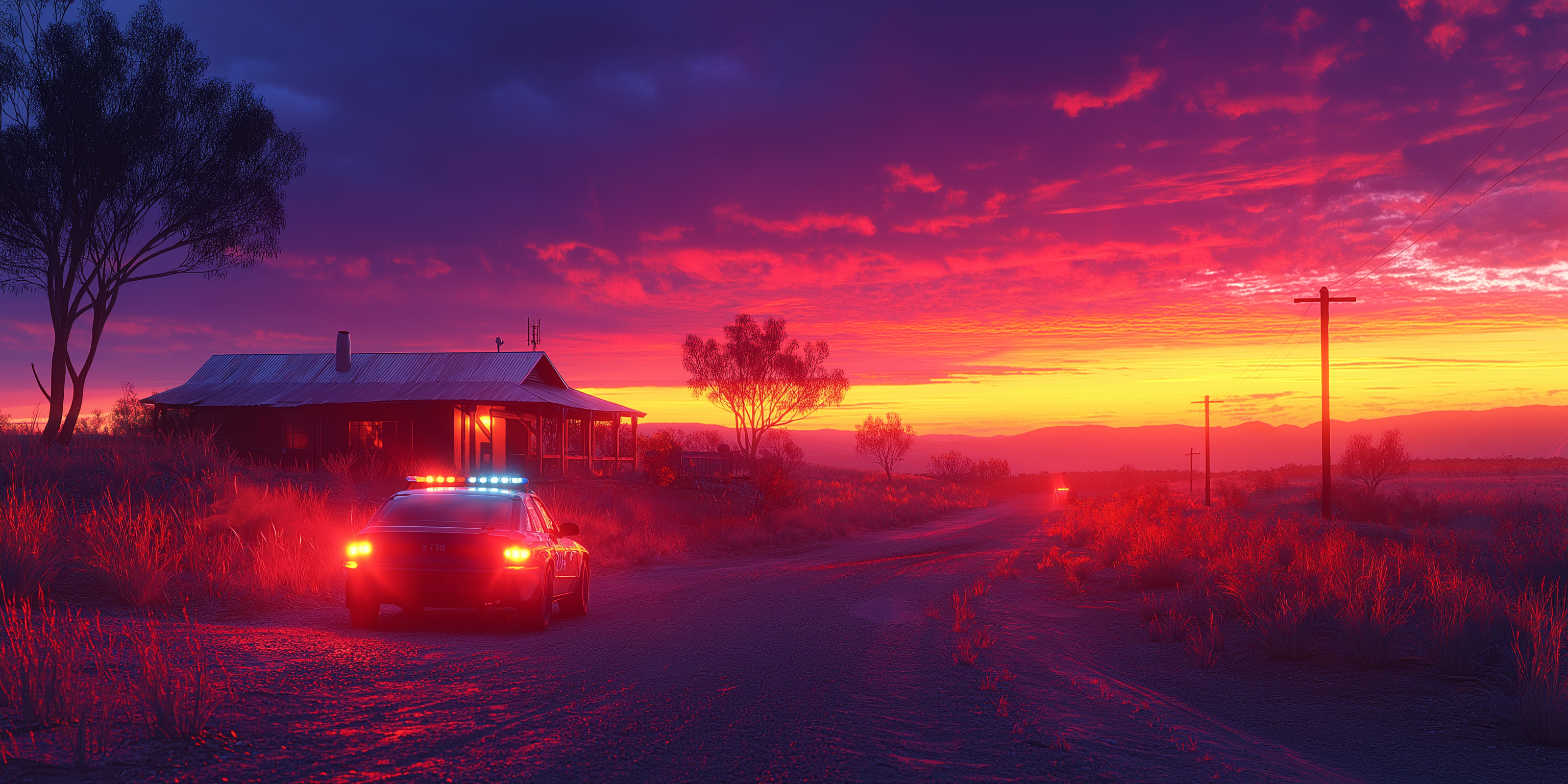
Philip Raymond Johnson
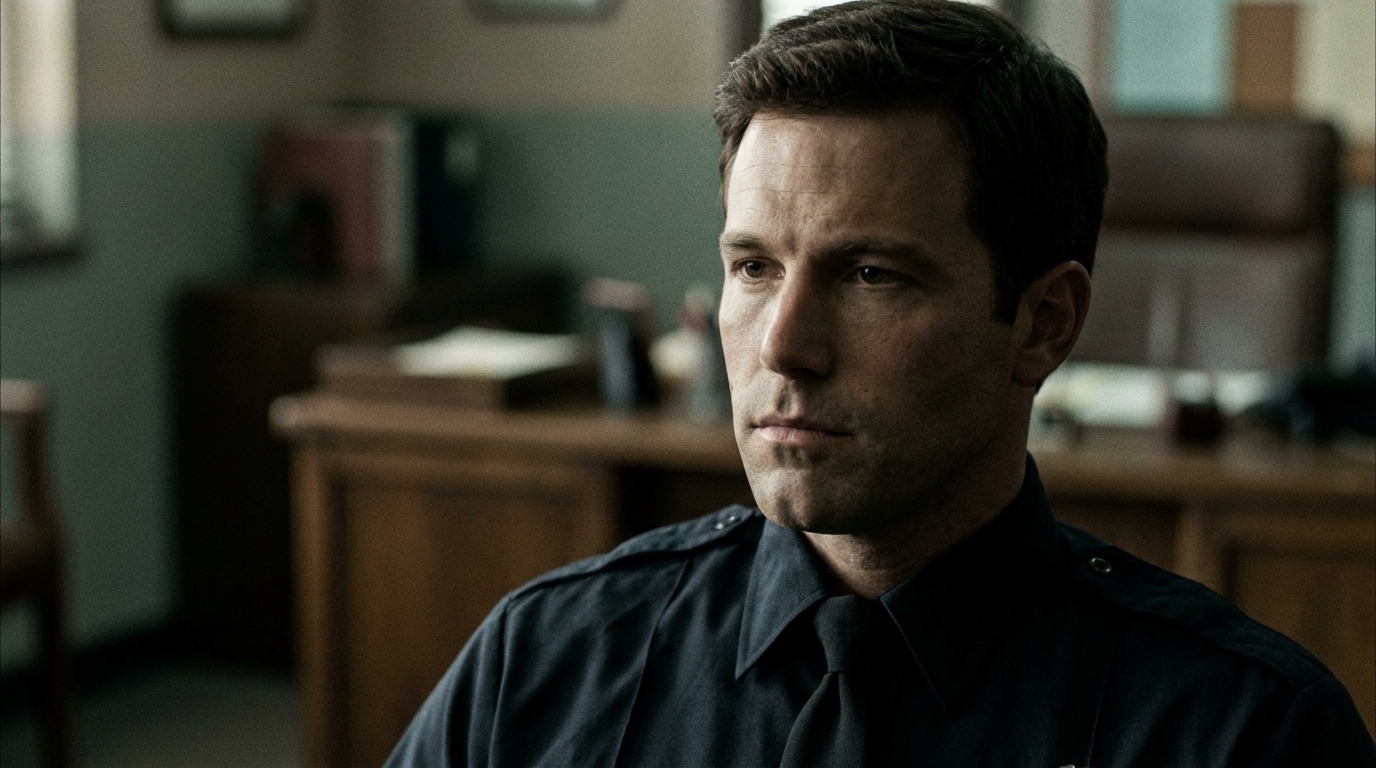
Senior Constable Philip Raymond Johnson (12 March 1959 – 17 June 1994) embodied the quiet steadiness that Broken Hill's police force relied upon in its darkest hours. A miner's son who returned to serve the community that raised him, Phil became the measured counterweight to Detective Barry Glasson's intensity during the Silverton Strangler investigation. His cautious voice urged evidence over instinct, procedure over passion—wisdom that went unheeded as young women continued to vanish. A devoted husband and father, his death in a roadside accident at thirty-five left a void that the briefing room bearing his name can never fill.
A Miner's Son
The maternity ward of Broken Hill District Hospital welcomed Philip Raymond Johnson at 7:23 on the morning of 12 March 1959, his arrival announced by lusty cries that the attending nurse later described as remarkably determined for so small a creature. His father, Albert Morris Johnson, received the news at the end of a night shift underground, emerging from the cage lift at the North Mine with coal dust still blackening the creases of his face. He walked the three kilometres home rather than wait for the bus, needing time to absorb the magnitude of becoming a father.
Albert Johnson had worked the mines since his sixteenth birthday, following his own father and grandfather into the darkness beneath Broken Hill's iron-rich earth. It was brutal work that aged men prematurely, that filled their lungs with dust and their dreams with the ever-present fear of collapse. Yet it also bred a particular kind of resilience—a stoic acceptance of hardship combined with fierce loyalty to fellow workers. These values would transfer to his son as surely as the Johnson surname.
Margaret Anne Johnson (née Walker) had met Albert at a hospital fundraiser in 1955, where she was serving sandwiches and he was attempting to look comfortable in borrowed dress shoes. She worked as a nurse at the same hospital where she would later deliver their children, her shifts often overlapping with Albert's in ways that meant family dinners required careful coordination. Margaret brought gentleness to balance Albert's gruffness, a quiet faith in education and self-improvement that she would instil in all her children.
The Johnson household occupied a modest fibro cottage on Wolfram Street, within walking distance of both the mine and the hospital. The garden, such as it was, consisted mainly of hardy natives that could survive Broken Hill's punishing summers, though Margaret maintained a small vegetable patch through sheer determination and careful rationing of water. The house itself was clean but spare, furnished with practical items accumulated over years of careful saving.
Phil's early childhood unfolded in the rhythms common to mining families: shift changes that structured daily routines, pay weeks that brought brief abundance followed by careful economy, community gatherings where children ran wild whilst adults discussed union matters and weather forecasts with equal gravity. He learned early that work was not merely occupation but identity, that a man's worth was measured by his reliability and his willingness to stand beside his mates when circumstances demanded.
Two sisters followed Phil into the family: Susan in 1962 and Martha in 1965. Both girls inherited their mother's quieter temperament, content to occupy themselves with books and drawing whilst Phil channelled his father's restless energy into neighbourhood adventures. He was protective of his sisters from the start, walking them to school even when his mates teased him for it, standing between them and the rough boys who sometimes lurked near the corner store.
Education and Early Calling
Broken Hill Primary School received Phil in 1965, a stocky boy with his father's square jaw and his mother's watchful eyes. He proved an average student academically, his mind wandering during arithmetic lessons and his handwriting remaining stubbornly illegible despite countless corrections. What he possessed instead was a practical intelligence that teachers struggled to measure—an ability to solve problems through observation and persistence rather than abstract reasoning.
The playground revealed his true talents. Phil emerged naturally as the boy others looked to when disputes required settling, when teams needed captaining, when someone had to negotiate with the bigger kids from the year above. He wasn't the largest or the fastest, but he possessed an instinctive fairness that commanded respect. Teachers noted his tendency to intervene in conflicts, to position himself between antagonists and talk situations down before fists flew.
His mother noticed too. "You've got the peacekeeper's gift," she told him one evening after he'd mediated a dispute between Susan and Martha over possession of a hairbrush. "Some people are born to stand between trouble and those who can't defend themselves." Phil didn't fully understand her meaning at the time, but the words lodged somewhere deep, germinating slowly into vocation.
High school at Broken Hill High brought new challenges and opportunities. Phil discovered rugby union in his second year, his compact build and low centre of gravity making him ideally suited to the forward pack. He played with controlled aggression, channelling energy that might otherwise have found less constructive outlets. By his final two years, he captained the first XV, earning respect through leading by example rather than commanding from the sidelines.
The Broken Hill Fire Brigade's cadet programme occupied his school holidays, introducing him to emergency response and the particular satisfaction of helping people in crisis. He learned to manage chaos, to prioritise actions when everything seemed urgent, to remain calm when others panicked. These skills would prove invaluable in his eventual career, though at the time they simply felt like useful ways to spend summers that might otherwise have drifted into boredom.
Career guidance sessions in his final year crystallised something that had been forming for years. When the visiting careers officer asked what he wanted to do after school, Phil answered without hesitation: "Join the police." The officer nodded, unsurprised. Some students required extensive counselling to identify their paths; others arrived already knowing.
The Academy and Sydney Years
The New South Wales Police Academy at Redfern accepted Phil's application in early 1978, his strong references from the fire brigade and school compensating for his modest academic results. He arrived in February, one of forty-seven cadets in his intake, carrying a single suitcase and his father's firm handshake still imprinted on his palm.
Academy life suited his temperament perfectly. The structured days, the physical demands, the clear expectations—all aligned with values he'd absorbed in Broken Hill's mining community. Where some cadets chafed against the discipline, Phil thrived within it. His instructors noted his composure under pressure, his methodical approach to problem-solving, his ability to remain calm when training scenarios escalated.
The marksmanship range revealed unexpected aptitude. Phil had never handled firearms before the academy, his father preferring fishing rods to rifles, but something in the combination of patience, focus, and controlled breathing came naturally to him. His scores consistently ranked among the intake's best, though he never seemed particularly invested in the competition.
More valuable were the lessons in crisis management and community policing—approaches that emphasised de-escalation over confrontation, understanding over enforcement. Phil absorbed these philosophies eagerly, recognising in them echoes of his mother's teachings about the peacekeeper's gift. He graduated in November 1979 with the Cadet Excellence Award, presented for his performance during field exercises where his calm leadership had prevented simulated situations from spiralling into disaster.
Sydney proved overwhelming at first. The city's scale, its noise, its relentless motion—all contrasted sharply with Broken Hill's measured rhythms. Phil found himself assigned to general duties in the inner suburbs, handling everything from domestic disputes to traffic accidents to the occasional pub brawl. The work was varied and often exhausting, but it taught him to read situations quickly, to adapt his approach to different communities and circumstances.
His first commendation came in March 1982, when he helped rescue a family trapped in a house fire before the brigade arrived. The official citation praised his courage and quick thinking, but Phil downplayed the recognition, insisting he'd simply done what anyone would have done. His colleagues knew better; not everyone possessed the calm necessary to enter a burning building whilst others stood paralysed.
Yet Sydney never felt like home. Phil missed the Outback's vast silences, the way you could see weather approaching from hours away, the particular quality of light at sunset when the mullock heaps glowed orange and purple. He missed knowing his neighbours, understanding the community's rhythms, belonging to something larger than himself. When the opportunity arose to transfer back to Broken Hill in 1983, he accepted without hesitation.
Return and Romance
The Broken Hill Police Station welcomed Phil back as Senior Constable Johnson in March 1983, his Sydney experience earning him immediate respect from colleagues who'd known him since childhood. The station operated with a skeleton crew compared to metropolitan commands, requiring officers to handle diverse responsibilities that city specialists would have divided amongst themselves. Phil embraced this variety, finding satisfaction in the direct connection between his work and the community's wellbeing.
His return coincided with a different kind of homecoming. Emily Victoria Brown had grown up in Silverton, the ghost town thirty kilometres west of Broken Hill, where her parents operated one of the remaining general stores serving tourists and the handful of permanent residents. She and Phil had crossed paths occasionally during their school years—Silverton children attended Broken Hill schools—but had never properly connected. That changed at the 1982 Broken Hill Show, where Emily was judging the baking competition and Phil was providing security.
Their courtship proceeded with the deliberate pace characteristic of both their natures. Emily, a primary school teacher with her mother's practical wisdom, appreciated Phil's steadiness and quiet humour. Phil, in turn, found in Emily someone who understood the Outback's rhythms without romanticising them, who could discuss both educational theory and the practical challenges of maintaining a garden in Broken Hill's climate. They married in October 1984 at a small ceremony in Silverton, the reception held at the hotel where Emily's grandfather had once tended bar.
The newlyweds established themselves in a modest house on Beryl Street, close enough to Phil's parents for Sunday dinners but far enough for independence. Emily continued teaching at Broken Hill South Primary School, her classes including several children whose parents Phil dealt with professionally—a overlap that required careful navigation but ultimately strengthened both their community connections.
James arrived in 1986, followed by Laura in 1988. Phil approached fatherhood with the same methodical care he brought to police work, researching child development, attending antenatal classes that his father would have considered unmanly, changing nappies without complaint. He wanted to be present in ways his own father's shift work had sometimes prevented, wanted his children to know him as more than a uniform that came and went at irregular hours.
The Partnership with Glasson
Detective Sergeant Barry Glasson had been working Broken Hill's serious crimes for years before Phil returned from Sydney, but their professional paths hadn't significantly crossed until 1986. Barry's intensity and Phil's measured caution might have created friction; instead, they developed a complementary dynamic that served both men well. Where Barry pursued hunches with relentless determination, Phil ensured procedure was followed, evidence properly documented, chains of custody maintained.
Their partnership solidified during a series of property crimes in early 1987, when Barry's instincts identified the perpetrator but Phil's careful evidence-gathering secured the conviction. The success established their working rhythm: Barry as the driven investigator, Phil as the methodical counterweight who prevented enthusiasm from compromising cases.
This dynamic would be tested to breaking point by the events of September 1988.
Sally Harlow's disappearance landed on Barry's desk like a grenade with the pin already pulled. The historian had been researching disappearances in the Silverton area—a subject that touched old wounds in the community and older fears that sensible people preferred not to examine. When she vanished on 13 September, leaving behind her research materials and a half-eaten breakfast at her accommodation, Barry recognised immediately that this was no simple missing person case.
Phil found himself pulled into the investigation despite his junior rank, Barry valuing his local knowledge and steady presence. The days that followed blurred into a frenzy of witness interviews, search coordination, and mounting frustration as leads evaporated and the media descended on Broken Hill with hungry intensity.
The tension between the two men surfaced during a heated exchange at the station on 20 September—a conversation that sixteen-year-old Violet Dallow would later describe overhearing when she visited to observe her friend Mandy's father.
"We can't just sit on our hands, Johnson," Barry insisted, his voice carrying the steel of accumulated sleepless nights. "Every minute we waste is another minute Sally could be out there, needing our help."
Phil held his ground, his neatly trimmed moustache twitching with the effort of remaining calm. "I understand, Barry. But we can't go off half-cocked. If we push too hard without solid ground to stand on, we'll lose what little credibility we've got left. We need leads, not just instincts."
It was the eternal argument between passion and procedure, urgency and accuracy. Phil believed—truly believed—that careful methodology would serve Sally better than frantic action. He was wrong, though not in the way he feared. Sally was already dead when they had that conversation, murdered the previous day, her body waiting to be discovered with theatrical cruelty outside Silverton.
The discovery on 22 September devastated the investigation team. Phil accompanied Barry to the crime scene, his stomach lurching at the staging that transformed murder into performance. He had seen death before—car accidents, mining incidents, the occasional violence that erupts in isolated communities—but nothing had prepared him for the deliberate artistry of Sally's positioning.
In the weeks and months that followed, Phil watched Barry's obsession consume him. The detective's marriage strained, his health deteriorated, his judgment became increasingly questionable. Phil tried to counsel caution, to remind his colleague that sustainable investigation required sustainable investigators, but his words fell on ears deafened by guilt and determination.
When Violet Dallow vanished from the Girl Guides camp on 30 September and was found murdered days later, Phil understood that his measured approach had failed. The killer—whoever he was—operated on a timeline that didn't accommodate careful procedure. Yet Phil also recognised that abandoning methodology entirely would serve no one, that justice required evidence that would hold up in court, not merely certainty that would satisfy grief.
The Aftermath Years
The Silverton Strangler investigation consumed 1988 and cast long shadows over the years that followed. Phil continued his steady work at the station, handling the routine matters that kept communities functioning whilst Barry pursued the case that had become his obsession. Their partnership cooled without fracturing entirely, the easy camaraderie replaced by professional respect and private concern.
Phil channelled his energies into initiatives that might prevent future tragedies. He helped establish the Community Watch Programme in 1989, encouraging residents to report unusual activities without the stigma traditionally attached to "dobbing." He developed relationships with the Indigenous communities whose knowledge of the land and its dangers had been systematically dismissed by earlier generations of police. He mentored young officers, sharing what he'd learned about balancing dedication with sustainable practice.
At home, he was present in ways that work might have prevented. He coached James's junior rugby team, attended Laura's school concerts, helped Emily mark assignments on evenings when her workload overwhelmed her. The children grew up knowing their father as more than a uniform, understanding his work as service rather than mere employment.
The nightmares came occasionally—dreams of red earth and staged bodies, of questions that had no answers and justice that remained undelivered. Emily learned to recognise the signs: restless sleep, sudden alertness at small sounds, the distant look that meant he was reviewing old details rather than experiencing the present moment. She didn't press him to talk, understanding that some burdens could only be carried, not shared.
Phil's involvement with the Broken Hill Historical Society provided unexpected solace. The organisation's work preserving records of the region's past offered perspective on the present—a reminder that communities had survived previous tragedies, that time eventually transformed even the most acute pain into manageable memory. He contributed to educational workshops for local schools, sharing not just police history but the broader story of how isolated communities had maintained order and mutual support across generations of hardship.
The Final Call
The morning of 17 June 1994 began like countless others. Phil rose early, shared breakfast with Emily and the children, and drove to the station for what promised to be an unremarkable shift. James, now eight, had a rugby match that afternoon; Phil planned to attend after his shift ended.
The emergency call came through at 2:47 p.m. A vehicle accident on the Barrier Highway, approximately forty kilometres east of town. Multiple casualties reported, ambulance already dispatched but police presence required for traffic management and scene preservation. Phil took the call, his response automatic after years of similar deployments.
The details of what followed emerged only through subsequent investigation. Phil was travelling at appropriate speed for the conditions—dry road, clear visibility, moderate traffic. A road train approaching from the opposite direction experienced a tyre blowout, causing the vehicle to jackknife across both lanes. Phil's evasive action was instinctive and correct, but the physics of the situation allowed no escape. His vehicle left the road and struck a culvert at an angle that proved unsurvivable.
He was thirty-five years old.
The funeral three days later drew hundreds to St Patrick's Catholic Church—the same church where Phil and Emily had celebrated James's christening, where the family attended Mass on significant occasions. Officers from across the state attended in dress uniform, their presence a testament to the respect Phil had earned through years of quiet service. Barry Glasson delivered a eulogy that broke halfway through, the hardened detective unable to maintain composure when speaking of the colleague who had tried so often to counsel him toward balance.
Emily's grief was profound but contained, her concern for the children preventing complete collapse. James and Laura, too young to fully comprehend the permanence of their loss, would spend years processing the absence that had suddenly defined their family. The community rallied around them with the fierce protectiveness that small towns reserve for their own, ensuring that practical needs were met even as emotional wounds remained raw.







