
Paul Samuel Smith
Paul Samuel Smith was born into complexity on 23 March 1983 in Adelaide, the first child of Noah Smith and Heather Atwell, whose troubled marriage would fracture when Paul was nine. A talented pianist and businessman, Paul built a life in Broken Hill centred on music, entrepreneurship, and family, marrying his high school sweetheart Claire and raising two children. Yet beneath the surface of devotion lay tensions and complexities that would erupt when his brother Luke's cryptic phone call shattered the foundations Paul had so carefully constructed.
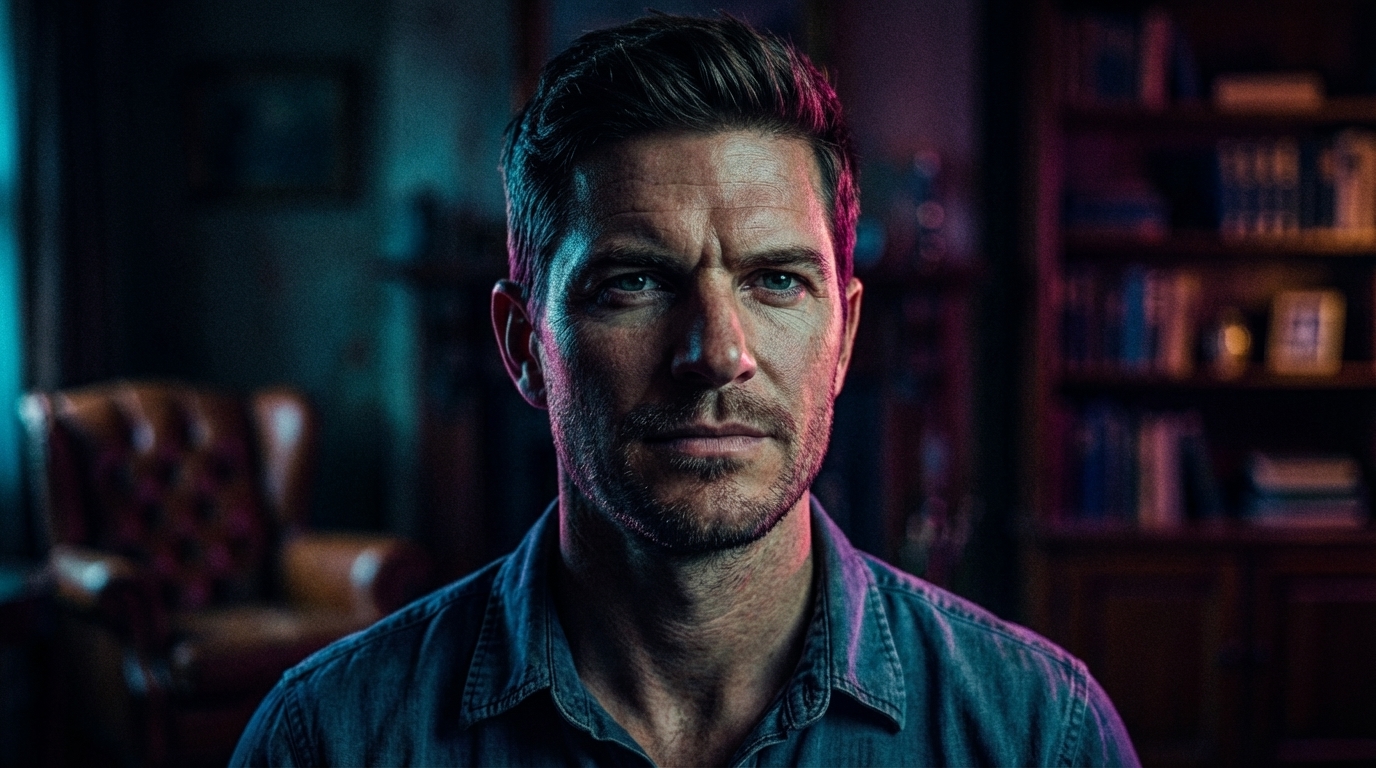
Born into Turbulence
Paul Samuel Smith entered the world on 23 March 1983 at the Queen Elizabeth Hospital in Adelaide, South Australia, the first child of Noah James Smith and Heather Marie Smith (née Atwell). His birth represented hope and possibility for a young couple whose marriage was already marked by undercurrents neither fully understood. Noah, a twenty-one-year-old mechanic with steady hands and quiet determination, greeted his son's arrival with profound relief and determined optimism. Heather, twenty years old and still carrying unspoken trauma from her own childhood, found in Paul's existence a brief period of grace—she could perform motherhood convincingly enough with this first child, could love him with something approaching normal maternal feeling.
The household into which Paul was born existed in the northern suburbs of Adelaide, a modest home where Noah worked long hours at Alltech Motors whilst Heather navigated the demands of new motherhood with varying degrees of success. Paul's earliest years were relatively stable—he was a watchful, serious infant who seemed to absorb the world with careful attention. Yet even in these first years, the marriage between Noah and Heather contained fractures that would eventually widen into chasms.
When Paul was sixteen months old, his brother Luke arrived on 19 July 1984 under circumstances that would fundamentally alter the family's trajectory. Heather's second pregnancy had been catastrophically different from her first, triggering a complete psychological breakdown that culminated in her attempting to perform a caesarean section on herself with broken glass. Luke's birth became an emergency that left Heather hospitalised with psychiatric intervention, the official records listing "placental abruption" as cause—a merciful lie that protected Luke from the truth of his violent entry into the world.
Paul was too young to understand the specifics of what had happened, but the aftermath shaped his childhood profoundly. His mother, previously inconsistent but present, became increasingly distant and fragile. His father, managing the dual demands of work and a wife requiring psychiatric supervision, had little capacity for the kind of present, engaged fatherhood Paul needed. The household was marked by careful silence, by things that couldn't be spoken, by a sense that something essential had broken but must be pretended whole.
Early Brotherhood and Growing Consciousness
As Paul and Luke grew through early childhood, their relationship developed the intensity that often characterises siblings close in age navigating a household marked by instability. Paul, as the elder, assumed a protective role—not through conscious choice but through necessity. He learned to be the responsible one, the careful one, the child who caused no additional problems for parents already overwhelmed. Luke, arriving into the world through trauma and spending his first months with a mother barely functional, developed differently—more sensitive, more attuned to invisible currents, marked by an intensity and mystical inclination that seemed both innate and circumstantially amplified.
The brothers navigated childhood together, each providing for the other what the family structure couldn't adequately supply—companionship, stability, someone who understood without explanation the particular strangeness of their household. They shared a bedroom in the modest Adelaide house, their whispered conversations in darkness creating a private world where they could acknowledge what daylight demanded they ignore.
Paul discovered music during these years, drawn particularly to the piano. The family possessed an upright instrument that had belonged to Noah's parents, and Paul gravitated to it instinctively, picking out melodies by ear before formal instruction. Music became his language—the means through which he could express emotions and complexities that the rigid silence of his household didn't accommodate. His paternal grandparents, Thomas and Mary Smith, recognised this talent and arranged lessons, creating one of the few spaces in Paul's childhood where he received sustained adult attention and validation.
The Separation
The marriage between Noah and Heather finally reached its breaking point in July 1992, shortly after Luke's eighth birthday and his baptism into the Mormon faith. The separation, when it came, felt simultaneously sudden and inevitable—years of carefully maintained distance collapsing into acknowledgement that the performance could no longer be sustained. Noah and Heather divorced swiftly, the legal dissolution of a relationship that had effectively ended years earlier but which both had maintained through a combination of religious obligation, parental duty, and simple inability to imagine alternatives.
For nine-year-old Paul and eight-year-old Luke, the divorce meant their mother's effective disappearance from daily life. Heather retreated to Glenelg, where she could rebuild herself around poetry and solitude rather than around the motherhood she'd never been able to sustain. Her involvement with the boys became sporadic—letters and poems sent on birthdays and holidays, attempts at connection that acknowledged her inability to provide conventional maternal love whilst maintaining some thread of relationship.
Noah gained custody, suddenly a single father to two boys whilst working full-time and navigating his own grief and confusion about the marriage's failure. He did his best—he was steady, reliable, present in the ways he knew how to be. But emotional availability had never been his strength, and the demands of single parenthood whilst managing a mechanic's shop left little capacity for the kind of engaged, emotionally attuned fathering his sons needed.
Broken Hill and New Beginnings
In the aftermath of the divorce, Noah's personal life took an unexpected turn. He met Greta Morrison, a compassionate and community-focused woman whose grounding presence offered the stability he'd longed for during his turbulent first marriage. They married in late 1993, when Paul was ten and Luke was nine, beginning a new chapter that would fundamentally reshape the family structure.
Greta brought warmth and organisation to a household that had functioned on survival mode. She welcomed Paul and Luke with genuine affection, though both boys struggled with the transition—their loyalties remained with their absent mother, and accepting Greta's maternal gestures felt like betrayal. The following year, Greta and Noah welcomed their first child together, Lisa, born in June 1994. Eli followed in April 1995, and the family dynamics shifted again.
Shortly after Eli's birth, Noah and Greta made the significant decision to relocate to Broken Hill, a remote mining town in far western New South Wales. The move represented Noah's desire for a fresh start, away from Adelaide's memories and complications, in a smaller community where he could establish his own business. He opened a mechanics shop—Broken Hill Auto Solutions—that would become his professional identity for the next decade.
For Paul, now twelve years old, the move to Broken Hill was dramatic and disorienting. The town was harsh, arid, and isolated—a place of wide streets and weathered buildings where red earth and scrubby bush extended to horizons that seemed impossibly distant. The family structure had transformed from two parents and two children to a blended household that would eventually include four more half-siblings—Jerome arriving in 1997 and Charles in 2001. Paul found himself occupying a complicated position: eldest child, but not quite part of the new family Noah and Greta were building, loved but separate, included but always conscious of being from the "before" that everyone seemed eager to move past.
Faith and Its Complications
The Mormon faith had been a steady thread through Paul's childhood, initially through Noah's devout practice. After the divorce and remarriage, it became even more central to the family's identity. Greta embraced the church with enthusiasm, and the household structured itself around religious observances—Sunday services, Family Home Evening, adherence to the Word of Wisdom, participation in church activities that consumed enormous amounts of time and energy.
Paul approached faith with characteristic seriousness. He attended services faithfully, fulfilled his responsibilities, studied scriptures with the same careful attention he brought to everything else. Yet even as a teenager, something in him held back from full commitment. Perhaps it was his mother's absence—Heather had never been particularly religious, and her retreat from family life created space for questions about whether the church's absolute certainties could accommodate the complexity of real human experience. Or perhaps it was simply Paul's temperament, his tendency toward analysis and caution that made the faith's demands for unquestioning conviction feel like an ill-fitting garment he was required to wear.
The expectation of serving a mission loomed over Paul's teenage years like an approaching storm. For young Mormon men, particularly those in families as devout as Noah and Greta's, mission service wasn't optional—it was essential preparation for future roles as husbands, fathers, and church leaders. Paul understood this, felt the weight of familial and community expectation, yet approached the approaching obligation with a mixture of dutiful acceptance and private dread.
Claire and the Promise of Partnership
During his early high school years in Broken Hill, Paul met Claire Elizabeth Clift, a fellow student whose passion for dance paralleled his love for music. Claire, born in April 1982 and thus a year older than Paul, was vivacious where he was reserved, expressive where he was careful, physically confident where he remained perpetually awkward. Their connection developed with the intensity particular to teenage romance in a small town, where limited social options meant relationships either deepened quickly or didn't develop at all.
Claire attended Paul's piano performances at community events; he watched her dance recitals with genuine admiration. They found in each other complementary partnerships—Claire's spontaneity balanced Paul's carefulness, his musical sensibility appreciated her physical expression, her social ease helped navigate situations where his shyness would have isolated him. Their courtship existed within the context of Broken Hill's tight-knit community and the constraints of Paul's religious obligations, both of which added layers of seriousness to what might otherwise have been simple teenage affection.
Yet their relationship from the start existed under the shadow of Paul's approaching missionary obligation. This separation was inevitable and non-negotiable—Paul would leave at nineteen for two years of service, during which communication with Claire would be severely limited. Their teenage romance thus carried the knowledge of approaching interruption, deepening through awareness of its impending suspension.
Mission Service
Paul departed for his mission at nineteen, as expected and required. He served for the requisite two years, fulfilling his obligation with characteristic seriousness and dedication. The mission experience fundamentally shaped him in ways both visible and hidden—he returned physically leaner, emotionally more guarded, and spiritually uncertain in ways he couldn't acknowledge even to himself.
The specific details of where Paul served remain somewhat opaque in family lore, but what emerged clearly was that the mission had exposed him to aspects of church teaching and practice that troubled him. The rigid structures, the constant supervision, the performance of faith as recruitment tool, the pressure to conform absolutely to prescribed patterns—all of it chafed against something in Paul's nature that valued authenticity and struggled with the kind of unquestioning obedience the mission demanded.
Yet expressing doubts was unthinkable. Apostasy represented perhaps the worst fate imaginable in Paul's world—rejection not just of doctrine but of family, identity, and the entire framework around which his life had been constructed. So he buried his questions deep, returning to Broken Hill with the approved narrative of successful service and strengthened faith intact, whilst privately something essential had shifted in ways he could neither acknowledge nor fully suppress.
Education and the Wider World
After completing his mission, Paul pursued his passion for music through formal education at the University of Adelaide. The move back to Adelaide—temporarily leaving Claire behind in Broken Hill and his family—represented both educational opportunity and perhaps unconscious escape from the intensifying pressure to commit fully to the life path everyone expected of him.
Adelaide's music programme exposed Paul to classical and contemporary genres that expanded his understanding far beyond the relatively limited musical vocabulary of his religious upbringing. He encountered composers whose work explored darkness and complexity, performers who brought emotional intensity that felt simultaneously liberating and dangerous, fellow students whose creative expression wasn't constrained by religious frameworks about appropriate content or emotional restraint.
Paul's compositions from this period reflected the internal conflict he couldn't articulate directly. His work contained technical proficiency married to emotional restraint, beautiful surfaces that hinted at depths he wouldn't allow himself to fully explore. His professors recognised talent but also noted a holding back, a refusal to fully commit to the vulnerability that great musical expression demanded. Paul couldn't explain—even to himself—what he was protecting or why full emotional honesty felt so threatening.
Following his music studies, Paul made what appeared to be an unexpected pivot: he enrolled in business studies in Sydney. This decision surprised family and friends who'd expected him to pursue a career as a music teacher or performer. But Paul, ever practical and perhaps sensing that his passion for music existed in uncomfortable tension with his need for financial stability and conventional success, sought to develop entrepreneurial skills that could provide foundation for secure family life.
Sydney represented yet another expansion of Paul's world. The city's scale, diversity, and constant motion exposed him to perspectives and possibilities far removed from the insulated world of his Mormon upbringing and small-town Broken Hill. He encountered business models and philosophies that challenged his assumptions, formed relationships with fellow students whose backgrounds and beliefs differed dramatically from his own, began to understand the wider world in ways that both exhilarated and unsettled him.
During this Sydney period, Paul's faith underwent quiet erosion. Not dramatic apostasy or sudden rejection, but a slow wearing away of certainty, a gradual recognition that the absolute truths he'd been raised with couldn't accommodate the complexity and diversity he now encountered daily. He attended church less frequently, making excuses about study commitments. He questioned teachings about exclusive truth and eternal consequences. He began to see his upbringing not as divinely ordained reality but as one particular cultural formation amongst many.
Yet he couldn't bring himself to reject it outright. Too much of his identity, too many relationships, too much of the life he'd imagined for himself remained bound up in Mormon structures and expectations. So he maintained the performance whilst the conviction behind it slowly bled away, creating an internal division that would characterise his adult life.
Marriage and the Performance of Happiness
Upon completing his business studies, Paul returned to Broken Hill to marry Claire, fulfilling the plans they'd discussed and postponed throughout his years of education. The wedding, conducted in accordance with Mormon custom, represented the culmination of expectations that had been building since their teenage courtship. Claire, whose own relationship with faith was perhaps less complicated than Paul's, embraced the vision of their future together—a partnership centred on shared artistic passions, family, and community.
The early years of their marriage looked, from the outside, like success. They purchased a home in Broken Hill not far from where they'd both grown up. Claire's dance school was thriving, becoming a central institution in Broken Hill's cultural life, bringing in steady income whilst providing her with professional identity and purpose. Paul established business ventures that merged his entrepreneurial training with practical necessity—the specifics remained somewhat vague to outsiders, but appeared profitable enough to support their comfortable middle-class life.
They were active in the local Mormon community, attending services regularly, Paul occasionally performing piano for church functions, both presenting the image of a young couple building the kind of eternal family their faith celebrated. To those observing from outside, the Smith household represented success—attractive young couple, artistic talents, growing business, faithful church participation.
Yet beneath this carefully maintained surface, fractures existed from the start. Paul's performance of faith had become exactly that—performance without conviction, duty without devotion. He attended services because not attending would raise questions and create complications, not because he believed. This created an internal dissonance that manifested as emotional distance, an inability to be fully present even when physically there.
Claire, whose own faith remained more intact, sensed this distance without understanding its source. She interpreted it as personal rejection rather than Paul's private spiritual crisis, felt him withdrawing in ways she couldn't name or address. Their communication developed patterns of careful avoidance—they discussed logistics, coordinated schedules, managed household practicalities, but the deeper conversations about satisfaction, authenticity, the gap between who they'd imagined becoming and who they actually were—these remained unspoken.
Parenthood
Their first child, Mack William Smith, arrived in 2009. Paul greeted fatherhood with a mixture of joy and trepidation, seeing in his son both the promise of continuity and the weight of new responsibility. He was determined to be present and engaged—particularly given his own childhood memories of Noah's emotional distance and Heather's absence. Mack was curious and energetic, gravitating naturally to both his father's music and his mother's physicality, often found either banging experimentally on the piano or attempting dance moves he'd observed in Claire's studio.
Rose Abigail Smith followed in February 2012, completing what Paul and Claire envisioned as their family. Rose was sunny and affectionate where Mack was intense and focused, bringing lightness to the household that balanced her brother's seriousness. Paul delighted in his children in ways that sometimes surprised him—their presence gave him permission to be playful, spontaneous, emotionally present in ways his careful, controlled adult self usually suppressed.
Family gatherings centred on music and dance, the Smith home filled with the sounds of Paul's piano compositions whilst Claire choreographed movements, Mack and Rose performing with unselfconscious joy. In these moments, Paul could almost convince himself that he'd built something worthwhile, that the compromises and performances were justified by the family they'd created together.
Yet the tensions in his marriage with Claire continued to deepen. Their intimacy—both emotional and physical—became characterised by gaps and silences. They functioned well as co-parents and household managers, but the deeper connection that had initially drawn them together felt increasingly elusive. Paul threw himself into work, using business demands as refuge from uncomfortable questions about satisfaction and authenticity. Claire channelled her energies into the dance school and the children, finding in professional success and maternal role the validation that her marriage increasingly failed to provide.
Neither was happy, exactly, but both remained committed to maintaining the structure of their life together. Divorce represented failure too catastrophic to seriously contemplate—it would shatter the careful facade they'd constructed, require explanations neither could give, disrupt the children's stability, prove that Paul had somehow inherited his parents' inability to sustain marriage. So they continued, year after year, performing partnership whilst the genuine connection eroded beneath the surface.
The Extended Family Network
Paul's relationship with Luke remained important throughout his adult life, though geographic distance necessarily limited contact. Luke had relocated to Tasmania, partnering with Jamie Greyson and building a life that looked nothing like the Mormon ideal. Luke's willingness to live authentically as a gay man, to reject aspects of their shared upbringing that denied his identity, represented a courage Paul couldn't help but admire even as it complicated his own compromises with religious demands he no longer believed but continued to perform.
When Luke and Jamie visited Broken Hill, or when Paul occasionally travelled to Tasmania, the brothers maintained connection through shared history and genuine affection, even as the divergent paths their lives had taken created distances that conversation couldn't entirely bridge. Paul's acceptance of Luke's sexuality and relationship represented both genuine brotherly love and perhaps unconscious envy—Luke had broken free from constraints that Paul continued to feel but couldn't bring himself to challenge directly.
Paul's relationships with his half-siblings—Lisa, Eli, Jerome, and Charles—followed more conventional patterns. As adults scattered across distance and life circumstances, they remained connected through occasional family gatherings and obligatory contact, maintaining forms of sibling relationships without depth that daily proximity might have created. Paul occupied the role of responsible eldest brother, the one who'd followed expected paths even as questions about those paths' rightness gnawed at him privately.
His relationship with Noah remained complex. Now in his fifties, Noah had mellowed somewhat from the distant father Paul remembered, but emotional intimacy had never been their pattern. They spoke occasionally by phone, Paul and Claire bringing Mack and Rose to Adelaide for visits, performing the rituals of extended family whilst never quite achieving genuine closeness.
Heather, Paul's biological mother, remained a peripheral figure. She'd sent letters and poems throughout Paul's childhood and adolescence, maintained tenuous connection that acknowledged her inability to provide conventional motherhood whilst preserving some thread of relationship. Paul had visited her occasionally in Glenelg during his university years, awkward encounters where they navigated around enormous silences about Luke's birth and her departure. When Heather died in February 2017, Paul felt grief complicated by anger and confusion—mourning a mother who'd never quite been present, yet whose absence had fundamentally shaped him.
The Cryptic Phone Call
In late July 2018, Paul received a phone call from Luke that would fundamentally destabilise everything. The call came late on 23 July, Luke's voice carrying an intensity and urgency Paul had never heard from his younger brother. Luke spoke in fragments—references to matters he couldn't explain over the phone, desperate requests that Paul trust him and come to Tasmania immediately, suggestions that something significant and perhaps dangerous was unfolding that required Paul's presence and support.
The call left Paul profoundly shaken. Luke had always been the dreamer, the one prone to mystical thinking and visions that existed outside conventional reality. Paul had learned to navigate Luke's intensity with mixture of support and gentle scepticism. But this call felt different—not grandiose delusion or spiritual enthusiasm, but genuine crisis.
Crossing the Threshold
Paul's flight to Hobart on 24 July 2018 represented both literal journey and symbolic threshold. The reunion with Luke at the Berriedale house carried an intensity that confirmed something significant was unfolding. Luke was clearly exhausted, operating on some mixture of determination and desperation. Jamie was present but withdrawn, undercurrents of tension suggesting recent conflict.
What Luke revealed defied comprehension—an artefact called the Portal Key, a literal doorway connecting their suburban Tasmanian home to another world entirely. The display bypassed Paul's scepticism through the simple fact of being undeniably real.
The crossing through the Portal, stepping from familiar space into the alien environment of Clivilius, shattered everything Paul thought he knew about reality, possibility, the nature of existence itself. Jamie, clearly unwilling but unable to resist momentum Luke had set in motion, was there with him—both thrust into circumstances that defied comprehension.
The First Weeks in Clivilius
The early days in Clivilius were marked by shock, survival logistics, and the slow, terrible recognition that return to Earth would not be simple or perhaps even possible. The settlement that would become known as Bixbus formed around the practical necessities of staying alive in an alien environment—finding water, establishing shelter, managing the supplies that Luke ferried through the Portal with increasing difficulty as circumstances on Earth grew more complicated.
Paul's business skills and practical nature proved unexpectedly useful in this new context. He helped establish organisational structures, managed resources, coordinated efforts amongst the growing community of people Luke brought through the Portal either voluntarily or through manipulation that became increasingly difficult to defend. Yet even as Paul contributed practically to survival, his emotional state remained fractured. The faith structures that had shaped his identity had been revealed as inadequate to explain a reality that included literal other worlds. The marriage and family life he'd left behind felt simultaneously infinitely distant and painfully immediate—he thought constantly of Claire and the children, ached with guilt about his absence, yet couldn't imagine how to explain where he'd gone or why.
His relationship with Luke underwent profound transformation in Clivilius. The brotherly affection remained, but it was now complicated by anger at the deception that had brought Paul here, frustration with Luke's messianic certainty about building something new, and the shared trauma of being trapped together in impossible circumstances. They fought frequently—about Luke's methods, about the ethics of bringing others through without full consent, about the future of the community they were building, about whether what they were doing had any meaning or was simply an elaborate exercise in survival without purpose.
Within the first month, Luke made decisions that would fundamentally reshape the community and Paul's experience within it. Noah and Greta arrived through the Portal, bringing with them Paul's half-brothers Jerome and Charles. The reunion was complex—joy at not being entirely cut off from family, anger that Luke had extended his manipulation to include their parents, relief at having Noah's practical expertise and Greta's organisational skills, guilt about the lives they'd all been forced to leave behind.
Noah's mechanical skills proved invaluable to Bixbus's development. He took on the role of Drop Zone Coordinator, overseeing the distribution of supplies critical to the settlement's growth and sustainability. Greta established routines and structures that helped transform a collection of traumatised individuals into something approaching a functional community. Jerome and Charles, younger and perhaps more adaptable, threw themselves into the practical work of building shelter and establishing infrastructure.
Paul's half-brother Eli, who had initially remained on Earth, eventually became the fourth Guardian of Bixbus—one of five individuals who would hold the unique ability to traverse between Earth and Clivilius. This role gave Eli responsibilities and burdens that aged him beyond his years, but it also meant the community maintained vital connection to the world they'd left behind. Lisa, who had been living in Salt Lake City with her husband, would eventually come through as well, though her husband refused to follow, leaving her marriage in ruins.
The Decision and Its Consequences
As the weeks passed in Clivilius, Paul made a decision that would haunt him for the rest of his life. He asked Beatrix Cramer, the second Guardian of Bixbus, to bring Mack and Rose to Clivilius. The request was born from longing, from guilt about his absence, from the desperate belief that having his children with him would somehow make the impossible situation more bearable. His preference was for the children to come without Claire—a calculation born from the complicated state of his marriage, from doubt about whether she would adapt to Clivilius, from the selfish hope that he could have his children without the daily reminder of a relationship that had failed long before he'd crossed through the Portal.
Beatrix, operating under Paul's instructions, found Rose at a playground in Queensland where Claire had relocated with the children in the aftermath of Paul's disappearance. The abduction was swift and efficient. When Claire realised what was happening and tried to intervene, it was too late. Rose was pulled through the Portal, leaving Claire and Mack behind in frantic pursuit.
What followed was catastrophic. Claire and Mack, desperate to reach Rose, managed to follow through the Portal—but the crossing went terribly wrong. The transition that should have been controlled became violent chaos. A motorhome carrying Claire appeared first, materialising in Clivilius with bone-jarring impact. Before anyone could react, a silver car arrived, crashing into the motorhome. Then came a bus, hurtling through the Portal with enough force to create a devastating collision that left metal twisted and bodies broken.
Paul's first sight of his family in Clivilius was Rose running to meet him across the red dust, then the horror of watching vehicles smash together whilst Claire stood in the motorhome doorway. The impact threw her, leaving her with injuries so severe that survival seemed unlikely. Mack emerged shaken but physically intact. Rose, traumatised but unhurt, clung to Paul and Greta whilst medical personnel rushed to extract Claire from the wreckage.
Claire survived the initial injuries, but barely. The primitive medical resources available in Bixbus were inadequate for the severity of her trauma. She lingered between life and death for days whilst Paul maintained vigil, caring for two children who needed explanations he couldn't provide, stability he couldn't offer, reassurance that everything would be alright when nothing was alright and perhaps never would be again. His guilt was absolute—he had asked for this, had requested that Beatrix bring his children, had set in motion the events that had nearly killed his wife and traumatised his daughter.
Rose's Death
The tragedy that would define Paul's existence in Clivilius occurred approximately six weeks after his family's arrival, on 21 August 2018. Leila Grantley was crossing through the Portal to become the fifth and final Guardian of Bixbus. Rose, still adjusting to life in this alien world, was near the Portal area with Greta and a new friend, Charlotte. Violence on the Earth side of the Portal—circumstances Paul would never fully understand—resulted in gunfire during Leila's crossing. A bullet flew through the open aperture between worlds, a projectile that shouldn't have been able to cross dimensions but somehow did.
Rose broke free from Greta's hand in a moment of childlike spontaneity, giggling as she ran toward the Portal. She tripped on the uneven ground. In that same instant, the bullet struck her in the forehead. Death was instantaneous.
Paul's world ended in that moment. Everything else—the alien landscape, the impossible circumstances, the compromises and performances that had characterised his adult life—all of it became irrelevant in the face of his daughter's body lying motionless in the Clivilius dust. He had brought her here. He had asked Beatrix to take her from the playground. He had prioritised his own needs over her safety. And now she was gone, killed by violence that had followed them from Earth, struck down in a world she should never have entered.
Claire, still recovering from her own injuries, barely survived Rose's death. The loss of her daughter, combined with the trauma of the crossing and the realisation that Paul's choices had led directly to Rose's abduction and death, created a rift between them that could never heal. Paul cared for her through the acute stages of grief, but their marriage—already fractured before Clivilius—was effectively over. Whether Claire would survive long-term remained uncertain; Paul suspected that even if her body recovered, something essential in her had been destroyed that could never be repaired.
Building Bixbus
In the aftermath of Rose's death, Paul threw himself into building Bixbus with an intensity born from the need to make her loss mean something. If she had died here, then this place had to become more than just a settlement of traumatised refugees. It had to become a community, a society, something approaching civilisation. Perhaps if Bixbus succeeded, if it became stable and safe and worth the sacrifices demanded, then Rose's death might be justified—or at least bearable.
Paul's leadership abilities, previously expressed through business ventures in Broken Hill, found new purpose. He helped form the Clivilius Lead Council, taking on administrative and organisational responsibilities that shaped Bixbus's development from desperate survival camp into structured community. His practical nature, his ability to coordinate resources and mediate conflicts, his talent for seeing what needed to be done and marshalling people to do it—all of these skills proved invaluable.
He also helped establish the Clivilius Secret Service, recognising that the settlement needed security infrastructure to protect against both external threats and internal instabilities. The organisation's formation reflected hard lessons learned from Rose's death—the Portal area needed to be secured, transitions needed to be controlled, violence from Earth couldn't be allowed to spill into Clivilius unchecked.
His musical talents found expression in community gatherings. He played piano pieces from memory during ceremonies and celebrations, taught songs to children born or brought to Clivilius, created beauty in a harsh place. Music became his means of processing grief that couldn't be spoken, of maintaining connection to the person he'd been before everything shattered.
Mack, now growing up in Clivilius without his sister, became Paul's focus. The boy needed stability, guidance, explanation for the inexplicable. Paul tried to be present in ways he hadn't always managed in Broken Hill, tried to provide the engaged fatherhood that guilt and grief now demanded. Yet the shadow of Rose's absence fell across every interaction—she should have been there, should have been growing alongside Mack, should have been alive.





