
Nola Margaret Greyson (née Patterson)
Nola Margaret Greyson lived seventy-four years carrying the emotional weight of a family that demanded everything whilst giving little in return, her nursing background and natural compassion making her the glue holding together a household marked by her husband's emotional distance and her children's scattered needs. Born into working-class Hobart, she built a life defined by service—to patients, to community causes, to her family—only to watch that life fragment through constant relocations, her daughter's death, and a marriage that survived on duty rather than affection before finally ending in divorce and lonely decline.
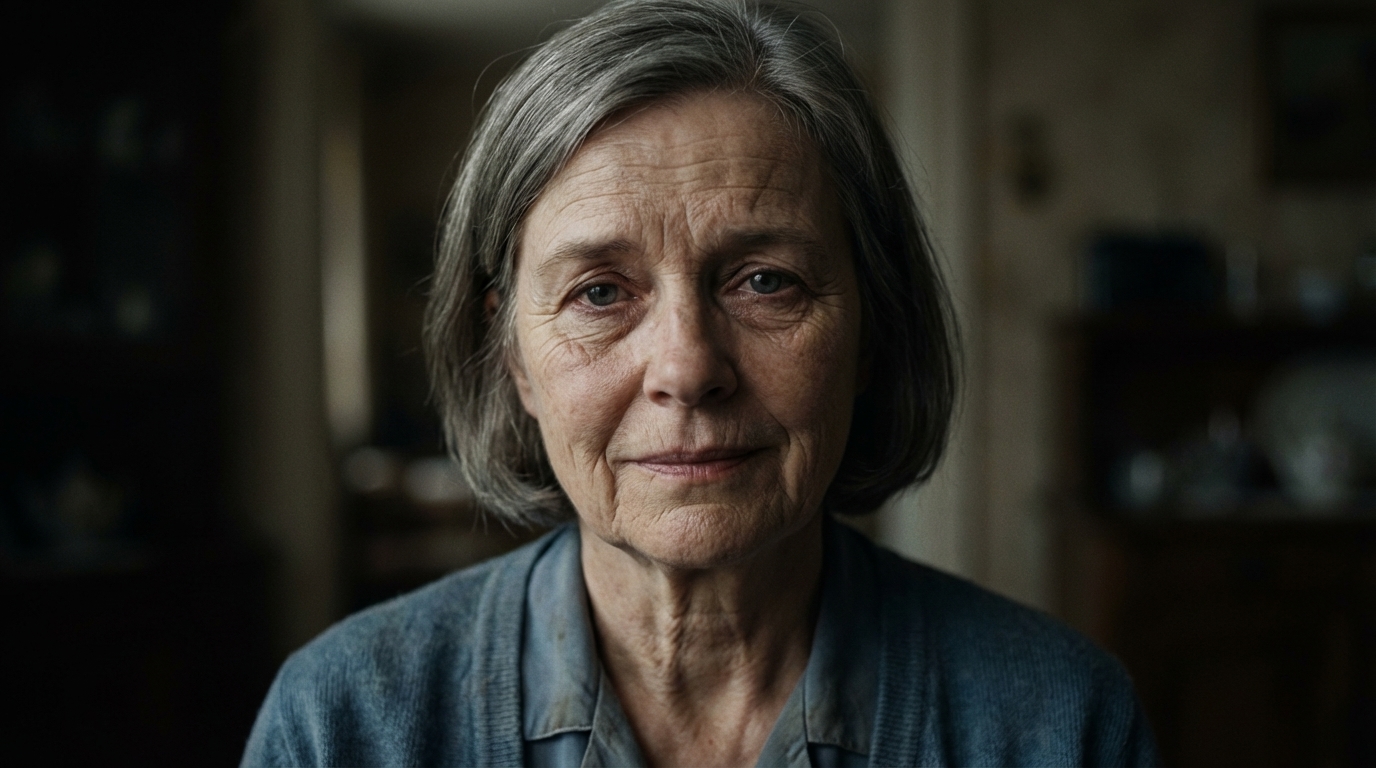
Nursing and Early Independence
Nola Margaret Patterson was born on 2 August 1943 in Hobart, Tasmania, the only child of working-class parents who instilled in her both fierce work ethic and deep compassion for others' suffering. Her father worked at the Hobart docks, her mother Mavis took in laundry and sewing, and both held firm beliefs that their daughter deserved better opportunities than their generation had known. They encouraged her education whilst also teaching practical skills—how to manage a household on limited means, how to make do and mend, how to notice when others were struggling and offer help without making them feel diminished.
Nola's decision to pursue nursing training at Royal Hobart Hospital in 1961, at age eighteen, represented both ambition and practicality. Nursing offered stable employment, respected profession, and the ability to support herself without relying on marriage—unusual independence for a woman of her generation. The training was rigorous, demanding physical stamina and emotional resilience as she learned to manage everything from routine medical care to emergency trauma whilst maintaining the professional composure expected of nurses.
She excelled at the emotional dimensions of nursing that some of her colleagues found burdensome. Nola possessed an intuitive ability to recognise what patients needed beyond medical treatment—the elderly man who needed someone to actually listen rather than just check his vitals, the frightened child who needed gentle explanation rather than just efficient procedure, the terminal patient who needed acknowledgment of their fears rather than cheerful denial. Her supervisors noted this quality in evaluations, recognising someone who understood that healing involved more than just clinical competence.
By 1970, when she met Peter Greyson at a social function neither particularly wanted to attend, Nola had established herself as a respected nurse at Royal Hobart Hospital, financially independent, emotionally mature, and clear about what she wanted from life. Peter, a newly qualified lawyer building his practice, represented stability, respectability, and shared working-class background that meant they understood each other's values without lengthy explanation. Their courtship was brief and practical—both were in their mid-to-late twenties, both ready to settle into adult life, both seeing in the other someone reliable who could help build the stable, respectable existence they'd been raised to value.
Family Tree
Marriage and the Weight of Expectation
They married in early 1971, and Louise arrived that June, faster than either had quite planned but welcomed nonetheless. Nola approached motherhood with the same combination of competence and compassion that characterised her nursing—she read extensively about child development, attended to Louise's needs with meticulous care, and found genuine joy in the daily rhythms of infant care that some women found monotonous. But she also maintained her nursing work initially, juggling shifts with childcare through a combination of her mother Mavis's help and careful scheduling.
Peter's increasing success in his legal practice meant Nola could reduce her nursing hours, then eventually stop working altogether to focus on raising Louise and engaging in the community volunteer work that became her primary identity outside motherhood. She served on committees for various Hobart charitable organisations, coordinated fundraising events, volunteered at community centres—work that utilised her organisational skills and deep compassion for those struggling with circumstances beyond their control.
But the marriage that had seemed so practical and stable in its early years began revealing complications Nola hadn't fully anticipated. Peter was a good provider, certainly—he worked hard, earned well, ensured they could afford a comfortable Granton home and Louise's education at St. Mary's College. But he was emotionally unavailable in ways that became increasingly problematic as years passed. He came home from work, read the newspaper, asked perfunctory questions, then retreated to his study. When Louise had problems or needed guidance, she came to Nola. When household decisions needed making, Nola made them. When emotional crises arose, Nola managed them.
She had married expecting partnership but found herself managing both household and emotional life essentially alone, with a husband who was present physically but absent in every way that mattered. She tried addressing this directly in early years—asking Peter to engage more with Louise, to talk to her rather than just provide for her, to be actually present rather than merely in the same room. But Peter didn't know how to give what Nola was asking for, and eventually she stopped asking, accepting this as the marriage she had rather than the marriage she'd hoped for.
The twelve-year gap before Jamie's arrival in December 1983 reflected this settled distance—they maintained functional partnership, shared a bed, fulfilled marital obligations, but the relationship had become more roommates than lovers, more business arrangement than genuine intimacy. Jamie's birth when Nola was forty represented both unexpected joy and overwhelming burden. She loved this sensitive, gentle boy deeply, but raising an infant at forty whilst managing Louise's teenage needs and maintaining her volunteer work pushed her to her limits.
And Peter, predictably, responded to increased family demands by working more hours, being home less, providing financially but remaining emotionally peripheral. Nola found herself essentially single parenting two children twelve years apart, managing all the emotional labour whilst Peter's contribution remained limited to paying bills and offering occasional opinions on major decisions.
Sarah's Arrival and the Beginning of Fracture
Sarah's birth in May 1986, when Nola was forty-two, brought complications that would ultimately unravel what remained of family stability. From the start, Sarah was fragile, her recurring respiratory issues requiring constant vigilance and frequent medical interventions. Nola's nursing background became simultaneously blessing and curse—she understood the severity of Sarah's condition, recognised warning signs others might miss, but also carried the weight of knowing how precarious her daughter's health truly was.
Her volunteer work disappeared entirely as Sarah's care demands consumed her time and energy. The community organisations she'd dedicated herself to for years had to find new volunteers. The fundraising events she'd coordinated so effectively went on without her. The identity she'd built outside of motherhood vanished, replaced entirely by the role of caretaker to a chronically ill child.
Peter's response was to work longer hours, generating income for mounting medical bills but providing no emotional support as Nola navigated the constant stress of managing Sarah's condition whilst also trying to maintain some semblance of normal family life for Jamie, now two and a half and confused by why his baby sister required so much attention. Louise, fifteen and absorbed in her final years at St. Mary's, helped when she could but was also establishing her own independence, preparing for university, living a life increasingly separate from daily family struggles.
When medical professionals suggested in 1988 that warmer, drier climate might significantly improve Sarah's respiratory condition, Nola saw the recommendation as both hope and threat. Hope that Sarah's health might improve, that the constant anxiety might ease. Threat because relocation would mean leaving Tasmania—leaving her mother Mavis who had been essential support, leaving the community connections she'd built over decades, leaving Louise who would stay behind to finish school.
Peter's Adelaide job offer in late 1988 forced decision. Nola understood the practical logic—better climate for Sarah, career advancement for Peter, higher income to cover medical expenses. But she also recognised what would be lost—Louise's daily presence, her own mother's support, the community where she'd established deep roots. When she tried expressing these concerns to Peter, he framed her hesitations as prioritising her own comfort over Sarah's health, a characterisation that felt simultaneously unfair and impossible to argue against.
The Adelaide and Brisbane Years
The move to Elizabeth, South Australia in early 1989 represented the first major fracture in Nola's identity and support systems. At forty-five, she was starting over in a new city with a five-year-old son, a three-year-old chronically ill daughter, and no support network beyond Peter—who remained as emotionally unavailable as ever whilst working increasingly long hours at his new firm.
She tried establishing herself in the Adelaide community, volunteering at Jamie's school, connecting with other mothers, attempting to recreate the support systems she'd left behind in Tasmania. But it was harder now—she was older, more tired, Sarah's care demands left less energy for building relationships, and the friendships formed felt more superficial than the deep connections she'd developed over decades in Hobart.
Louise's visits during university holidays became lifelines Nola looked forward to with desperate intensity. Her eldest daughter would arrive from Tasmania, and for those concentrated weeks Nola had someone to actually talk to, someone who could help with Sarah and Jamie, someone who saw and acknowledged the weight she was carrying. But Louise always left again, returning to Tasmania and her university studies, and Nola would be alone again with responsibilities that never diminished.
Jamie's friendship with Luke Smith during these years represented one bright spot—seeing her sensitive son find a genuine friend, watching the two boys' close bond develop, knowing Jamie had someone beyond family who valued and understood him. Sarah's health improved somewhat in the warmer climate, though she remained fragile, requiring constant monitoring and frequent medical attention that consumed most of Nola's days.
The 1992 move to Brisbane, when Peter received another career advancement opportunity, devastated what remained of Nola's equilibrium. She had just begun establishing some stability in Adelaide—Sarah was settled in school, Jamie had his friendship with Luke, Nola had started building tentative community connections. Peter's announcement that they would be relocating to Queensland felt like another betrayal, another prioritisation of his career over family stability, though he framed it as necessary for their financial security.
The Brisbane years from 1992 to 1995 marked Nola's lowest period. Jamie, eight years old and grieving separation from his best friend, needed emotional support that required energy Nola barely had. Sarah, six and struggling with yet another relocation, became increasingly withdrawn, her health issues complicated by psychological distress that Nola recognised but felt helpless to address. Peter worked longer hours than ever, home less, engaged less, providing financially whilst remaining fundamentally absent.
Nola carried everything—managing Sarah's complex medical care, supporting Jamie through his grief and adjustment, maintaining the household, and trying somehow to hold together a marriage that had become mere formality. She was exhausted constantly, depleted emotionally and physically, functioning on determination and duty rather than any genuine joy or fulfilment. Her nursing training helped her manage the practical demands, but nothing had prepared her for the emotional weight of being the sole emotional centre of a family that demanded everything whilst her husband remained peripheral.
Sarah's Death and Marriage Collapse
Sarah's death in March 1995 shattered Nola completely. She had dedicated nine years to managing her daughter's fragile health, had sacrificed her own identity and support systems through multiple relocations justified primarily by Sarah's medical needs, had given everything she had to keeping this delicate child alive—and it hadn't been enough.
Standing at Sarah's hospital bedside, holding her daughter's small hand as she died, Nola felt not just grief but rage—rage at the unfairness, rage at Peter's inability to be emotionally present even in this devastating moment, rage at the years of carrying burdens alone that had somehow still failed to prevent this outcome. Louise was there, heavily pregnant with Kain, and Nola clung to her eldest daughter with desperate need, finding in Louise's presence the only comfort available in that impossible moment.
The funeral arrangements, the endless practical details of death that Nola managed with mechanical efficiency, provided structure that prevented complete collapse. But underneath the composed surface, something fundamental had broken. She had organised her entire adult life around caring for others—as nurse, as volunteer, as mother—and her youngest child had died anyway. The meaning she'd found in service felt hollow now, the sacrifices she'd made seemed pointless, the years of managing everything alone whilst Peter remained emotionally absent felt like time stolen that she could never reclaim.
The marriage that had survived on functional partnership despite emotional distance couldn't survive this grief. Nola needed to talk about Sarah, to process the loss, to find some meaning in the tragedy. Peter needed silence, distance, walls against the pain. They occupied the same house but lived increasingly separate lives, maintaining appearances whilst the relationship dissolved into something less than roommates, more like strangers who happened to share space.
Nola continued managing the household through Jamie's remaining school years in Brisbane because she didn't know what else to do, because duty and routine provided structure against the void, because Jamie needed stability even if she couldn't provide genuine emotional support whilst drowning in her own unprocessed grief. But she was fundamentally broken, functioning but not living, performing the role of mother and wife whilst feeling nothing but exhausting numbness punctuated by occasional waves of rage and despair.
Return to Tasmania and Final Years
When Peter and Nola returned to Tasmania in the early 2000s—Jamie had finished school and begun his aged care training, no longer requiring their daily presence—it represented less homecoming than admission of defeat. They settled in Kingston, not Granton where they'd started, in a modest house that reflected diminished circumstances and diminished ambitions. Nola's mother Mavis had died whilst they were in Queensland, another loss Nola had processed from a distance, another reminder of what the relocations had cost.
The divorce in the late 2000s surprised no one who knew them. They had been living separate lives under the same roof for years, bound only by inertia and habit. The divorce was uncontested—neither had energy to fight, neither particularly cared about property settlements, both simply wanted release from a marriage that had long since died in everything but legal status.
Nola moved to a small flat in Moonah, found work at a local community centre coordinating services for elderly residents—work that utilised her nursing background and organisational skills whilst requiring less than full-time commitment. She rebuilt a small life, smaller than what she'd once had but sustainable, marked by quiet routines rather than the constant demands that had characterised her earlier years.
She maintained contact with Louise and Jamie, though relationships felt complicated by the weight of everything unspoken—the years of emotional labour Nola had carried alone, the grief about Sarah none of them knew how to process, the recognition that she had given everything to her family whilst receiving so little genuine support in return. Louise, managing her own complicated life at Jeffries Manor with four children, called regularly but the conversations remained carefully surface-level, discussions of practical matters that avoided the emotional terrain both knew existed beneath. Jamie, now living in Tasmania and in his relationship with Luke Smith, visited occasionally, though Nola recognised something troubling in the relationship she couldn't quite articulate.
Illness and Death
The cancer diagnosis in early 2017 came almost as relief—finally, an end in sight to years of simply persisting without particular purpose, years of managing her own life with the same mechanical efficiency she'd once applied to managing her family's needs. She underwent some treatment initially, more from habit than genuine desire to fight, but the cancer was aggressive and treatment offered limited prospects.
By mid-2017, she'd transitioned to palliative care, moved to a hospice facility in Hobart where nurses—younger women who reminded her of herself decades earlier—managed her care with competence and compassion. Louise visited when she could, bringing flowers and conversation that felt both comforting and hollow, the two women finally having time together but lacking the language to address the decades of complexity between them. Jamie came less frequently, struggling with watching his mother die after having lost his sister years earlier.
Nola died on 11 December 2017, at age seventy-four, with Louise holding her hand much as Nola had held Sarah's hand twenty-two years earlier. Her final words to Louise were reportedly "I'm sorry I couldn't protect her," though whether she meant Sarah or Louise herself or some combination remained unclear. Peter attended the funeral but stood apart, unable to articulate or perhaps even feel the grief that might have been appropriate, their forty-plus-year marriage reduced to awkward distance at its end.
The funeral was modest but better attended than Peter's would be years later—former colleagues from her nursing years, people she'd worked with in community organisations, neighbours who'd experienced her quiet kindness. The eulogy, delivered by a former colleague, spoke of Nola's dedication to service, her compassionate care, her tireless work on behalf of others. What went unspoken was the cost of that service—the years of carrying burdens alone, the sacrifices that went unacknowledged, the emotional labour that depleted her whilst those she served remained unaware of what they demanded.
Louise, standing at her mother's funeral seven months before her own death in the Jeffries Manor Massacre, reportedly told Thomas that she finally understood the warning her mother had given decades earlier—about sacrificing herself to rescue someone damaged, about carrying others' emotional weight whilst receiving nothing in return. Whether Louise recognised how fully she'd replicated her mother's pattern, becoming the emotional centre of the Jeffries family whilst Thomas remained as emotionally unavailable as Peter had been, remained unclear.







