
Noah James Smith
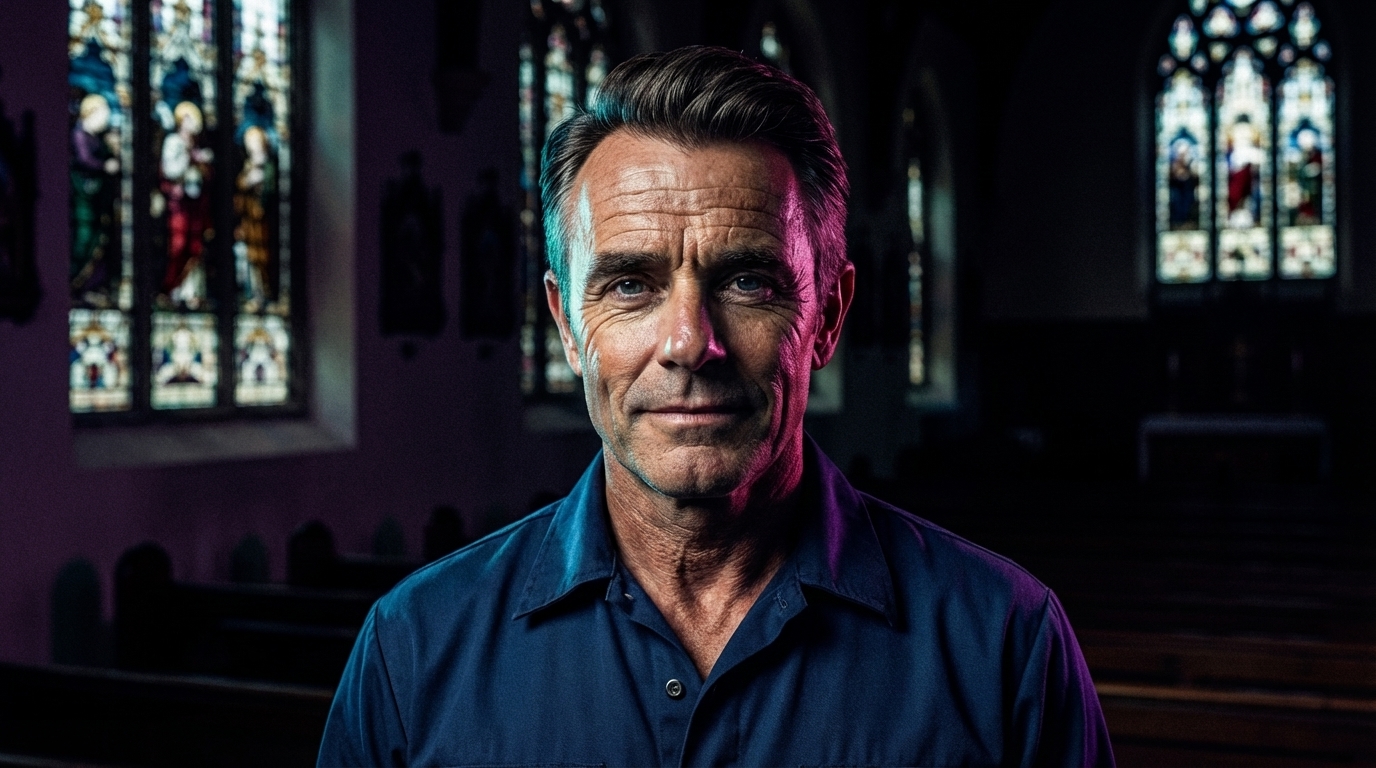
Noah James Smith, born on 12 June 1961 in Leicester, England, is a skilled mechanic and devoted father whose life has been marked by resilience, faith, and an unwavering commitment to family. From the turbulence of a difficult first marriage through the stability he found with Greta Morrison, Noah's journey led him from Adelaide's workshops to Broken Hill's outback, and ultimately to the alien world of Clivilius, where his practical expertise became essential to the survival of the settlement of Bixbus.
Born into Work and Movement
Noah James Smith entered the world on 12 June 1961 at Leicester General Hospital in Leicester, England, the first child of Thomas William Smith and Mary Catherine Smith (née Hargreaves). His arrival brought joy to a young working-class couple whose lives were defined by practical competence and quiet determination. Thomas, a machinist whose skilled hands could coax precision from metal and machinery, greeted his son's birth with the same steady reliability he brought to his work. Mary, a homemaker whose devotion to family provided the emotional foundation their household needed, found in Noah's existence the fulfilment of her maternal aspirations.
The Leicester of Noah's earliest years existed in the shadow of post-war recovery, a city rebuilding itself through industrial labour and working-class resilience. The Smith household at 47 Belgrave Road operated with the rhythms typical of families navigating economic uncertainty—Thomas's wages from the machining shop provided modest but steady income, whilst Mary's careful household management stretched every pound to cover necessities. Their home was marked by orderliness and routine, yet beneath the surface discipline lay genuine warmth and affection that shaped Noah's earliest understanding of what family meant.
When Noah was three years old, the Smith family made the momentous decision to emigrate to Australia, joining the wave of post-war British migration seeking opportunity in the Southern Hemisphere. The journey by ship, weeks of ocean crossing that transformed familiar into foreign, represented a threshold moment in family history—leaving behind extended family, familiar landscapes, and established community for the promise of better prospects in a distant land. For Noah, too young to fully comprehend the magnitude of this change, the migration simply meant that the world he knew transformed from grey Leicester streets to the bright, harsh light of Adelaide.
Adelaide Childhood and the Workshop
The Smith family settled in Adelaide's northern suburbs, establishing themselves in a modest home where Thomas found work at a local machine shop. The Adelaide of Noah's childhood presented stark contrasts to Leicester—brutal summer heat replacing English damp, vast horizons substituting for crowded streets, the distinctive Australian character of egalitarian directness differing from British class consciousness. Yet certain essentials remained constant: Thomas's dedication to skilled labour, Mary's creation of domestic stability, and the family's modest but secure working-class existence.
Noah's childhood unfolded in the particular freedom of suburban Adelaide during the 1960s and early 1970s. The neighbourhood was safe enough for children to roam, the streets wide and sparsely trafficked compared to Leicester's density. Noah spent countless hours exploring, riding bicycles with neighbourhood children, playing cricket in empty lots, absorbing the physical confidence that came from growing up in a place where outdoor space wasn't a precious commodity.
Yet the true centre of Noah's childhood was his father's workshop. Thomas, recognising his son's natural curiosity about how things worked, allowed Noah into the space where engines were repaired, machines maintained, and practical problems solved through mechanical knowledge. The workshop became Noah's education in a different kind of literacy—not words on pages but the language of tools and metal, of understanding how components fitted together to create functional wholes, of developing the patient problem-solving that characterised skilled mechanical work.
By adolescence, Noah had developed competence that extended beyond casual interest. He understood engine repair, could diagnose mechanical problems through observation and testing, possessed the steady hands and careful attention to detail that made the difference between adequate and excellent work. Thomas, pleased but unsurprised by his son's aptitude, began treating him as genuine apprentice rather than merely indulged child. The hours they spent together in the workshop, working in companionable silence punctuated by technical discussion, created bonds that transcended typical father-son relationships.
Noah's formal education at St Paul's Primary School and later Adelaide Technical High School was competent but unremarkable. He performed adequately in academic subjects, meeting requirements without particular distinction. His real education occurred in the workshop, where he absorbed practical knowledge that no classroom could provide. Teachers noted his quiet reliability, his tendency to be overlooked in a classroom yet dependable when given practical tasks to complete. He made friends but maintained no particular intensity of social connection—he was present, liked well enough, but fundamentally more comfortable with machinery than with the complicated social navigation adolescence demanded.
Heather Atwell and the First Marriage
During his late teens and early twenties, Noah worked alongside his father whilst developing his own identity as a skilled mechanic. The work provided both income and satisfaction—there was clarity in mechanical problems, definitive rightness when repairs succeeded, tangible evidence of competence that fed Noah's quiet sense of self-worth. He was twenty years old, established in his trade, when he became romantically involved with Heather Marie Atwell.
Heather, nineteen and working as a shop assistant, possessed a vivacity and emotional intensity that initially attracted Noah. Where he was steady and contained, she was expressive and passionate. Where he approached life with cautious pragmatism, she embraced experience with impulsive enthusiasm. The complementary nature of their temperaments created initial attraction—she found his reliability appealing after a chaotic childhood, whilst he was drawn to her expressiveness as relief from his own emotional guardedness.
Their courtship moved quickly by contemporary standards, progressing from meeting to engagement within months. Both were active in the local Mormon congregation, their shared faith providing framework for relationship that might otherwise have lacked foundation. Noah, raised in the church by parents who'd converted after emigrating, approached religion with the same steady reliability he brought to everything—faithful attendance, dutiful observance, acceptance of teachings without particular mystical conviction. Heather's relationship with faith was more complicated, oscillating between intense devotion and periods of questioning that Noah found unsettling but attributed to youthful searching.
They married in 1982 in a ceremony that satisfied both families' expectations, establishing themselves in a modest home in Adelaide's northern suburbs. Noah continued his work as a mechanic whilst Heather managed their household, both approaching marriage with the earnest determination of young people certain they could build stable lives through dedication and faith.
The Trauma of Paul and Luke's Births
Paul Samuel Smith's arrival on 23 March 1983 initially seemed to fulfil the promise of their marriage. Noah greeted fatherhood with profound relief and determined optimism, seeing in his son the possibility of building the kind of stable family structure he'd experienced in his own childhood. He worked long hours at Alltech Motors to provide for his growing family, approaching his responsibilities with characteristic seriousness.
Yet even during those early months, fractures existed beneath the surface. Heather's adjustment to motherhood was inconsistent—she could perform the role convincingly enough with Paul, loving him with something approaching normal maternal feeling, yet Noah sensed her struggle with demands that came naturally to other mothers. He attributed her difficulties to the normal challenges of first-time parenting, choosing to believe that time and support would help her settle into the role.
When Heather became pregnant again just over a year after Paul's birth, Noah felt cautious optimism. A second child would complete their family, provide Paul with a sibling, demonstrate their successful navigation of the challenges that had marked the early months of parenthood. Yet Heather's second pregnancy was catastrophically different from her first, deteriorating into psychological crisis that culminated in her attempting to perform a caesarean section on herself with broken glass on 19 July 1984.
The emergency of Luke's birth became the defining trauma of Noah's young adult life. The hospital ward, Heather's blood, the terror of watching medical personnel fight to save both mother and infant whilst protecting Paul from the horror unfolding—all of it shattered Noah's carefully constructed sense that dedication and faith could overcome any challenge. The official records listing "placental abruption" as cause became a merciful lie that protected Luke whilst imprisoning Noah in a conspiracy of silence about what had actually occurred.
The aftermath required Noah to navigate impossibilities. Heather returned from psychiatric care fragile and distant, their marriage effectively ended by trauma neither could discuss. Noah managed the dual demands of full-time work and a wife requiring careful supervision, maintaining household functioning whilst grieving the loss of the partnership he'd imagined building. The burden was crushing, yet he continued because abandoning his family was unthinkable—his faith, his upbringing, his fundamental character all demanded he remain present and responsible regardless of personal cost.
Family Tree
The Breaking and the Aftermath
For the next eight years, Noah and Heather maintained the appearance of marriage whilst existing in separate emotional universes. They coordinated about the boys' care, managed household logistics, attended church services together, all whilst avoiding any genuine intimacy or acknowledgment of what had broken between them. Noah threw himself into work, using mechanical problems as refuge from emotional complexities he lacked tools to address. Heather retreated into whatever private world allowed her to survive, present enough to maintain minimal maternal functioning but fundamentally absent in ways both boys felt acutely.
The separation, when it finally came in July 1992, shortly after Luke's eighth birthday and his baptism into the Mormon faith, felt simultaneously sudden and inevitable. Years of carefully maintained distance collapsed into acknowledgment that the performance could no longer be sustained. The divorce proceedings were swift—a legal dissolution of a relationship that had effectively ended years earlier but which both had maintained through a combination of religious obligation, parental duty, and simple inability to imagine alternatives.
Noah gained custody of Paul and Luke, suddenly a single father to two boys whilst working full-time and navigating his own grief and confusion about the marriage's failure. He did his best—he was steady, reliable, present in the ways he knew how to be. He ensured the boys attended school, maintained household routines, provided the practical necessities of daily life. Yet emotional availability had never been his strength, and the demands of single parenthood whilst managing a mechanic's shop left little capacity for the kind of engaged, emotionally attuned fathering his sons needed.
Heather retreated to Glenelg, where she could rebuild herself around poetry and solitude rather than around the motherhood she'd never been able to sustain. Her involvement with the boys became sporadic—letters and poems sent on birthdays and holidays, attempts at connection that acknowledged her inability to provide conventional maternal love whilst maintaining some thread of relationship. Noah neither prevented nor encouraged these contacts, recognising that whatever relationship the boys had with their mother couldn't be forced into patterns that made logical sense.
Greta Morrison and New Beginnings
In the aftermath of the divorce, whilst navigating single fatherhood and the practical demands of survival, Noah met Greta Morrison. Greta, a compassionate and community-focused woman, offered stability and emotional groundedness that Noah had never experienced in his first marriage. Where Heather had been volatile and unpredictable, Greta was steady and reliable. Where his first marriage had been marked by silences and careful avoidance, his relationship with Greta developed through honest communication and mutual support.
They married in late 1993, when Paul was ten and Luke was nine, beginning a new chapter that would fundamentally reshape the family structure. Greta brought warmth and organisation to a household that had functioned on survival mode. She welcomed Paul and Luke with genuine affection, though both boys struggled with the transition—their loyalties remained with their absent mother, and accepting Greta's maternal gestures felt like betrayal.
The arrival of Lisa on 10 June 1994 marked the beginning of Noah and Greta's shared family. Eli followed on 18 April 1995, bringing new dynamics to a household trying to blend "before" children with "after" children, first marriage trauma with second marriage hope. Shortly after Eli's birth, Noah and Greta made the significant decision to relocate to Broken Hill, a remote mining town in far western New South Wales.
Broken Hill Years
The move to Broken Hill represented Noah's desire for a fresh start, away from Adelaide's memories and complications, in a smaller community where he could establish his own business. The town was harsh, arid, and isolated—a place of wide streets and weathered buildings where red earth and scrubby bush extended to horizons that seemed impossibly distant. Yet for Noah, the remoteness felt like opportunity rather than limitation.
He opened Broken Hill Auto Solutions, a mechanics shop that would become his professional identity for the next decade. The business served local residents, farmers, and small businesses, Noah's range of services spanning basic vehicle repairs to specialised engine maintenance for agricultural equipment. His reputation for honesty and meticulous work grew steadily, making his business essential to the community. Known for his integrity and mechanical expertise, Noah became a trusted figure whom people depended upon not just for repairs but for fair dealing in a town where reputation mattered enormously.
During these Broken Hill years, Noah and Greta's family continued to expand. Jerome arrived in 1997, followed by Charles in 2001, completing what they envisioned as their family. The household was lively and close-knit, with strong bonds between the siblings despite the complicated dynamics of a blended family. Noah often worked with his children in the shop, teaching them mechanical basics with the same patient instruction his father had provided him. Eli, in particular, showed strong aptitude, absorbing Noah's knowledge and inheriting his father's work ethic in ways that created special connection between them.
Yet even amidst the success of his business and the stability of his second marriage, Noah carried the weight of his relationship with Paul and Luke. The boys, now teenagers navigating the particular challenges of adolescence in a blended family in a remote town, occupied a complicated position—eldest children, but not quite part of the new family Noah and Greta were building, loved but separate, included but always conscious of being from the "before" that everyone seemed eager to move past. Noah tried to bridge these gaps through practical support and consistent presence, yet the emotional distance that had characterised his own upbringing remained his default mode, making the kind of intimate father-son connection both boys needed frustratingly elusive.
Return to Adelaide
In 2006, Noah and Greta decided to move the family back to Adelaide, partly for educational opportunities for the children and to reconnect with Paul and Luke, who had both been profoundly affected by their earlier family experiences. Noah resumed work as a specialist mechanic in Adelaide, focusing on engine restoration—a role that allowed him to apply his mechanical skills in a more refined capacity. Known for his meticulous approach and attention to detail, Noah became respected in the classic car community, his expertise in restoring older engines making him sought after by collectors and enthusiasts.
During these Adelaide years, Noah maintained his steady presence in his children's lives, supporting their various pursuits whilst continuing to navigate the complicated dynamics of his blended family. Paul had married Claire and was building his life in Broken Hill. Luke had relocated to Tasmania, partnering with Jamie Greyson and building a life that diverged dramatically from Mormon ideals. Lisa was pursuing her own path. Eli was developing into a skilled mechanic under Noah's tutelage. Jerome and Charles were navigating their teenage years. Noah and Greta provided what stability they could, maintaining household routines and religious observances that structured their family life.
The Mormon faith remained central to the household's identity. Greta embraced the church with enthusiasm, and the family structured itself around religious observances—Sunday services, Family Home Evening, adherence to the Word of Wisdom, participation in church activities that consumed enormous amounts of time and energy. Noah approached faith with characteristic steadiness, fulfilling his responsibilities, attending services faithfully, yet his relationship with religion was fundamentally practical rather than mystical. He believed because belief provided structure and community, because it aligned with the values he wanted to instil in his children, not because he experienced the kind of spiritual conviction that characterised Greta's more passionate devotion.
The Call to Gather
In late July 2018, Noah's carefully constructed life was fundamentally disrupted by what their faith community called a "call to gather." The specifics of how this call came, through what channels and with what authorisation, would remain somewhat unclear. Yet the essential message was unambiguous: certain families were being asked to relocate to Clivilius, to join a settlement being established by Guardians, to participate in something larger than individual lives or earthly concerns.
The call came at a moment of particular vulnerability for the Smith family. Paul had disappeared on 23 July, creating crisis that consumed Greta's emotional energy and left her desperate for answers Noah couldn't provide. Claire, Paul's wife, was frantic with worry and anger, making accusatory phone calls that suggested the Smith family was somehow responsible for his absence. The household existed in state of anxious suspension, waiting for news that didn't come, trying to maintain normal routines whilst fundamental questions about Paul's whereabouts and wellbeing remained unanswered.
When Luke arrived on 1 August with revelations about the Portal, about Clivilius, about the community being built in another dimension, Noah's initial reaction was profound scepticism. The claims defied everything he understood about reality, possibility, the nature of existence itself. Yet Luke's intensity and obvious exhaustion, combined with the undeniable evidence of the Portal Key and the aperture it created between worlds, bypassed intellectual objections through simple fact of being demonstrably real.
The decision to accept the call to gather represented an act of faith that transcended Noah's typically pragmatic approach to religion. He wasn't responding to mystical conviction or spiritual certainty—he was choosing to trust his son, to support his family, to step into unknown because remaining in the familiar had become untenable. Greta, whose faith was more passionate and less qualified by pragmatic reservations, embraced the call with conviction that both inspired and unsettled Noah. She saw the gathering as divine purpose, as opportunity to participate in something profoundly meaningful. Noah saw it as necessary step in circumstances that offered no good alternatives.
On 1 August 2018, Noah, Greta, Jerome, and Charles crossed through the Portal into Clivilius, leaving behind Adelaide, their home, their established lives, and any possibility of easy return. The crossing itself was disorienting—stepping through the aperture between worlds, emerging into alien landscape of red dust and strange light, confronting the reality that they now existed in a dimension that shouldn't be possible yet undeniably was.
Bixbus and the Role of Builder
The early days in Clivilius were marked by shock, survival logistics, and the slow recognition that return to Earth would not be simple or perhaps even possible. The settlement that would become known as Bixbus formed around practical necessities of staying alive in an alien environment—finding water, establishing shelter, managing the supplies that Guardians ferried through the Portal with increasing difficulty as circumstances on Earth grew more complicated.
Noah's mechanical skills and practical nature proved invaluable in this new context. His experience with engines, with machinery, with understanding how physical systems functioned and could be maintained or adapted—all of it became essential to Bixbus's survival and development. He took on the role of Drop Zone Coordinator, overseeing the distribution of vital supplies critical to the settlement's growth and sustainability. His responsibilities involved ensuring that resources reached Bixbus's inhabitants efficiently, maintaining the community's transport and storage systems, supporting infrastructure that was literally life-or-death in an environment where Earth's usual support systems didn't exist.
Noah's contributions extended far beyond coordination. His mechanical expertise allowed him to create solar-powered storage facilities, improve resource distribution, maintain essential equipment, and solve the countless practical problems that arose in a settlement being built from almost nothing in an alien world. Working alongside his children—particularly Eli, who had become a Guardian and could travel between worlds—Noah took pride in contributing to a project that combined his technical skills with his dedication to community wellbeing.
The work was exhausting and unrelenting. Resources were limited, problems constant, the pressure to maintain functioning systems whilst the settlement grew created stress that wore on everyone. Yet Noah approached these challenges with the same steady reliability he'd brought to his mechanics shop in Broken Hill. Problems required solutions. Systems needed maintenance. People depended on infrastructure functioning properly. These were facts that demanded practical response rather than emotional processing, and Noah's temperament was perfectly suited to such demands.
His relationship with Greta deepened during these Clivilius years. The shared experience of navigating impossible circumstances, of building something meaningful despite overwhelming challenges, of maintaining faith and hope when both were tested constantly—all of it created bonds that transcended the ordinary intimacies of married life. Greta provided the emotional stability and spiritual conviction that Noah lacked, whilst Noah offered the practical competence and steady presence that grounded Greta when her faith was tested by harsh realities.
Yet even as Noah contributed to Bixbus's physical development, he remained troubled by the circumstances that had brought them here. Paul's role in requesting that Beatrix abduct his children, the catastrophic arrival of Claire and the children through the Portal, Rose's death from a stray bullet that crossed between dimensions—all of it weighed on Noah with a guilt that was both irrational and inescapable. He hadn't made the decisions that led to these tragedies, yet they had occurred to his family, under circumstances his acceptance of the call to gather had made possible.
Legacy and Ongoing Presence
As Bixbus transitioned from desperate survival camp into structured community, Noah's role evolved from emergency coordinator to long-term infrastructure planner. His later years in the settlement were dedicated to training younger community members, ensuring his knowledge would benefit future generations. His careful planning and innovations in storage and transport systems became foundational to Bixbus's infrastructure, his quiet competence creating stability that allowed others to focus on other aspects of community building.
Noah remained a pillar of support for his children, particularly Luke and Eli, who bore the weighty responsibilities of Guardianship and maintained the vital link between Earth and Clivilius. Although he couldn't return to Earth like his sons, Noah's commitment to his family was unwavering. He adapted his skills and his role to suit the needs of this new world, finding in practical work the same satisfaction and purpose he'd always derived from solving mechanical problems and helping others through his competence.
His relationship with Paul remained complicated by the tragedies that had befallen the family. Claire's ongoing grief over Rose's death, her barely-managed survival in Clivilius, the fracture of Paul's marriage—all of it created painful dynamics that Noah witnessed but couldn't repair. Yet he maintained presence for his grandchildren, particularly Mack, offering the steady reliability that had always characterised his approach to family responsibility.







