Nicholas Patrick Lahey
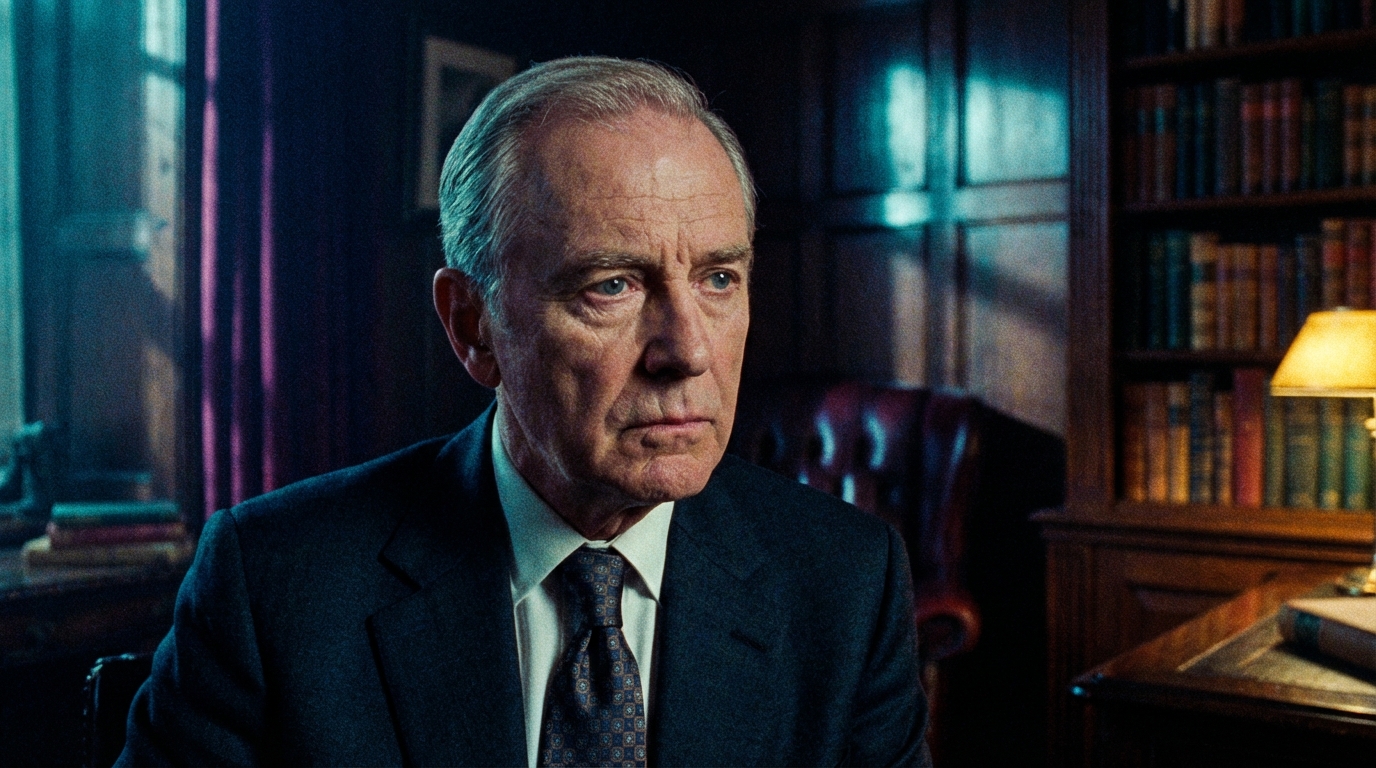
Nicholas Patrick Lahey carried the weight of being the first—the first child, the first to attend university, the first to remain when others departed—transforming primogeniture into both achievement and burden across seven decades of careful scholarship and complicated devotion. Born in 1947, two months before his parents' hasty wedding, he embodied post-war Tasmania's intellectual aspirations whilst harbouring the peculiar loneliness of those who succeed too thoroughly at meeting expectations. His story reveals how academic excellence can become both a sanctuary and a prison, how being the "good son" creates its own form of exile.
The Circumstances of Arrival (1947-1952)
Nicholas entered the world on the 22nd of September 1947 at the Royal Hobart Hospital, his arrival precipitating rather than following his parents' marriage—a chronological discrepancy the family would carefully obscure for decades. The seven-pound infant, arriving "two months premature" according to the official family narrative, was actually perfectly on time, the product of Jane and Patrick's courtship enthusiasm exceeding their matrimonial planning.
This inauspicious beginning shaped Nicholas profoundly, though he wouldn't understand the timeline's significance until discovering his parents' marriage certificate whilst settling his father's estate in 2013. The knowledge that he was the reason for, rather than the result of, their union explained certain tensions he'd always sensed but never articulated—his mother's occasional distant looks, his father's excessive attention to legitimacy and propriety.
The Sandy Bay cottage into which the infant Nicholas arrived was still being renovated, with Patrick working nights to make it habitable whilst Jane managed a colicky baby in half-finished rooms. The small house at 4 Bective Street, purchased with assistance from Jane's parents, was meant to be temporary but would serve the growing family until 1963. The house's incomplete state during Nicholas's first years became a metaphor for the family being constructed alongside it—everything functional but not quite finished, held together by determination more than by design.
Nicholas's earliest memories involved the smell of fresh paint and sawdust, with the sound of his father's hammering providing the rhythm to his childhood. The cottage was small—three bedrooms eventually accommodating four children through careful arrangement and sibling sharing—but its proximity to Mount Wellington and Sandy Bay beach provided compensations that the cramped interior lacked. Patrick's workshop occupied a small shed in the backyard, becoming the site where father and eventually eldest son would communicate through parallel work rather than direct conversation.
As a toddler, Nicholas displayed an unusual focus for sustained tasks, sitting for hours arranging blocks in complex patterns whilst other children of his age ricocheted between activities. Jane's diary noted with concern that her two-year-old son would become distressed if interrupted mid-task, displaying what she termed "an old man's need for completion." This early perfectionism delighted Patrick, who saw in his son's methodical nature a kindred spirit, whilst it worried Jane, who recognised something rigid that might struggle with life's necessary flexibility.
The arrival of his sister Fiona in July 1949 transformed Nicholas from an only child to a protective older brother with remarkable swiftness. At not quite two years of age, he appointed himself as her guardian, attempting to carry her despite being barely larger himself, explaining her needs to adults with precocious authority. The small Sandy Bay cottage became even more crowded with the addition of a second child, Nicholas and Fiona initially sharing a room before later arrangements moved Nicholas to share with Solomon whilst Fiona occupied the third bedroom with Pip after her birth in 1957.
The Shaping Years (1953-1963)
Starting school at Sandy Bay Primary in 1953 revealed Nicholas's intellectual gifts alongside his social challenges. Teachers immediately recognised his exceptional ability—reading at a Year 3 level upon entry, solving mathematical problems that challenged older students. Yet the playground politics bewildered him. He couldn't understand why children lied, why they formed alliances that shifted daily, why they derived pleasure from others' embarrassment. His response was a withdrawal into books, earning him the predictable label of "teacher's pet" that would follow him throughout primary school.
The birth of Solomon in April 1953 created unexpected complications in the increasingly crowded Sandy Bay cottage. Nicholas, accustomed to being the protective older brother to one sister, struggled with a sibling who neither needed nor wanted his oversight. Solomon's self-sufficiency felt like a rejection to the six-year-old Nicholas, who'd defined himself through caretaking. Their relationship, cordial but distant from the start, established a pattern of parallel existence that would persist throughout their lives. The bedroom sharing that necessity imposed—Nicholas and Solomon occupying the second bedroom whilst Fiona had the third—created physical proximity without emotional closeness.
At home during these Sandy Bay years, Nicholas navigated the complex dynamics of his parents' marriage with characteristic observation. He was ten years old when Patrick and Jane departed for Hamburg in early 1961, old enough to sense that something beyond a simple work opportunity was driving the decision, young enough to lack framework for understanding adult complications. The children's six-month stay with Thelma at Jeffries Manor whilst parents were in Germany created disruption that Nicholas managed through increased responsibility for his younger siblings, his caretaking instincts finding outlet in ensuring Fiona, Solomon, and Pip adapted to their temporary displacement.
Patrick and Jane's return from Hamburg in mid-1962 brought subtle changes that Nicholas registered without comprehending. His mother seemed simultaneously more fragile and more determined, his father more careful and more distant. The household atmosphere at 4 Bective Street had shifted in ways that Nicholas couldn't articulate but which made the already small cottage feel even more constrained. When Patrick announced the family would be relocating to New Norfolk in early 1963 for his new position at Boyer Mill, Nicholas experienced relief disproportionate to the news itself—sensing that physical distance might ease tensions he'd observed without understanding.
Academic success at Sandy Bay Primary came easily—too easily, creating its own problems. Nicholas won every school prize without effort, completed assignments in a fraction of the allotted time, and corrected teachers' errors with an innocent precision that embarrassed everyone involved. By Year 5, he was effectively teaching himself, with the school library becoming his real classroom. The librarian, Mrs. Henderson, recognising a kindred spirit, began ordering books specifically for him, creating an unofficial advanced curriculum that sustained his intellectual engagement when formal schooling couldn't.
The New Norfolk Transition and Secondary Education (1963-1965)
The family's relocation to New Norfolk in February 1963 occurred during Nicholas's Year 10, a disruption that affected him less than it might have affected students more socially integrated. At fifteen, he'd already completed three years at Hobart High School, establishing patterns of academic excellence and social isolation that location couldn't substantially alter. The decision to continue attending Hobart High School rather than transferring to New Norfolk District High School meant daily commuting—ninety minutes each way by bus—but preserved continuity during his final secondary years.
The house at 19 Hobart Road provided Nicholas with his first private bedroom, a luxury after years of sharing cramped quarters with Solomon at Sandy Bay. The larger space allowed him to establish study areas, to arrange books with the precision he craved, to create an environment optimised for intellectual work. His room became sanctuary, the door often closed for hours whilst he pursued reading and study that exceeded any curriculum requirement.
The daily commute to Hobart High School from New Norfolk became time for reading and thinking rather than social interaction. Nicholas would board the early bus carrying multiple books, spending the journey absorbed in whatever currently consumed his attention—philosophy, mathematics, literature that teachers hadn't assigned. Other students learned quickly that the tall, serious boy from New Norfolk preferred his books to conversation, leaving him to his solitary transit.
The physical transformation that adolescence brought sat uncomfortably on Nicholas. By Year 11 he'd reached six feet, his frame filling out through the mandatory school rowing programme that required participation regardless of individual inclination. This new physicality attracted attention he found bewildering—girls began noticing him, their interest both flattering and unwelcome. He handled romantic attention with academic analysis, literally creating charts of interaction patterns in his private notebooks, missing entirely the emotional components that defied quantification.
At Hobart High School, Nicholas gravitated towards the debate club and the chess team—activities where interaction followed rules, where intelligence was an asset rather than a liability. He formed his first real friendship with David Chu, the son of Chinese immigrants, another outsider whose mathematical brilliance matched Nicholas's verbal gifts. Together they inhabited the library's furthest corner, conducting conversations in formulae and philosophical propositions, finding in abstraction the connection they couldn't achieve through normal teenage social interaction.
His final years at Hobart High School saw Nicholas accumulate academic prizes with mechanical regularity—dux of his year, state prizes in English and Mathematics, university scholarship offers from multiple institutions. Yet these achievements felt hollow somehow, recognition for facility rather than genuine accomplishment. What he truly wanted—to understand why people behaved as they did, to find frameworks for making sense of human irrationality—remained elusive despite his academic success.
University Awakening (1966-1970)
The University of Tasmania represented a homecoming rather than a departure. Unlike his peers who saw university as an escape from family, Nicholas embraced the opportunity to remain in Hobart whilst pursuing intellectual growth. The daily commute from New Norfolk to the university campus became extension of his high school pattern—ninety minutes each way for reading and thinking, time carved from social demands. His enrolment in the combined Arts/Law degrees reflected ambition tempered by practicality—his mother's dreams meeting his father's pragmatism, the law providing respectable career path whilst Arts permitted intellectual exploration.
Living at 19 Hobart Road throughout his undergraduate years meant continued presence in family life even whilst his attention increasingly inhabited the intellectual world of academia. He maintained his bedroom sanctuary, emerging for meals and occasional family interaction but otherwise absorbed in study that far exceeded course requirements. Patrick and Jane accepted this pattern, recognising that Nicholas's mind worked differently, that he needed intellectual engagement the way others needed social connection.
The university revealed Nicholas's gift for synthesis, connecting disparate ideas across disciplines with elegant ease. His first-year essay on maritime law's philosophical foundations earned department-wide attention, combining legal precedent with Kantian ethics in ways that impressed even the most jaded professors. Yet this intellectual success masked profound personal uncertainty. Nicholas excelled at academic performance whilst remaining mystified by the university's social dimensions—the parties, the societies, the informal networks through which so much actual learning occurred.
The relationship with Margaret Thompson, beginning in his second year, provided unexpected education in emotional complexity. Margaret, studying education, possessed a warmth that melted Nicholas's reserve without threatening his boundaries. She understood his need for structure, didn't demand emotional availability he couldn't provide, found his intellectual intensity attractive rather than off-putting. They'd meet in the university library, work in comfortable parallel silence, occasionally venture to restaurants where Margaret would order for both of them because menu decisions paralysed Nicholas with their infinite permutations.
Their relationship lasted eighteen months, conducted largely through study dates and careful conversations where Margaret taught him that intelligence could coexist with feeling, that precision didn't require emotional coldness. She introduced him to her family, brought him to social gatherings where his silence was interpreted as thoughtful depth, helped him navigate interactions that would have been impossible alone. When she accepted a teaching position in Launceston in 1968, requiring the relationship's end, Nicholas's response—relief mixed with regret—revealed his ambivalence about intimacy that would persist throughout his life.
The student movements of the late 1960s challenged Nicholas's political detachment. While his classmates protested against the Vietnam War and social inequality, he remained in the library, arguing that emotional responses undermined rational discourse. This stance earned him contempt from activists and approval from the faculty, further isolating him between generations. His essay defending conscription on logical grounds—whilst personally opposing the war—exemplified his ability to separate intellect from conviction, a skill that impressed professors whilst disturbing his peers who couldn't understand how someone could argue positions they didn't hold.
The law studies proved ultimately unsuitable, with the profession's practical requirements conflicting with Nicholas's theoretical inclinations. The moot court exercises, where performance and persuasion mattered as much as logical analysis, were torture. The networking expectations, where career advancement depended on relationships built through social interaction, were impossible. After completing the combined degree in 1970, he immediately enrolled in postgraduate philosophy, finding in abstract thought the home that legal precedent hadn't provided.
His Honours thesis—examining epistemological frameworks in colonial Tasmania—earned First Class Honours and publication offers, establishing his academic trajectory. The work combined philosophical rigour with historical research, asking how isolated communities develop knowledge systems without institutional validation. Reading it years later, colleagues would recognise it as profoundly autobiographical—Nicholas was studying his own isolation, seeking theoretical framework for his inability to access ordinary social ways of knowing.
The thesis defence, conducted in a seminar room at the university whilst Nicholas still lived at 19 Hobart Road, was characteristically brilliant and characteristically awkward. Nicholas presented his arguments with perfect logical precision whilst visibly sweating, making eye contact with no one, his hands shaking as he turned pages. The examiners passed him with distinction whilst privately wondering if such profound social anxiety would prevent him from functioning in academic life. They needn't have worried—Nicholas would find in teaching a form of connection that ordinary social interaction could never provide.
The Academic Path (1971-1985)
Joining the University of Tasmania's Philosophy Department as a tutor in 1971 felt like destiny fulfilled. Nicholas discovered an unexpected gift for teaching, his precise explanations illuminating complex concepts for struggling students. Yet he maintained a careful distance, with office hours conducted with the door open and personal revelations strictly prohibited. Students respected him enormously whilst knowing nothing about him—Dr. Lahey became an institution rather than an individual.
His doctoral research, examining moral philosophy in isolated communities, took him throughout Tasmania, interviewing residents of remote settlements about ethical decision-making without institutional oversight. The work, combining philosophical rigour with anthropological method, broke new ground whilst revealing Nicholas's fascination with isolation—perhaps recognising his own emotional remoteness in geographical metaphor.
The relationship with Dr. Elizabeth Hartley, beginning in 1974, seemed promising. A colleague in the History Department, she appreciated Nicholas's intellectual intensity whilst possessing her own emotional reserve. They conducted their courtship through academic conferences and joint research projects, with their intimacy expressed through footnotes and shared citations. The engagement, announced in 1976, surprised no one and excited no one—an appropriate symmetry for a relationship built on mutual respect rather than passion.
The wedding, planned for October 1977, never occurred. Elizabeth accepted a position at Oxford six weeks before the ceremony, asking Nicholas to accompany her. His refusal—citing obligations to family, to the department, and to Tasmania—revealed priorities he hadn't acknowledged. Elizabeth's departure exposed the truth both had avoided: their relationship was an elaborate intellectual exercise, lacking the irrational commitment that sustains actual love. Nicholas returned the ring via registered mail, keeping a carbon copy of the accompanying letter that managed to be both formally correct and emotionally vacant.
The birth of Pip's children would later provide unexpected joy for Nicholas, though the earlier arrival of Solomon in 1953 had destabilised his position as the protective older brother. When Pip was born in December 1957, the ten-year-old Nicholas found renewed purpose in his guardian role. She became his particular responsibility, with her free spirit both delighting and terrifying him. He taught her to read before school, helped with homework throughout her education, and worried constantly about her seemingly reckless approach to life.
The 1980s established Nicholas's reputation as Tasmania's leading moral philosopher. His publications on the ethical implications of environmental degradation gained international attention, though he carefully avoided his sister Fiona's activist rallies despite their philosophical alignment. This separation of thought from action frustrated family members who couldn't understand how someone could articulate moral imperatives whilst refusing to act upon them.
Middle Years and Compromises (1986-1998)
The promotion to Associate Professor in 1986 brought responsibilities Nicholas hadn't anticipated. Department politics required navigation skills that his intelligence couldn't provide. He made enemies through innocent honesty, telling colleagues exactly what he thought of their research with devastating precision. The nickname "The Computer"—meant mockingly—actually pleased him, confirming his aspiration to pure rationality.
The relationship with Jennifer Morse, beginning in 1988, represented Nicholas's last attempt at conventional partnership. A widow with two teenage sons, she brought a chaos that initially energised him. Her house's disorder, the children's emotional volatility, and her own passionate nature provided a counterweight to his structured existence. For two years, Nicholas attempted domesticity, attending school concerts, helping with homework, and pretending an interest in football.
The relationship's end came through gradual recognition rather than dramatic rupture. Jennifer needed an emotional availability that Nicholas couldn't provide. He could perform the partner duties but not inhabit them, could simulate warmth without feeling it. Her sons' adolescent struggles bewildered him—their illogical rebellions, their rejection of obvious solutions, their preference for suffering over sense. When Jennifer suggested living together, Nicholas's panic was so severe that he required medical attention, his body revealing truths that his mind wouldn't acknowledge.
His parents' ageing created unexpected demands. Patrick's increasing frailty required practical support that Nicholas provided efficiently—arranging medical appointments, managing finances, and researching care options. Yet the emotional support remained beyond him. When Patrick attempted father-son conversations about life's meaning, Nicholas responded with philosophical treatises rather than personal revelation. Jane understood her eldest son's limitations, never demanding what he couldn't give, her acceptance both a blessing and a curse.
Professional success continued accumulating. He became a Full Professor in 1994, Department Head in 1996, with numerous publications and international conference invitations. Yet Nicholas felt increasingly hollow, with his achievements mounting whilst his satisfaction diminished. He began experiencing what he privately termed "existential vertigo"—moments where his life's careful construction seemed arbitrary, where decades of rational choices appeared as an elaborate avoidance of actual living.
Tragedy and Transformation (1998-2013)
The phone call about Pip and Greg's death came during Nicholas's evening ritual of marking papers. The Swiss authorities' clinical delivery of devastating news suited his emotional temperature—facts without feeling, logistics without lament. Yet something cracked in Nicholas that October night, a hairline fracture in his carefully maintained rationality that would gradually widen over the subsequent years.
At Pip's funeral, Nicholas delivered a eulogy that astonished the attendees. Instead of his usual measured analysis, he spoke with raw emotion about his baby sister's gift for joy, about how her laughter had been the only thing that could penetrate his protective abstractions. He wept publicly for the first time in memory, his grief so profound that Solomon crossed from Melbourne to support him—their first genuine connection in decades.
The arrival of Pip's orphaned children at his parents' home created an unexpected opportunity for redemption. Nicholas established education funds for Sarah and Oscar, but more importantly, made himself available in ways he'd never managed before. With Sarah especially, her rage and brilliance reminding him of the young Pip, he found a capacity for patience that surprised everyone, including himself.
He began visiting his parents weekly, ostensibly to help with the children but really seeking something he couldn't articulate. Watching the seventy-three-year-old Patrick teaching Oscar woodwork, seeing Jane transform grief into fierce protection of the grandchildren, Nicholas recognised a form of intelligence that his philosophy hadn't encompassed—a wisdom that emerged from engagement rather than from analysis.
His academic work shifted, becoming more personal if less rigorous. Papers on grief's epistemology, on knowledge through loss, on the ethics of survival drew from experience rather than from theory. Colleagues noticed the change, with some dismissing it as age-related decline, others recognising a hard-won humanity. His teaching transformed too, admitting uncertainty where he'd once proclaimed conviction, asking questions he couldn't answer.
Patrick's death on Valentine's Day 2013 struck Nicholas harder than anticipated. Sorting through his father's workshop, finding tools maintained with a devotion that exceeded any museum curator's, Nicholas finally understood Patrick's form of love—expressed through precision, through ensuring things worked, through being reliable rather than demonstrative. The elaborate bookshelf that Patrick had built for Nicholas's office, its joinery so perfect that it required no screws, became a monument to unspoken affection.
Final Phase (2013-2018)
After Patrick's death, Nicholas experienced what he later described as "philosophical puberty at sixty-six"—a sudden, uncomfortable growth that challenged every carefully constructed certainty. He began therapy with Dr. Sarah Brennan (no relation to Solomon's psychiatrist), initially approaching it as an intellectual exercise before discovering emotions he'd buried so deep that he'd forgotten their existence.
The revelation about his conception preceding his parents' marriage, discovered whilst executing Patrick's estate, recontextualised his entire existence. Understanding that he was an accident rather than an intention explained the excessive achievement, the need to justify an existence that had driven seven decades of accomplishment. The knowledge was simultaneously devastating and liberating—if his life began through error, perhaps errors were permissible.
He attempted a reconnection with Solomon, visiting Melbourne quarterly, with their conversations still careful but carrying new undertones of mutual recognition. Both men had constructed elaborate architectures of avoidance, finding in their shared isolation an unexpected commonality. They began exchanging emails about buildings and philosophy, using abstract discussion as a pathway to personal revelation.
When Jane entered the Vaucluse Nursing Home in June 2017, Nicholas became the primary visitor, spending hours reading to her from books she'd once read to him. Her final weeks revealed dimensions of his mother that he'd never suspected—the secrets she'd carried, the complexity she'd managed, the prices paid for family stability. Her confession about Luke Smith, the grandson she'd never acknowledged, taught Nicholas about forms of protection he'd never considered.
Jane's death on the 4th of August 2018 left Nicholas as the family patriarch, a role for which he felt unqualified to fill. At her funeral, he spoke about gratitude—for patience with a son who could think but not feel, for acceptance of limitations he was only beginning to recognise, for demonstrating that love existed in multiple forms, not all requiring words.
Sarah's death four days later, whilst investigating the very cousin Jane had hidden, struck the final blow to Nicholas's carefully ordered world. His favourite niece, the one who'd inherited his intelligence but coupled it with Pip's passion, gone at twenty-nine. The randomness, the waste, the absence of meaning in the timing broke something fundamental in Nicholas's philosophical framework. Sometimes, he realised, there were no reasons, only the aftermath.
Continuing Questions
At seventy-seven, Nicholas Lahey continues at the University of Tasmania, though increasingly as a monument rather than as an active participant. His lectures, once precise dissertations, now wander through personal anecdotes and unanswered questions. Students find him either inspiringly human or disappointingly declined, depending on their expectations of philosophy's purpose.
He lives alone in the same Hobart apartment he's occupied since 1985, with its order gradually softening into comfortable disarray. Books pile on surfaces where they were once strictly shelved, and dishes accumulate in the sink where they were once immediately washed. This relaxation of standards feels like recovery rather than decline, with perfectionism's grip finally loosening after seven decades of strain.
The secret Nicholas carries but never speaks: his discovery, whilst researching his thesis decades ago, of documents suggesting James Jeffries' involvement in refugee smuggling operations that his mother Jane facilitated. The knowledge that his mother's mysterious absences involved genuine moral courage rather than suspected infidelity revolutionised his understanding of ethics, though he never revealed this discovery, protecting her secret even after her death.
His current project, unlikely to be completed, examines the philosophy of failure—how lives that don't meet their intended purposes might possess a different, perhaps greater, value. It's obviously autobiographical, this late-career meditation on the gap between achievement and satisfaction, between external success and internal completion. He writes slowly, without a publication deadline, finding in the process itself the meaning that the product never provided.
Nicholas maintains weekly dinners with Fiona when she's in Hobart, with their relationship finally achieving the warmth that eluded their youth. They discuss their parents, their lost siblings, and the strange Lahey legacy of intelligence without ease. Neither mentions that they're the last ones standing, that the family has reduced to two elderly siblings trying to understand what it all meant before time eliminates the question.
His story continues, shaped by what the philosopher Martin Heidegger called "thrownness"—the circumstances we don't choose but must navigate. Born too early, achieving too much, feeling too little, Nicholas Lahey embodies the particular tragedy of those who succeed at everything except living. Yet his late-life transformation, incomplete but genuine, suggests that wisdom might arrive at any age, that even the most carefully constructed walls can develop doors, that the good son might finally become the genuine person he was always meant to be.
The university, acknowledging his contributions, named a lecture theatre in his honour—The Nicholas Lahey Auditorium. He attended the dedication ceremony, listening to colleagues praise his rationality, his precision, and his intellectual rigour. Afterwards, alone in the space that bore his name, he thought about Pip's laughter, Sarah's anger, his father's silent devotion, and his mother's hidden courage. The theatre, designed for words, filled with the ghosts whose silence said more than any lecture he'd delivered.







