
Nathan Luke Cowdrey
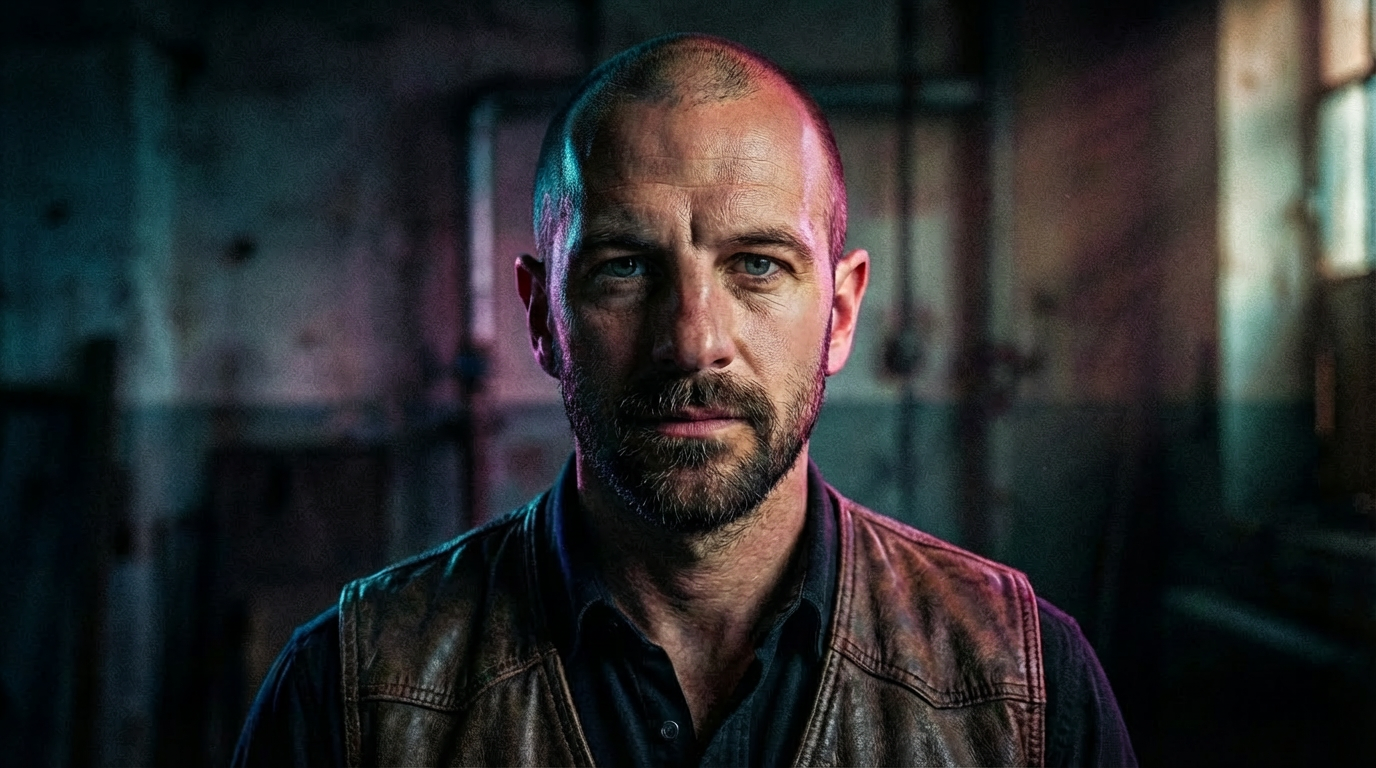
Nathan Luke Cowdrey (born 28 June 1984) is the founding Guardian of Saint Phillis and the only person known to have mastered the CliveMind interface for accessing CLIVE's preserved consciousness. Born in Adelaide to Michael and Helen Cowdrey, Nathan spent his early adulthood drifting through jobs that never quite fit before settling in Hobart as a government business analyst. His January 2018 discovery of a Portal Key—passed to him by his friend Seth Holder—launched a journey that has taken him from idealistic settlement founder to shadow operative. The death of Guardian Amber Styles in London in 2019 shattered both the original Guardian Group and Nathan's belief in safety; since then, he has operated in the spaces between worlds and identities, tracing patterns others cannot see while protecting secrets they don't know exist.
Early Life in Adelaide
Nathan Luke Cowdrey was born on 28 June 1984 at Flinders Medical Centre in Bedford Park, South Australia, the second son of Michael David Cowdrey, an electrician, and Helen Margaret Cowdrey (née Ashworth), a library technician at the State Library of South Australia. The family lived in a modest brick veneer house in Morphett Vale, a suburb of neat lawns and identical rooflines in Adelaide's southern sprawl, where Nathan would spend the first eighteen years of his life.
Joshua Paul Cowdrey had arrived fourteen months earlier, and the dynamic between the brothers established itself early. Where Josh approached problems methodically—dismantling toys to understand their mechanisms, cataloguing his collections with handwritten labels—Nathan was the one who asked questions that had no clear answers. Why did the sky change colour at sunset? What happened to the water that went down the drain? Where did the birds go in winter? Helen encouraged this curiosity, bringing home books from the library on subjects Nathan had wondered about that week, while Michael—patient but practical—tried to channel his younger son's restlessness into something useful.
The brothers weren't close in the way of shared secrets and whispered confidences, but they understood each other. Josh provided structure when Nathan's enthusiasm scattered in too many directions; Nathan pushed Josh to consider possibilities beyond the immediately logical. It was a complementary relationship rather than an intimate one, built on mutual respect and the particular bond of siblings who had navigated the same household, the same parents, the same Sunday dinners at their grandparent's house in Colonel Light Gardens.
Nathan attended Morphett Vale Primary School (1989–1995) and then Wirreanda High School (1996–2001), where he performed adequately without distinction. Teachers noted his intelligence but also his tendency toward distraction, his habit of staring out windows during lessons, his essays that occasionally sparked with genuine insight but more often meandered into tangents that had little to do with the assigned topic. He wasn't troublesome—Nathan had inherited enough of his mother's quiet compliance to avoid conflict—but neither was he the kind of student who left lasting impressions.
What he loved were stories. Science fiction novels consumed by torchlight after bedtime, history documentaries watched on weekend afternoons, the way his grandmother would tell tales of Adelaide in the 1950s that made the past feel as real as the present. Nathan developed an early sense that the world contained more than what was immediately visible, that beneath the ordinary surface of things lay patterns and connections waiting to be discovered.
Education and Early Restlessness
In 2002, Nathan enrolled at Flinders University to study Environmental Management, a choice driven less by passion than by process of elimination. He cared about the natural world in the abstract way most young Australians did, and the degree seemed to offer a path toward something meaningful without requiring the rigid commitment of medicine or law. Josh had already begun studying Information Technology at the University of South Australia, and there was an unspoken assumption that the Cowdrey sons would find professional careers, stable incomes, the kind of security their parents had worked to provide.
Nathan completed his degree in 2005 with results that hovered around the median—respectable but unremarkable. He had enjoyed certain subjects: ecological systems theory, environmental impact assessment, a third-year unit on sustainability policy that briefly ignited genuine engagement. But the gap between studying environmental management and actually managing environments proved wider than he'd anticipated. Graduate positions were scarce, and those available seemed to involve more spreadsheets than ecosystems, more compliance documentation than conservation.
The years immediately following graduation were characterised by drift. Nathan worked briefly for a small environmental consultancy in Adelaide's CBD, conducting desktop assessments for developments that would proceed regardless of what his reports concluded. He spent six months in a call centre, then three months as an administrative assistant at a community health organisation. Each role felt like wearing someone else's clothes—functional but wrong in ways he couldn't quite articulate.
Port Macquarie and the Search for Somewhere
In late 2006, Nathan moved to Port Macquarie on the New South Wales mid-north coast, following a relationship that had seemed promising and a vague sense that Adelaide had become too small, too familiar, too much like the life his parents had lived. The relationship ended within eight months, but Nathan stayed. Port Macquarie was pleasant enough—beaches, a slower pace, the feeling of being somewhere between where he'd been and where he might eventually be going.
He worked in retail, then in a small accounting firm as an office administrator, learning by proximity the basics of financial systems and business processes. It wasn't inspiring work, but Nathan discovered he had an aptitude for understanding how organisations functioned, how information flowed between departments, where inefficiencies accumulated and how they might be addressed. His employer noticed this aptitude and began involving him in minor process improvement projects, documenting workflows, identifying bottlenecks.
By mid-2007, Nathan was twenty-three years old and increasingly aware that Port Macquarie represented a holding pattern rather than a destination.
Tasmania and the Discovery of Routine
The decision to move to Tasmania in early 2008 was, like most of Nathan's major decisions, more intuitive than strategic. A former colleague from the Port Macquarie accounting firm had relocated to Hobart and mentioned that a finance and technology company was hiring. Nathan applied without particular expectation, was offered a position as a junior business analyst, and within six weeks had packed his belongings into his second-hand Corolla and driven onto the Spirit of Tasmania ferry.
Hobart in 2008 was a city in transition—the Museum of Old and New Art hadn't yet transformed the cultural landscape, but there was already a sense of something stirring beneath the heritage sandstone and quiet streets. Nathan found a rental flat in North Hobart, bought a bicycle, and began learning the particular rhythms of island life: the way weather moved across kunanyi/Mount Wellington, the intimacy of a city small enough that strangers became familiar faces within months, the slower cadence of conversation compared to the mainland.
It was at the finance company that Nathan met Seth Holder, a data analyst five years his senior whose office was adjacent to Nathan's cubicle. Their friendship developed gradually—shared lunches in the Salamanca Market precinct, after-work drinks at a pub near the waterfront, increasingly lengthy conversations that ranged from workplace frustrations to philosophy to Seth's particular fascination with conspiracy theories and hidden histories. Nathan found Seth's enthusiasm infectious even when the theories themselves seemed implausible; what mattered was the underlying conviction that the official version of events was rarely the complete story.
The finance company restructured in 2011, and Nathan took the redundancy package as an opportunity rather than a setback. He had been studying part-time for a Graduate Certificate in Business Analysis, building credentials to match the aptitude he'd discovered in Port Macquarie, and within three months had secured a position with the Tasmanian Government—a business analyst role in a department responsible for service delivery systems.
The Architecture of Ordinary Life
The years between 2011 and 2018 were the most settled of Nathan's adult life. He moved to a better flat in Battery Point, within walking distance of the CBD, and established routines that gradually hardened into rituals. The morning bus from Hampden Road. Coffee at Blackwood & Co on Salamanca Place, where he became enough of a regular that the barista—whose name he deliberately never learned, preferring the wordless efficiency of their transaction—knew his order without being asked. The walk along the waterfront to his office building. The particular chair he preferred in meeting rooms, the specific angle of his monitor, the brand of pen he used for handwritten notes.
Nathan recognised this tendency toward ritual as a form of self-management, a way of containing the restlessness that had characterised his twenties within structures that allowed him to function effectively. The environmental management graduate who had struggled to find purpose had become a competent government employee, valued for his ability to translate between technical teams and business stakeholders, to document complex processes in ways that made them comprehensible, to identify where systems weren't serving the people they were designed to help.
His friendship with Seth Holder evolved after Seth left the finance company to become an independent consultant. They saw each other less frequently—monthly dinners, occasional weekend hikes—but the connection deepened rather than faded. Seth's consulting work took him into increasingly obscure corners of the corporate world, and his theories about hidden power structures became more elaborate, more specific, more troubling. Nathan listened without fully believing, but also without dismissing. Seth was brilliant in ways that conventional success metrics failed to capture, and his conviction that something was profoundly wrong with how the world operated resonated with Nathan's own persistent sense that the surface of things concealed deeper truths.
By January 2018, Nathan was thirty-three years old, a senior business analyst working on the Inteq OneGov upgrade—a sprawling government IT project that consumed most of his professional attention. His colleague Verity Sloane, a forensic accountant whose precision and dry humour made the tedious work bearable, had become his closest workplace friendship. His routines were established, his flat was comfortable, his life was stable in ways that his twenties self might have found suffocating but his thirties self had learned to appreciate.
He had no way of knowing that a yellow Post-it note on his monitor would dismantle everything he'd built.
The Envelope and What Followed
The events of 10 January 2018 are documented elsewhere in detail: Seth Holder's cryptic summons, the meeting at Cornerstone Café, the envelope containing five Portal Keys and a letter describing impossible things. What matters for understanding Nathan Cowdrey is not the sequence of events but his response to them.
Another person might have dismissed Seth's letter as the final collapse of a brilliant mind into delusion. Another person might have taken the strange objects to the police, or thrown them away, or simply refused to engage with claims that contradicted everything known about reality. Nathan did none of these things. Instead, he sat alone in Meeting Room 4B on the fourth floor of his government building, read Seth's instructions, and made a choice.
The Portal Key activation—blood drawn, energy released, the wall transforming into something that shouldn't exist—could have been the end of Nathan Cowdrey as a functional person. The voice in his mind that identified itself as Clive could have shattered whatever remained of his grip on sanity. Instead, Nathan stepped through the portal and into Clivilius, emerging in the barren territory that would become Saint Phillis.
The Guardians of Saint Phillis
The formation of the Guardian Group followed Seth's instructions: five individuals, each bound to a Portal Key, each connected to the territory that Clive designated as Saint Phillis. Nathan chose his brother Josh first—not because they were close in the conventional sense, but because Nathan trusted Josh's methodical competence and knew that whatever lay ahead would require skills he himself lacked. Verity Sloane came next, her forensic precision and unshakeable calm making her an obvious choice despite the impossibility of what Nathan was asking her to believe.
Saul Morgan Carter and Amber Louise Styles completed the group, their selections driven by factors that Nathan has never fully explained—instinct, perhaps, or guidance from Clive that he doesn't entirely remember. The five Guardians entered Clivilius together for the first time in February 2018, stood in the red dust of their allocated territory, and began the work of transformation.
Nathan's leadership emerged organically rather than through formal designation. He was the first Guardian, the one who had received Seth's knowledge, the conduit through which information from Clive initially flowed. The others looked to him for direction not because he claimed authority but because he was willing to make decisions when decisions were required, to take responsibility for outcomes when outcomes were uncertain, to absorb the weight of choices that affected everyone.
London 2019: The Fracture
By early 2019, the Guardians of Saint Phillis had expanded their operations beyond their settlement. A penthouse in London served as their sanctuary—high above the city, a place where plans felt possible, where the rules of two worlds could be bent just enough to give them an edge. The windows caught the sun just right in those final weeks, golden light streaking across white walls lined with maps, data, sketches of a future they still believed in.
They had identified something worth exposing: connections within the Clivilius Corporation, patterns of dimensional exploitation that the world wasn't ready to know but perhaps needed to. Josh sat by the window outlining their next move. Saul was buried in financial models. Verity pinned intelligence to the corkboard with quiet efficiency. And Amber was running final checks, her instincts sharper than any sensor, her thoroughness absolute.
None of them heard the knock for what it was. None of them moved fast enough.
Amber stumbled through the door with blood already spreading across her chest. Her eyes were wide—not with fear, but with urgency. Her last word was a command: "Run!"
What followed was chaos. Smoke. Shouting. The sick metallic tang of blood. Saul's voice cracking as he tried to keep her alive. Josh yelling directions, desperation breaking through his usual calm. Verity frozen for a second too long before gripping her Portal Key and vanishing into rainbow light, tears already on her face.
Nathan waited until the last possible second, kneeling beside Amber as her eyes went glassy, her breath hitching once and then never again. He activated his Portal Key with hands stained crimson, arrived in Clivilius with knees buckled and heart in his throat, the scent of burning still trapped in his hair.
He was never the same.
Becoming a Shadow
The others made it out. But something between them broke that night—something unspoken. They scattered, just as their protocol demanded.
Josh buried his grief beneath iron strategy. Verity became a ghost in the information grid. Saul found refuge in economic systems, as though balance sheets could compensate for bloodshed. And Nathan became a shadow.
He drifted between unknown locations, between assignments, piecing together fragments of conspiracy, tracing patterns in silence. He no longer believed in safety—only preparation. He didn't form new alliances. He watched. He studied. He kept his guard razor-sharp, his empathy just beneath the surface, bruised and waiting.
Somewhere in those years of shadow work, Nathan developed a unique capability - the Nathan Protocol.
Edinburgh: The Campbell Assignment
By mid-2024, Nathan had been drawn to Edinburgh by whispers that reached far beyond the city's cobbled streets. The Campbell family name had surfaced in conversations where it shouldn't have, catching the attention of those who understood the significance of certain patterns.
The Leaf & Bean café became his cover. For eight months, Nathan worked as a barista for Daniel Campbell, learning the particular rhythms of a business that served more than coffee. He watched how Daniel handled certain customers, noted the quiet conversations that stopped when he approached, observed deliveries arriving at odd hours. The effects of certain blends—unusual clarity of thought, enhanced perception—reminded him of substances found in Clivilius, though milder, more refined.
The Campbell legacy went deeper than unusual plants or special coffee blends. Hybrid vegetation with properties that defied natural law, tended in hidden greenhouses. Tunnels beneath the estate that weren't just storage chambers but designed routes connecting to something larger. A pact forged centuries ago with the Stewart sisters to protect Jacobites in exchange for soil from Clivilius itself.
Nathan told himself he was investigating the Campbells. The truth—acknowledged in quiet moments walking through Edinburgh's gathering darkness—was that he had begun protecting them. Something about Daniel Campbell reminded him of what he'd once been: a man carrying responsibilities that weighed heavily, protecting something precious without fully understanding its significance.
The Present
Saint Phillis still exists as Nathan's settlement, though his relationship to it has changed. Where once he led its development, now he uses it primarily as transit point—a familiar coordinate for portal travel between the obligations that pull him across two worlds.
The Guardian organisation that once operated as a unified force has fractured into isolated cells, trust shattered alongside dimensional barriers during the Edinburgh Incident of 2022. Coordinating reinforcements or resources through their scattered network takes hours that urgent situations rarely allow. Nathan operates largely alone, connected to his fellow original Guardians through encrypted channels but separated by distance, trauma, and the different paths grief carved for each of them.
In late June 2025, Nathan travelled to Geneva on what appeared to be a solo birthday trip. The historic city—quiet, observant—offered enough distraction to conceal deeper objectives: reconnaissance beneath cathedrals, beside the lake, over coffee in squares where time keeps its own secrets. Some meetings felt like fate; others, like surveillance; still others, like something scripted. The question that builds beneath each moment—whether he is discovering the story or being led through it—has no easy answer.
Nathan Luke Cowdrey, the boy from Morphett Vale who sensed the world contained more than what was visible has been proved right in ways that cost him nearly everything. The government analyst who found comfort in routine now operates in spaces where routine is a luxury and survival depends on reading patterns others cannot see. The settlement leader who believed he could build something lasting has learned that some things cannot be protected, only witnessed as they burn.
He still misses coffee from Blackwood & Co, served by a barista whose name he never learned. It's a small loss compared to everything else, but some mornings—in Edinburgh, or Saint Phillis, or wherever the next assignment takes him—it's the loss he feels most acutely. The reminder that certain doors, once walked through, don't permit return.
The hardest lies to guard, Nathan has learned, are the ones you start telling yourself. But some truths don't wait to be found. They come for you when the clock runs out.







