Nathan James Porter
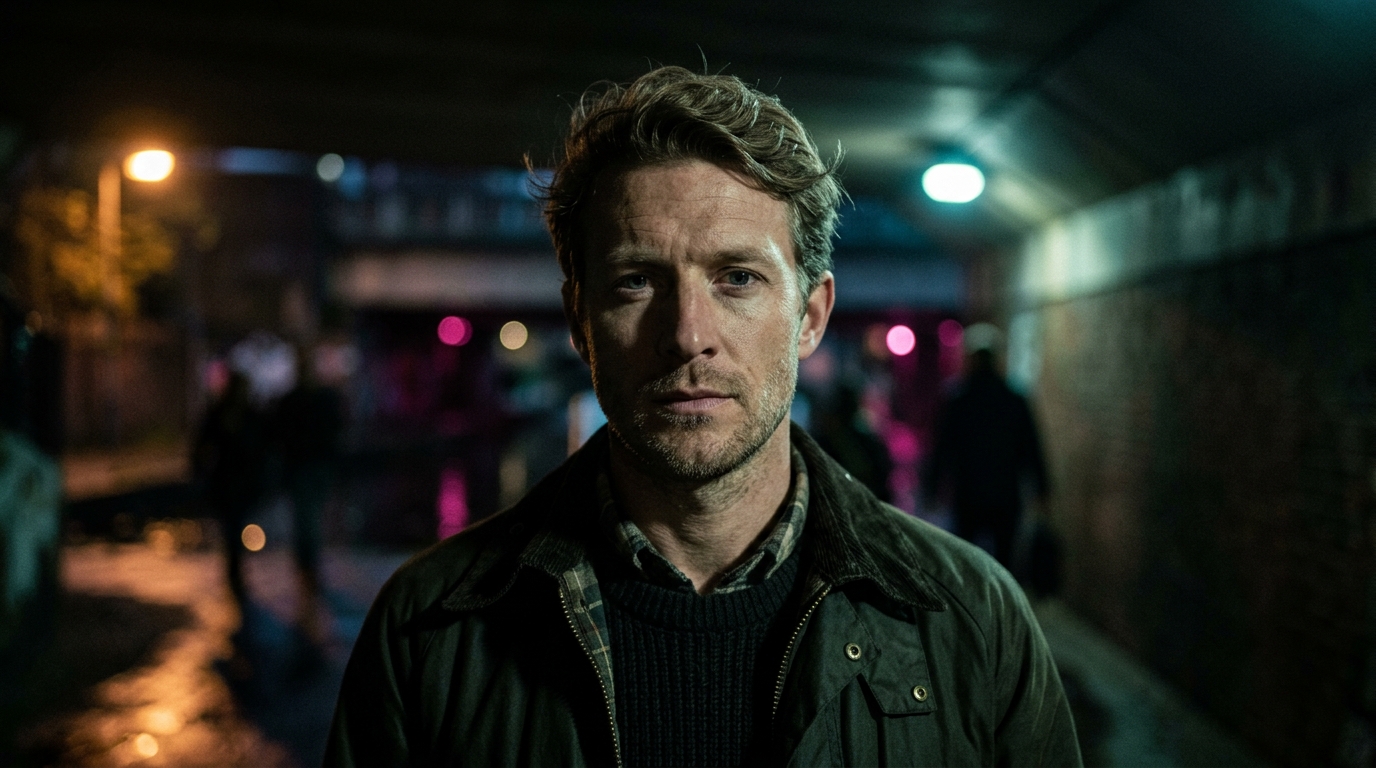
Nathan James Porter (b. 9 April 1993, Bristol) was an environmental engineer raised in a cool, water-obsessed household who turned a childhood on the Severn into a career in sustainable irrigation. Disillusioned by bureaucracy, he was recruited by Killerton Enterprises and crossed the Portal to Bixbus in 2018, where he built the settlement's water infrastructure. He married Sophie Bennett of Brierly in 2020, and the couple raised two children, Samuel and Elise, while Nathan worked against his own upbringing to be a warmer father than his own had been.
A Childhood Measured in Flow Rates
Nathan James Porter was born just after four o'clock on the afternoon of Thursday 9 April 1993, in a maternity ward at St Michael's Hospital in south-central Bristol. A light rain had slicked the pavements that morning and the Avon ran high and brown with spring melt, and his mother, Lillian Porter (née Hughes), passed the gaps between contractions discussing the previous week's rainfall in the Severn basin with the midwife. His father, Graham Porter, stood stiffly at the bedside with an unopened briefcase of coastal-runoff diagrams in the corner, more fluent in floodgate schematics than in the soft unknowability of labour.
There were no visitors that day and no celebration. When Nathan finally cried, Graham's first instinct was to reach not for the boy but for the camera, recording the occurrence as one might log a gauge reading. The detail would have meant nothing to the infant, but it set the temperature of the household he was entering.
Graham was a civil engineer who had built a respected career in flood management and water conservation; Lillian was a hydrologist whose work on river ecosystems took her up and down the catchments of the West Country. They were not unkind people. They were simply people for whom care was a thing expressed through competence — a properly maintained culvert, a correctly calibrated forecast — rather than through warmth. Affection in the Porter house came encoded in flow rates and rainfall figures, and a boy who wanted his parents' attention learned quickly that the surest route to it was to take an interest in water.
Nathan took the interest, and it took root in him. By the age of eight he could read a hydrograph; by ten he was accompanying Graham and Lillian on weekend fieldwork along the Severn and the Somerset Levels, holding the staff for level surveys and learning to recognise the particular smell of a river about to overtop its banks. He grew up understanding the world as a system of inflows and outflows that could, with enough rigour, be made to behave.
He was an only child, and the house in Bristol was a quiet one. There were no siblings to absorb the surplus or fill the silences, only Nathan and two parents who loved him in the manner available to them, which was through instruction. He learned early to be self-sufficient — to amuse himself, to need little, to read the barometer of a room the way he read the river — and the habit of self-reliance hardened into something he would later have to work to unlearn.
His two parents reached him by different routes. Graham was the colder of the pair, a man who measured approval in nods and corrected work without praising it; the warmest thing he ever offered his son was the trust of a real task on a real survey. Lillian was gentler but more absent, forever half away in some catchment of her own, and Nathan learned that the surest way to summon her full attention was to bring her a problem about water. He brought her many. It was, for years, the closest thing he had to conversation with his mother.
He attended Bristol Grammar School from 1998, moving up through its junior and senior years and excelling in mathematics, physics and the environmental sciences. He was a diligent rather than a charismatic pupil, more comfortable with a problem set than a party. In his final year he completed an independent study on flood mitigation across the Somerset Levels that drew quiet notice from a couple of local environmental groups — the first time his competence had earned him recognition from people who were not his parents, and a feeling he would spend much of his life chasing.
Family Tree
Exeter and the Argument for Water
In 2011 Nathan left Bristol for the University of Exeter, enrolling in environmental engineering with a focus on water-resource management. Exeter suited him. The Streatham campus, green and steep and threaded with its own small watercourses, gave him room to think, and for the first time he was surrounded by people who found his preoccupations interesting rather than odd.
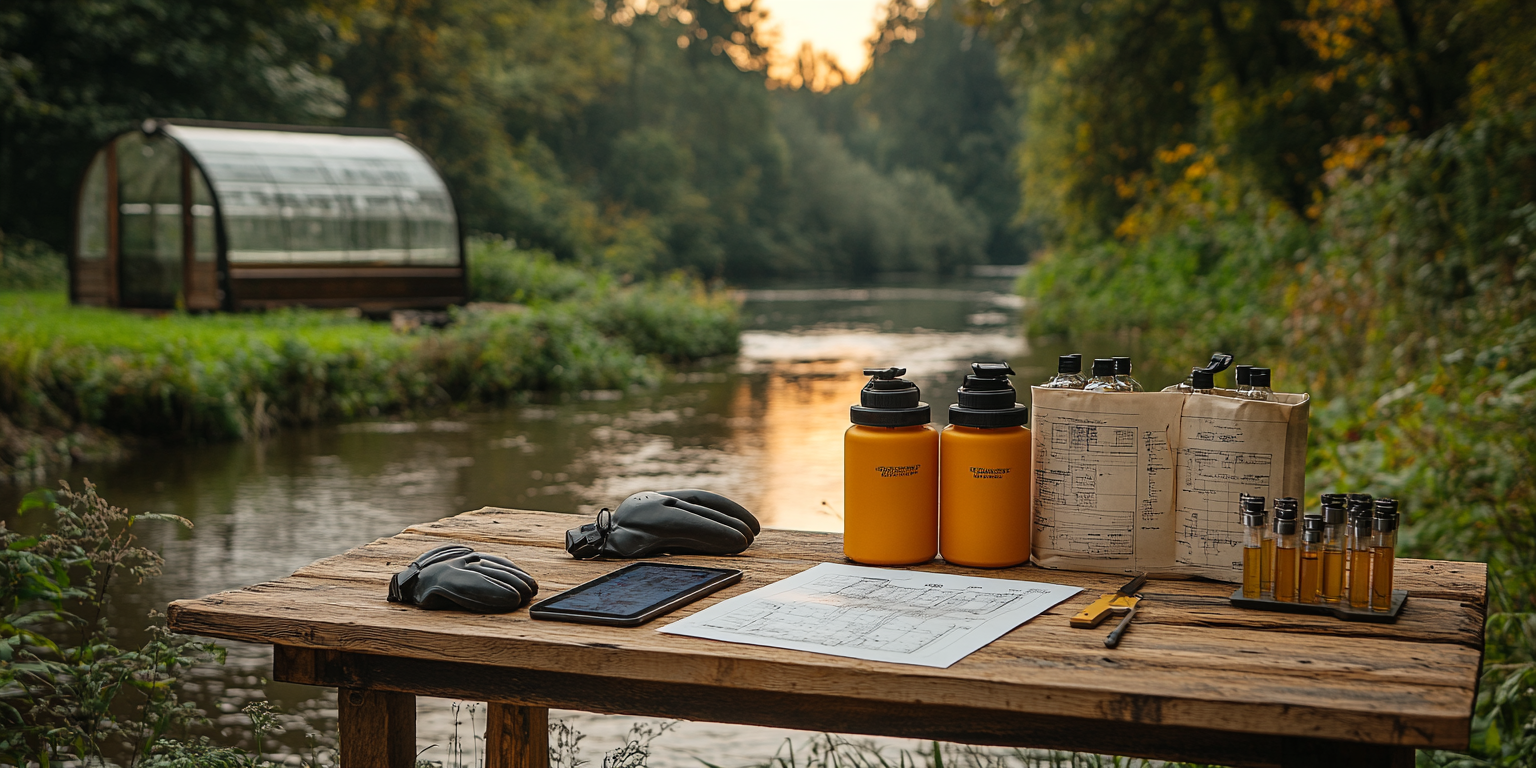
His undergraduate work circled a single conviction: that the coming century's defining scarcity would be fresh water, and that the engineering response had to be self-sufficiency rather than ever-larger extraction. He built a hydroponic farming prototype that was later trialled in community gardens as a test of urban food security, and he researched closed-loop irrigation systems designed for places where rain could not be relied upon. In 2014 he presented those findings at the UK Water Sustainability Conference, a modest milestone that nonetheless confirmed the direction of his life.
His final dissertation, Self-Sufficient Irrigation: Balancing Water Conservation and Agricultural Productivity in a Changing Climate, argued that conservation and yield were not opposites but a single design problem badly posed. He graduated in 2015 with a strong degree and a clear sense of what he wanted to do, which was rarer among his cohort than the degree itself.
What Exeter could not give him was any great ease with people. He left it much as he had arrived — precise, earnest, a little remote, and convinced on some level he rarely examined that to be useful was the same thing as to be loved.
He made few close friends and kept fewer, though a handful of fellow students learned that the standoffish engineer warmed considerably over a catchment map and a difficult problem. He spent one long summer on placement with a Devon water authority, walking flood-prone valleys with a clipboard and a pair of waders, and came away from it more certain than ever that fieldwork suited him better than offices and that he would always rather be near the water than in a meeting about it.
Drip Lines and Dead Ends
The three years after graduation took Nathan across three continents. He joined a string of sustainable-water projects that carried him through the United Kingdom, southern Europe and parts of East Africa, and the work was, on paper, exactly what he had trained for.
In the drought-stressed farmland of Spain and Portugal he helped install drip-irrigation systems that wrung crops from soil that had no business growing them. In England he advised local councils on flood resilience, folding natural flood-management techniques into urban drainage plans. In rural Kenya and Ethiopia he worked on water-purification systems for communities that had never had clean supply, and it was there, watching a village turn a tap and drink without fear, that he came closest to the uncomplicated satisfaction he kept expecting the job to deliver.
It rarely did. For every system he commissioned there were months lost to procurement disputes, planning objections, funding that evaporated between approval and disbursement, and committees that preferred a defensible delay to a useful decision. Nathan was good at the engineering and impatient with everything that surrounded it. He came to believe — not entirely fairly — that the bottleneck on human progress was no longer knowledge but process, and that he was spending the best years of his competence filling in forms.
The frustration curdled into something close to disillusionment. He wanted, with an intensity he found difficult to articulate, a place where the right answer could simply be built. He did not yet understand how much such places tend to cost.
The years took a quieter toll as well. The itinerant life of a contract engineer left little room for anything that did not fit in a suitcase, and Nathan, never gifted at intimacy to begin with, drifted through a string of short postings and shorter relationships without putting down roots anywhere. He told himself he preferred it that way. He was approaching thirty, technically accomplished and personally unattached, and the absence at the centre of his life had begun to feel less like freedom than like a room he had forgotten how to leave.
A Blank Slate
The offer came in the middle of 2018, from a corporation called Killerton Enterprises. The pitch was extraordinary and, to a man in Nathan's frame of mind, almost irresistible: a new settlement, Bixbus, being raised more or less from open ground, with water infrastructure to be designed from first principles and none of the regulatory undergrowth that had strangled him on Earth. Killerton wanted an environmental engineer who could build irrigation, harvesting and treatment systems for a growing city. They wanted, in effect, exactly him.
He did not ask as many questions as he should have. A more suspicious man might have wondered why a private company held the keys to an entire world, or what became of the people and places that stood in the way of its ambitions; Nathan, dazzled by the prospect of unobstructed work, took the blank slate at face value. In the latter half of 2018 he stepped through the Portal and arrived in Bixbus.
The settlement astonished him. Here was a place where environmental policy had not yet been compromised by a century of competing interests, where a city's relationship to its water could be got right the first time. He was set to work at once, and threw himself in with the appetite of a man finally permitted to do the thing he was for.
The first major fruit was the Bixbus Irrigation Network, brought into service in 2019, which married hydroponic methods with conventional field agriculture to lift the young settlement's food production. It was the work of his life arriving early, and for a while the sheer momentum of it answered every doubt he might otherwise have entertained about the company that had brought him there.
The early going was harder than the pitch had suggested. Bixbus in those first months was mud and scaffolding and improvisation, its supply lines thin and its margins for error thinner, and a single miscalculated grade could leave a quarter of the settlement without water. Nathan worked in conditions that would have horrified the councils he had once cursed, and discovered that he thrived in them. Freed of paperwork, he was ruthless and tireless and occasionally insufferable, driving crews through long days and tolerating slowness in no one, least of all himself. The systems held, by and large, because he refused to let them do otherwise, and the settlement learned to rely on the cold, exact Englishman who had appeared through the Portal and started telling everyone where the pipes should go.
The Woman From Brierly
Late in 2018 Nathan met Sophie Elizabeth Bennett, and the orderly geometry of his life acquired a complication he had not designed for. Sophie had arrived in Bixbus that September as part of the first delegation out of Brierly, an older agricultural settlement, travelling alongside Elias Bradbury and the exploration team to study the new city's methods and carry them home. She was an engineer in temperament and a daughter of one of Brierly's founding families in fact, born on 3 March 1996 to a soil conservationist and a botanist, and she had grown up arguing with her own community about the very questions Nathan had spent his career on.
They found each other across a shared subject — irrigation, land use, the reconciliation of yield and conservation — and discovered, to Nathan's quiet bewilderment, that the conversation did not want to end. Where he was rootless, she was rooted; where he had been raised in a house that mistook documentation for love, she had been raised among people, traditions and a deep and unembarrassed belonging. She was, in nearly every respect, the thing he had been missing without having the language to name it.
They married in Brierly in 2020, in a ceremony that braided the settlement's older customs together with the forward-leaning spirit of Bixbus — a fitting union for a couple who both spent their working lives trying to make tradition and progress sit at the same table. In December that year the CGRN completed its Bixbus–Brierly Line, and the railway did for their marriage what it did for the two settlements, collapsing a hard journey into an easy one and letting them belong to both places at once.
Marriage gave Nathan an entire family at a stroke, which a man raised in the quiet of the Porter house found both a gift and a bewilderment. Sophie's father, William Bennett, was a soil conservationist of few words and firm opinions; her mother, Catherine, a botanist and herbalist who read the land the way Nathan read its water; her elder brother, Thomas, a carpenter and builder, regarded his sister's English engineer with the wary courtesy due an unproven quantity. Brierly's older residents were warier still, suspicious of outside influence and unconvinced that the city's methods belonged in their fields. Nathan, who had spent a career being right and being resented for it, had to learn — slowly, and not always graciously — that in Brierly a good idea badly introduced was simply a quarrel, and that his wife's patience was the only currency that spent there.
Fathering Against Type
Their son, Samuel, was born in 2021, and a daughter, Elise, in 2023. Fatherhood undid Nathan in ways the Portal never had. Holding Samuel for the first time, he understood with sudden and unwelcome clarity exactly what his own father had reached past on the afternoon he was born, and he resolved — with the grim determination he usually reserved for failing infrastructure — that his children would not grow up fluent only in the language of work.
It did not come naturally. He had to learn warmth the way other men learn a second language, consciously and with errors, and Sophie watched him catch himself mid-retreat into a project and turn back toward the children more times than either of them ever remarked on. He was not always successful. There were evenings when the river restoration mattered more than bedtime, weeks when his patience with Brierly's traditionalists thinned into something his wife had to apologise for. He knew his own coldness as a man knows a recurring injury, and he worked at it.
He found, to his surprise, that the children reached him most easily on the ground he already knew. He took Samuel down to the Bixbus River as soon as the boy could walk it, crouching with him over the shallows to explain where the water came from and where it was going, and felt, in those unhurried hours, the closest thing to the inheritance he had meant to pass on — the wonder of the thing rather than merely its measurement. With Elise, still small, he was clumsier and more tender both, and he caught himself studying her face the way Graham had once photographed his, except that Nathan put the work down and picked the child up. The reversal was small and it was deliberate and it cost him something every time, and he counted it among the better things he had built.
The work itself did not slow. The Bixbus Rainwater Collection System, a network of reservoirs and underground storage completed in 2020, sharply reduced the settlement's waste; the Bixbus River Restoration Project of 2022 turned his attention to conservation and flood management along the watercourse the city depended on. He extended his expertise outward to the revitalisation of settlements along the Bixbus River, Kaniva and Brierly among them, and lent his weight to the slow drafting of a Clivilius Sustainable Water Policy that might one day spare new settlements the mistakes he had spent his career repairing.
For all his standing, he carried a quiet guilt that surfaced most often when he looked at his children. He had crossed the Portal without much grief and severed himself from Graham and Lillian almost without noticing; only now, watching Samuel and Elise grow up without grandparents they would never meet, did the shape of that choice become visible to him. He had wanted a world he could build cleanly, and he had got one, and the price had been a family on the other side of a doorway he could not uncross.
He found his rare stillness on the water. He kayaked the Bixbus River whenever the work allowed, drawn back, as he always had been, to the moving thing he understood best, and there, between strokes, he came as near as he ever did to peace. He had set out to build a future in which human development and the living world were no longer at war with each other, and in the unfinished settlement on the far side of the Portal he had, against the odds and against his own upbringing, made a fair beginning of it.







